Wildfowl & Wetlands Trust (WWT)

Study shows Severn barrage is just too expensive

The power generated by a ten-mile barrage across the Severn Estuary could be produced more cheaply using other green technologies, leading economists say today (June 12).

Frontier Economics, Europe’s leading economic consultancy, also show that the proposal to use taxpayers money to build a £15 billion dam across the estuary would not, under existing Treasury rules, warrant special government subsidies or any other form of public investment.

Frontier’s analysis, commissioned by ten UK environment groups, follows a report last October by the Sustainable Development Commission, which said if a barrage between Cardiff and Weston-super-Mare was built, it should be state funded and state run.

Those backing the scheme say it is essential to help the government hit its renewable energy generation target.

Matthew Bell, author of the report, said: “It is hard to think of reasons for the public sector to build or operate a barrage which would not be equally applicable to many other projects and assets that sit in the private sector.

“Not only is the private sector more than able to finance a scheme of this scale but, even using the most conservative estimates of costs, the barrage is one of the most expensive options for clean energy generation there is.”

Frontier assessed the justification for public funding of a large Severn barrage and compared its cost with the cost of generating the same amount of energy in the UK using other renewable technologies.

Variable carbon trading prices, the youth of tidal technology, the high cost of a barrage and the risks to private investors, were not sufficient grounds for state involvement in a large barrage, the study found.

The report shows the barrage to be expensive compared to other renewables and that the government’s renewables target could probably be met using cheaper green technologies. “Considerable new evidence would be needed to make a large barrage in the Severn estuary an attractive option,” Frontier say.

The RSPB, National Trust, WWF-UK, the Salmon & Trout Association and The Wildlife Trusts were amongst the groups commissioning the analysis.

Graham Wynne, Chief Executive of the RSPB, said: “There are good reasons for trying to harness the energy potential of the Severn estuary. But the estuary is truly exceptional for its ecological value. The Sustainable Development Commission has already confirmed that a barrage would fundamentally change the nature of the Severn Estuary. Frontier’s report shows that this exorbitantly expensive and massively damaging proposal cannot be justified on economic grounds – there are simply too many cheaper options for clean energy generation.”

Quotes from other partners:

Mark Lloyd, Executive Director of the Anglers’ Conservation Association, said: “putting aside the huge uncertainties about the hydrological and ecological effects of constructing a tidal barrage in a dynamic and diverse environment like the Severn estuary, it is now clear that this proposed scheme does not make economic sense either. Tens of thousands of anglers, and the thousands of businesses which depend on income from anglers, will breathe a huge sigh of relief.”

Paul Knight, Director of the Salmon & Trout Association, said: “This report clearly shows that there are cheaper ways for the government to meet its renewable energy targets. This is great news for the ecology of the Severn estuary, including the salmon, sea trout and many species of sea fish whose habitat and migration patterns would be severely impacted if the barrage were to be built.”

Tony Burton, Director of Strategy and External Affairs at the National Trust, said: “The Severn Estuary is a unique and valuable asset, rich in wildlife and striking landscapes. While we support strong action to tackle climate change, we need to do this in a cost effective way and respect the importance of our natural environment. This study demonstrates that the government should consider other ways of meeting our renewable targets, which make better use of public money and at less cost to the environment.”

Martin Spray, Chief Executive of WWT, said: “WWT fully supports a move towards renewable low-carbon energy generation. However, building a large barrage across the Severn estuary would have such a huge cost to the natural environment that it cannot be considered as a sustainable option. As we expected, Frontier’s report finds the economic cost is similarly disproportionate and therefore we cannot see how the Government will be able to justify financial support for a Severn barrage.”

Stephanie Hilborne, chief executive of The Wildlife Trusts, said: “The Wildlife Trusts have obvious concerns over the devastating impact of a Barrage on the wildlife of the Severn estuary. But beyond environmental impacts, this report fundamentally questions the economic argument for a Barrage, using the Government’s own financial tests. The Minister should take this evidence very seriously.”

David Nussbaum, Chief Executive of WWF-UK, commented: “This report concludes quite clearly that Government support for a hugely costly Severn barrage is not justified. There are far better opportunities for renewable energy, and government support could be targeted to improve the infrastructure for such renewable energy supply. Financial support for an expensive, inflexible and highly damaging technology like the proposed Severn barrage would not be a good use of taxpayers’ money.”

Morgan Parry, Head of WWF Cymru said: “This report concludes quite clearly that government support for the Severn barrage is not justified. Whereas we would welcome government intervention to improve the infrastructure of renewable energy supply, financial support for a redundant and highly damaging technology like a barrage is not the way to do it.”

Dr Stephen Marsh-Smith, Chief Executive of the Wye and Usk Foundation, said: “Construction of this barrage would wipe out all the migratory fish including salmon and shad using the Severn estuary. It will be a disaster if this barrage is chosen to generate electricity when we know it isn’t the best way of doing so. There are so many other options that would spare what is a unique pair of rivers and the huge rural economies attached to them.”

This entry was posted in WWT news. Bookmark the permalink.

Black-tailed godwit chicks wiped out

Flooding of the Ouse Washes at WWT Welney has once again wiped out the breeding season for wading birds, with up to 70 pairs of wader chicks eaten by predators – including the precious Black-tailed Godwit chicks who hatched just a fortnight ago on the reserve.

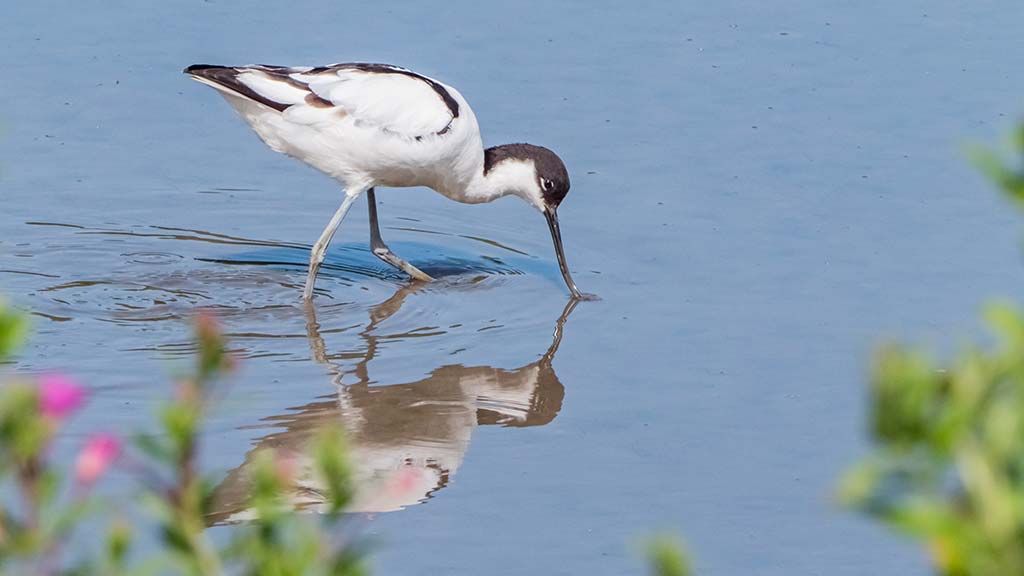
Predators were able to strike when much of the reserve at Welney became up to 2.5m underwater, forcing the waders including Avocet chicks, Snipe, Redshank and the Black-tailed Godwits onto limited areas of dry ground. All surviving wading birds have abandoned breeding attempts and fled the area.

Hopes were raised for a better breeding season this year when, in late May, a handful of Black-tailed Godwit chicks hatched on the reserve after earlier floods were pumped away by the Environment Agency. However, crossed fingers were not enough to stem the flow of rainfall in the 8600 square kilometre catchment area of the Washes which resulted in the floodgates opening up once again. Historically, flooding of the Washes occurs between November and March but, last year high rainfall caused flooding to continue into May. And it has happened again this year.

Kevin Peberdy, WWT’s director of centre developments, said: “Seeing another year of bank to bank flooding in early summer is devastating for these nationally important ground nesting birds and further highlights the need to reduce catchment run-off. We continue to work with the Environment Agency in dealing with the flooding, but one thing we are looking at is developing alternative wetlands as soon as possible immediately outside the Ouse Washes at Welney. This could help mitigate some of the losses and particularly an important lifeline to the Black-tailed Godwits which could shortly be lost altogether from the Ouse Washes.

Despite the flooding at WWT Welney, there is still plenty for visitors to do, including trails, pond-dipping and arts and crafts available on weekends and school holidays. Forthcoming events include our Father’s Day BBQ and Family Fun Day with lots of sporting activities and crafts for families to take part in. Also, we have our National Insect Week Event, ‘In with the Insects’ on 22 June where there will be activities celebrating some of the other inhabitants of our wetlands such as a mini-beast hunt, pond-dipping, crafts and an Ugly Bug Parade.

This entry was posted in WWT news. Bookmark the permalink.