Wildfowl & Wetlands Trust (WWT)

New report reveals the ups and downs of Britain’s waterbirds

Each winter Britain sees the arrival of millions of waterbirds of many different species from the Arctic and northern Europe. A report – Waterbirds in the UK 2007/08 – published today highlights some startling changes in the fortunes of these visitors over the last decade.

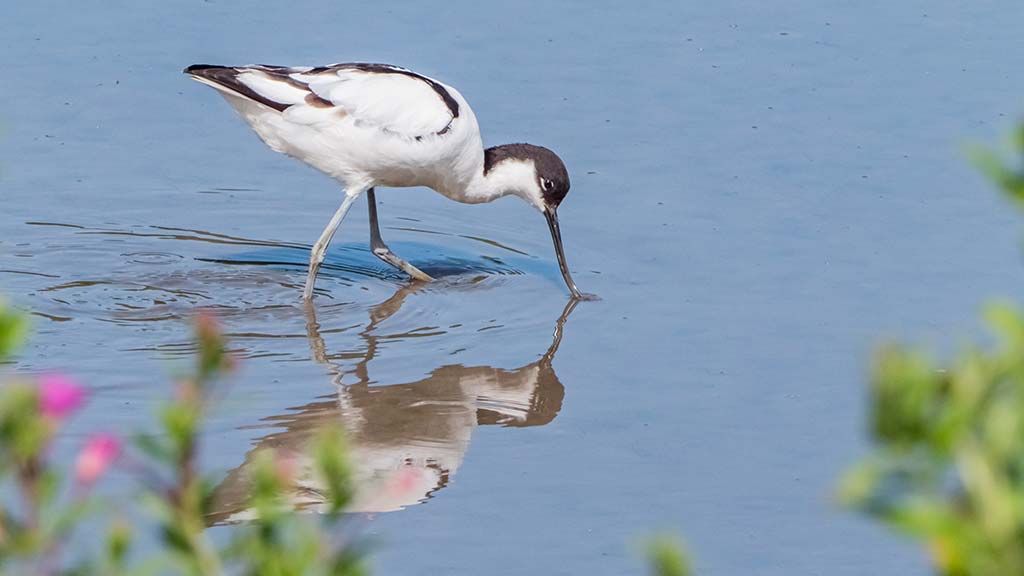
An analysis of the 50 most widespread winter-visiting wetland birds (excluding gulls) shows there have been some very dramatic changes over the last decade. The birds faring the worst, compared with a decade ago, include: ringed plover; pochard; bar-tailed godwit; and the Greenland white-fronted goose. The five species recording the greatest increases over the period include: little egret; whooper swan; black-tailed godwit; avocet and the Greenland barnacle goose.

For some declining species, such as the ringed plover and bar-tailed godwit, it seems they are shifting away from wintering in the UK, preferring to spend the winter in continental Europe. However, those species which have increased in number are increasing for a variety of reasons. Avocets are believed to have increased because of milder winters and targeted conservation action, while the black-tailed godwit and whooper swan, which migrate from Icleand, are thought to be increasing because of subtle changes in farming there, possibly linked to climate change.

Dr Mark Avery is the RSPB’s Conservation Director. He said: “Two aspects of this long-running study really stand out. Firstly, that bird populations change over time, understanding this is critical to developing future conservation strategies. Secondly, the UK’s wetlands – and particularly those on the coast – are of enormous importance to the survival of a great number of waterbirds which migrate from many other countries.

“The protection and wise management of our wetlands is a priority to ensure that they continue to provide a lifeline to bird populations in the face of climate change, a view recognised by the Convention on Wetlands of International Importance.”

Chas Holt, WeBS organiser, BTO, commented: “The changes in waterbird populations identified each year by Wetland Bird Survey (WeBS) volunteers highlight the importance of monitoring our wetlands. Without the dedicated efforts of WeBS volunteers thoughout the UK, we would know far less than we do about how our waterbird populations are faring, and which sites are of most importance for them. Future research and conservation efforts, both at the national and international level, can be suitably directed using information collected by these volunteers.”

Richard Hearn, Head of Species Monitoring at WWT, said: “Where declines of these migratory waterbirds have been noted in the UK, we must gauard against assuming these birds are wintering further east in parts of Europe previously too cold. Climate-related changes in distribution have the potential to mask more serious conservation problems, so it is more important than ever that we get the complete picture by working with partners abroad to monitor these birds across their flyways.”

David Stroud, of JNCC, said: “The UK has been working with Greenland, Iceland and Ireland to develop an international action plan for Greenland White-fronted Geese under the Agreement on the conservation of African-Eurasian migratory waterbirds (AEWA). AEWA provides a legal framework for countries to work together to conserve such waterbirds that move between many countries in the course of their annual migratory cycle. The monitoring data from WeBS are essential to enable the UK to fulfil its obligations under AEWA and other international treaties.”

The annual report is based on the fieldwork of around 3000 bird surveyors participating in synchronized monthly counts at wetlands, including estuaries, marshes, lakes and reservoirs, across the UK. The UK is of global importance for wintering wetland birds and 225 wetland sites host one or more species in internationally-important numbers and 85 hold an average of 10,000 or more birds.

Over the last five years the most important sites for waterbirds in the UK have been (in order with the average number of birds): The Wash (371,308); the Ribble Estuary (238,160); the North Norfolk coast (206,703); Morecambe Bay (197,291); and the Thames Estuary (186,302).

The report is produced by the British Trust for Ornithology, the RSPB, and the Joint Nature Conservation Committee, in association with the Wildfowl & Wetlands Trust.

The species which have increased the most between 1997/98 and 2007/08 are:

  • Little Egret 811%
  • Whooper Swan 135%
  • Black-tailed Godwit 79%
  • Avocet 73%
  • Greenland Barnacle Goose 66%
  • Little Grebe 60%
  • Re-established Greylag Goose 50%
  • Shoveler 43%
  • Gadwall 31%
  • Canada Goose 27%

The species which have declined the most between 1997/98 and 2007/08 are:

  • Ringed Plover -57%
  • Pochard -44%
  • Bar-tailed Godwit -42%
  • Common Scoter -37%
  • Greenland White-fronted Goose -37%
  • Dunlin -31%
  • Shelduck -31%
  • Goosander -29%
  • Eider -29%
  • Bewick’s Swan -28%

A total of 225 wetland sites in the UK support one or more species in internationally-important numbers. A number of sites, on average over the last five winters, held over 50,000 birds each winter. The sites listed below include the average number of birds present each winter between 2003/04 and 2007/08.

Number of birds present each winter between 2003/04 and 2007/08
Site Bird population Region Species of int imp
The Wash 371,308 East of England / East Midlands 16
Ribble Estuary 238,160 North West England 16
North Norfolk Coast 206,703 East of England 8
Morecambe Bay 197,291 North West England 11
Thames Estuary 186,302 South East / East of England 12
Humber Estuary 217,805 Yorkshire and Humberside 12
Dee Estuary 129,271 North West England / Wales 7
Solway Estuary 122,602 North West England / Scotland 10
Somerset Levels 99,035 South West England 6
Breydon Water & Berney Marshe 98,071 East of England 7
Ouse Washes 94,253 East of England 9
Strangford Lough 80,120 Northern Ireland 8
Mersey Estuary 79,504 North West England 5
Swale Estuary 79,361 South East England 3
Forth Estuary 77,655 Scotland 7
Loch of Strathbeg 69,688 Scotland 3
Severn Estuary 69,482 South West England / Wales 7
Blackwater Estuary 62,801 South East England 6
Inner Moray/Inverness Firth 60,871 Scotland 2
Loughs Neagh and Beg 56,110 Northern Ireland 5
Alt Estuary 51,662 North West England 4
Lindisfarne 51,467 North East England 4
This entry was posted in Conservation. Bookmark the permalink.

Early birds confused by late spring

Reports that spring may be delayed this year do not seem to have reached the birds at WWT London Wetland Centre. Some birds have already surprised visitors by singing unusually early.

Birdwatchers heard the first bittern, a rare type of heron, ‘booming’ in early January this year. Male bittern normally make their distinctive mating call from April onwards in an effort to attract a mate. The call is a ‘booming’ noise which carries through reedbeds and can be heard up to at least two miles away. While five of these secretive birds have been spotted at the centre this winter – an unusually high number, especially for a site so close to the heart of the capital – this is the first record of one booming at London Wetland Centre. There are roughly 75 breeding male bittern in the UK.

And to add to the confusion this week a willow warbler has been heard singing on the edge of the Wetland Centre site. These small songbirds typically spend summer in the UK and fly south for the winter. Willow warbler typically fly over 3,000 miles to West Africa. The centre’s staff are amazed at this bird’s early arrival and are keen to discover if this is the first willow warbler to be heard calling this year anywhere in the country.

Adam Salmon, Reserve Manager, said “It is totally unprecedented for a willow warbler to be singing this early. We would usually see these birds arriving in the UK from mid March, and singing towards the beginning of April.” It is possible that unusual weather in southern Europe or West Africa, where the warbler is likely to have been spending winter, may have encouraged the bird to fly home early.

WWT London Wetland Centre is a 105 acre wildlife haven close to the heart of the capital. Over 180 bird species have been recorded on site and it is also home to eight species of bat, a thriving colony of water voles (the UK’s most endangered mammal), amphibians, reptiles, moths, butterflies and dragonflies. Some exceptionally rare sightings have been recorded over the 10 years that the site has been open including Roesel’s bush cricket, Nathusius’ pipistrelle and Leisler’s bats, cattle egret, night heron, Montagu’s harrier, lesser emperor dragonfly and white-spotted bluethroat. The reserve is a Site of Special Scientific Interest (SSSI) and was recently described by Chris Packham, BBC Springwatch presenter, as “one of the most important conservation projects of the past century… giving millions of people the opportunity to encounter wildlife up close.”

This entry was posted in Conservation. Bookmark the permalink.

A step forward in Laos

WWT’s work in Laos has been a resounding success, with the threat of building development around the sensitive and vulnerable That Luang Marsh averted, at least for the time being.

WWT’s chief executive was able to report on the latest work at the marsh at WWT’s WATER project workshop in Laos in January, which some 60 delegates from Laos itself, Vietnam, Cambodia and Thailand attended.

The plans that WWT are currently proposing for the marsh focus on its important role in storing floodwater, therefore reducing flooding across the city; treating the city’s wastewater, resulting in an improved urban environment; providing food for more than 40,000 people through rice and aquatic resources such as fish, snails and plants; and being an important biodiversity area for the city. That Luang Marsh also has a large cultural significance for the people of Laos as the important That Luang Temple is situated on the edge of the marsh.

The project has also constructed five wetland treatment systems to demonstrate the treatment of industrial and domestic wastewater.

This entry was posted in WWT news. Bookmark the permalink.

A whole lot of half term fun, for a whole lot less.

Get the most from your precious pound this Half Term, visit WWT National Wetland Centre Wales to enjoy a whole host of activities for the whole family, while giving the children exciting opportunities to learn about the natural world around them.

Half term activities range from family arts and crafts to guided walks and the centre will be offering visitors to chance to play our exciting ‘upstream, downstream’ wetland card game. Daily top scorers win a bottle of Yali wetland wine from Vinã Ventisquero (over 18s) or a cuddly toy cygnet plus a chance to win the overall top prize of a family break at a Farmstay property courtesy of NFU Mutual.

WWT National Wetland Centre Wales introduces adults and children alike to the wonders of wetland birds and their habitats, with stunning scenery and nose-to-beak encounters with some of the world’s most dramatic and rare birds.  The centre has an excellent restaurant and gift shop, plus family friendly and disabled facilities including buggy access, manual wheelchairs and mobility scooters for hire.

Visit during the Half Term holiday and become a member of WWT and not only do you get your entrance fee refunded, but you get free entry for the rest of 2009. So you can bring the children back to any WWT centre as many times as you like over the Easter and Summer school holidays and throughout the year for nothing!  As well as free entry to WWT wetland centres, members receive an exclusive quarterly magazine, Waterlife, which keeps you up to date on what’s going on at all nine centres and WWT’s conservation work around the world.

As well as trying your luck at our upstream, downstream game at WWT centres during Half Term, other activities during the Half Term holiday include:

The wetland picnic quiz and frieze will explore what wetland foods are, where they have come from and how far they have traveled.  Whether it be rice from Bangladesh, wine from Australia or cranberries from the USA.  There will also be arts activities where young people and the young at heart can have a go at printing to contribute to our wetland picnic frieze.

A wetland walk looking at our very own river will allow visitors to explore the wonders of the wetlands, from the Herons Wing Hide to the Tower, while focusing on the theme of World Wetlands Day ‘Upstream, downstream, wetlands connect us all’

WWT National Wetland Centre Wales, Llanelli is open every day from 9.30 am to5 pm (grounds open until 6pm in the summer) and parking is free of charge.  It can be found 2 miles east of Llanelli off the A484 to Swansea .  Follow the brown duck signs off the M4, J48.  Nearest railway station is Llanelli.

This entry was posted in Llanelli news. Bookmark the permalink.

Give a gift from the heart this Valentine’s Day

Looking for an original gift to warm the heart of your loved one this Valentine’s Day? Why not give a gift of bird adoption from the Wildfowl & Wetlands Trust (WWT).

With a choice of 11 different birds to adopt, bird adoption is a unique gift for anyone who loves ducks, swans, flamingos or geese.

Bird adoption truly makes a difference to our feathered friends as the money generated goes directly towards helping to save globally threatened species. All ages can have fun learning about their chosen bird through fact sheets, twice yearly newsletters, an adopter’s only website area and a complimentary ticket to visit any WWT centre.

You can adopt a bird for as little as £2 a month and there are three easy ways to do it: online through our website, by telephoning 01453 891194/5, or by visiting a WWT centre shop.

This year, Valentine’s Day is a Saturday, so why not do something different and visit your local WWT National Wetland Centre Wales, Llanelli to watch the romance among the wildlife.

Watch the swans begin their elaborate courtship displays by making the classic heart shape with their necks as a display of their affection.

WWT National Wetland Centre Wales provides the perfect setting for a romantic walk in beautiful surroundings where you can watch winter wildlife spectacles including thousands of over wintering wildfowl and wading birds.

Take a walk around the beautiful grounds and see many rare and threatened waterbirds including ducks, geese, swans and flamingos.

WWT National Wetland Centre Wales will also be offering Valentine themed food in the Estuary Café, a real treat for all love birds.

For more information, visit events and activities around Valentine’s Day, and visit online for details on how to sign up for that unique gift for your loved one.

WWT National Wetland Centre Wales, Llanelli is open every day from 9.30 am to 5 pm(grounds open until 6pm in the summer) and parking is free of charge. It can be found 2 miles east of Llanelli off the A484 to Swansea. Follow the brown duck signs off the M4, J48. Nearest railway station is Llanelli.

This entry was posted in WWT news. Bookmark the permalink.