Wildfowl & Wetlands Trust (WWT)

Public urged to tell politicians: we care about wildlife

Conservationists are urging the public to help stop further wildlife loss by encouraging their local MPs and Prospective Parliamentary Candidates to sign a new “Wildlife Pledge”, to do all they can to stop and reverse wildlife decline.

A consortium of 11 wildlife charities, including WWT, Butterfly Conservation, Plantlife, The RSPB and The Wildlife Trusts have pulled together the pledge to help reverse the rapid decline in our wildlife – both species and habitats. It was recently reported that around 500 species have become extinct in England in the recent past and conservationists are appealing to the public to help make wildlife a top priority for politicians and stop further species being lost.

The Wildlife Pledge, which can be viewed online at www.wildlifepledges2010.org.uk is supported by wildlife organisations representing over two million people. It includes the promise to take action in tackling climate change and to help wildlife meet this challenge. It also looks for commitment from politicians to help reverse the decline of farmland wildlife by the effective promotion of nature-friendly farming, as well as to provide children with contact with the natural world as part of their education.

The pledge gives Prospective Parliamentary Candidates the opportunity to express their support and commitment to various aspects of wildlife conservation. The public can view which candidates have given their support for this issue before the election. Conservationists are encouraging people to then contact their Prospective Parliamentary Candidates informing them how important this issue is and that their response to the pledge may affect the way they vote.

Dr Martin Warren, Chief Executive of Butterfly Conservation said: “Biodiversity is a crucial issue facing the future survival of the planet. It is vital that the next UK parliament takes biodiversity seriously and encourages urgent action to reverse the massive losses of the last few decades. We are urging Parliamentary Candidates to sign the Wildlife Pledge to demonstrate commitment to protecting our wildlife and stop further extinctions.”

RSPB Director of Conservation, Mark Avery, said: “Wildlife doesn’t get to vote at the election but we hope that voters can make this an issue that counts. The wildlife pledge allows people to check out how wildlife friendly their prospective MPs will be.”

Stephanie Hilborne, Chief Executive of The Wildlife Trusts said: “The actions of the next government are absolutely crucial to ensuring a future for our wildlife. One of the many challenges they will face will be to implement the Marine Act to restore our seas and also to restore the natural environment on land. It is vital that we have MPs in the new parliament who understand and appreciate these challenges and keep the next government on its toes.”

Chief Executive of Wildfowl & Wetlands Trust, Martin Spray, said: “We urge all of our members and supporters to make their local candidates aware that wildlife really matters to the people in their community, as does the habitat that supports them. Wetlands are particularly vital for the wide ranging benefits they bring to our communities and to the wildlife they support. If you look after the habitat, you are looking after the wildlife, and the people. It is essential that this be an issue at the ballot box.”

Plantlife’s Chief Executive Victoria Chester said she hoped that the initiative would help to raise the profile of the natural environment even further as a political issue. “We know that many voters value wildlife and the vital contribution it makes to our lives and we want it to be there for future generations to enjoy. I hope that the Pledge will encourage all candidates and future MPs to place caring for the natural environment at the heart of the work of the new parliament,” she said.

To find out if your local candidates have signed the pledge, visit www.wildlifepledges2010.org.uk

This entry was posted in Conservation. Bookmark the permalink.

Rare goslings cause delight

The National Wetland Centre Wales is celebrating some fluffy goslings which have arrived in time for Easter.  Visitors to the centre are admiring three adorable goslings which are just over a week old.  These aren’t just any goslings either, they are nenes which are the rarest geese in the world.

The nene, or Hawaiian goose was rescued from the brink of extinction by conservationist Sir Peter Scott, who founded the Wildfowl & Wetlands Trust (WWT), which opened the centre in Wales in 1991.

At one point there were just 30 left in the world, but thanks to conservation efforts since 1950 hundreds now thrive in the wild as well as in wildfowl collections.  The 50 or so nenes in the National Wetland Centre Wales are extremely popular with visitors as they are so friendly they can be hand fed.

Nigel Williams, centre manager, said: “Nothing says that Easter has arrived more than the arrival of baby birds.  The nenes are immensely popular with our visitors because they are very attractive and tame. We have another eight females sitting on nests so we are expecting quite a few more to arrive soon.”

There is also a whole programme of events at the centre over the spring holidays.
Children of all ages will be able to enjoy a range of arts and crafts activities every day from 2 April to 18 April at the centre in Llanelli.

There will also be pond dipping sessions in which families can use nets and magnifying glasses to discover the underwater world. The bike trail at the centre in Llanelli is also reopening on Good Friday. The centre has a fleet of bikes to suit all ages and the cost of hire is included in the normal admission cost so it is a great way to enjoy exercising outdoors.

The centre is open from 9.30am to 5pm every day. Bikes are available from 12noon to 4pm. For further information please contact 01554 741087 or email info.llanelli@wwt.org.uk

This entry was posted in Llanelli news. Bookmark the permalink.

Efforts to save the world’s rarest duck receive timely boost

Efforts to establish a breeding programme to save the world’s rarest duck, the Madagascar pochard, have received a boost from Defra’s Darwin Initiative.

£282,000 over three years from the Darwin Initiative will help to fully establish the breeding programme, which was started late last year as an emergency measure following the news that only six females remained in the wild. As well as supporting breeding and rearing the birds, the money will pay to train Malagasy conservationists, develop a recovery plan and identify lakes where the ducks can potentially be reintroduced. Fundraising is now underway to build a conservation-breeding centre for the project in Madagascar.

Last year, an expedition confirmed that the remaining population of only 20 ducks at a single location contained just six females and that none of the young from the previous year had survived. With the species facing such a precarious future, a partnership formed to ensure the ducks’ survival: Durrell Wildlife Conservation Trust, Wildfowl & Wetlands Trust (WWT), The Peregrine Fund, whose scientist rediscovered the duck, and the Government of Madagascar.

In November, with funding from the Mitsubishi Corporation Fund for Europe and Africa, the partnership managed to establish a safety-net population. With minimal disturbance to the adult ducks, the team were able to remove three clutches of eggs from wild nests and have reared 23 ducklings in a temporary facility.

The project is now well and truly underway

Durrell’s Project Leader, Dr Glyn Young, says, “This dramatic mission was a vital first step but now we need to establish a sustainable breeding programme and to identify suitable locations to reintroduce ducks in the future. The Darwin Initiative support will allow us to do this.”

WWT’s Peter Cranswick added, “This money effectively means that the immediate risk of extinction for the Madagascar pochard has been averted. Many challenges lie ahead for its long-term survival – not least, to ensure that the needs of both local Malagasy people and the Pochard can be harmonised at key wetlands – but the project is now well and truly underway. ”

This entry was posted in Conservation. Bookmark the permalink.

Er…don’t you think we ‘otter’ say grace first…?

While male otter Ned barely pauses for breath before tucking in to the celebration fish cake, partner Thai (left) clearly decided that the occasion deserved a little more reverence as she appeared to put her hands together and ‘say grace’ – a traditional prayer of thanks given before eating.

Resident Asian short-clawed otters Ned, Thai and their four children, Muna, Nixie, Musa and Rod were given the fishy cake as part of celebrations to mark WWT Martin Mere Wetland Centre’s 35th anniversary in Lancashire this week.

Over the last 35 years, Martin Mere has welcomed over 5.5m visitors as well as over 300,000 school educational visits. To mark the occasion, a time capsule was buried on Monday (1 March) with pictures from staff and visitors included illustrating Martin Mere today as well as what the centre could be like in 50 years.

The land for WWT Martin Mere was purchased in 1970 by Sir Peter Scott because of the numbers of wintering waterfowl using the site, in particular the pink–footed geese from Iceland and the Bewick’s swans from Russia. The land was derelict and used for intensive agriculture purposes and it took just three years to turn the site around to open to the public in 1975 to become a site of international importance.

One of the people that helped to do this was Andy Wooldridge, who progressed to become Centre Manager in 2007. Andy said: “I am enormously proud of how Martin Mere has developed over the years. At the start we didn’t even have a coffee shop as adults came with their packed lunch to watch the birds from the hides. Since then we have grown to offer an amazing award winning wildlife experience and day out for families, adults, children and couples. There are too many changes to talk about but some of my proudest moments have been when we started to breed greater flamingos in the 80s and purchasing new land, developing it from farm land to wetlands.”

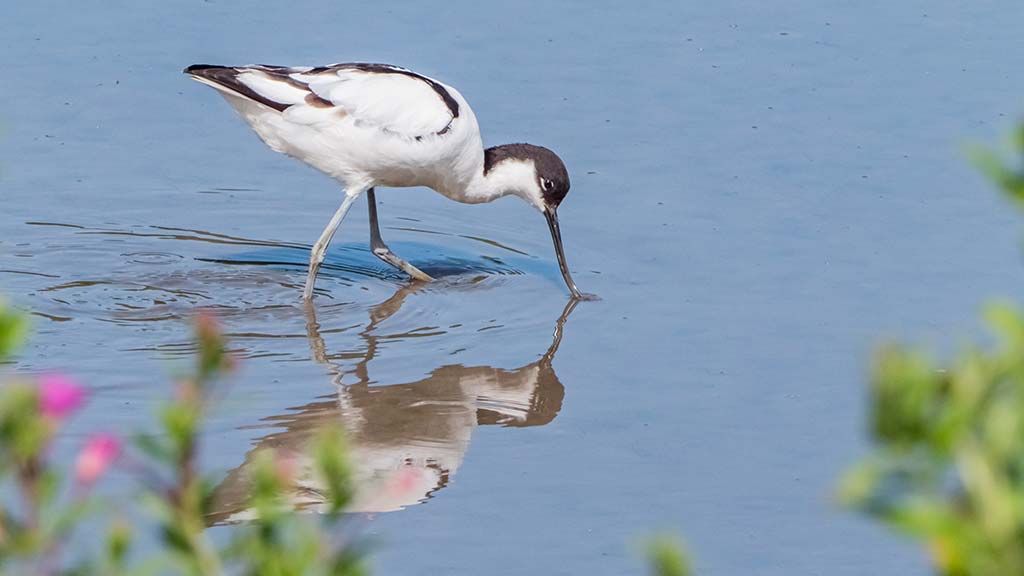
There have been many wildlife changes over the years but the most notable has been the increase in pink-footed geese from 30,000 to 100,000 in Lancashire, avocet increases from just four to 88 on the mere in 2009. Numbers of Bewick’s swans have declined but whooper swans from Iceland have increased from literally none in 1970 to almost 2,000 today. Martin Mere also now has mammals, including beavers and the otter family – both of which are proving very popular with visitors!

This entry was posted in WWT news. Bookmark the permalink.