Wildfowl & Wetlands Trust (WWT)

Research team take rare eggs to save species from extinction

Under gruelling conditions and amid fears it might be too late, a conservation breeding team in the remote Russian Far East has collected a clutch of spoon-billed sandpiper eggs, signalling an incredible step towards safeguarding the species from extinction.

The team has been in Russia since mid-May on an emergency mission to find nests to collect eggs for conservation breeding. They aim to create a population in captivity for future reintroductions and as a safety net,
should the species die out in the wild before threats along their flyway can be addressed.

Nigel Jarrett, Head of Conservation Breeding for WWT and leading the expedition in Russia said: “Finding a nest of eggs made the 35 sleep-deprived days so far, the gruelling 7000 mile journey hampered by transport problems, heavy snow, driving winds, and lashing rain – not to mention the ever present threat of becoming a hungry bear’s lunch – completely and utterly worthwhile.”

Now five weeks into the mission, at times it seemed doomed to failure. Peaks of excitement with sightings of adult male spoon-billed sandpipers in full courtship ritual and song, were swiftly followed by crushing disappointment as a predated nest and dead female were discovered.

With so few breeding pairs in existence, the loss of a female and her eggs through predation is a distressing event. However, it is natural for predation to occur like this. The real threat to the survival of the species are caused by humans: inter-tidal destruction along the spoon-billed sandpiper’s migration flyway and unsustainable levels of trapping on the wintering grounds in Myanmar and Bangladesh.

Part of the expedition team, Liza Tambovtseva from Birds Russia, said: “We know from previous years that there is a great risk of nest predations. In 2010 we found eight nests, four of which were predated before hatching. In 2009 the situation was even worse: there were four nests found and only one was successfully hatched – the other three were predated.”

Nigel said: “It was a cruel moment for everybody. That day we had trekked through snowdrifts and as we stepped onto the tundra my eyes were still streaming tears from snow-blindness. As my vision cleared the first thing I saw as I looked down, right in my path, was the broken body of a female spoon-billed sandpiper next to a nest littered with smashed eggshells. It was a devastating moment but it made us more determined to continue our search, vowing that we could not let this truly remarkable bird become extinct. ”

When, just a few days after finding the predated nest the team found a second nest, this time with a fresh clutch of eggs inside, the team decided not to risk leaving them to succumb to the same fate as before. Nigel explains: “Ideally, we leave freshly laid eggs in the nest for at least a week before collecting, but because the first nest we had come across was predated so quickly, we had no idea whether this would be the case with other nests.”

Liza continued: “Considering theseSpoon-billed sandpiper eggs
statistics we recommended taking the clutch for incubation straightaway because we believed there was a greater chance for the spoon-billed sandpiper’s eggs to hatch in incubators than to remain in this nest. Also, by taking this clutch at an early stage we gave the bird a good chance to relay a second clutch. In this way we minimize the harm for the birds and for nature.”

So, late into the night just days ago, Nigel lifted the first clutch of eggs from their tiny nest in the rough, unforgiving terrain of the arctic tundra and carefully laid them in a portable incubator for the slow and careful dinghy and ATV (all terrain vehicle) journey back to base in Meinypilgyno. At this stage it is not known whether the collected eggs are viable. Infertile eggs are common with spoon-billed sandpiper, so only time will tell.

Thankfully, things started to look up. After successfully collecting the first clutch, the team went on to discover several more nests each with freshly laid eggs and with these, the plan is to leave them to be naturally incubated by their parents for several days more, all the time assessing the risks from nearby predators.

Nigel continued: “It is a carefully balanced waiting game. We are only able to monitor the nests from a distance as our presence near them naturally attracts predators like gulls, dogs, foxes and stoats. If we take eggs too early there is a chance they will not develop normally in an incubator, but if we leave it too late the eggs can get eaten by predators. Dogs are a particular problem in the area as the villagers tend to keep them as early warning systems for approaching bears. All we can do is watch and wait.”

The team have constructed a temporary incubation facility out on the tundra where they will hatch the chicks before transferring the fledged young via sea and air back to Moscow Zoo for quarantine. The chicks will then be transferred to a specially built conservation breeding unit at WWT’s headquarters in Slimbridge, Gloucestershire where staff will rear and breed the birds.

The expedition, led by staffWWT's Nigel Jarrett placing spoon-billed sandpiper eggs into the incubator
from the Wildfowl & Wetlands Trust (WWT) and Birds Russia, has support from the RSPB, BTO, BirdLife International, ArcCona, the Spoon-billed Sandpiper Task Force and Moscow Zoo. The project is funded by WWT and RSPB, with additional financial contributions and support from BirdLife International, the East-Asian Australasian Flyway Partnership, the Convention on Migratory Species, and Heritage Expeditions.

The team plans to establish a population in a conservation breeding facility at WWT Slimbridge which will be the source for reintroductions over the coming decades, once the threats to the birds and their habitats along their flyway have been sufficiently addressed.Dealing with the threats to the bird on the flyway will help a range of other species destined to suffer a similar fate.

The spoon-billed sandpiper is a unique and remarkable bird, but its shocking drop in numbers indicates likely extinction within a decade if urgent action is not taken.

This entry was posted in Conservation. Bookmark the permalink.

A little gosling take over!

The Duckery is over-run this year, not least with the influx of goslings coming our way!Never before have the Downy Duckling Day tours been blessed with so many little balls of fluff toddling across the grass…

To top it all off they contain species which we have been simply dying to breed. The blue-phase lesser snow, black Brant, Greater Magellan, Lesser white-fronted, Red-breasted and Ross’s to name a few!

To me; nothing is cuter than a gosling. With their huge
dumpy bottoms and inquisitive faces, they would make a much better Andrex puppy. And boy do they need cleaning up after! Just a few days after hatch they are sprinting around within their coop, keeping those leg muscles strong and pooing all over the place! At three days their grazing urges completely take over, and you can often find them nibbling away willy-nilly with

their heads in the air as if they are sticking their tongues out at you. At this point they simply must have grass, and so at just three days they make their way outside for the first time… Here they graduate through a variety of sized coops until they are relatively self-sufficient at around 3-4 weeks.

One little white-phase lesser snow has a mallady which I have never come across before… I am reliably informed that he has a mummified yolk sack. What this has caused, is an overall distinct lack of bottom. He just does not have that … pointed tail and defined end point you expect; more a sack of potatoes on the back! I will be very interested to see if his tail feathers grow through satisfactorily and whether the mummified sack very slowly depletes away. “Bottomless” has two reasons for his nickname; the second being he is always first in the food bowl!

Having recently been moved to a new bit of the grazing strip where “gasp” ducks live, the whole group is currently proving hillarious to staff through their complete inability to stand up for themselves. When it comes to feed time these great big squishy goslings career up to the bowl so excited and keen, but are easily herded away by a single Patagonian crested duck! They stand aside patiently twiddling their toes until the Pat has finished, and then dive onto the food bowl.

Their character is insurmountable, and I believe that the power of the gosling could cure almost any depression. You just cannot help but smile :D

Post a comment

03/07/11 Mo: What wonderful little goslings – they look so vulnerable and adorable. How I would love to be allowed to pick one up and stroke its soft down. So pleased you are having such a productive year. I think you have the very best job in the whole World! Well done!

03/07/11 Mo Warren: I agree! Goslings are the most wonderful creatures and I long to get photos from you Phoebe as a substitute for being amongst them. The little Greater Magellans are over a month old now and my last picture of them was at two weeks when I visited on June 16th. I know they are slow developers but you see them all the time so wouldnt be so acutley aware of their day-by- day changes. I long to get more pics of them as they grow up. PLEASE!

This entry was posted in Duck diary. Bookmark the permalink.

Schools demand access to the outdoor classroom

Teachers are calling for more outside facilities to ensure all children and young people have the opportunity to learn outdoors and have contact with nature.

Tomorrow (Friday 24 June), more than 50 sites will respond to this demand by hosting visits from their local school and MP as part of a UK-wide initiative to get every child outdoors.

Some of the UK’s biggest environmental education organisations, the RSPB, the Field Studies Council and the Wildfowl & Wetlands Trust, have joined forces and will be opening the doors to all their teaching sites and centres.

For the first time, school children have invited their local MP to come and share an outdoor learning experience with them and see first-hand the benefits contact with nature brings. MPs will also hear from teachers how valuable these opportunities are educationally.

Tomorrow’s initiative comes in response to new research, commissioned by the RSPB, from Ipsos MORI that asked teachers what resources or support would encourage them to do more of their teaching outdoors.

After additional funding, primary teachers most often said that the thing they need to do more of their teaching outdoors was greater access to outside classrooms and outdoor facilities.

Kate Humble, TV wildlife presenter, said: “If a child hasn’t ever got their hands dirty, climbed a tree or been wowed by weird and wonderful pond creatures, how can we expect them to care enough to protect wildlife? Having access to discover, learn and play outdoors in nature is surely an essential part of childhood.

“Learning in the outdoor classroom, whether in their own school grounds, on a day visit to a nature reserve or during a residential stay, is proven to be of enormous educational advantage. Children of all ages benefit from real life “hands on” experiences where they can see, hear, touch and explore the world around them.”

Each year, the RSPB, the Field Studies Council and the Wildfowl & Wetlands Trust welcomes nearly a quarter of a million children and young people to their centres providing outdoor learning facilities to schools and universities.

All their sites already hold, or are working towards gaining, the Council for Learning Outside the Classroom’s Quality Badge – a kite mark recently introduced to demonstrate the high quality of outdoor learning that takes place as well as their health and safety procedures.

Despite all the evidence about the positive impacts contact with nature brings to a child’s education, health and wellbeing, many children are still missing out on these crucial experiences.

The RSPB, the Field Studies Council and the Wildfowl & Wetlands Trust believe that every child should have regular contact with nature, whether in their school grounds, local environment, further afield, or with family and friends.

To begin to address teachers’ concerns about funding, the Government has indicated that the newly created Pupil Premium could be used to give fairer access to nature for pupils from deprived backgrounds, for example funding school trips to experience the natural environment.

Rob Lucas, Chief Executive of the Field Studies Council, said: “Schools, parents and MPs agree that getting children outdoors in nature is a good idea. We are encouraged by the recent commitments made by Government in their Natural Environment White Paper to remove unnecessary rules and barriers to learning in the natural environment. [note 3]

“This event reinforces the enormous benefits to be gained from regular contact with nature for children. We hope Government, schools and local authorities work together with providers of learning in the natural environment to find ways to get every child outdoors. We will continue to monitor progress in achieving this and hold the Government to account on its commitments in the White Paper.”

This entry was posted in WWT news. Bookmark the permalink.

Relax and enjoy a stress-free September with WWT

Wellbeing Month, 1-30 September

Escape the stresses of daily life this September and regain that relaxed holiday feeling as you head into autumn.

September at Wildfowl & Wetlands Trust (WWT) centres across the UK is ‘Wellbeing Month’, and there is a whole host of relaxing, calming and life-enhancing activities throughout the month designed to make you feel good.

At Arundel Wetland Centre you can relax at Waterfest, a celebration water for life, work and play at on 17-18 September .

Families can enjoy riding the miniature steam train, watching the Dabblers model boats sail over Swan Lake and visiting canal boat and water power displays.

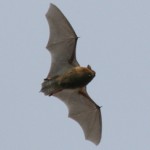
The evening bat walk on 15 September is an interesting way to experience nature at Arundel Wetland Centre or you can learn to take beautiful nature shots at the Beginning Wildlife Photography course with David Plummer on September 24-25.

Get out and enjoy the fresh air, take part in new activities and embrace that feeling of calm as you experience the health and wellbeing benefits of interacting with wildlife at any of WWT’s nine visitor centres.

It is increasingly accepted that spending time outdoors, surrounded by nature, is good for people’s physical, mental and emotional wellbeing. For example, recent studies have concluded that…

•spending time in the outdoors and in contact with the natural environment can have a positive effect on mental health[i]
• many people engage in feeding wildlife, such as birds, because they derive considerable personal satisfaction and comfort from the interaction[ii]
• contact with green spaces positively impacts blood pressure, cholesterol, outlook on life and stress-reduction[iii]

Plus, if you choose to become a member of WWT you can escape to any WWT centre as many times as you like throughout the year, for nothing!

Each WWT centre has exciting events and activities all year round, so there is always something to learn or do. WWT members can also feel good knowing that their membership helps to support WWT’s conservation work both in the UK and around the world.

Every WWT centre has excellent restaurants and gift shops and all have family friendly and disabled facilities. So head down to your nearest WWT wetland centre this September and discover an oasis of calm.

This entry was posted in Arundel news. Bookmark the permalink.

Bufflehead

Bufflehead are brilliant. They hatch from the tiniest of eggs into veritable balls of monochrome fluff, and their bold black caps and soft dark eyes prove to be very captivating. As the very smallest of the divers they are exceptionally delicate, easy to
dehydrate and very difficult to feed.

In recent years we have struggled to breed any at all, pairs either refusing to copulate or even refusing to simply associate with one another. Many solutions to these problems have been proffered; from the size of nest box holes to inappropriate genetics, but as yet nothing has worked for us. In 2010 we threw our cards on the table and swapped the lot for a new group of young strapping juveniles. Hopefully in 2012 Slimbridge will see some success…

Something has happened however down at our Arundel wetland centre. In the first week of June a large clutch of Bufflehead eggs were delivered to the Slimbridge duckery which displayed remarkable fertility and exceptional quality. These dumpy eggs sat dutifully in our incubators until they inexorably began to hatch, revealing 7 wonderful ducklings. These birds were split into two small groups, and we began to systematically teach them to feed. This involved petri-dishes of water, soaked 35% Lundi food, chick crumb, a water drip and a whole lot of patience.

Bufflehead and many other divers hatch out into a wild world of creepy crawlies and live food. When faced in captivity with a bowl of static food, their inquisitive natures often prove insufficient for the challenge… Over the years staff here have discovered that a jam jar of water placed in a petri-dish of soaked Lundi often does the trick of luring them over… As they physically move about, the glass reflects their movement in the light of the heat lamp and they are tempted  to investigate. As the Lundi is a soaked food, it is a 2in1 meal for a little Buff; instantly helping them to simultaneously hydrate. After they have the hang of it and there are some lovely dark poos in their coop, we slowly wean them onto dry Lundi and then onto crumb.

In the second picture you might be able to discern a little Puna Teal. “Why” I hear you ask? As these Buffs were so important to us we decided to provide them with a surrogate or two. The theory goes that placing a dabbling species such as a Teal or slow growing Mallardy type within the group can teach a non-dabbler to feed by example. As the yolk sack of the young teal is absorbed the innate need within them to shove their beak into surrounding objects to ascertain whether they are edible or not kicks in with a vengeance. Upon finding edible foodstuffs they do such a good job of enjoying it, that divers try to get in on the action and learn to feed by example. In this case it worked an absolute treat, and on day three I regularly found the entire brood scampering away from the Lundi dish every hour or so.

As you can see the 7 have been re-united along with 3 other Buffs sourced from a local breeder, and they are happily ensconced within our fresh water diving tanks, feathering up and frolicking.

The other centre which commonly holds Buffs is the Llanelli centre, but the age range of the birds there is at the higher end of the spectrum. Despite this we have received positive early reports, so with fingers AND toes crossed, maybe we can mesh two broods in 2011 for future breeding success!

Post a comment

24/06/11 kathy Valier: Fascinating to read about the intricacies of teaching bufflehead ducklngs to feed on inanimate food. Congratulations on your success!

This entry was posted in Duck diary. Bookmark the permalink.

Would you like our ottergraphs!?

Asian short-clawed otters Rod and Musa, by Charlie Syme.Our Asian short-clawed otters, Rod and Musa, have been making a splash in the local media, following the official opening of their new enclosure by BBC Look North’s Trai Anfield earlier this week.

TV, radio and press coverage has ensured that their cute faces and cheeky antics have been seen by people across the local area, and the gregarious pair are now looking forward to greeting new fans at our Animal Magic event this weekend (Sunday 26 June – visit our events pages for details).Rod and Musa get 'papped!'.

John Wear from Sainsbury's in Washington, BBC Look North presenter Trai Anfield and WWT Washington centre manager Jane Ramshaw.Marketing manager Leanne McCormella said: “The launch of Rod and Musa’s new enclosure was a great success and we hope that people living in the local area will now feel inspired to come and visit them, as well as the hundreds of rare waterbirds, woodland birds, amphibians, insects and amazing scenery that they share their home with.

“We’d like to say a big thank you to Sainsbury’s in Washington, who provided Rod and Musa with a huge box of tasty fresh fish for the occasion. They can’t wait to get their teeth stuck into more!”

This entry was posted in Washington news. Bookmark the permalink.

Greater Magellan developments

Yay! After a difficult incubation period with cracked eggs and an abandoning mum, Mrs. Magellan’s eggs finally hatched in our incubators to produce 5 wonderful goslings…

These little stripy balls hatched out to great applause from duckery staff after the nail-varnish repairs on their eggs proved successful. Their dark eye patches give them a menacing air, but their activities are far from illicit… After 2 days under a heat lamp recovering from their hatch, they were put outside with a group of 5 Abyssinian blue-winged geese where they enjoy nibbling grass seeds, performing a bit of leg ballet, and general laziness. Unless young geese are put to grass very quickly indeed they will end up tucking into each other and not least the polyester carpet so strong is their innate desire to graze! As such then these 5 babes found themselves out in the early June drizzle at just three days old for their first taste of Gloucestershire.

As is typical with South American Sheldgeese, these guys will grow very slowly indeed. Whereas true geese species such as Snow geese can hatch and fly away within 70 days, Sheldgeese can take more like 5 months! As non-migrants their feather growth reflects this, their gorgeous stripy feathers covering the body and neck first, leaving the little stumpy wings well and truly until last! I am crossing my fingers for a tasty 2:3 ratio…

Mum and Dad have since been placed into a pen on Tommy’s Loopway, so head on down and whisper quietly that their goslings are doing absolutely fine :)

Post a comment

24/06/11 Mo Warren: Thanks you Phoebe for raising ‘my’ goslings. Although I still miss my Upland geese, it was obviously the best move to give them to you! The gosles are absolutely gorgeous. Mo & Ron Warren

22/06/11 Kathy Valier: How exciting to see the results of the eggs laid so quickly after the Magellans’ arrival and your fine nail polish work! They do look like bandits or the Lone Ranger.

This entry was posted in Duck diary. Bookmark the permalink.

Black-headed ducks

These ducks may be brown, dull, and mousey in many aspects, but they are absolutely stunning in others!

The black-headed duck or “cuckoo duck” is to me the most fascinating and innovative of all the birds we keep at Slimbridge. The birds live solitary lives, spending much of the year alone and only coming together to mate. The male has a simple throat gurgle and inflation, which although not very striking in the scheme of things appears to do the job! Black-headed duck are pretty verile and copulation is generally very successful. Sperm is hoarded by the female and she will lay three or four eggs in the nests of any species within reach; from different species of waterfowl to moorhens and coots! Neither bird then takes any further part in parenting and disappear off from whence they came.

The eggs sit under the host bird and are turned and incubated along with the host eggs. Upon hatching the little guys snooze for 12 hours or so absorbing the yolk sack and drying off, before jumping ship as it were and just heading off into the wilderness to rear themselves!

In the 90′s staff were collecting around 12-14 eggs a year from host nesting species including Rosybill and Puna from our South American pampas pen. They were such an assumed acquisition that soon they were endlessly giving pairs away! Collected up fresh and put under bantams the eggs proved amazingly resilient to addle and we soon discovered they could be put under just about anything and still hatch very successfully. Over time however we soon became so used to passing them on that we were not adequately aware of the dangers that were afoot. the host birds in the pampas pen were aging  and nesting females became fewer. Suddenly there was nowhere for them to lay their eggs and after two difficult years everything just stopped laying altogether.

Our experience of incubating and rearing from fresh is that the incubation period is in fact 19-22 days. The eggs are easy to identify for although being classically bulbous and white the shell has a visible porosity to it and are often punctuated by blocked dirty pores. The hatch is pretty quick, and the duckling is distinctive in that it makes no coop mates or friends, and is an individual from the first. It was found that wet-rearing was ideal with species such as white-headed duck and Maccoa, and that they were typically silent. We cannot prove that calling does not occur within the egg and after, but considering that in the wild they need not coordinate their hatch with any other under the host and they swim off alone to rear themselves in the wilderness, we had assumed they had no need of one. Mark Hulme once did a study for WWT on alarm calls, and although the BHD duckling was often seen following the host briefly during periods of stress, not a single note was uttered.

This was highlighted to us just 2 weeks ago, as when the duckling that had hatched unexpectedly under a call duck was being rounded up, when it went to ground it was totally and utterly as silent as the grave. As our breeding aviaries are not as fruitful as their natural homeland, self-rearing was never an option! Here he is safe and sound in the company of some little stifftails.

Post a comment

17/06/11 Kathy Valier: Pretty amazing that the hatchlings make it on their own. That must be the ultimate in precociousness

This entry was posted in Duck diary. Bookmark the permalink.

Black bellied whistling ducks :)

These little guys have worked hard to become the universal Downy Duckling Day favourite this year, and they really do deserve it!! 

The black-bellied or southern red-billed whistling duck is a relatively
common duck native to the southern USA, Mexico and South America. Typically non-migratory with a great deal of lazy character, these ducks live relatively cosy lives dabbling at the edges of golf courses, modern developments and cultivated land as well as the more natural marshes that they have come to call home. They have come back from the threats of over-hunting and habitat destruction with remarkably good grace; adapting to their new environment with a certain amount of flair! Pairs are believed to be monogamous; a rare occurrence for duck species compared to geese and swans. 

They nest naturally in tree hollows or cavities but have latterly learnt to use ground nests as well as nest boxes provided for their cause. Clutches can range from 8 eggs to 18 eggs, spherical in shape and visibly porous, with very little nesting material or vegetative matter to protect them. The ducklings hatch out to all extents and purposes like little fluffy bumblebees! Their distinct black and yellow stripes and rotund shape make them appear to levitate upon their spindly long legs as if they are floating. Their general attitude in captivity is also hilarious, copying the traditional whistling duck aspect of sticking their bottoms out to face the danger, and in this case scrumming their clutch-mate into the wall! They often manage to sleep standing up, with their heads rested on the shoulder of a friend looking absolutely gorgeous. 

As they grow their delightful aspect does not change. Learning very quickly that their keepers are of no threat they begin to mouth angrily at you as you pass as if warning you off their patch. Typically there is a ring-leader who initiates this, and then a few others will flank him as well as if saying “yeah go on!!” They look super smart throughout their early lives, well preened and tidy until they hit the teenage stage when suddenly their gorgeous stripes become interspersed with dull.. brown.. feathers… 

Suddenly before you know it the magic has all gone. Thankfully that is still a little way off yet this year… 

Post a comment

13/06/11 Magellan Mo: Hope these little stars are still attractive by the time we can get to see them! Well done Phoebe for nurturing them as is your Life’s Purpose! Mo

This entry was posted in Duck diary. Bookmark the permalink.

The duckery tour begins . . .

Ducklings hatching at this time of year make Castle Espie Duckery Tours a day out to remember. With the largest captive bird collection anywhere in Ireland, you will see many breeds which you quite simply, won’t see anywhere else!

Every Saturday and Sunday in June at noon, 2pm and 3pm, join us to learn more about how we conserve and protect for future generations of ducks and people!

Also another brilliant date for your diary; Saturday 18, Fathers Go Feral is a Father’s Day event with a difference. Now into the 4th year this one books quickly. A chance for dads everywhere and their kids to learn about bush craft, camp out under the stars in Castle Espie’s woodland and learn more about nature. Starts at 7pm on Saturday 18 June; adults £30; children £20. Booking is essential with the centre in advance.

Bat night completes the events for the month. From 9pm on Friday 24, the evening is given over to these amazing winged mammals. Adults £5 and under 16’s £4. Booking essential as places are limited.

Lastly, a chance to Walk on the Wild Side on Saturday 25 and Sunday 26, is an exciting new edition to our calendar of events. This volunteer-led interactive site tour, promotes health and happiness while looking at foraging, rambling and leaving no trace – from 2-4pm.

Aside of charged events others are at usual wetlands admission.Castle Espie is open daily from 10.00am. Access to the car park, shop, Loughshore Café and Graffan Gallery is free.

For more information on these and other events please call or click 028 9187 4146, wwt.org.uk/castleespie

ends.

This entry was posted in Castle Espie news. Bookmark the permalink.