 Dumping Grass and Garden Cuttings on the Reserve
Unfortunately, we are experiencing an increase in incidents of people dumping their garden waste on the reserve. It should be noted that the practice of waste on the edge of ditches is illegal fly-tipping and can lead to a number of different issues such as blocking drainage systems, causing local flooding and environmental damage.
Flood risk: Cuttings have the potential to wash into watercourses, clogging channels and storm drains which leads to property and road floods.
Water Pollution: As green waste decomposes in water, it strips out dissolved oxygen and releases excess nutrients, killing fish and triggering suffocating algae blooms.
Habitat Damage: High nutrient loads from decomposing clippings smother and kill native plants, spread invasive seeds, and introduce plant diseases or fungi.
Livestock risks: Grass clippings can ferment quickly, heat up, and cause fatal digestive issues or poisoning if livestock consume them.
Legal Penalties: Disposing of garden waste outside your property boundary or in public spaces counts as fly-tipping under UK law, carrying fixed penalty notices or prosecution.
Please consider better alternatives such as leaving cuttings on the lawn or adding to a home compost bin mixed with dry brown waste like twigs or cardboard. Use your local council’s green waste collection service or take the clippings to a household recycling centre.
The WWT Reserves team works tirelessly to protect and enhance a mosaic of habitats and the wide array of species found across the Steart Marshes and Bridgwater Bay reserves. We thank you for your understanding on this matter.
Wardens and volunteers have been busy cutting back some of the young growth next to hedgerows which we laid last year around Polden screen. This creates a dense, upright hedge which we can access to lay in the future, and means that the hedge won't grow across the path whilst we can't cut it during nesting bird season. Some areas of new growth further back from the path are being allowed to grow into thicker areas of hedge and scrub patches.
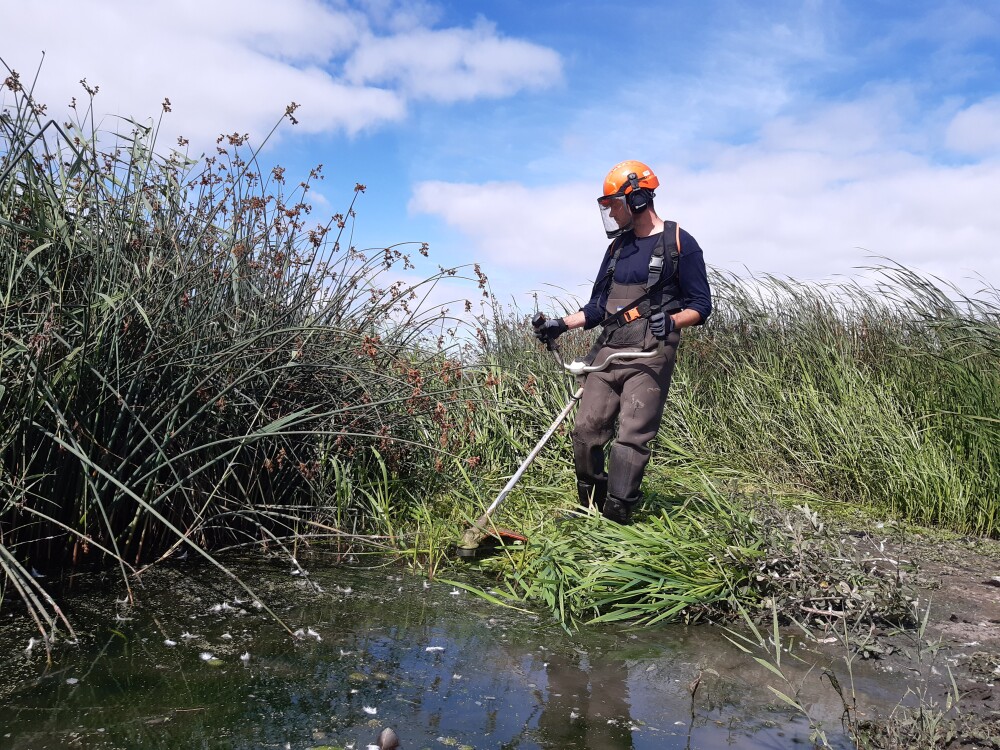
We've also been cutting some reed around lagoons on Stockland in front of the viewing platform, to keep areas of open water and create variety in the age and height of the reeds at the edge of the water, as well as giving a better view from the platform. This was all cut with the Softrack. Some of the willows in front of the platform have also been cut back so the water is visible.

Audio events and history walks are still bookable on our website events page...
Come and experience the history and the sounds of Steart Marshes including voices of the local community, wildlife, water & the second world war influence on the area.
Sundays 20th and 27th September – The Three Waters sound experience
Sunday 4th October – History walks
See our latest updates @WWTSteartMarshes on Facebook and Instagram