Globally dragonflies can be found on every continent except Antarctica. More than 50 species have been recorded in the UK, with several regularly spotted at WWT Caerlaverock including four-spotted chasers, emperor dragonflies, and common hawkers.
Thanks to carefully managed wetlands and ongoing habitat creation, dragonflies thrive across the reserve. WWT Caerlaverock is recognised as a dragonfly hotspot by the British Dragonfly Society, and our monitoring surveys help us track how species are responding to habitat changes and our wetland restoration work.
When is the best time to see dragonflies?
Dragonflies begin emerging in late spring and early summer, reaching peak activity through July and August. Warm, sunny days with minimal wind provide the best opportunities to spot them as they patrol wetlands in search of food, mates and breeding sites. When the sun comes out, look to sheltered plant life like hedgerows and tall grasses, or over the reeded areas of our ponds, and you should start to see them darting around.
Species to look out for
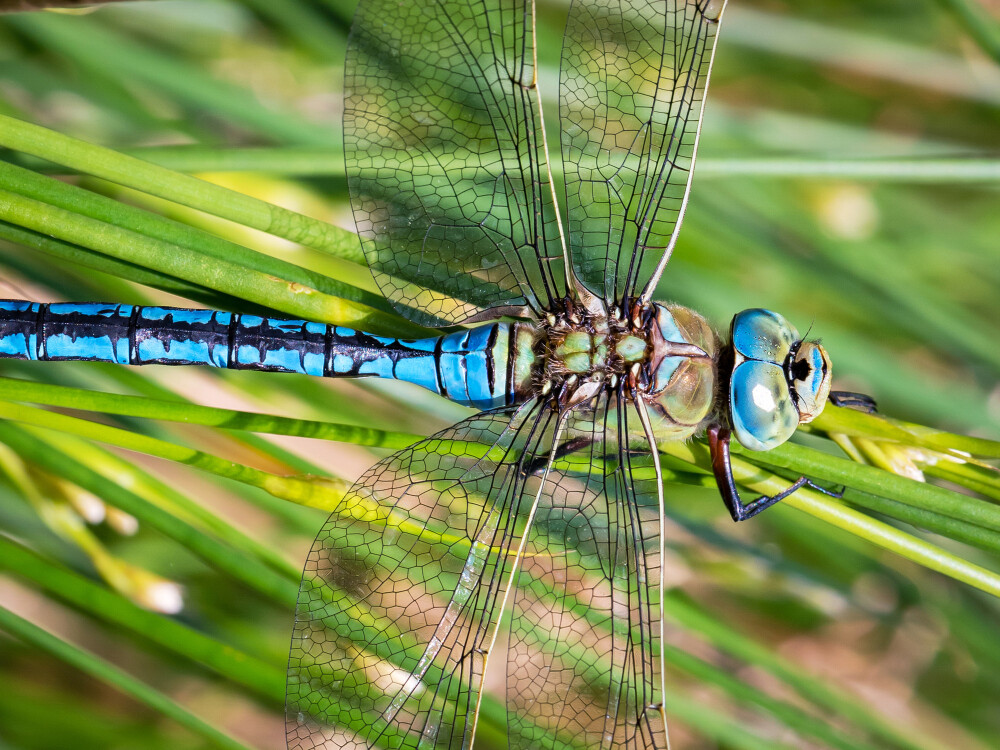
Emperor dragonfly (Anax imperator)
This large hawker dragonfly is a very recognisable species, the males have a token sky blue abdomen and a dark central line, while the slightly smaller females have a green abdomen and dark central line. They may also be recognised by their flight pattern – they often fly with their abdomen tilted slightly downwards.
Where to look: Heavily vegetated ponds, like the edges of Teal Pond and Back Pond.
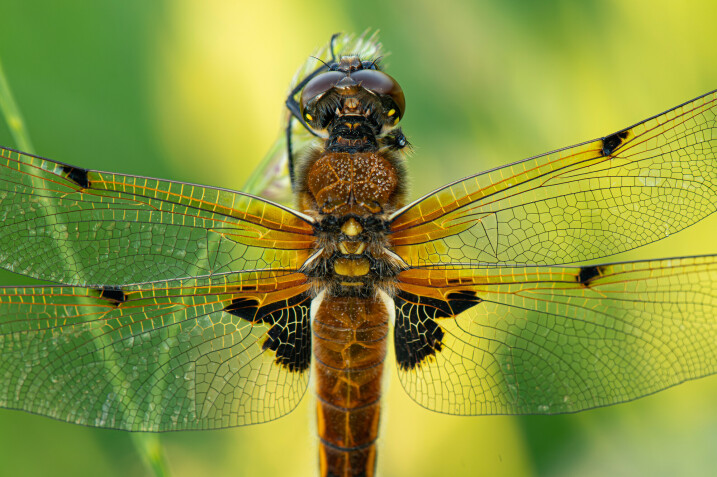
Four-Spotted Chaser (Libellula quadrimaculata)
A self-explanatory dragonfly, the key element to their identification are two tell-tale dark spots on each wing (4 spots on one side, 8 in total). Both males and females exhibit the same distinctions, including an amber to dark brown abdomen, often with rows of yellow spots running down either side.
Where to look: Ponds with more open water spaces, as well as emerging vegetation.
Broad-bodied chaser (Libellula depressa)
One of the most exciting recent additions to the reserve, the broad-bodied chaser is easy to recognise by its unusually wide abdomen and dark wing patches. Males have a striking powder-blue abdomen, while females are yellow-brown. This species was first recorded on the reserve in 2025.
Where to look: Newly created ponds or those that have undergone recent management work. Especially ponds with open margins and patches of bare ground.
Southern hawker (Aeshna cyanea)
A large and impressive dragonfly with bright green markings. Unlike other hawker species, it has large pale patches on the thorax and bands towards the end of the abdomen rather than spots.
Where to look: Saltcot Loaning, pond margins and sheltered wetland edges.
Black-tailed skimmer (Orthetrum cancellatum)
First recorded at WWT Caerlaverock in 2025. Spot them often perching on bare ground beside water. Males have a blue abdomen with a distinctive black tip, while females are yellow with black ladder-like markings.
Where to look: Pond edges, bare banks and sunny wetland margins.
What else might you see?
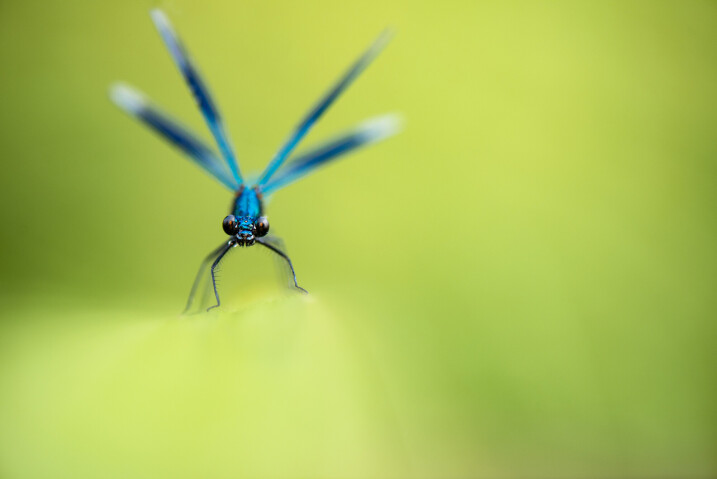
While searching for dragonflies, keep an eye out for other summer wildlife. The reserve's paths come alive with butterflies including red admiral, comma and meadow brown, while ponds and wet grasslands support an abundance of insects, birds and other wetland wildlife. It is highly likely that on your walks to identify dragonflies, you will see a large number of damselflies, including azure, large red, emerald, and blue-tailed. Walking along the Lochar Water path may even give you an opportunity to see the wonderful, banded demoiselle damselfly.
Whether you're joining us for the Dragonfly Festival or simply enjoying a summer walk, pick up a spotter sheet and see how many species you can find. You never know what dazzling dragonfly might zoom past.
Pick up a spotter sheet
Whether you're joining us for the Dragonfly Festival or simply enjoying a summer walk, pick up a spotter sheet and see how many species you can find. You never know what dazzling dragonfly might zoom past.
Plan your visit