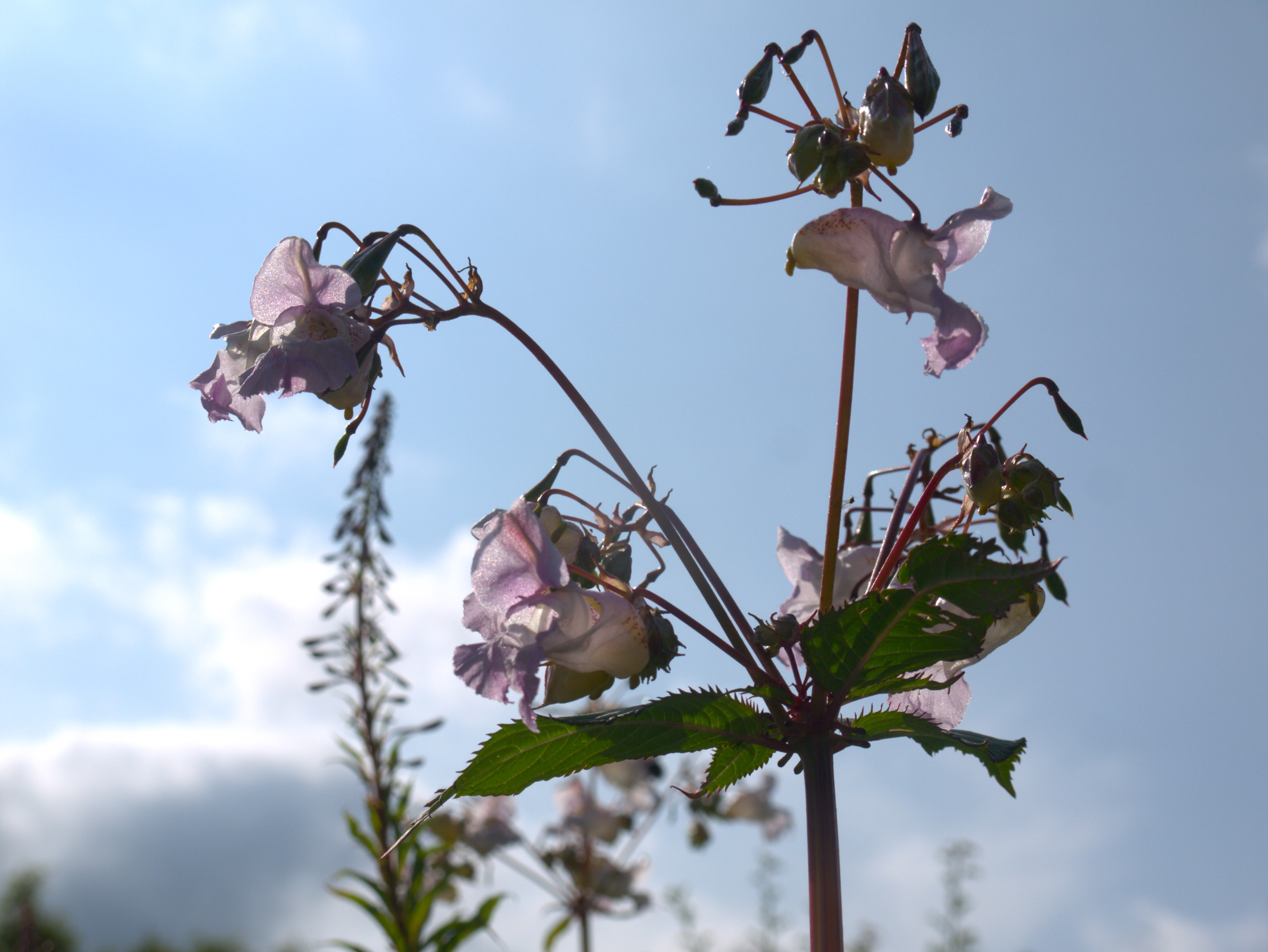
What is it?
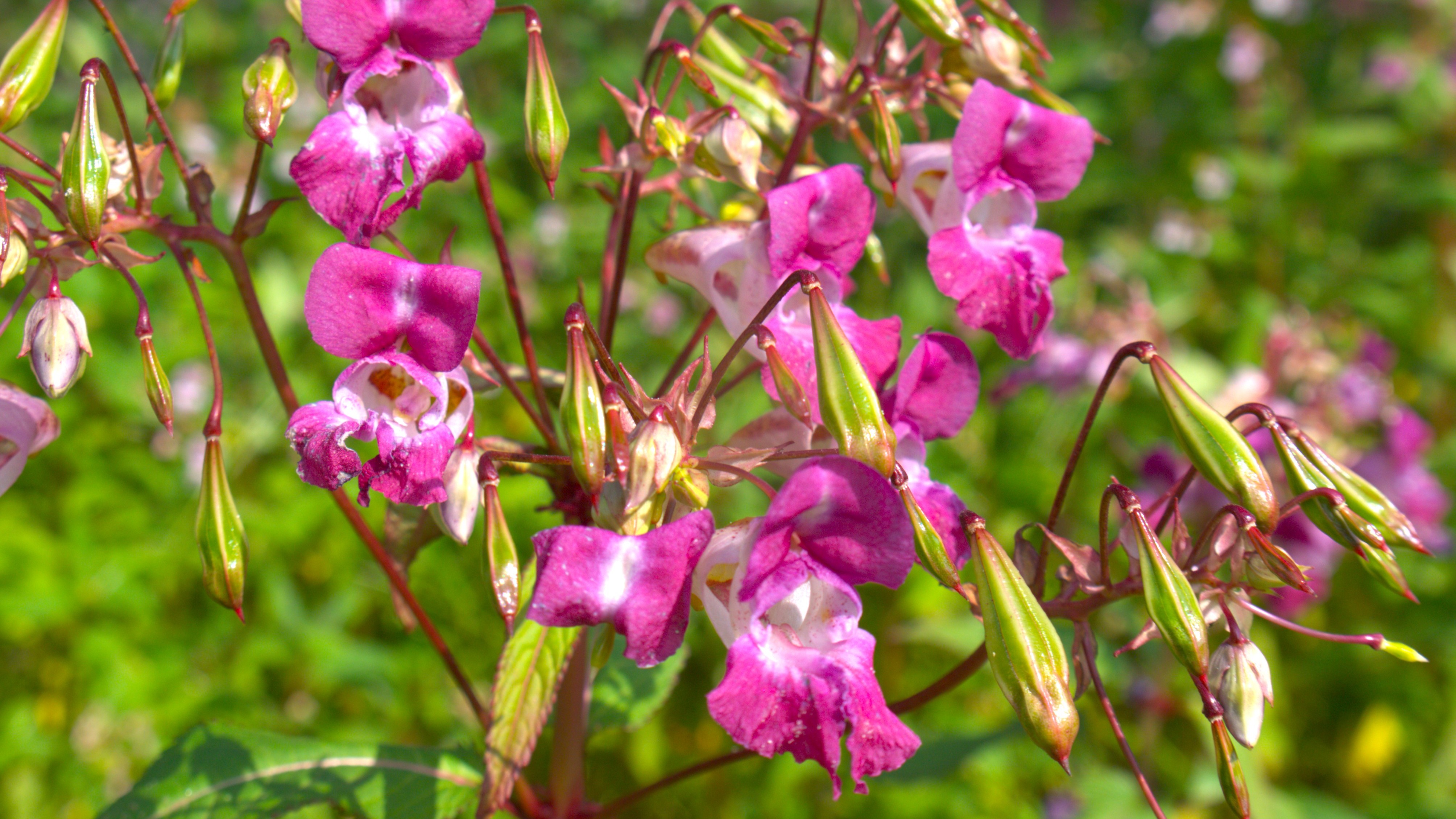
Himalayan Balsam (impatiens glandulifera) is a fast-growing annual plant (up to 2m high) with large pink flowers, hollow stems and a very shallow root system. It is originally from the Himalayas and was first introduced in 1839 as an ornamental garden plant in Southwest England.
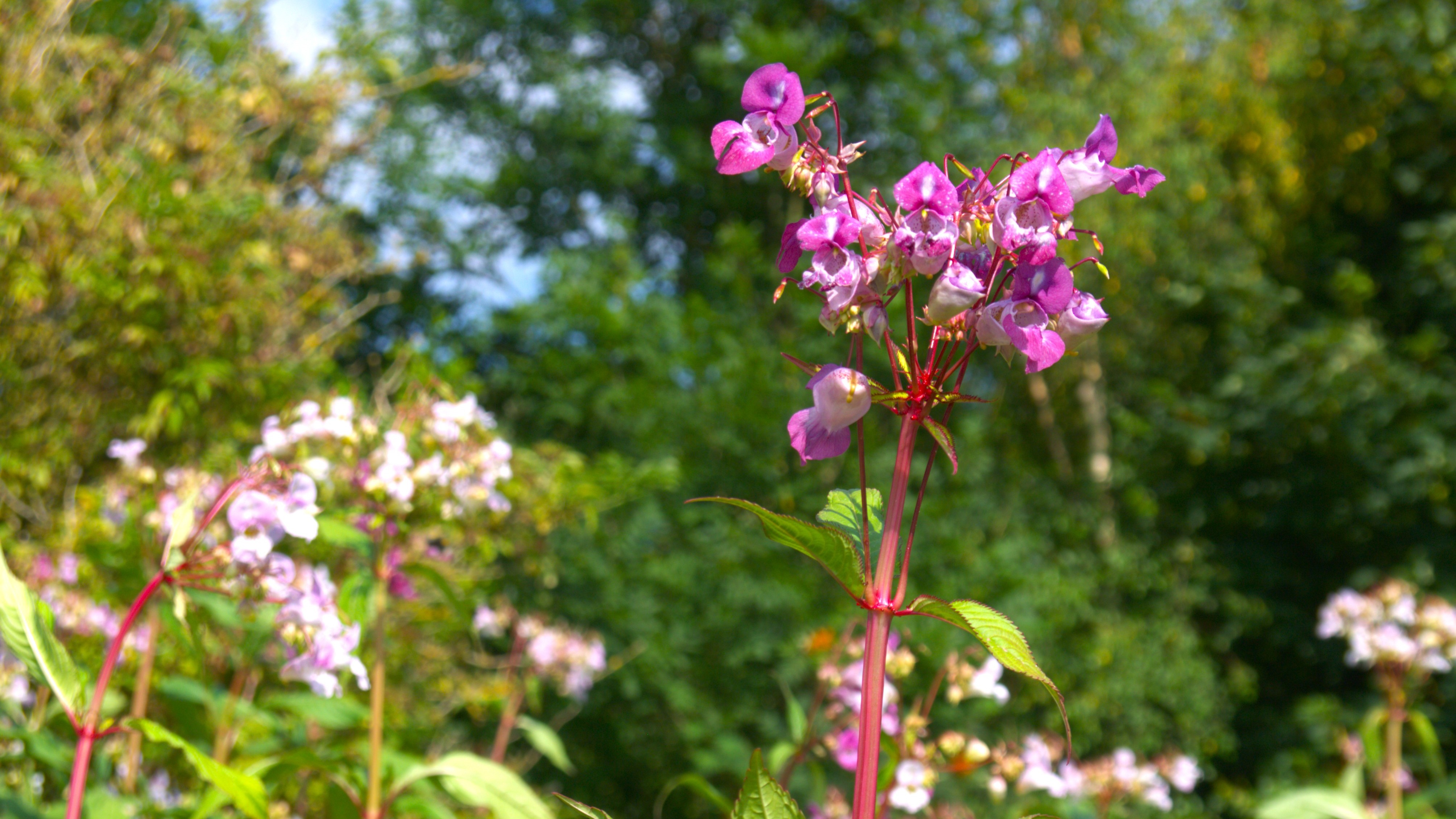
Why is it bad?
Himalayan Balsam is classed as an invasive non-native species (INNS) under Schedule 9 of the Wildlife and Countryside Act 1981 due to its ability to rapidly spread and dominate areas. Each plant can produce up to 800 seeds contained in seed pods which explode when ripe, spreading seeds up to 7m away. Once established in an area, it quicky colonises, outcompeting native species and contributing to bank erosion due to the exposed soil it leaves when it dies back in the autumn.
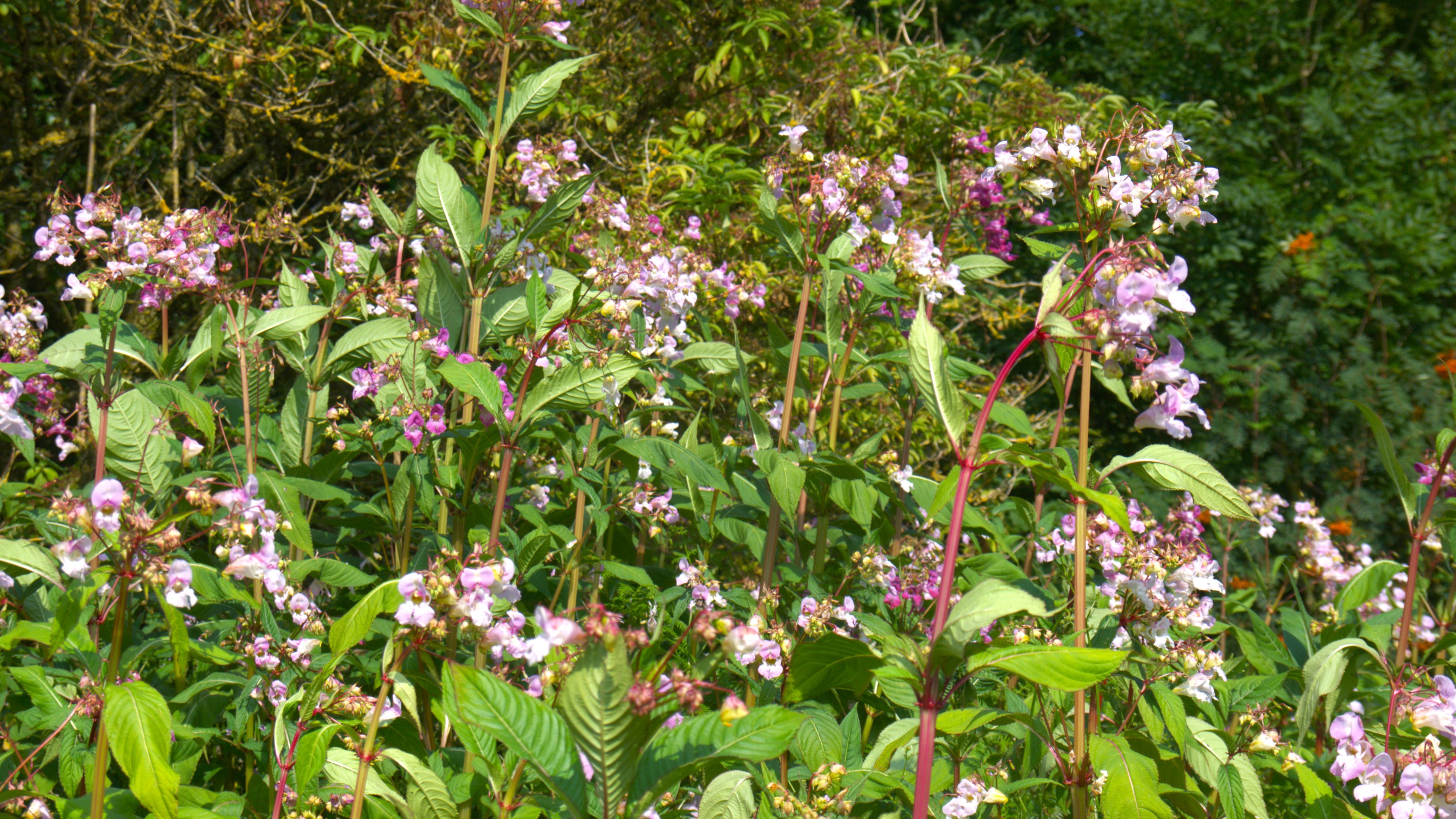
Its main dispersal corridors are via rivers and waterways, often lining the banks of infected river systems. Unintentional spread through contained soil and planting of seeds by people due to the attractive nature of the plant also contribute to its distribution.
What can we do?
As part of ongoing INNS monitoring, reserve staff have been carrying out surveys of local waterways to map Himalayan Balsam distribution as it moves towards the reserve. This will allow us to swiftly remove any individuals before they can become established to protect onsite habitats.
Management practises include hand pulling before seed maturation, ideally in spring and early summer when plants are still small. Care must be taken to remove the whole plant including the root system to prevent regrowth. As the seeds can stay viable in the soil for up to 2 years, regular monitoring and removal of new seedlings must continue to ensure complete and successful eradication.
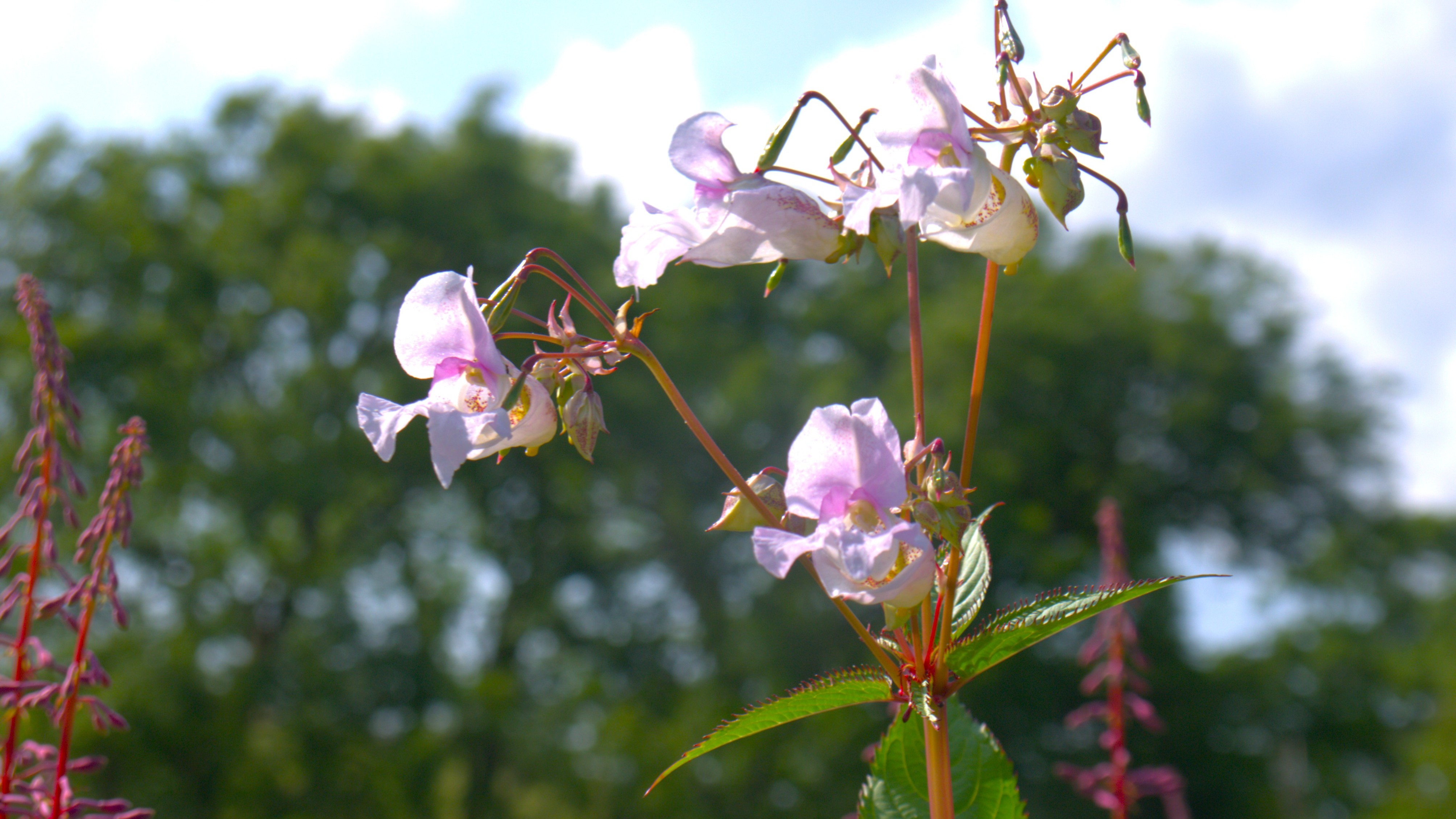
How can you help?
Take part in citizen science and contribute to records of Himalayan Balsam across the region. If you spot some Himalayan Balsam whilst out and about, snap a picture and record the location using a recording app like iRecord or iNaturalist. These records feed into the National Biodiversity Network (NBN) and the Southwest Scotland Environment Recording Centre (SWSEIC), helping to build a map of INNS presence and inform management efforts.
Volunteer with us! Sign up to be a Reserve Assistant Volunteer to help with INNS monitoring and management across the reserve. Our practical volunteers meet every Thursday to carry out a number of tasks vital to keep the reserve up and running. You can find out more and apply here.
By Emma Chinnery, Project Officer