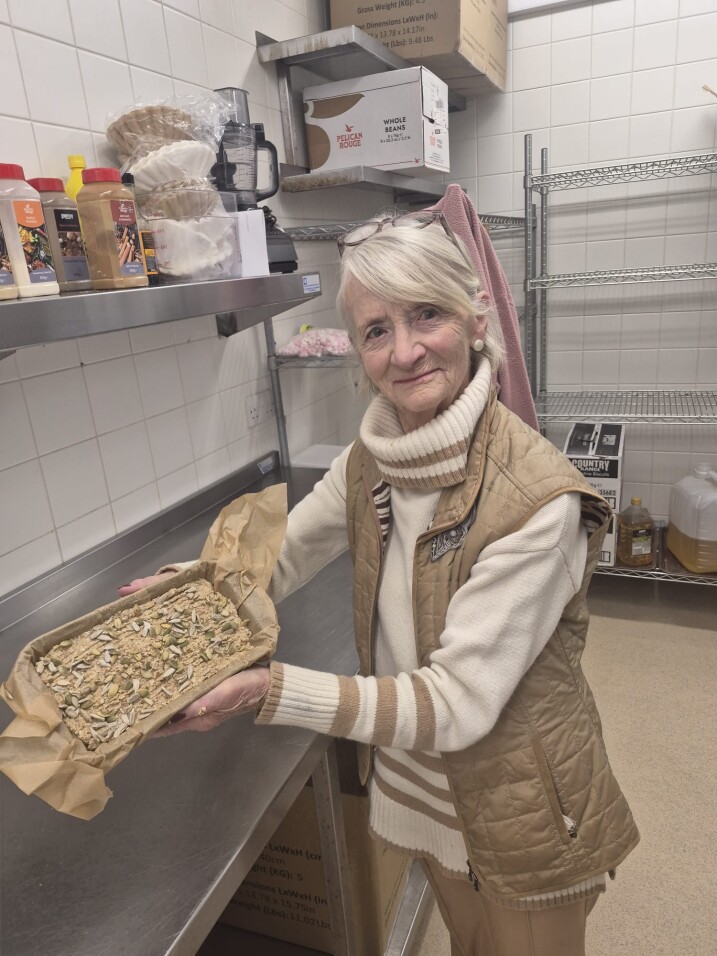
The Story of Castle Espie's wheaten bread. By Julie Mackie.
The story begins shortly after Paddy had purchased Castle Espie from Tony McCleery in 1978.
Work had begun to turn a residential home into the Castle Espie Conservation Centre and Gallery when we decided to join an ornithological meeting in Norfolk. On our way home, Paddy spotted an Art Gallery that looked tempting, so in we went. Paddy looked at pictures but I had spotted a table in the back of the Gallery with a welcoming pot of coffee on it and Norfolk being rather chilly in January, I made a bee-line for it. The die was cast!
Our conversation for the rest of the journey was about my thoughts of having a Coffee Room at Castle Espie. As I said then, when people arrive to look at pictures and a waterfowl collection, they would be encouraged to return if there was coffee and cookies as well.
This worked very well but I then noticed that our visitors were eating lots of these cookies round about lunchtime, so another catering initiative was planned. This time it was for soup and wheaten bread. Before I was married, a friend had made some particularly good wheaten bread scones when I was with her, and she gave me the recipe with the strict instructions only to use a special brand of course Wholemeal Flour. So this is how her recipe came to Castle Espie's kitchen and instead of scones, I made bread.
Soup and wheaten bread seemed popular so I added chicken liver pate, chicken pie, fish pie and a selection of puddings to the lunchtime menu. The pate was a speciality of Jane Higgenson, and the chicken & apple pies came from Mary Lou Pooler. Both lived down the Tullynakill Road which was very convenient.
I made the fish pie and indulged in including my favourite spiced apple crumble, crepes with orange sauce & ice cream with chocolate sauce.
In order to free up the tables for second sittings, I served coffee upstairs in what we called The Observation Room - now The Raven Suite.
As time went on / was asked to do weddings, wakes and birthdays, but my favourite occasion was when Castle Espie was chosen for the dinner following the presentation of the Christopher Ewart-Biggs award. Seamus Heaney was there and how lucky we were to have his signature in the Visitors Book.
So in a way history seemed to repeat itself when I called those wheaten loaves
'The building blocks of Castle Espie
After all it was Robert Murland's bricks that made Castle Espie the success it became in the 19th Century and now Tracey Johnston is replicating the Murland bricks to continue their story in the 21st Century.