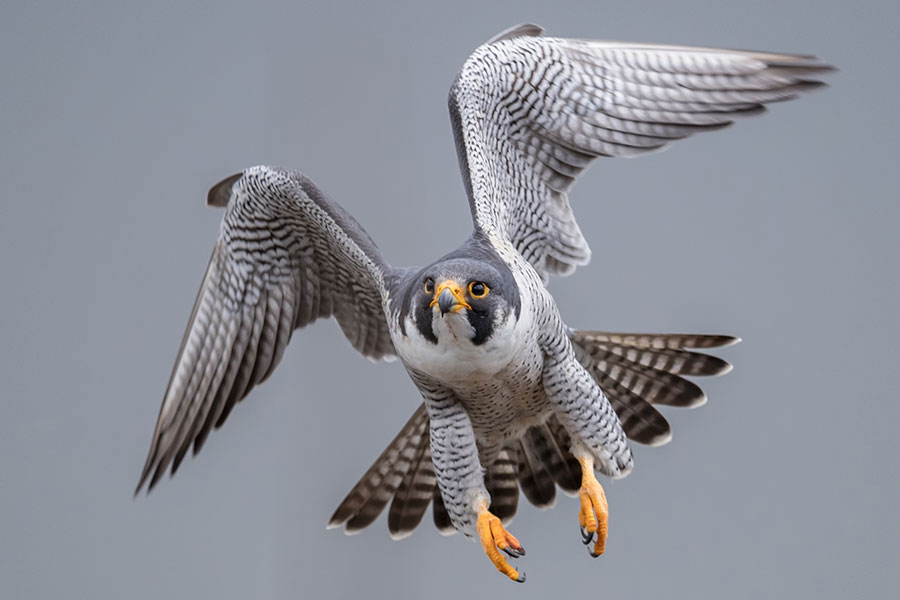
The following sightings were taken from the reserve at Castle Espie during a rising tide. The bird of the week this week is the Peregrine Falcon. Peregrines have a dark head, grey back and black bars on a white chest, females are a lot larger than the males. A species notorious for its speed, it can reach over 200mph during dives. Peregrines are avivores, which means they mainly eat birds, this is the reason for their impressive dives in which they capture birds in mid-air. To protect themselves from the high impact, they will hit the wing of their prey with clenched feet and then catch the falling dead bird. Specialised nostrils direct airflow away from the birds’ lungs during dives so they avoid irreversible damage from the extreme air pressure created. These birds can live over 20 years in the wild and will mate for life, returning to the same nest site each year. During the 20th Century, Peregrines suffered serious declines due to pesticides like DDT and dieldrin, which are now banned. These caused eggs to have extremely thin shells which lacked calcium so they were prone to breakage and very few chicks hatched. Now Peregrines are the most widespread falcon in the world and some areas have the highest populations they have ever had. These birds are able to take advantage of urban areas, nesting buildings in cities and preying on pigeons.
Recent Sightings 16th November