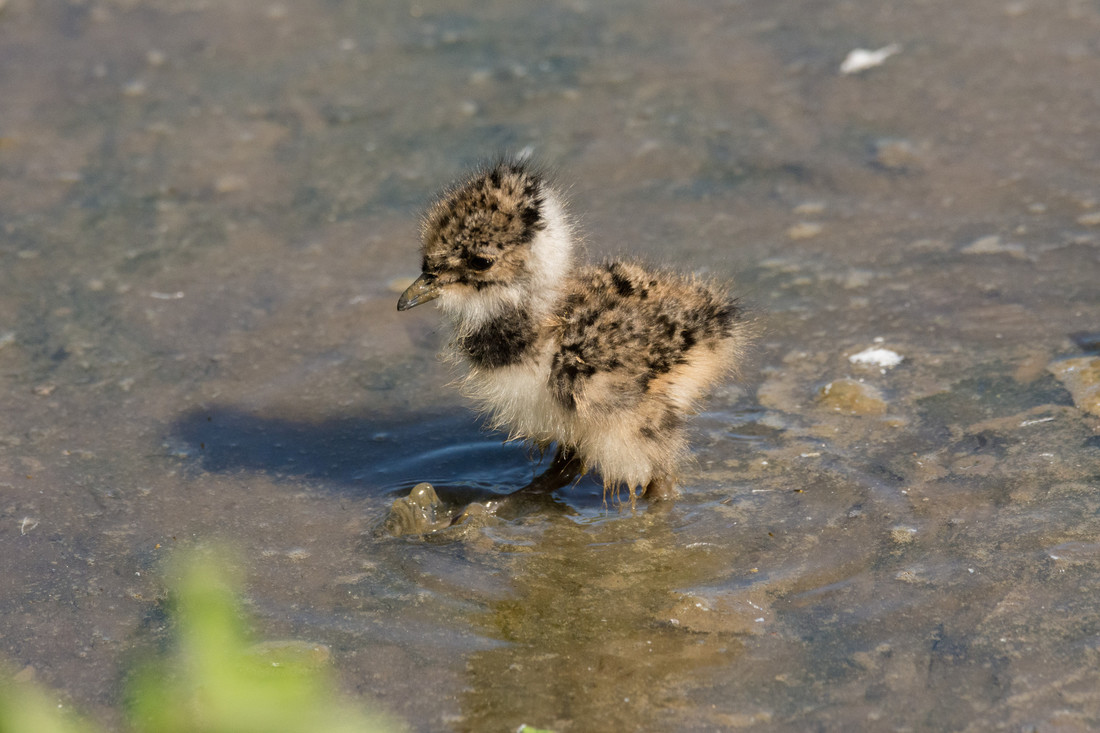
A Lapwing chick wading, credits WWT.
There has been some exciting news on the reserve this summer, with two Lapwing chicks successfully fledging after the breeding season.
Earlier this year, three pairs of Lapwings nested on the reserve, and in June we shared the encouraging sight of a young chick reaching the juvenile stage after several years where breeding success had been limited by predation. We're now delighted to confirm that two chicks have successfully fledged, marking a positive outcome for this iconic wetland species.
This success comes alongside a new approach to managing the reserve's grazing marsh. For the first time, we've kept the grazing marsh wetter than usual throughout the summer, creating ideal feeding conditions for both breeding birds and migrating waders.
Adam Salmon, Reserve Manager at WWT London Wetland Centre, said:
"We're delighted to see two Lapwing chicks successfully fledge this year. After several years of limited breeding success, this is a really encouraging result and shows how important careful habitat management is in supporting wetland wildlife."
The wetter conditions are already proving beneficial, with autumn migrant waders beginning to drop into the reserve to take advantage of the rich feeding habitat as they make their journeys south.
Lapwings have suffered significant declines across the UK, making every successful breeding season an important milestone. While there is always more work to do, seeing two young birds successfully take flight is an encouraging sign that the reserve continues to provide valuable habitat for wetland wildlife.
As summer turns to autumn, visitors can also look forward to seeing more migrating waders arriving on the reserve, taking advantage of the improved conditions on the grazing marsh.