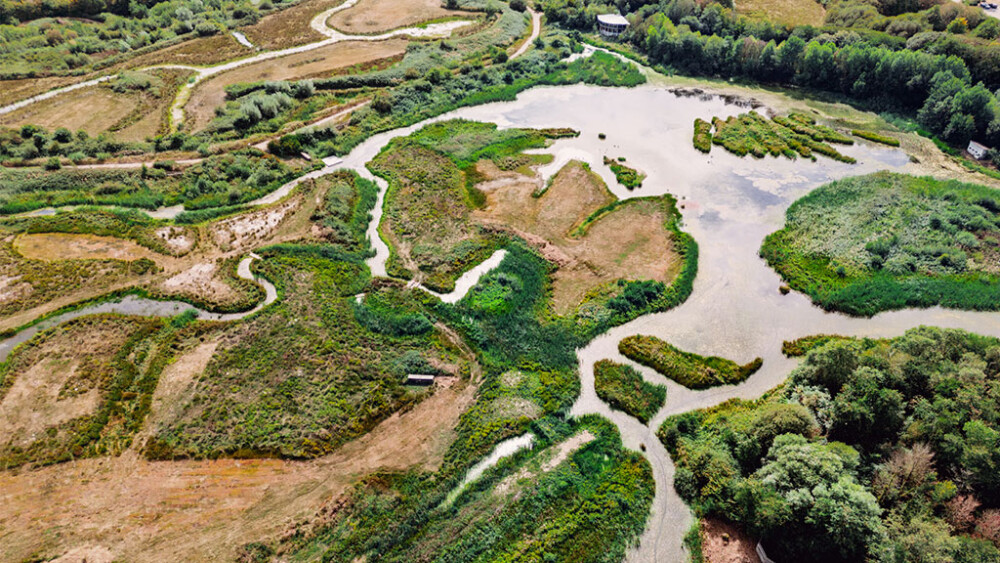
Header image: The Millennium Wetlands at WWT Llanelli from the air © Harley Todd/WWT
I recently posted on LinkedIn about hope, fear and preparedness with the climate crisis.
Hope at the tipping point we are seeing with society starting to speak up for action – people are telling me they see the threat climate change poses to our daily lives. That enough is enough: we need to act.
Fear that we are missing the critical need to mitigate and adapt to climate change. And fear that nature, which is the original technological solution for us to mitigate and adapt, is being trashed and instead we scrabble for new technology to solve the climate problem.
It prompted a great discussion on LinkedIn – thank you all. Because we do need to be prepared: the pathway we are now on demands we act. So, what do we do?
The scenes we’ve witnessed across the UK this summer tell a shocking story of nature pushed to its limit.
Landscapes we have quite literally squeezed dry are unable to provide the resilience they once did. We’re seeing first hand the very real impacts of climate breakdown right on our doorsteps: blackened heathlands, forests that continue to burn, farmland unable to sustain crops, and streams, rivers and brooks that are running dry.
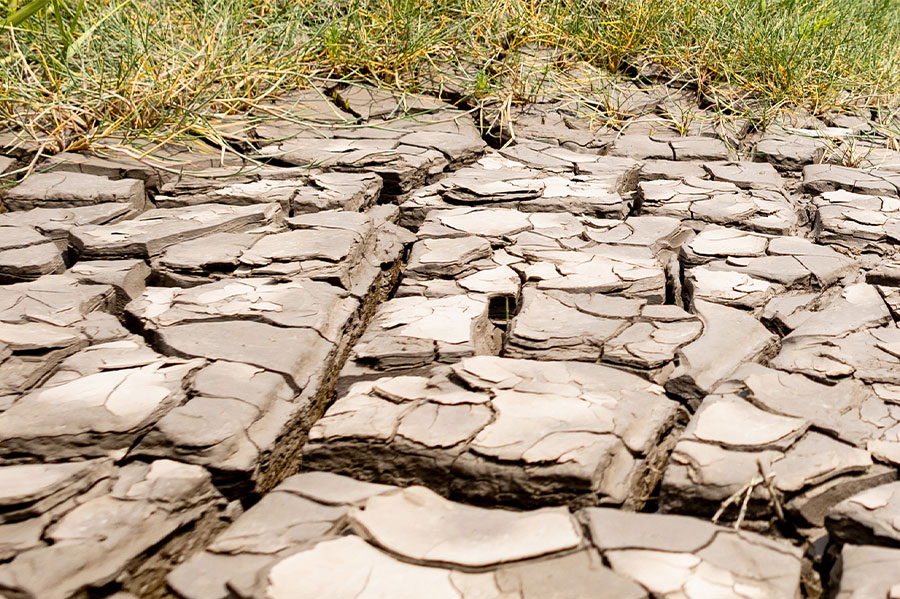 Dry, cracked, sun-baked mud © Sam Walker/WWT
As storms roll in, our headlines will undoubtedly turn from drought to floods, our hardened soils unable to absorb the rain as it falls.
The impact on our wildlife is devastating. The impact on people and communities equally so.
But here is another picture worth sharing. That green patch sitting beside a parched, yellow landscape tells a different story. From the air, it is clear to see the benefits of wetlands.
Following weeks of wildfires and months of extreme heat, the smell of smoke hangs in the air in south Wales like many other areas of the country. But the wetlands at WWT Llanelli is a picture of lush green and muddy brown. It holds water where it should be, giving it space, allowing it to flow through the landscape, holding back drought and holding in floodwaters.
As the wetland charity, WWT has been championing the superpowers of wetlands for eight decades. We know that wetlands are incredible. We know they have the power to store carbon. We know they can reduce, slow or even halt the impacts of climate breakdown – the impacts that we’re seeing right now, across the country.
We know that wetlands can create healthier places to live, support nature and – more important than ever – help us adapt to the realities of the climate crisis.
1.2 million hectares. That’s how much wetland potential sits in England.
At a time when we need to build climate resilience, that figure can no longer be ignored.
As is always the case in a crisis, communities have come together. The emergency services continue to do a heroic job. And we’ve seen once again, what people can do when faced with an emergency.
But an emergency shouldn’t be the wake-up call. This wake-up call is one that we, as a country, have slowly walked into.
We’ve let the UK run dry.
To build a resilient future, we need real ambition. And wetlands need to be part of that ambition.
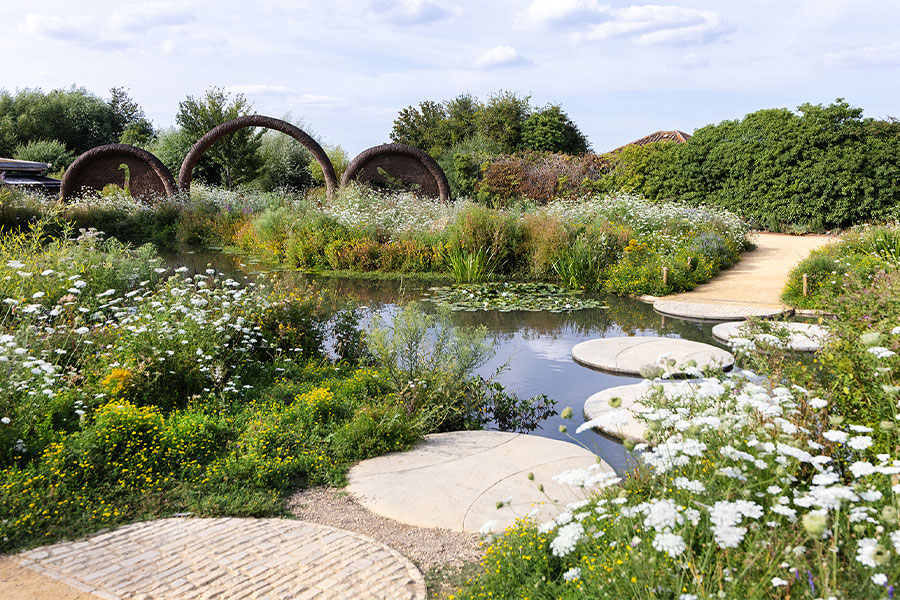 The Estuary Shoreline at WWT Slimbridge in full bloom on a bright sunny day © Becs Greenaway/WWT
1.2 million hectares of wetland potential. And restoring a fraction of that will make a real difference. Recommended by the government’s own advisors, restoring 100,000 hectares of wetlands will help deliver the country’s environmental goals. That is WWT’s mission to restore wetlands like our lives depend on it, because they do.
100,000 hectares is an area three times the size of the Isle of Wight. It’s ambitious. It’s bold. But it is achievable.
Over the past 400 years, 90% of our wetlands have been lost in England alone. Large or small, every newly created or restored wetland counts. From landscape scale saltmarsh restoration hugging our eroding coastlines, to embedding small, nature-rich Sustainable Drainage Systems (SuDS) into the places where we live, wetlands can help the UK be global leaders in adapting to our changing world.
Come join us at WWT, the wetland charity, on our mission to restore wetlands and unlock their power. Wetter really is better.
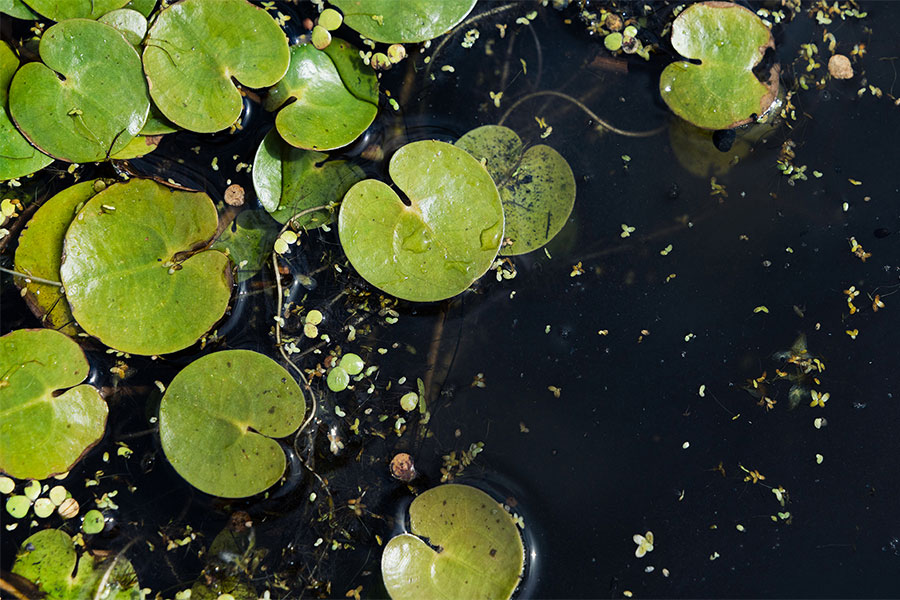 Frogbit leaves floating on the water surface © Becs Greenaway/WWT