All images © the Dawson family.
As a parent, I believe that getting out into nature as a family is one of the greatest gifts you can give your kids. Encouraging a love and appreciation for the natural world can only ever be a good thing, and a brilliant place to start is by getting into birding.
I have two kids, aged seven and 10, and while we’ve always been outdoorsy nature lovers, this year we all properly caught the birding bug. Yes, we’re a fully signed up family of ‘bird nerds.’
If you’re keen to get into birding as a family, the great news is that it’s easy to get started and costs absolutely nothing. Here are some tips for getting started, as well as what I’ve learnt along the way.
Start off right
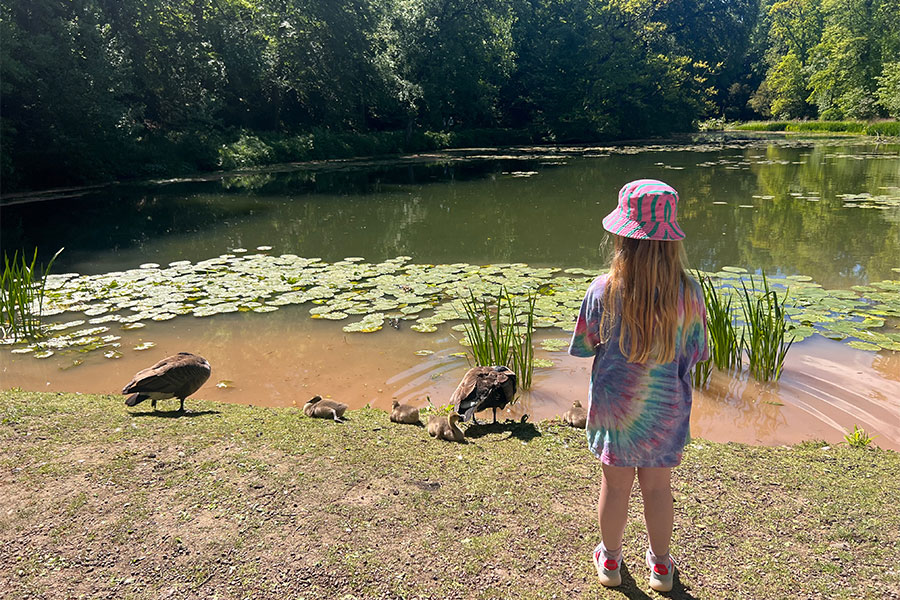
Birdwatching really does equip kids with some excellent life skills, like patience, observation and listening. It’s a wonderful way to develop a lifelong love of nature, so start off right by instilling some basic rules. It might sound obvious, but make sure your children know to observe from a distance, not to interfere with nests or touch wild birds, and to be respectful of their surroundings.
You don’t have to be an expert
Everyone starts with very little or no knowledge of birds, so don’t worry if you don’t know what you’re doing to begin with. Jot down the birds you see in your garden or while you’re out on a walk and read up on them when you’re home. It’s amazing how quickly you become familiar with their colours, markings and calls. A year in, I love hearing the obscure species my kids now come up with during a bird-themed Alphabet Game on a long drive!
Get a bird feeder
If you have suitable space, I’d encourage you to hang a bird feeder in your garden. You and your children will soon start to recognise the different types of visitors and it’s such a simple way to capture a child’s imagination – my two are fully invested in the robin vs blue tit turf wars. Just make sure to follow RSPB guidelines on feeding seasonally and safely.
Stock up on books
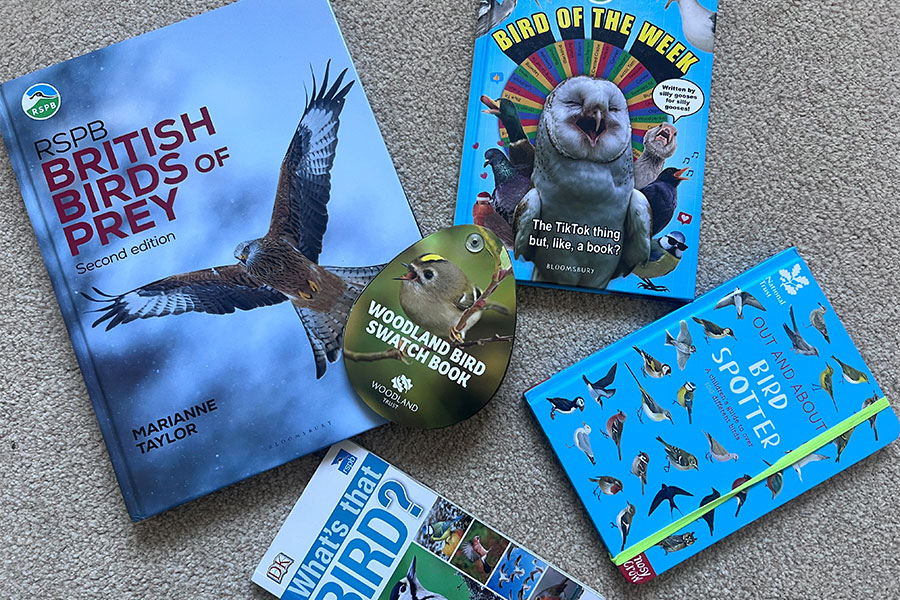
Kid-friendly bird books are invaluable for building knowledge, and we’ve amassed quite the collection over the year (charity shops are a goldmine). Books and pocket guides with clear photos and simple ways to ID different species are a big help to turn curiosity into knowledge. I found that once the kids were familiar with a number of species, their confidence grew and they were desperate to learn more. Some of our favourite books include the RSPB Bird of the Week book, which has my son in fits of giggles while teaching him about bird behaviour, and the National Trust Out and About Bird Spotter, which is a great all-rounder.
Think about timing
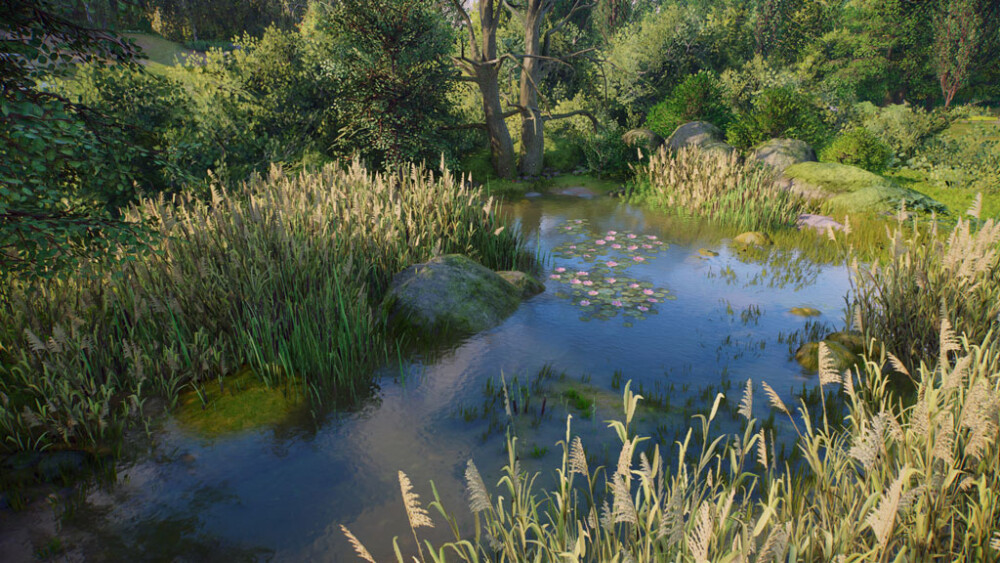
I love how bird watching changes with the seasons. My children are fascinated by migration, so autumn and winter are an exciting time to head to our local wetlands to see what’s visiting. If you’re feeling adventurous, in late spring – I’d time it during the school holidays if I were you – set the alarm a little (OK, a lot) earlier and see if you can catch the dawn chorus. I promise you it’s an experience they won’t forget. Whatever the time of year, there’s always something different to spot.
Work birding into the everyday
The more you talk about birds, the more your children will notice them. Birding unintentionally runs through everything we do together now, whether that’s pointing out the red kites soaring over farmland on our way to an afterschool club or saying ‘hello’ to the flock of starlings that like to occupy the tree opposite school. Honestly, birding doesn’t have to be an ‘event’, make it part of daily life, and as their interest grows take the opportunity to talk to your children about how, as individuals and as a family, we can help nature and make positive changes for the environment.
Explore the apps
Don’t be afraid of embracing tech. When we were first getting into birding as a family, we found the Merlin Bird ID app to be hugely helpful. It’s free to use and can help you identify birds through their call or by a photo. I’ll warn you though, it’s addictive! On one (binocular-less) dog walk through the fields by our house, we spotted two birds too far away to visually ID. They had such a distinctive call, and we were very excited when the app confirmed a pair of lapwings. Naturally, we revisited the field again with binoculars to get a better look. The app has really helped us become familiar with certain bird calls – so much so that we don’t need to rely on it quite as much now.
Get a pair of binoculars
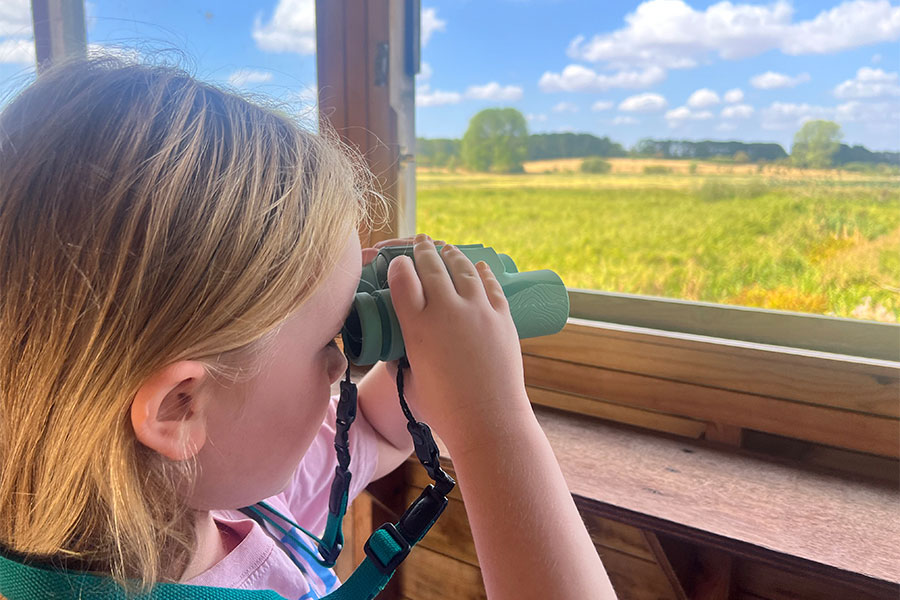
Birding with your children doesn’t require loads of expensive kit, in fact we started out with nothing at all. That being said, the one thing which really does make a difference to the overall experience is a pair of binoculars. These will help you and your family get a closer look at the birds, making identification much easier. I was lucky enough to test out a range of Swarovski optics which were unbelievably good, but if you’re just starting out you may prefer to borrow a pair to begin with. If you decide to buy, the WWT Cygnet binoculars are a great, affordable ‘entry-level’ pair, designed specifically for kids – a great Christmas gift for any budding birder.
Plan days out together
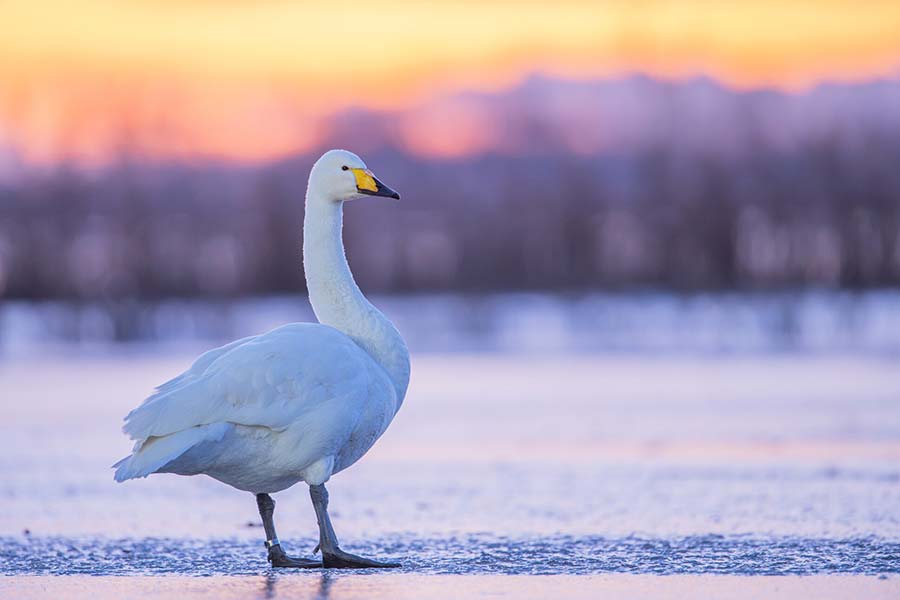
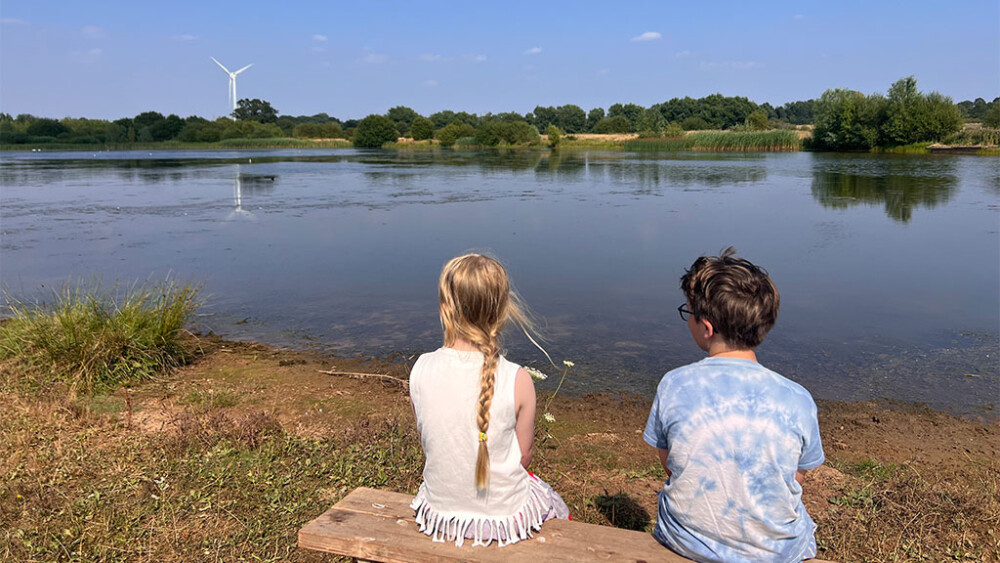
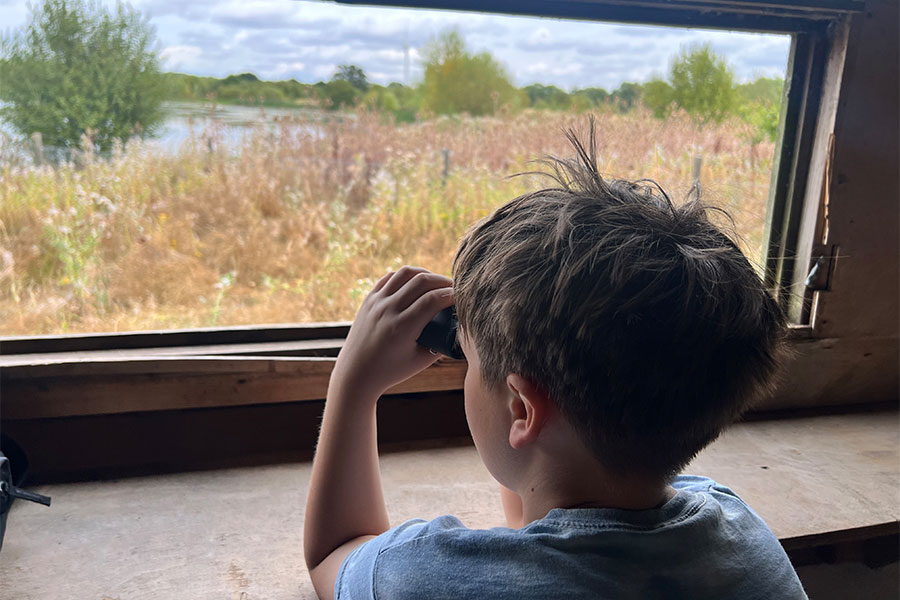
Birding is fun, so treat it that way and make a day out of it. We’re lucky to have a lake just a mile from our front door, where we like to visit the resident mute swans. But we also try to get out and visit other wetlands, whether it’s a day trip to spot the Rutland ospreys (success!) or while on holiday (my kids insist no trip to Northumberland would be complete without a puffin sighting). Many wetland reserves are perfectly set up for family visits, with boardwalks and accessible hides, so your children can get close to the action.
Start a bird list
Once you’ve found your groove as a birding family, why not start your bird list? We’re planning on starting our own bird list in January, with the aim of keeping it going all year long. It’s really simple to do, you just need a notepad and pen (a pair of binoculars would be handy, too), then jot down the species, number of birds, location and date in the pad as you spot them. This could be on family outings to your local wetland centre or simply birds you spot in your garden at home. I can’t wait to look back on this at the end of the year to see all the different birds we’ve encountered together.
Key wetland bird species to keep an eye out for
Next time you’re at your local WWT wetland centre, see if you can spot one of these easily identifiable birds.
Kingfisher
Nothing comes close to the thrill of spotting a kingfisher, even if it is just a flash of blue. Keep an eye on the water’s edge, where the water is clear, slow flowing and shallow.
Grey heron
With its large yellow bill, pale neck, grey body and long black plumes, this impressive bird is instantly recognisable.
Little egret
All white, with a black bill, black legs and bright yellow feet, little egrets are a familiar sight across most of the UK’s wetlands.
Tufted duck
As is usual in the bird world, the male tufted duck is the fanciest of the pair, with its bold monochromatic plumage, piercing golden eyes and tuft of feathers at the crown of its head.
Teal
This perfectly compact dabbling duck can be a little shy, so keep your eyes on the reeds to spot one. The colourful male is very distinct with its chestnut brown head and green flash across the eye and down the neck.
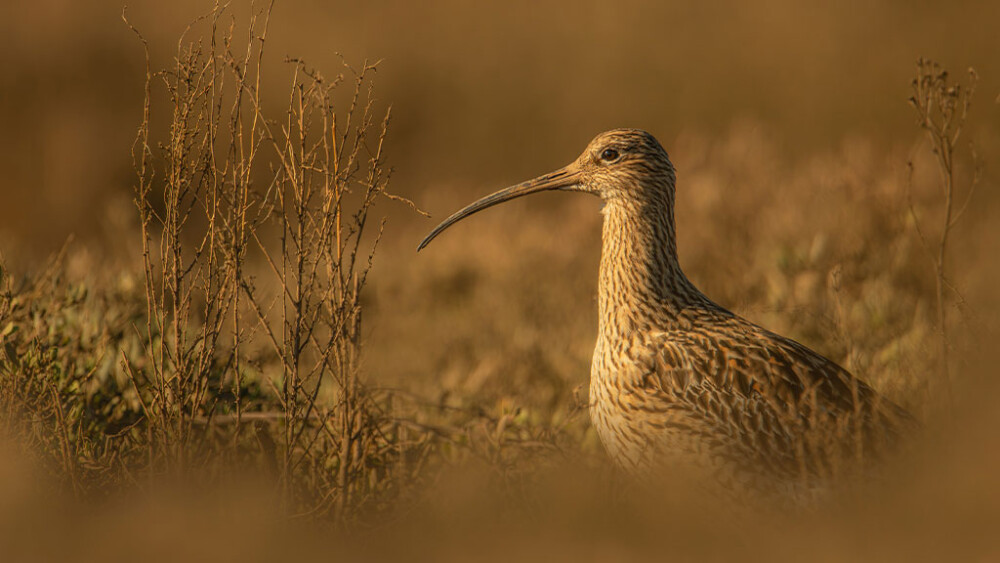
Eurasian curlew
The largest of all European wading birds, the curlew is an impressive sight. You’ll recognise it by its mottle brown-grey plumage, long downward-curved bill and its iconic ‘cur-lee’ call.