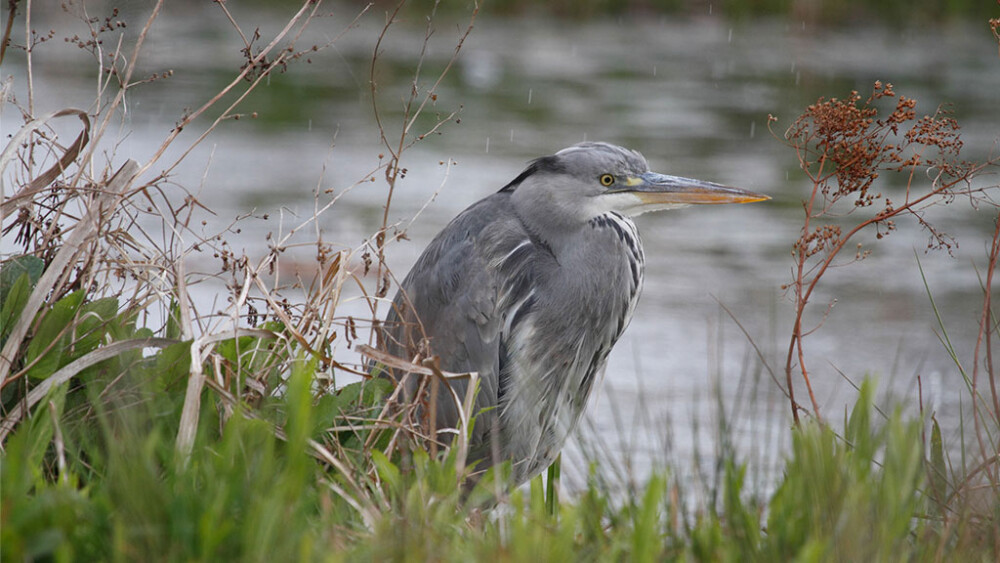
Header image: A grey heron in the rain at London Wetland Centre
We Brits love to talk about our changeable weather. Though wind and rain might not seem like good conditions to be out with a camera, often the more extreme the weather, the greater opportunity there is to capture eye-catching images.
Like falling snow, heavy rain adds interest to a picture. Try to position yourself so the background behind your subject helps spotlight it. The best way to illustrate falling rain is to shoot into the light with your subject against a dark background.
During heavy rain, mammals and birds tend to sit or stand motionless, occasionally giving a good shake or flap to dispel water from their fur or feathers. These moments are perfect for dramatic photography as water flies everywhere. Again, look for a dark backdrop to get the best effect.
Wind can be a great help in photographing flying birds. Ducks, geese and swans will always take off into the wind, and the windier it gets, the slower the birds will fly, helping you keep track of your subject.
Stormy days with sunshine and showers can offer dark, brooding clouds that can make great backdrops for flying birds, especially swans. Look out for those beautiful rainbows for the ultimate backdrop, and stay dry!
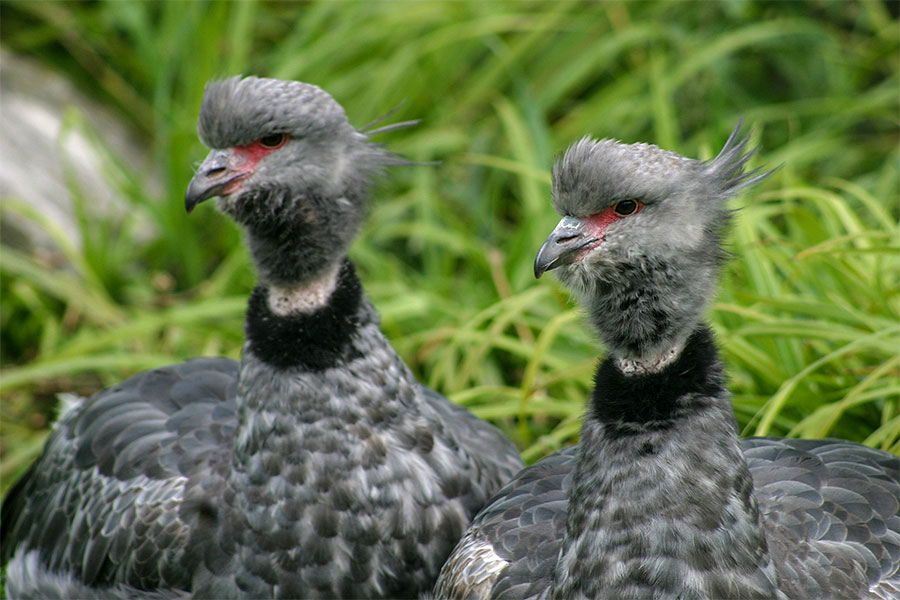 A pair of crested screamers together in the rain at WWT Slimbridge.
Get the effect
Your choice of shutter speed will dictate how falling rain looks in your photo. So it’s worth setting a mode on your camera that allows this control. A slower shutter speed will make rain and snow look streaky, while a fast speed will freeze the falling raindrops.
Go high key
If the light is dull and the background is sky or water try overexposing by at least one stop to what your camera is telling you. We call this ‘high key’. It will bleach out your background to help the subject stand out more.
Learn to anticipate
You’ll need to be alert to capture animals shaking off the water during a downpour. Watch for your subject showing signs of movement, and get ready to press the shutter – the action can be over all too quickly. A fast shutter speed will freeze both the water droplets and movement of an animal or bird.
Keep shooting
When windy days whip up waves on larger stretches of water, use a fast shutter speed to freeze the splashes. It helps to take lots of pictures, so you increase your chances of having at least one shot where the bird is positioned perfectly.