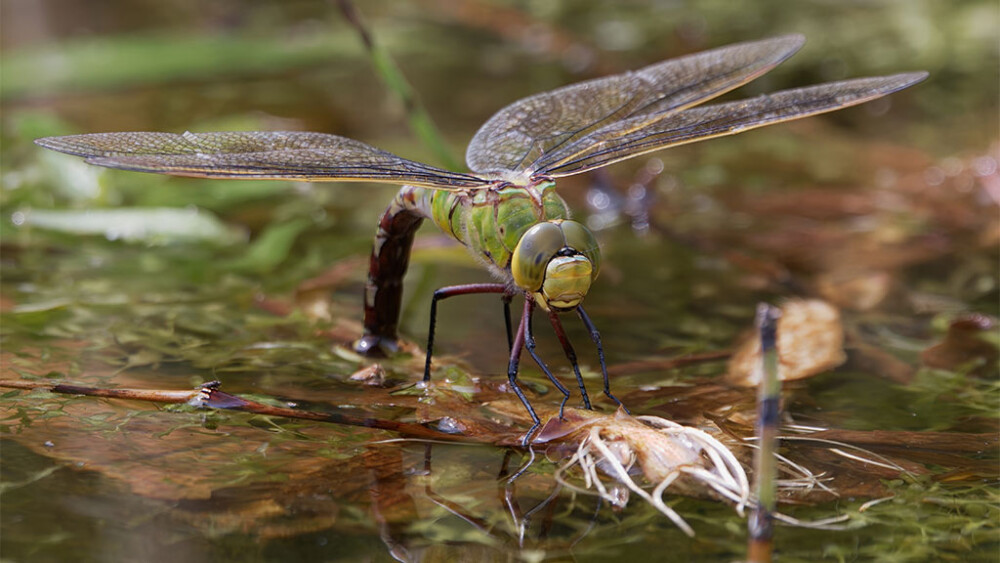
Header image: Ovipositing emperor dragonfly at Castle Espie © Jonathan Clark WWT
Introduction by WWT Head of Reserves Management, Leigh Marshall
This season was more challenging than ever. None of the stories of success, the highlights, or the challenges each of our reserves have overcome this summer would have been possible without the support of people like you and all those who gave to our Climate Resilience Fund appeal.
Firstly, we have to take our hats off (or not, given the 38 degrees and blistering heat that all the teams working outside for wetland conservation have had to endure) to the people who kept our WWT reserves going, whatever the weather. I hope when reading about our successes, you’ll think of the teams and their tireless efforts. Even when faced with one of the driest summers on record, our reserve teams have kept our wetlands wet.
They were able to do this thanks to our Climate Resilience Fund (CRF). With appeal donations from our supporters, members and corporate partners, we’ve been able to help wildlife and wetlands adapt to the climate crisis. Thank you so much for your generosity.
So, back to our reserves. What a summer! For me, the highlight has to be the insects and how they have migrated across this year's custard cream landscape to find the small, isolated pockets of blue or green wetlands, before establishing themselves on our sites. You have to remember, insects go through various life stages, so our reserves are having to manage many different wetland habitats for one individual species. Good water levels and soft ground, allowing insects to emerge among the flora-rich meadows or ditch edges, have been crucial to their abundance this summer – and what a show they’ve put on!
WWT Arundel: toadlet patrols and plenty of sand martins
The warm, damp conditions of early June provided the perfect trigger for this year’s toadlet emergence. Thousands of tiny, newly formed toads left the ponds to begin life on land, in what we think is one of nature’s often overlooked but truly magical moments.
To make sure these tiny amphibians could make their journey safely, visitors on 2 June were asked to tread carefully as they made their way across the reserve, particularly along the path from the car park. The toadlet’s knights in shining armour came in the form of our reserve staff and volunteers, who helped safely guide these little toads on their way.
In exciting barn owl news, our reserve team were lucky enough to briefly handle four wild barn owlets (our guess is they were around 35-44 days old) who were getting their leg rings from licensed ringer Stuart Card in early June. The owlets were then walked up the ladder and returned to their owl box. We’ve named them after the letters on the leg rings, choosing ‘Bread’ as the naming theme. Meet Cupcake, Loaf, Naan and Panini.
Little egrets have been thriving, with at least five youngsters spotted in the nesting area between the Sand Martin Hide and Ramsar Hide in mid-June. We’ve also had two oystercatcher chicks hatched, with one fledged, and have recorded at least two pairs of great spotted woodpeckers nesting and on the feeder in the Wood Loop.
The sand martin colony have been busy, with around 100 birds using the majority of the 299 nesting holes at the Sand Martin Hide. In August their second broods fledged, starting the long migration south.
A highlight this summer has been the appearance of two juvenile marsh harriers who put on quite the show in June, impressing visitors and staff with their newly acquired flying skills over the Large Lagoon and wet grassland. And let’s not forget our resident pair of marsh harriers, who despite being particularly secretive this breeding season, welcomed two young in mid-July.
On 13 August we welcomed back our herd of mixed breed cattle to our wet grassland. These moo-ing mowers will be in residence until the end of October and can always be relied on to trim the plants and get the lapwing nesting grounds in great shape. As well as being great for soil health and seed distribution for a richer grassland, our herd play another important role. Their organic dung allows a rich array of insects, perfect for the bats to forage before they hibernate. Talk about multitasking!
WWT Caerlaverock: restoration and reopening
The biggest news from Caerlaverock is that we finally officially reopened to visitors and members at the start of July. It’s been amazing to welcome everyone back to our beautiful wetland site and see the reserve buzzing again.
This summer we were very excited to welcome two glossy ibis, who took up residence on our Folly Pond. It’s a rare sight for Scotland; but as we move the site into a richer wetland mosaic, we know from climate planning that reserves like Caerlaverock will provide valuable food and safety for species when southern England is having multiple heatwaves – much the same way as when we have extreme cold winters, and the birds migrate south or west. Sadly, by the end of August the glossy ibis had moved on, but we’ll be keeping a look out (and everything crossed) for their return.
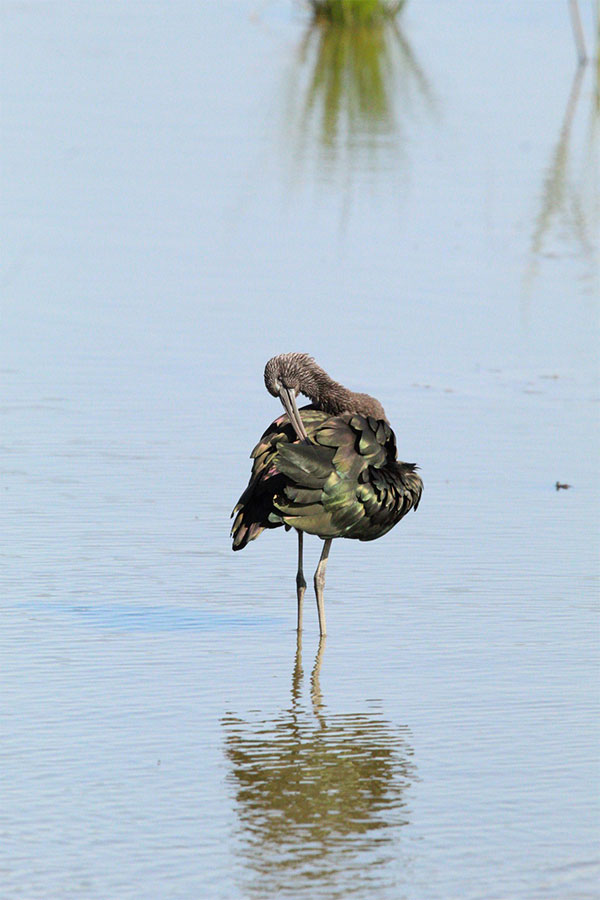 Glossy ibis © Rebecca Davies/WWT
Something we haven’t been short on this summer are little egrets. They’ve been visiting in sieges of up to 20 or more and are always a welcome sight in Caerlaverock. We are also incredibly lucky to welcome a pair of barn owls in July, who have chosen to make their home in one of our building rooftops.
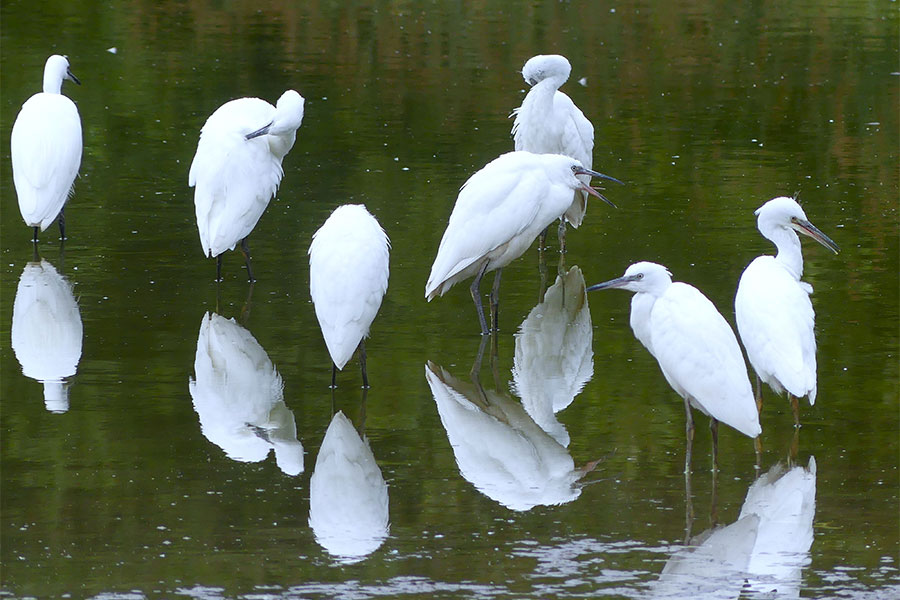 Little egret flock © David Pickett/WWT
It’s a familiar story across all the reserves this summer, with butterflies, dragonflies and damselflies seen in high numbers across the site. We’ve been busy with our creature surveys, going around the reserve, counting and recording the different species we have. We were lucky enough to identify two rare dragonfly species, the black tailed skimmer and red-veined darter, on site, with our Centre and Reserve Manager David Pickett, managing to capture the latter on camera. Our annual Dragonfly Festival was another great success, with the photography exhibition of dragonflies by Andrew Fusek Peters being a highlight.
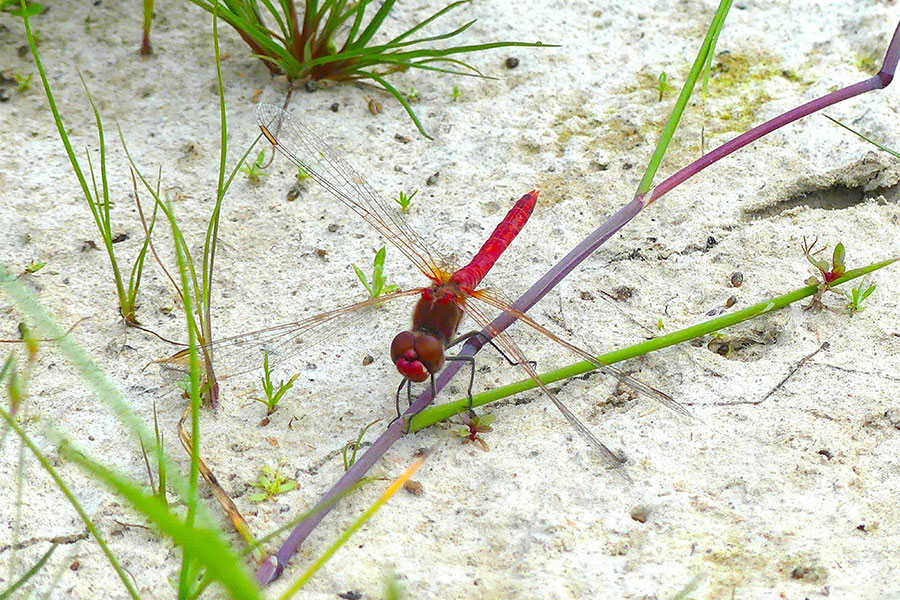 Red-veined darter © David Pickett/WWT
The hot and dry summer has inevitably created challenges across the reserve, with our Folly Pond drying up after consecutive heatwaves and very minimal rain. Thankfully, the site is robust, and our wetlands are continuing to survive despite the weather – although we’ve never wished for a rainy autumn more than we do right now.
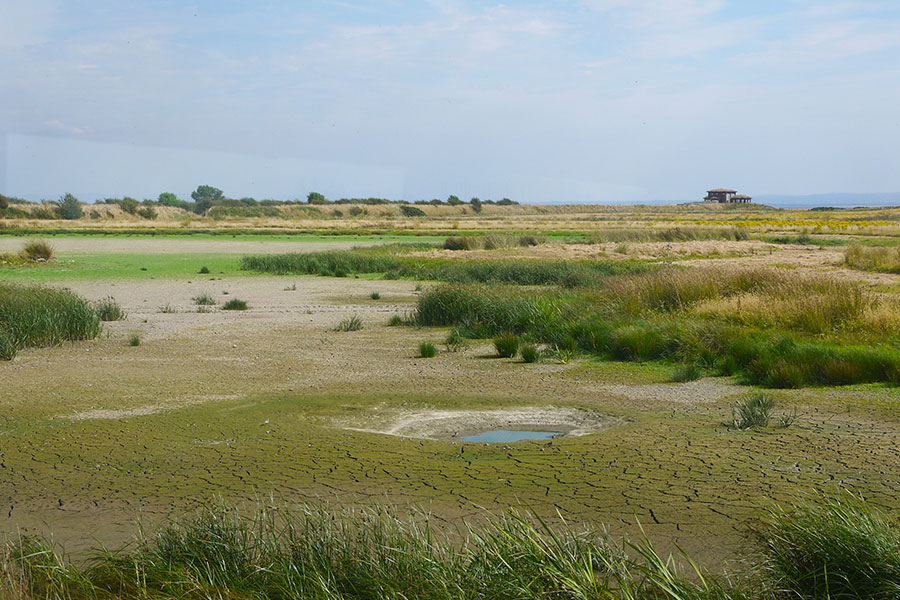 Folly Pond in drought conditions © Georgia Pope/WWT
It’s been a really busy season, with staff and volunteers pitching in to get Caerlaverock in top shape this summer. Work on the Farmhouse restoration continues and we’re hoping to have this ready and open for visitors by the end of the year – watch this space. Of course we’re a little biased, but it really is the most unbelievable place to stay the night and enjoy sunsets, sunrises and all the nighttime creatures you wouldn’t usually spot on a day trip to Caerlaverock.
The team and our fantastic volunteers (14 of us in total) have also been working hard on the saltmarsh conducting the Saltmarsh Plant Survey. After several trips out, clocking up many hours, a lot of steps and some excellent packed lunches, this August we completed the task to record and document plant species across our beautiful saltmarsh.
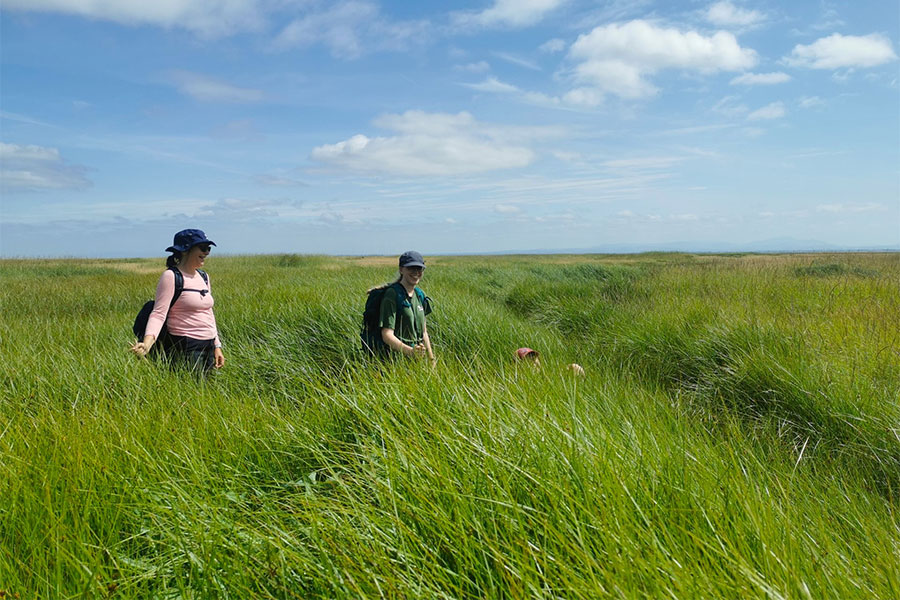 Saltmarsh plant survey © Izzy Rigby/WWT
If you fancy the idea of spending your days at WWT Caerlaverock and have some free time on your hands, we’re expanding the team and looking for volunteers to help run, manage and support our nature reserve site. Have a look on our website for more details or come in and have a chat with us.
WWT Castle Espie: an osprey flyover and rare butterfly sightings
It’s been busy on the bird front at Castle Espie this summer, with some exciting sightings on the reserve so far. We’ve spotted common sandpiper on a few occasions over the summer, including a group of three seen in June (it’s uncommon for these birds to be seen together like this). There’s been at least three male reed warblers on site too. No sign of any fledgling but singing males mean they were potentially defending a territory with a nest site, so we’ll be keeping a close eye on things.
In breeding news, the swallows have done well this summer, with three known nest sites on the reserve, each with one or two broods, fledging three to four chicks each. Sedge warblers have also nested onsite, with fledglings spotted in the reed bed. And, in early June six adorable shelducklings were seen on the shingle bank.
The artificial tern rafts had an upgrade this summer, with the addition of bamboo poles. These are intended to make it harder for large gulls to land, creating a safe space for the migratory birds to breed successfully, so far so good, with around nine common tern chicks spotted on the Saline Lagoon raft in August. They are in various stages of development, but some look to be fledging soon.
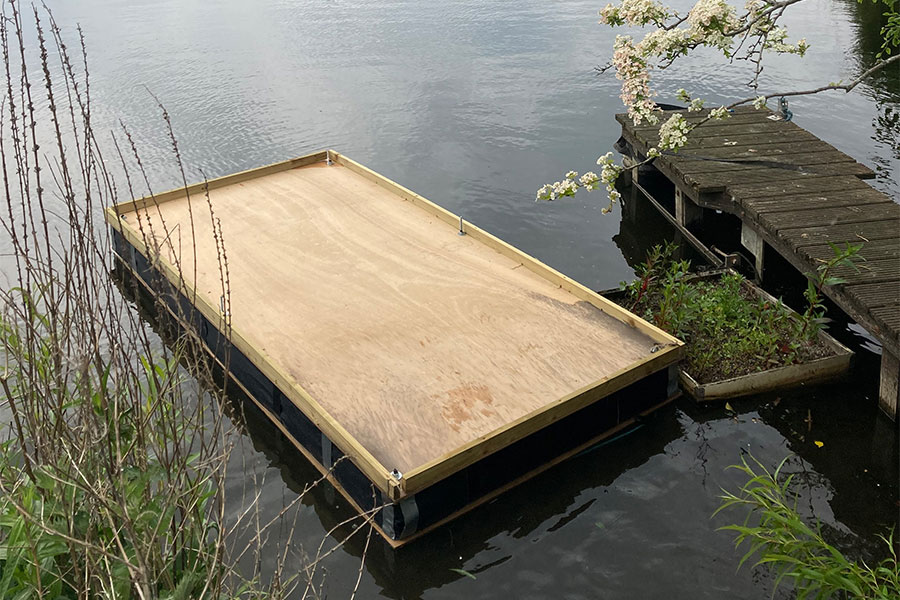 Tern raft in construction phase © WWT
After a wee while without a sighing, we were delighted to spot a kingfisher back on the main lake. It’s always a special treat to see one, so keep your eyes on the water edge next time you visit us; you never know what you might encounter. We even spotted an osprey flying over the reserve in late July, which has to be up there as one of the most exciting flyovers of the summer.
Over the past year, the comma butterfly has become a regular summer visitor to Castle Espie, and this year is no exception. This much-loved butterfly is usually a rare sight in Northern Ireland, but it seems to be sticking around our wetlands, and we couldn’t be more chuffed about it.
The comma wasn’t the only butterfly to grace our reserves; it was a good year for cryptic wood white which is only found in Northern Ireland (it’s a close relative of the wood white, found in mainland UK). And there were both clouded yellow and silver washed fritillary butterflies spotted onsite in August. Dragonfly have also been high, with sightings including emperor, migrant hawker and hairy hawker.
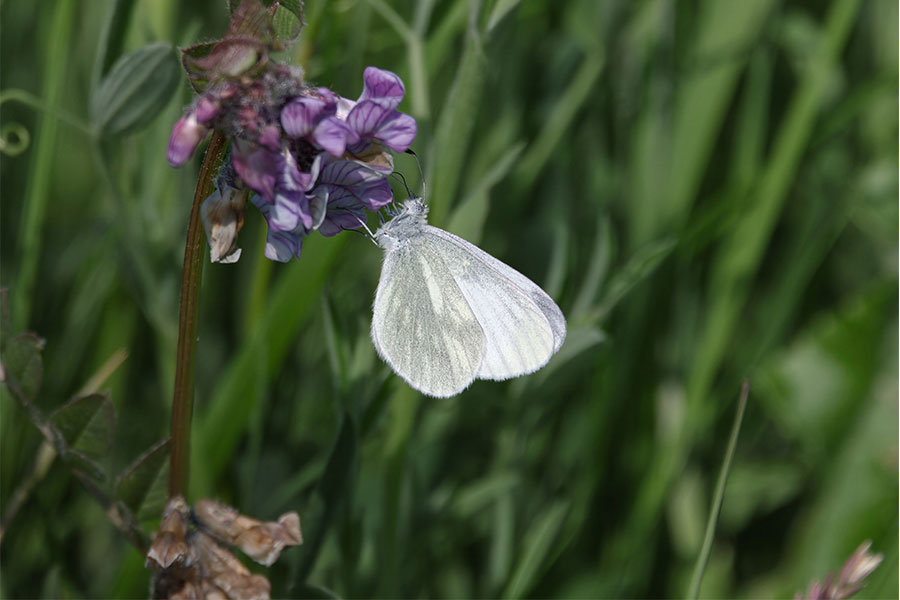 Cryptic wood white © Jonathan Clark/WWT
WWT Llanelli: otters, ibis and an alien caterpillar invasion
Good news from down on Deep Water Lake. Our resident kingfishers had a second brood in early August. While these incredible birds can have up to three broods a year, we were unsure whether they exceptionally dry summer would have had an impact on breeding, so we think two is a great success.
Otters were a familiar sight to visitors and staff in early June, mostly around Deep Water Lake, but throughout July they became rather elusive. Thankfully, they returned in early August with regular sighing from staff, volunteers and visitors – we think the group is likely a mother with a grown-up pup or two.
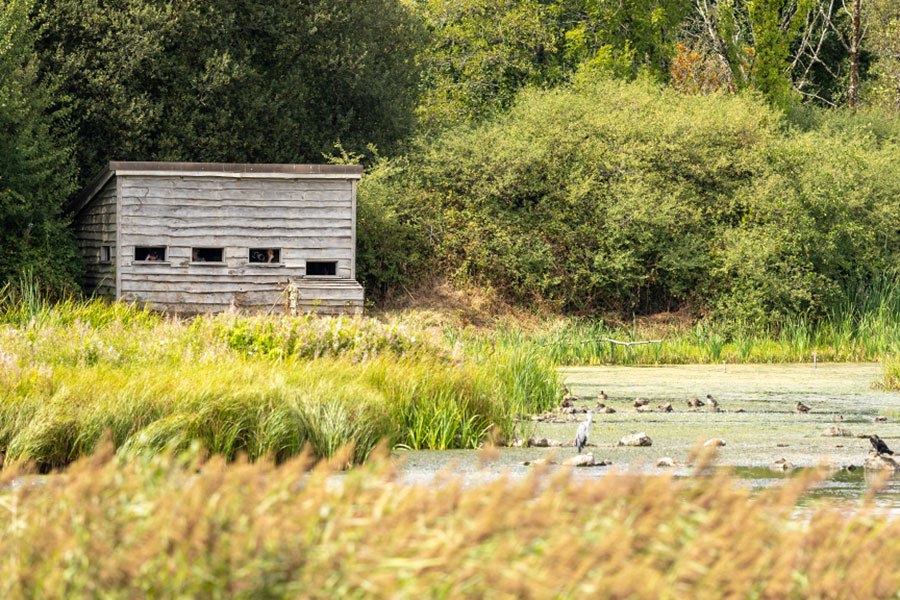 Bird-watching at Deep Water Lake © Sam Walker/WWT
It’s been a great few months on the reserve for all butterflies, dragonflies and moths. The dragonflies in particularly have been thriving in the unseasonably hot weather, with regular sightings of emperor dragonflies, four-spotted chasers and hairy dragonflies, as well as numerous appearances of the red-eyed damselfly.
An alien-looking congregation of caterpillars set up residence at WWT Llanelli in early June. A colony (also known as a communal web) of newly hatched peacock butterfly caterpillars looked like a dark mass clinging to the tops of nettles – a fascinating if rather odd sight!
You know what they say; you wait all year for an odd-looking caterpillar, and two species come along at once… Just a week or so later, one of our volunteers spotted the peculiar puss moth caterpillar camouflaged in the willow trees at WWT Llanelli. If its vibrant green, white and red, with dark diamond patterns and spots, appearance isn’t fancy enough, its horn-like projections behind the head and two small whip-like tails, which can squirt acid when disturbed, definitely makes this the most unusual visitor to the reserve this summer.
We’ve been spoilt with birds of prey encounters this summer with multiple sightings of marsh harriers throughout the season. It’s impossible to know whether we’re lucky enough to have resident harriers, despite regular sighting in winter and summer, both this year and last, but it’s incredibly encouraging to see marsh harriers so regularly out on the reserve and a real compliment to see they appreciate our carefully managed and protected habitats.
Peregrine falcons have been spotted soaring above the Saline Lagoon and in August we had numerous visits from a goshawk.
One special sighting was a Eurasian bittern among the reeds on Deep Water Lake on 28 July. This is such exciting news and, although it hasn’t been seen since, we hope it will pop by again soon.
Our wader numbers have been steadily increasing and there’s been shanks-a-plenty, with as many as 46 greenshank and 184 redshank, as well as spotted redshank, along with 1,040 black-tailed godwit. We even spotted a glossy ibis on the Dafen Scrapes on 16 July; we don’t know if it’s the same ibis that visited us in spring, but it’s very exciting nonetheless.
Great white egrets, cattle egrets, green sandpiper, wood sandpipers, curlew sandpipers, green sandpipers and garganey were all recorded through the summer period.
And we welcomed some new, hairier-than-usual, members to the team; our herd of cattle. You might spot them grazing out on the Saline Lagoon and surrounding areas. Whether it’s their poo, their pee, their eating habits, or simply how much they churn up the earth with their hooves, almost everything these cattle do feeds back to our conservation work. We’re lucky to have them!
WWT London: an exceptional season for waders
The extreme weather has certainly thrown some challenges our way but, as always, summer has not disappointed at WWT London. We were absolutey delighted to have our first lapwing juveniles fledge – for the first time in five years! It’s hugely exciting and positive news and we’ll be keeping a close eye on what happens next.
We also enjoyed one of the best summer/early autumn wader passage periods since the late 1990s, with daily records of different wader species including *deep breath* common sandpiper, wood sandpiper, green sandpiper, black-tailed godwit, ruff and snipe. This variation and increase in numbers may have potentially been helped by the team keeping water levels higher on the marsh, which in turn may have encouraged migrating waterbirds to drop into the site more regularly. We hope it’s a sign of things to come.
In breeding news, we’ve seen an increase in breeding pairs of common tern, thanks to the installation of new Tern Rafts (funded by Natixis). These are in place on the Main Lake and the Reservoir Lagoon, and after being installed just a few months ago they are making a big difference. We’ve already had several fledged birds this summer.
The dragonflies have been living it up in the warm sunshine, with migratory red-veined darters paying us a visit in June. It’s not the first time this magnificent species has been spotted on the reserve, but it’s still very scarce, so we’re excited the hot weather has brought it to London.
The green-eyed hawker had a strong breeding season. Our reserve has been a firmly established breeding site for this endangered species for the past six years, and it’s something we’re massively proud of. It’s only in recent years the dragonfly has been found outside of the Norfolk Broads and a few wetlands in Norfolk and Suffolk.
The team have also got stuck into habitat management for the wet marsh. We’ve been rotovating the ground and raising the water levels to encourage more feeding wader species like green sandpiper and snipe. Hopefully we’ll have good news to report on that in a future roundup.
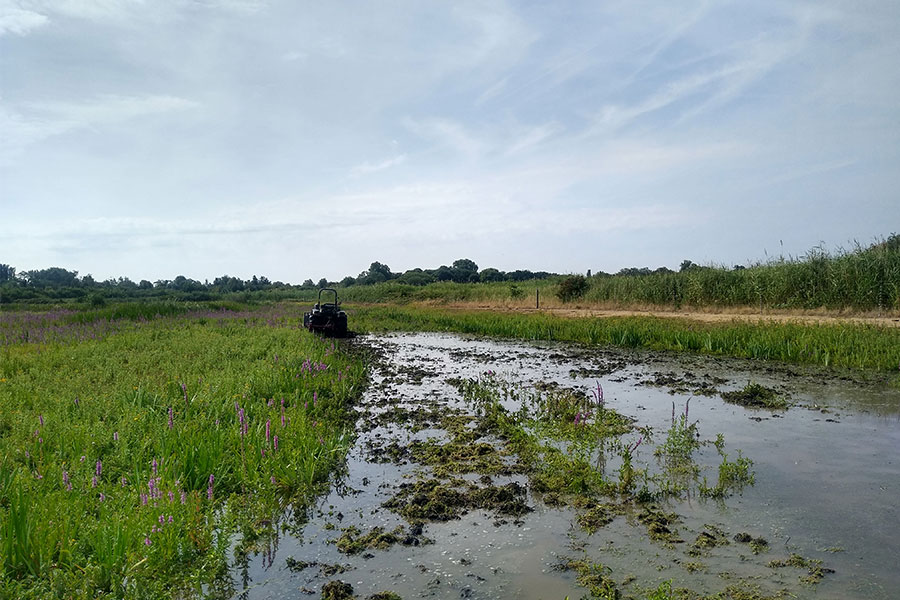 Rotovating the wet marsh © WWT
WWT Martin Mere: a cracking summer for bitterns
It’s been a busy one! We’ve been very lucky to receive funding from a local company, CMA CGM, for a large-scale restoration project at Martin Mere and things have been going really well so far this summer. The team have been using a soil spreader to create and enhance scrapes and grips in the fields, providing muddy areas for wader chicks to feed next spring. We have also been weed wiping the soft rush, which has been dominating the wet fields outcompeting the wildflowers. The weed wiping has been incredibly successful, reducing the soft rush from 70% cover to less than 20%. It’s massively rewarding to see this hard work already making a difference.
The bitterns have had a cracking summer, with breeding success for the third year in a row! This year we had two booming males, two nests and they fledged three chicks. We monitor the nests using a thermal drone, which means we are able to see and understand what is happening with these secretive species without repeatedly disturbing them. We were able to fit colour rings to the three fledged bittern chicks, and visitors have been able to read these rings from the photos they have been taking as they fly around the reserve. We are looking forward to hopefully finding out more about the travels of these young bitterns over the next few years!
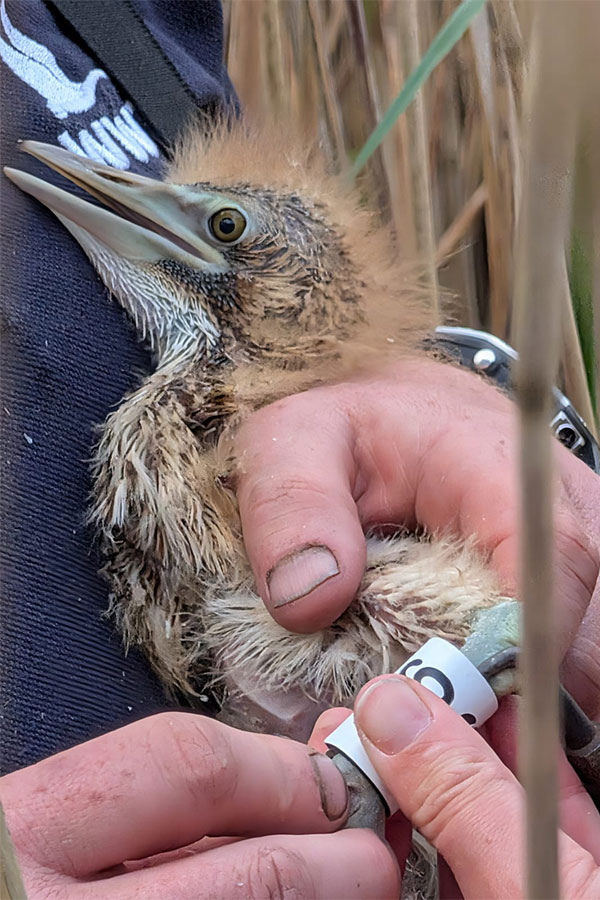 Fitting rings to bittern chicks © Louise Greenwood/WWT
Marsh harriers have also had another successful year. They first successfully bred on site in 2020 and are now a common sight at Martin Mere. This summer there were five nests and they fledged 12 chicks!
The dragonflies have been putting on a great show at Martin Mere this summer. We’ve had two new species for the reserve; the green-eyed hawker has been seen flying up and down the Boat House Sluice in front of the Ron Barker Hide, and the small red-eyed damselfly has been spotted around the Viking Village and the Eurasian Crane Pen, with up to 10 individuals seen on the floating wetland plants. Our new attraction, ‘Europe’s longest stepping stones’, is a great place to see dragonflies, as they race along the stepping stones. It’s the perfect place for spotting black-tailed skimmers up close.
Butterflies have had an incredible season and there are thousands at Martin Mere this summer. Feeding on the thistles, knapweed and buddleias this summer, we have seen hundreds of painted lady, peacock and red admiral butterflies. If you want to spot them yourself, head to the Wet Walkway, Bug Hunting Area and in front of the Discovery Hide. Further out on the reserve, clouded yellow butterflies have been spotted, with up to seven seen feeding on the purple loosestrife flowers. A single silver-washed fritillary was seen feeding on a marsh thistle – this is an exciting new species for the reserve, so we’ll be keeping an eye out for more of these over the last of summer.
WWT Slimbridge: cranes, corn bunting and common blues
The multiple heatwaves and prolonged hot, rainless (but for one or two evenings) days made things tricky for managing water levels at Slimbridge over the summer. A constant effort to use every drop wisely enabled us to at least keep the main areas wet, resulting in great conditions for our returning and passage waders.
Grasshopper warblers were on territory through the summer, and a corn bunting was heard across the reserve from 17 June to 10 August. In exciting news, bitterns bred here again (with at least two fledged young), as well as barn owls (again with two fledged chicks), marsh harriers, and avocets (who fledged at least 10 young). But it was a particularly poor season for lapwing and redshank.
The cranes have loved Slimbridge this year, with over 20 present throughout the summer including lots of un-ringed younger birds and four breeding pairs. At least four birds went through the wing moult and were flightless for many weeks over the summer, and we’ve seen three fledged young.
From August, a few whinchats and wheatears joined the stonechats on the fencelines, with lots of juvenile whitethroat, lesser whitethroat and willow warbler dropping in, too, during late July and August. We were also treated to the vibrant sight of a flock of more than 50 yellow wagtails, following our herd of cattle.
Summer wader passage did not disappoint, with over 300 ringed plover recorded in August, along with ruff, spotted redshank, greenshank, juvenile wood sandpipers, grey and golden plover, little-ringed plover, whimbrel, turnstones, knot and bar-tailed godwit and little stint.
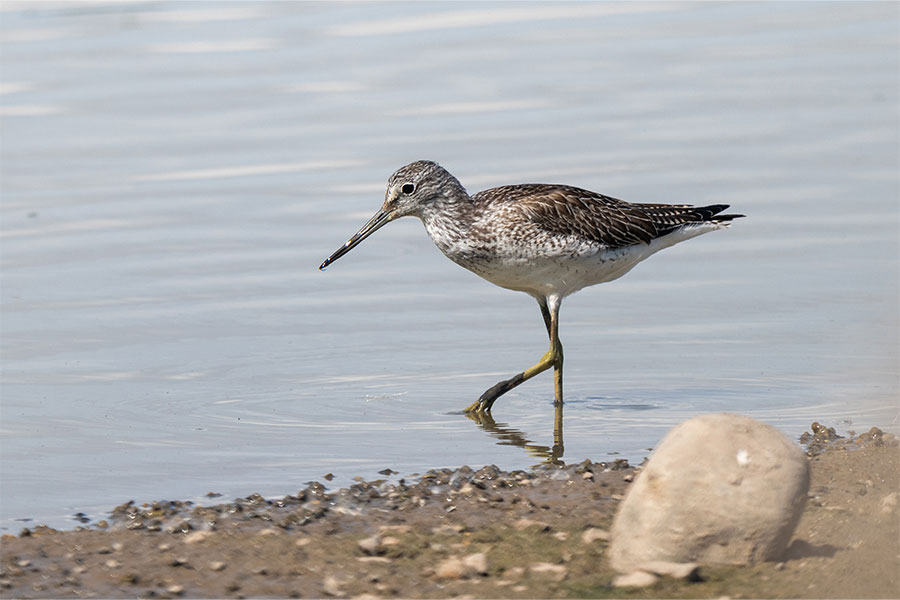 Greenshank © Ella Slinn/WWT
Scarcer species paying us a visit this summer include turtle dove on 1 June, great skua on 4 June, red-necked phalarope and gannet on 7 June, at least six different curlew sandpipers in May and June, and singing quail from 15 to 30 June. In July we spotted little tern and three goosander. Then August gave us a sighting of black tern on the 3rd as well as 2cy (that’s second-calendar-year) male Montagu’s harrier on the 4th.
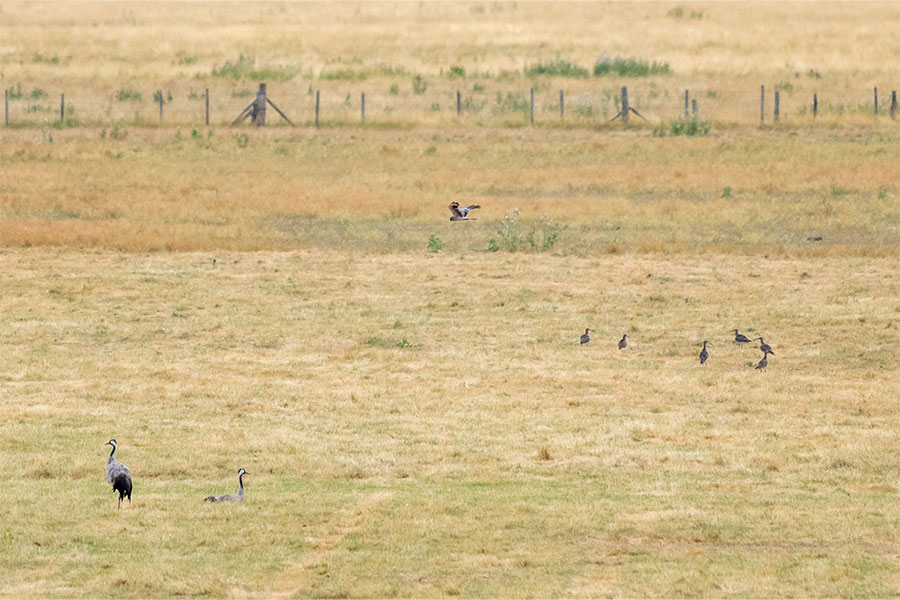 Common crane and curlew look on as the visiting Montagu’s harrier quarters the Dumbles © Ella Slinn/WWT
And, after its prolonged stay, a lone dark-bellied brent goose finally departed on migration on 26 May – talk about making yourself comfortable!
The hot weather provided perfect conditions for dragonflies and
There was an influx of the glorious, red-veined darter, including mating pairs, and egg-laying was noted on site, with around 20 established territories. The willow emeralds were again out in force, proving they’re now firmly established at Slimbridge. Our wild headlands continue to encourage greater numbers of butterflies, with high counts of many species including gatekeepers, marbled whites, ringlets, common blues, brown argus and many more. We had a massive influx of over 1,000 painted lady butterflies, and over 30 clouded yellows on any one day.
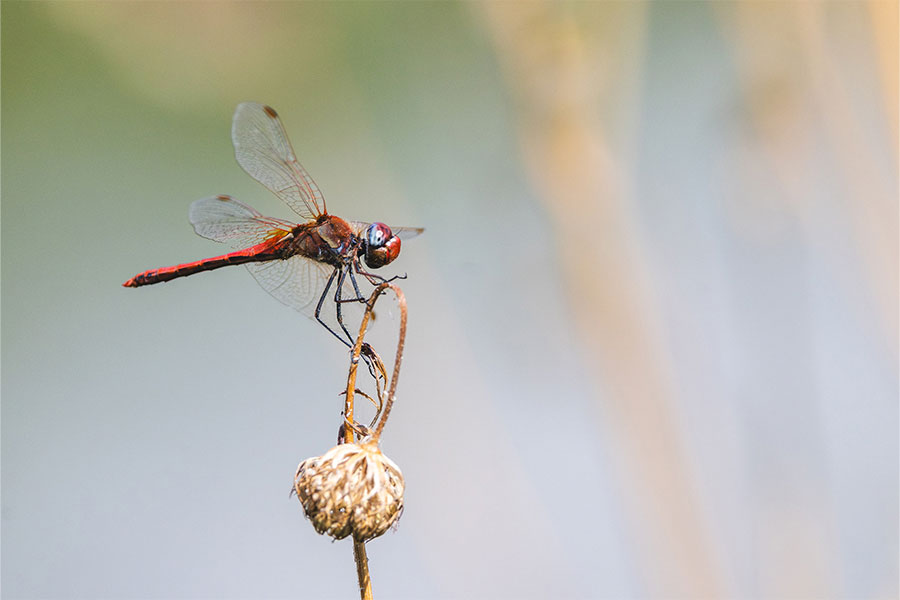 Red-veined darter © Becs Greenaway/WWT
Roe deer and brown hare were spotted out and about, enjoying the meadows. This summer we didn’t see as many grass snake as usual, but it’s been so hot refugia hasn’t been used much, which likely explains this.
Steart: water vole survey and rare bee sighting
There’s been plenty to celebrate at WWT Steart this summer. In August we marked the 10th anniversary of the annual WWT Steart SWNNR (that’s Somerset Wetlands Super National Nature Reserve) Research Day. What started out as a small gathering of staff, volunteers and academics has grown to a fantastic day attended by over 100 people from various charities, regulatory bodies, academics, business and the Somerset Council. The focus is on the amazing world of wetlands, for wildlife and people, and it’s always a great opportunity for knowledge exchange and strengthening partnerships, to better wetlands creation, management and research.
Great news for our water voles, which are thriving across the reserve. Geckoella ecological consultants visited WWT Steart Marshes to undertake a water vole survey and, while they will return for the second half in autumn, the initial results are positive. Feeding signs, droppings and burrows have been found extensively across the reserve, and there’s even been a couple of sightings of these elusive river-dwellers, which all show that water voles are using a wide range of areas across the site.
We’ve also had a much more positive breeding season for our waders this year, with avocet, little ringed plover, lapwing and oystercatcher all successfully fledging young.
And it’s not just success with the birds and voles; butterflies have been living their best lives at Steart Marshes, with very good numbers of clouded yellow and painted lady recorded. Dragonflies have also done well, with two new species – the green-eyed hawker and the blue-eyed hawker – spotted on the reserve for the first time. The latter has been seen laying eggs, which confirms breeding – an exciting first for Somerset!
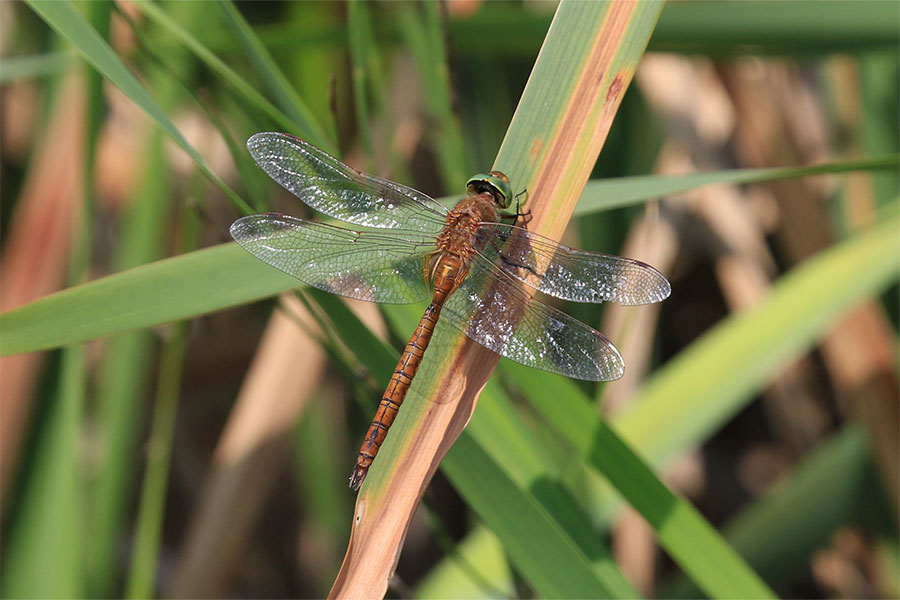 Green-eyed hawker © Sam Wall/WWT
In other firsts, the solitary sea aster bee (AKA Colletes halophilus) has been recorded on the reserve for the first time in a number of years. As the name suggests, the bee is heavily associated with sea aster and so can only be found on or around saltmarshes. What makes this sighting really interesting is that it’s well out of the south-eastern range the bee typically is found in.
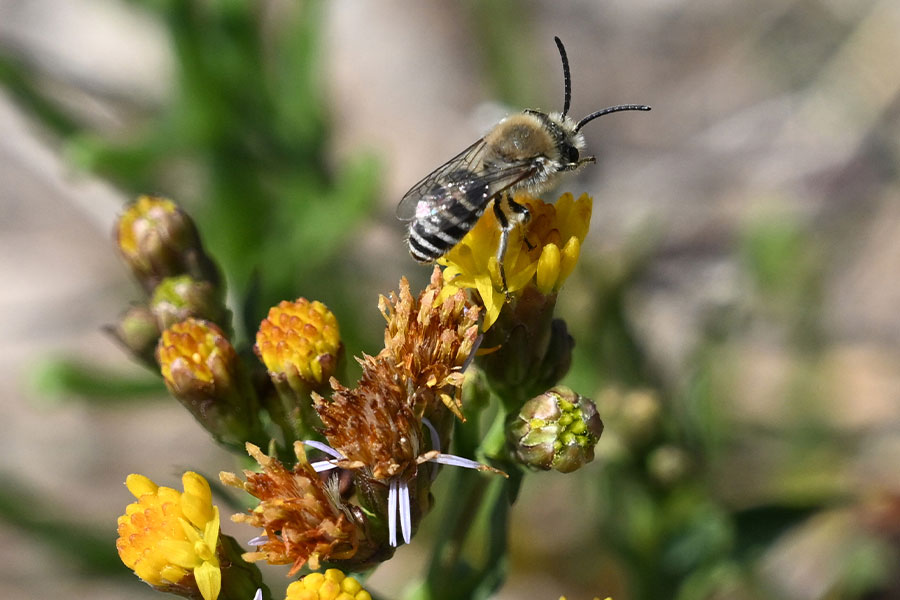 Sea aster bee © Kit Houghton/WWT
We’ll talk to anyone who’ll listen about how amazing wetlands are. Thanks to the National Lottery Heritage Fund Connecting Coastal Communities project, we have been busy delivering new Saltmarsh Habitat courses, created in partnership with the Field Studios Council. Secondary school resources are in the final edits, and we cannot wait for these to go live on our Learning Zone website later this year. We’ve also been running all kinds of art workshops for the public, including willow weaving, walk and sketch sessions and even rap workshops using rhythm and poetry to create music centred around saltmarsh and wetland wildlife. Getting people engaged and encouraging them to be creative in our wetlands has been a great way to slow down and feel closer to nature. The perfect way to spend summer!
WWT Washington: a glorious orchid season and a visit from a hummingbird hawk-moth
Summer has been in full swing across the reserve, with plenty of wildlife making the most of the warm weather and excellent conditions onsite.
Wader Lake has been a real hotspot throughout the season, and we’ve been delighted to see impressive numbers of breeding and post-breeding waders, including avocet, oystercatchers, lapwing, redshank and curlew. Despite the summery weather, the first signs of autumn migration are already appearing at the reserve with greenshank, black-tailed godwit and common sandpiper all spotted over the last few weeks.
You never get bored of spotting a kingfisher, and both our staff and visitors have been treated to the exciting bright flash of blue darting around Wader Lake and along the River Wear this summer.
The distinctive song of the sedge warbler has become a familiar sound across the reserve. These birds have had a very productive season, making themselves at home along the reedbeds.
Summer migrant birds have been busy feeding over the wetlands, with swift, sand martin, house martin and swallow in abundance.
Our waterfowl have also had a great summer, with family groups of shelduck, tufted duck and gadwall all successfully raising young. And the Heronry has remained busy, with grey herons and little egrets a real highlight for visitors.
WWT Washington has been buzzing this year – not just with visitors but with summer insect life, which has loved the prolonged hot weather. Butterflies have had an exceptional season with everything from red admiral, small tortoiseshell, speckled wood, ringlet, meadow brown and comma to the colourful painted lady gracing our reserve.
Dragonflies and damselflies have been seen darting around the Amphibian Ponds throughout the summer, and there’s been a lot of commotion around ultimate crowd-pleaser, the hummingbird hawk-moth, which has been recorded at Wet Wood. There’s been a big increase in sightings of this magnificent moth across the UK this summer; we’d love for them to stick around.
We’ve worked hard to keep the reserve thriving during the summer and our wildflower displays have been spectacular this year, with oxeye daisy, meadow buttercup, common knapweed, great burnet, meadow cranesbill and yarrow bringing an abundance of colour to WWT Washington. The orchids have also not disappointed, with highlights including bee orchids, northern marsh orchids, common spotted orchids and pyramidal orchids (a scarce species for Washington) all in bloom this season. As well as looking beautiful, these rich floral displays have supported a wide range of pollinators, helping the reserve buzz with life throughout the summer months.
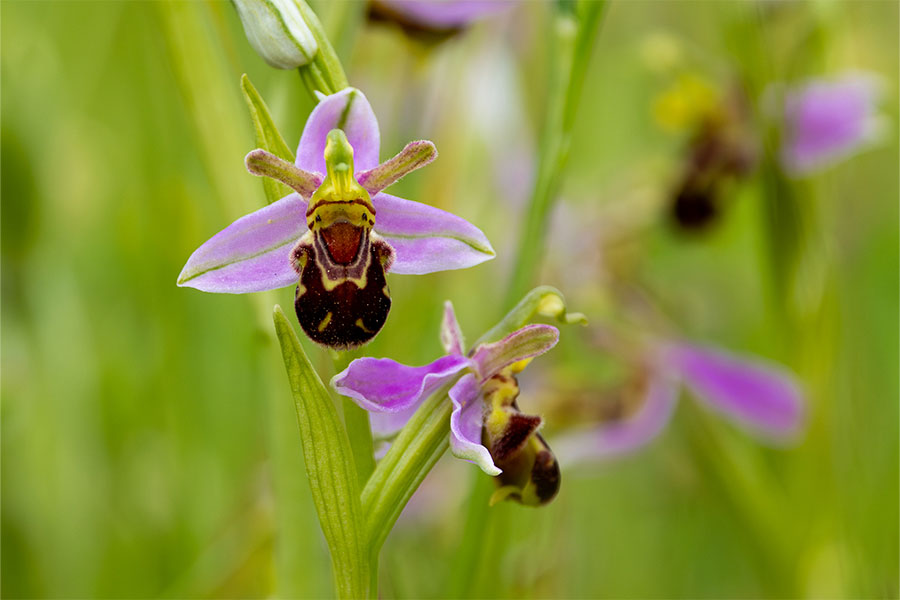 Bee orchid © Sam Walker/WWT
As summer begins to transition towards autumn, wildlife activity remains high and migrant waders continue to arrive, making it a fantastic time to get out and explore the reserve.
WWT Welney: a pair of glossy ibis and a family of spoonbills
Summer hasn’t been the easiest for us at WWT Welney. With multiple heatwaves and ongoing drought conditions creating a stressed landscape, we think it proves more than ever how vital wetlands are and how we need to create, manage and protect them for a brighter future.
Thankfully, the tidal river has provided us with a valuable supply of water to keep the Ouse Washes scrapes and ditches wet for wildlife and cattle.
It’s been a ‘roll-your-sleeves-up’ kind of summer at WWT Welney, and our reserve work has centred around the care of the cattle as well as clearing vegetation in front of the viewing screens, hides and along paths. Sheep have started to graze the washes, and our hay cut has been stored away to provide valuable winter food for our herds when the seasons change.
The hot weather may have transformed the landscape over summer, but we’ve been spoilt with some exceptional bird highlights. A pair of glossy ibis have made a daily appearance through much of summer, and we were treated to a family of spoonbills feeding in front of the main observatory in August.
Other bird highlights include 26 cattle egret and more than 20 snipe, as well as wood sandpipers and green sandpipers migrating through.
Not to be outdone, the dragonflies and butterflies have been having a field day this summer – this is the kind of weather they love, as long as food is readily available. We were lucky enough to spot three blue-eyed hawker dragonflies; these were first recorded on the reserve only last year, so we’re hoping they will become annual visitors. There’s also been plenty of clouded yellow butterflies onsite, filling the reserve with flashes of colour.