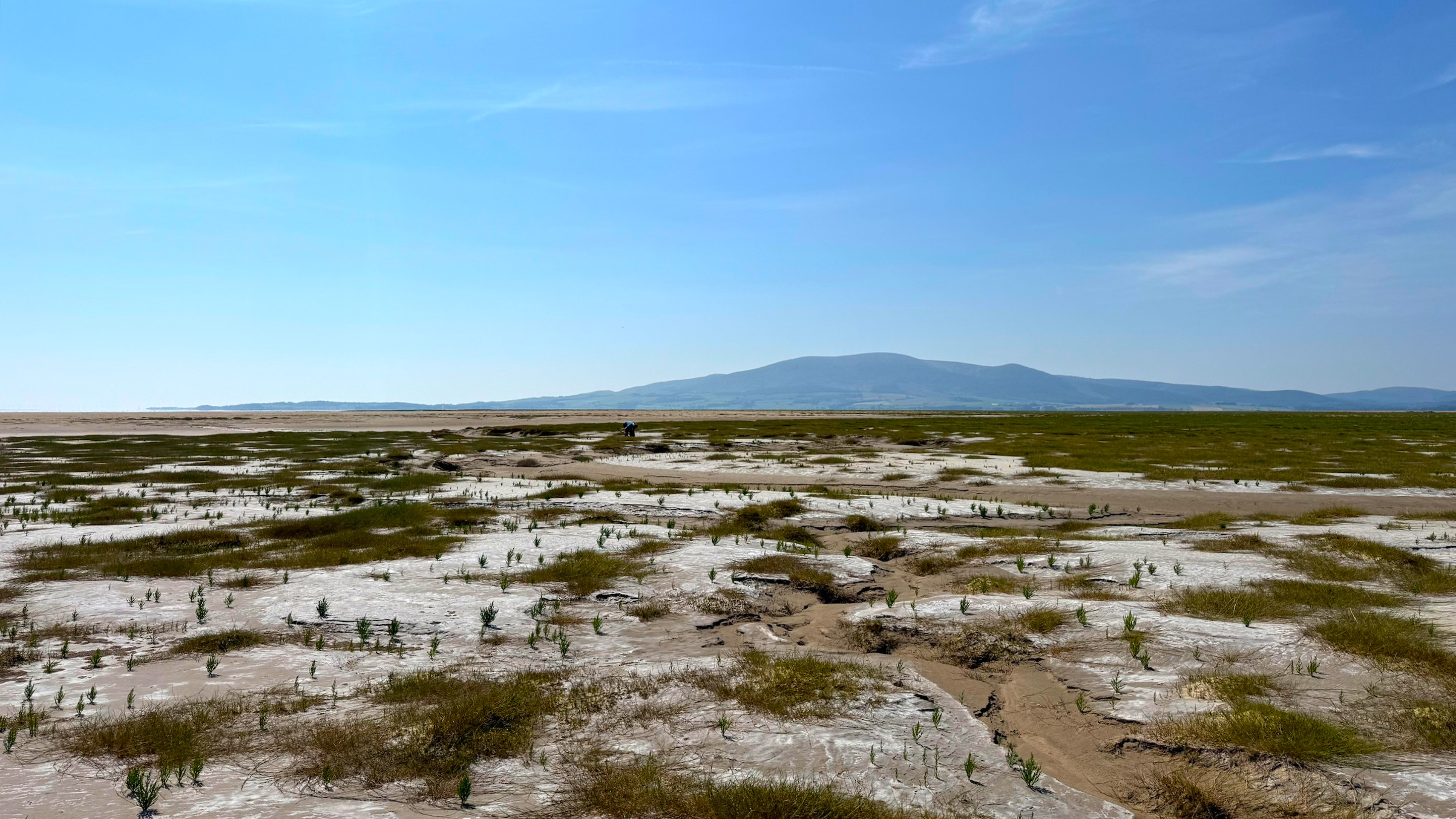
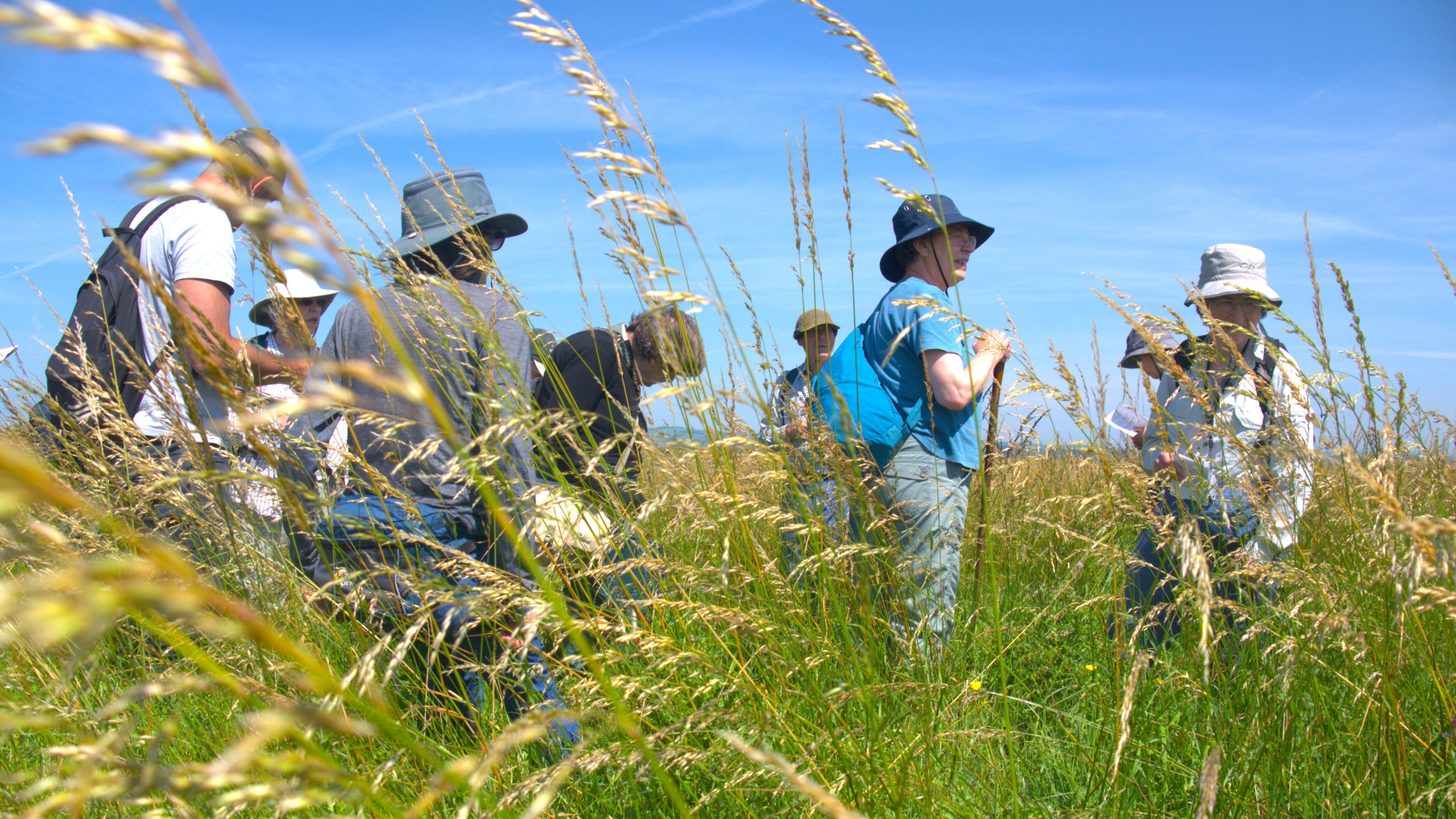
Earlier this month, the WWT staff were lucky enough to be guided on a saltmarsh survey by plant extraordinaire Chris Miles.
Chris is the local recorder for Dumfriesshire (Vice-County 72) as part of the Botanical Society of Britain and Ireland (BSBI). The Dumfriesshire BSBI group consists of a range of experts and enthusiasts who regularly meet throughout the summer months to record plant species across the region.
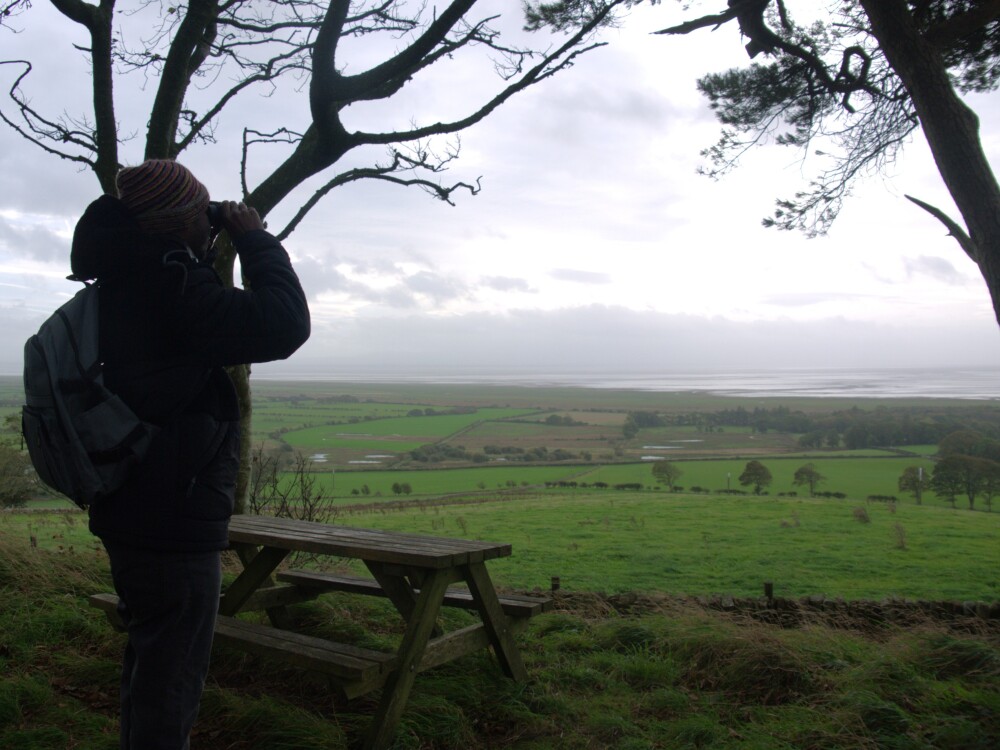
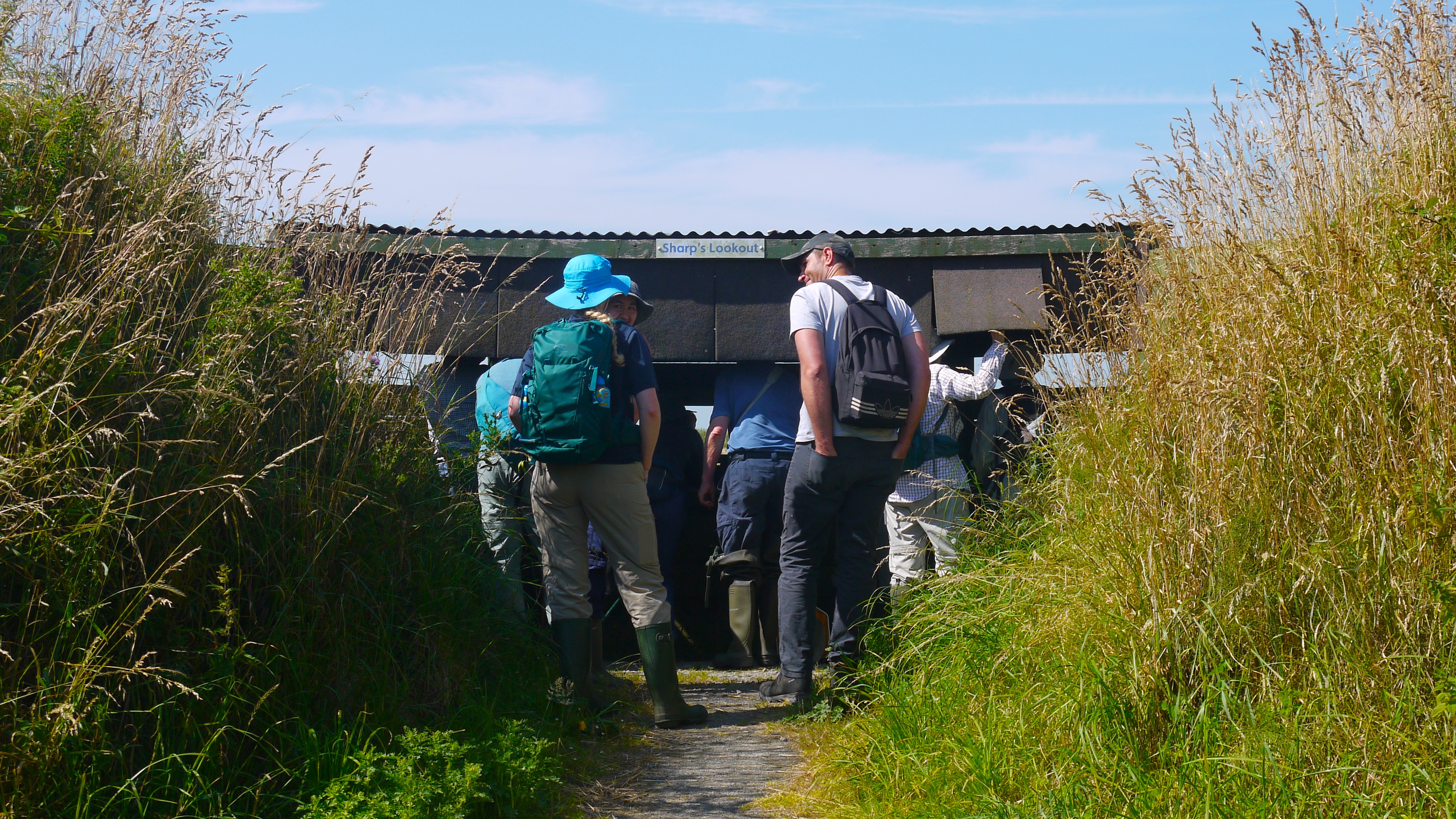
We began by walking along the Saltcot loaning to reach the saltmarsh access point, with a mandatory break enroute to twitch the glossy ibis who were presenting well in the Folly Pond – a much more mobile attraction than the group are used to!
Phase 1: Freshwater Transition Zone
Back on to plants, we entered the saltmarsh on the landward edge – freshwater transition zone. Here you can find a wide variety of species, from grasses such as creeping bent (agrostis stolonifera), tall fescue (schoenoplectus arundinacea) and couch grass (elymus repens) to flowering plants like meadow buttercup (ranunculus acris), common restharrow (ononis repens) and parsley water dropwort (oenanthe fistulosa).
But beware, Hemlock water dropwort (oenathe lachenalii), a close relative can also be found on the merse. Colloquially known as ‘dead man’s fingers’, all parts of the plant are highly poisonous whilst its sap can cause rashes and blistering if exposed to bare skin.
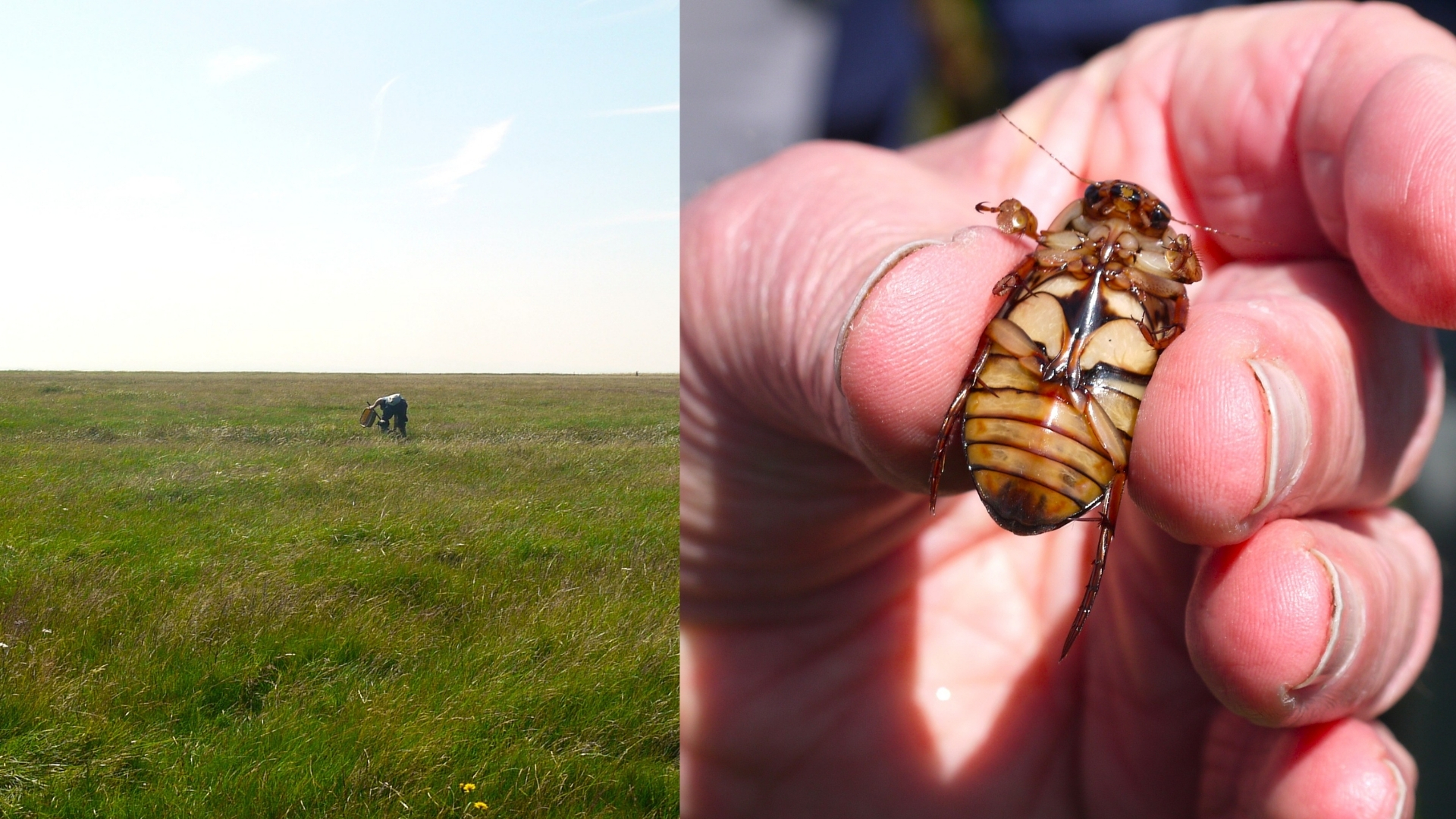
Another temporary tangent occurred in the form of Bob, our resident beetle expert who found a species of great diving beetle. Great diving beetles are voracious predators, hunting tadpoles, small fish and even other beetles – luckily humans are a little large for their appetites. After sufficient oohing and aahing from the group, Bob released the beetle back to its natural habitat.
Phase 2: Stable Merse
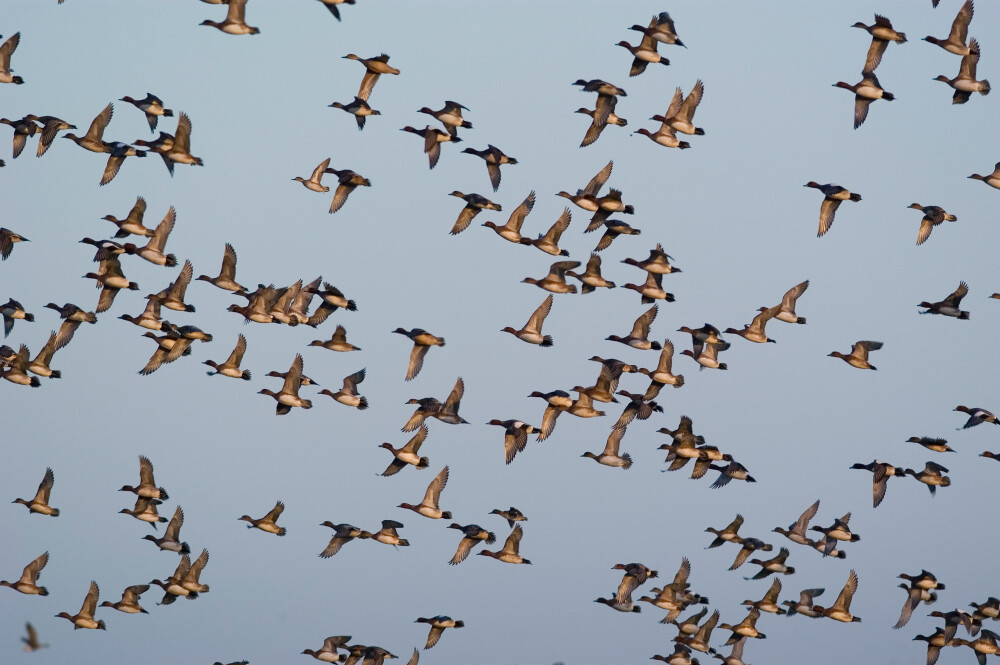
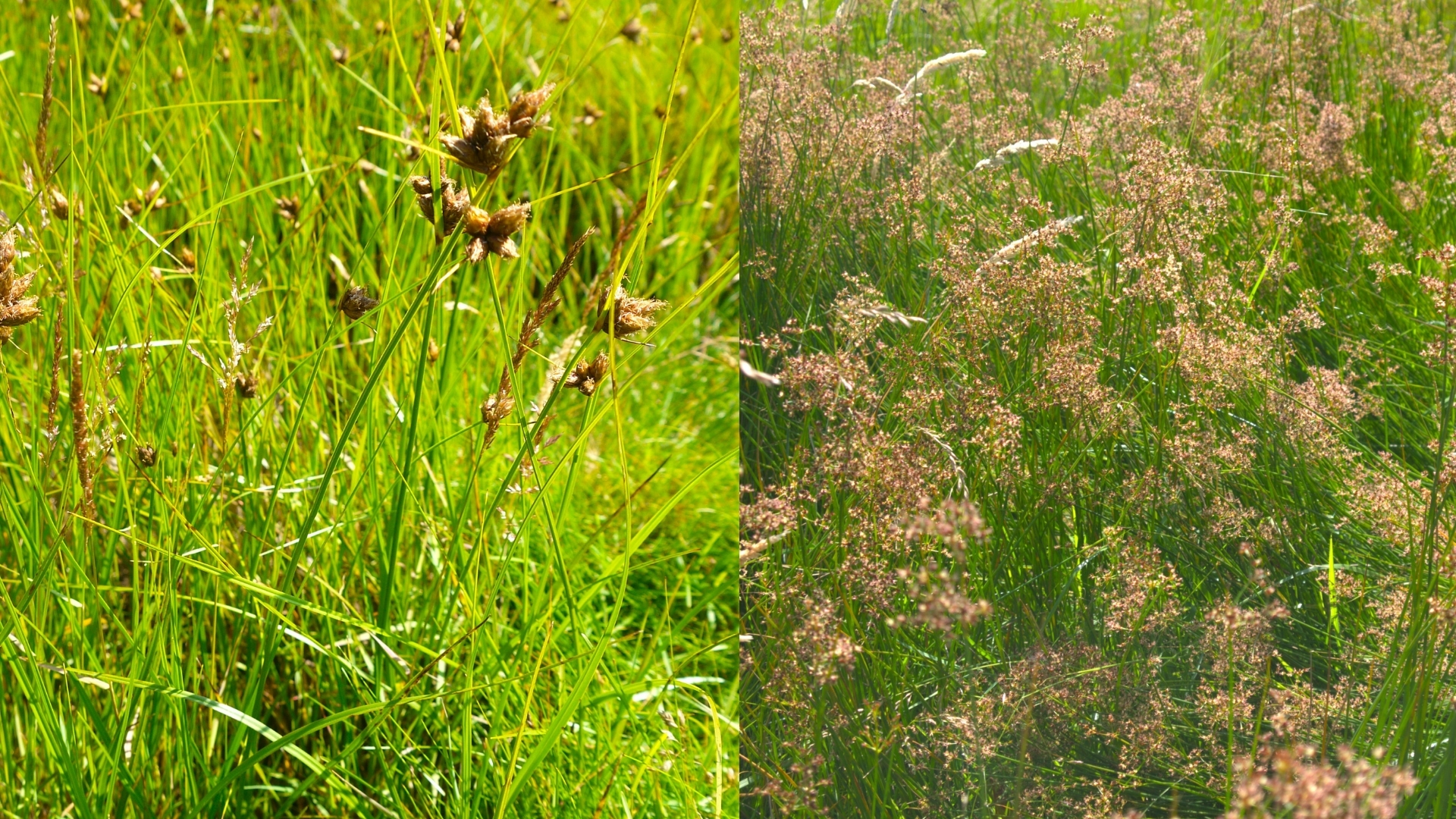
We then moved on to the middle zone known as stable merse. If you’re a rush lover, this is the place for you, as we encountered a whole array of rush species as we moved further out onto the merse. Jointed rush (juncus articulatus), sharp-flowered rush (juncus acutiflorus), soft rush (juncus effusus) and saltmarsh rush (juncus gerardii) were all spotted, the latter being a particular favourite of wigeons who eat the small round fruits.
Sea club rush (bolboschoenus maritimus), a distinctive chunky fruit atop sharply angled three-sided stems typical of the sedge family, despite the deceptive common name. This species favours saline habitats with regular flooding, often indicating standing water, as one member of the group found when he stepped on a patch only to lose his leg to the marshy water below.
Phase 3: Lower Zone
Continuing to the lower zone, where the newly formed merse lies we found one of my favourite saltmarsh species: sea aster (tripolium pannonicum). Other finds included greater sea spurrey (Spergularia media) with its delicate white flowers and sea arrow grass (triglochin maritimum), instantly recognisable by its unique flower stems.
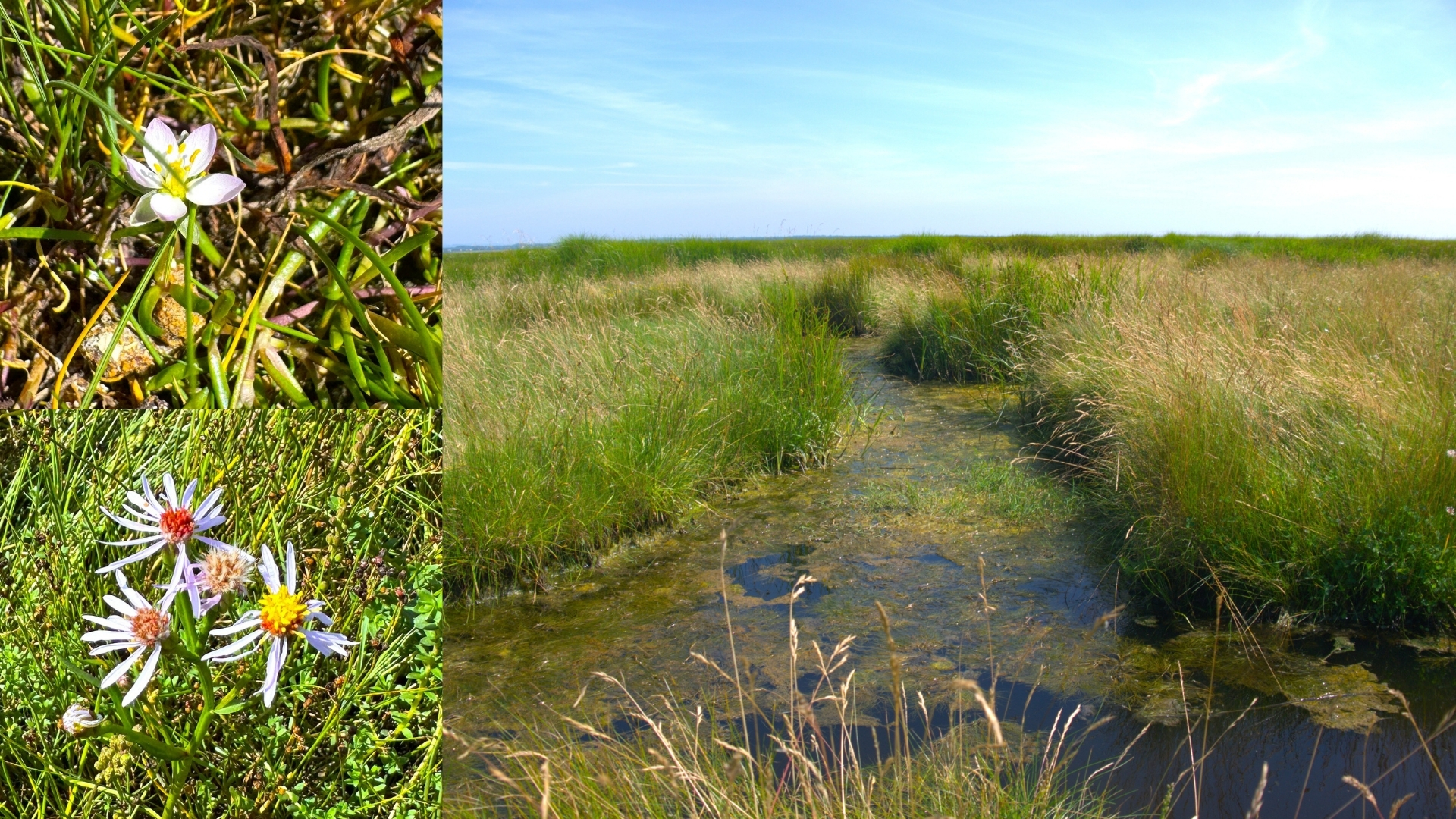
We then came to the creek system, a complex series of tidal creeks, pools and pans. After some trial and error to find a route through (unfortunately google maps hasn’t cracked this one yet) we meandered through to find fennel pondweed (stuckenia pectinata) dominating the pools alongside sea rush (juncus maritimus) – another rush species!
Phase 4: Mudflats
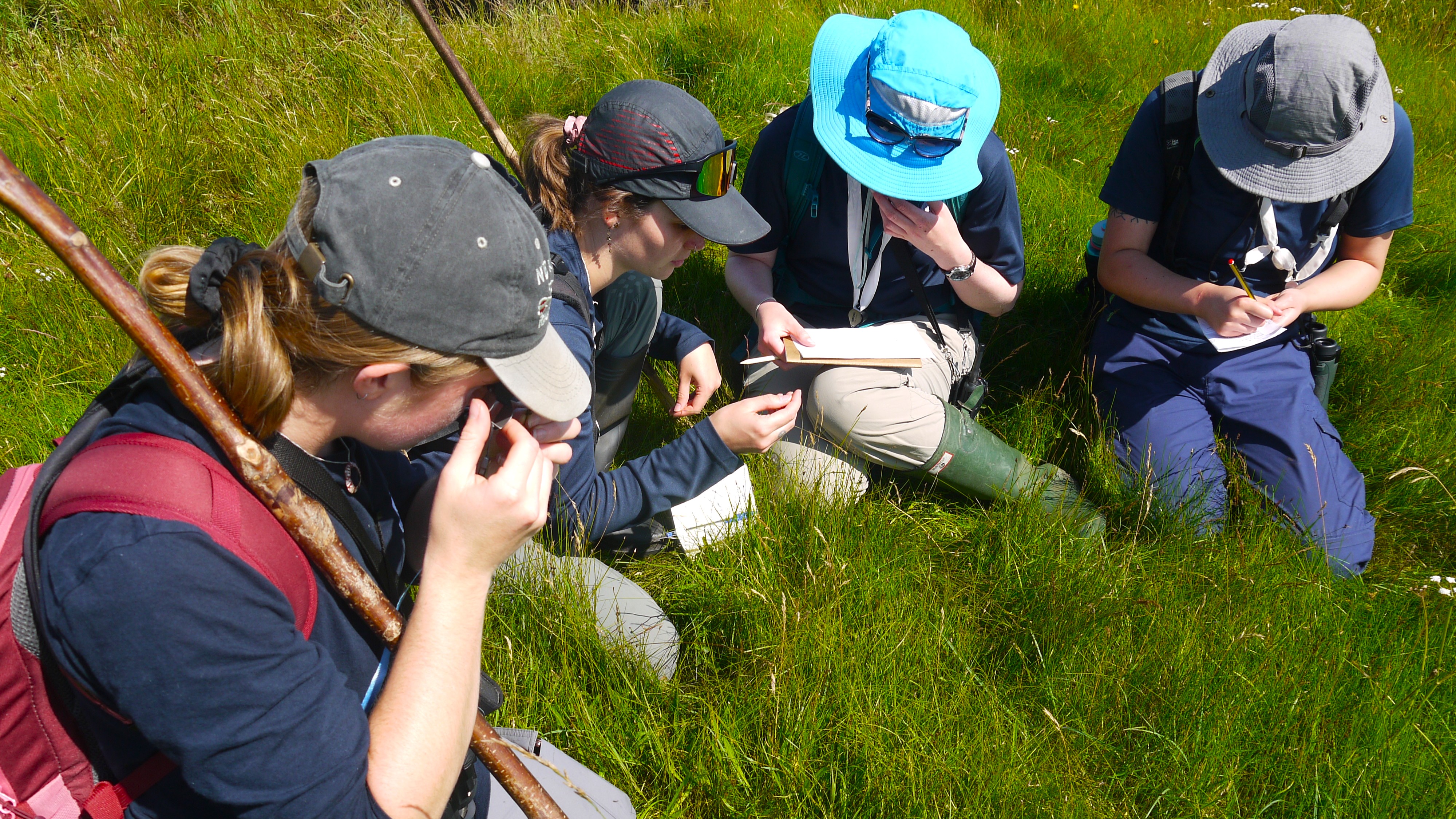
Finally, we came to the pioneer saltmarsh on mudflats. Here the variety of species begins to decrease dramatically as the area is frequently flooded, with salt tolerant characteristics necessary for survival. The area is dominated by glasswort (salicornia europaea) and common saltmarsh grass (puccinellia maritima), a fine and wide spreading grass which plays a key role in trapping silt deposited by the incoming tide. Interspersed with these were patches of annual sea-blite (suaeda maritima), a delightful plant whose tiny flowers can only be fully appreciated by using a hand lens. Out on the far edge on the saltmarsh, you can begin to appreciate the true expanse of the merse, looking back the reserve seems a world away.
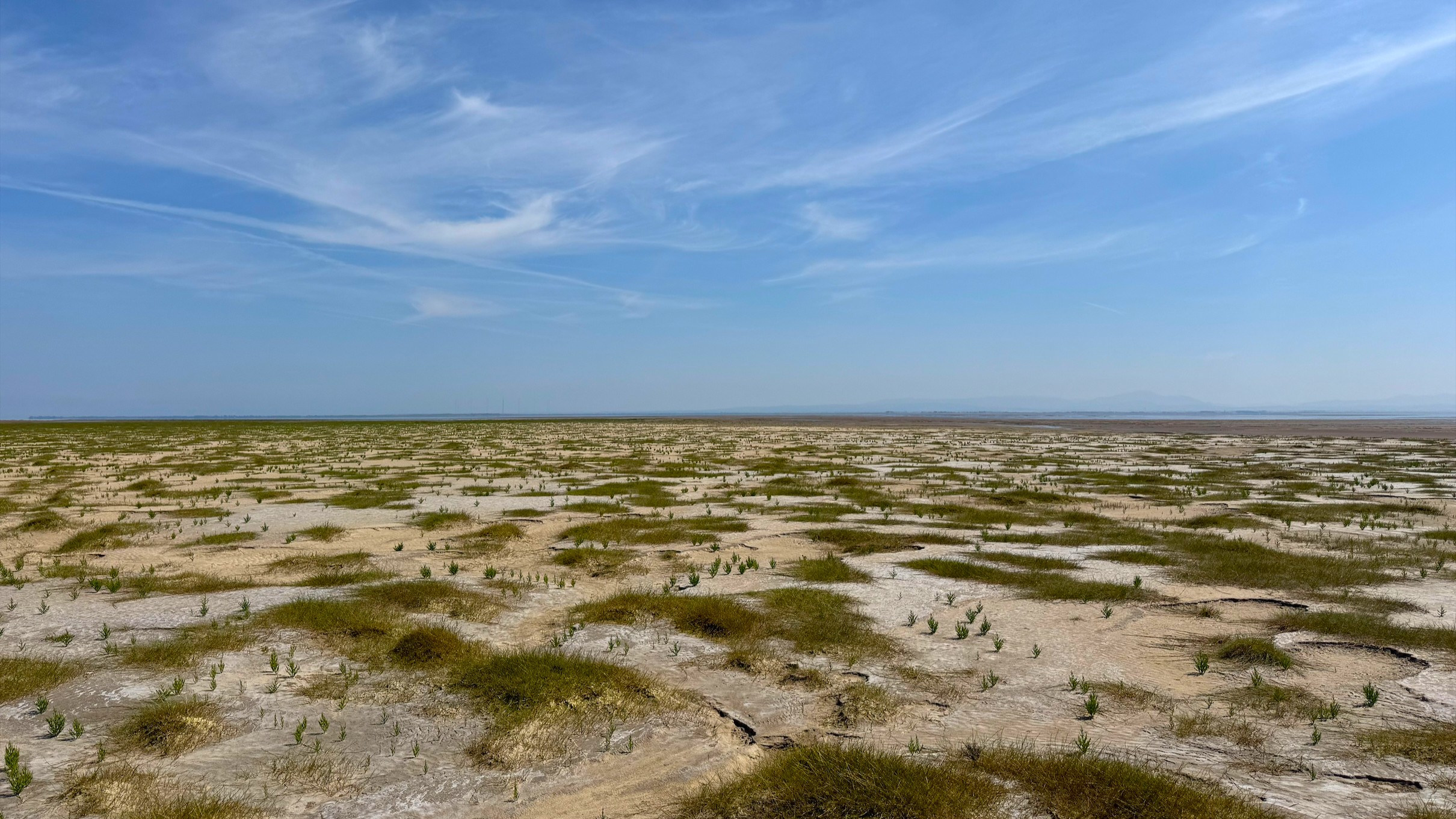
The saltmarsh at WWT Caerlaverock is steadily accumulating, meaning it is expanding outwards as it gains new material deposits which are then colonised and stabilised by pioneer plants. Ever in equilibrium, as we gain here the saltmarsh further down the coast to our west is shrinking as coastal processes erode the fragile saltmarsh edge.
If you would like to join on any BSBI outings across Dumfriesshire please contact Chris directly at dumfriesbotany@gmail.com. Recorders for other Vice-Countries and their associated BSBI groups for across the country can be found at https://bsbi.org/in-your-area/local-botany.
By Emma Chinnery, Project Officer