If you walk through our Wildlife Gardens, you’ll be surrounded by all kinds of wildlife – flies, wasps, moths, butterflies, damselflies and even dragonflies.
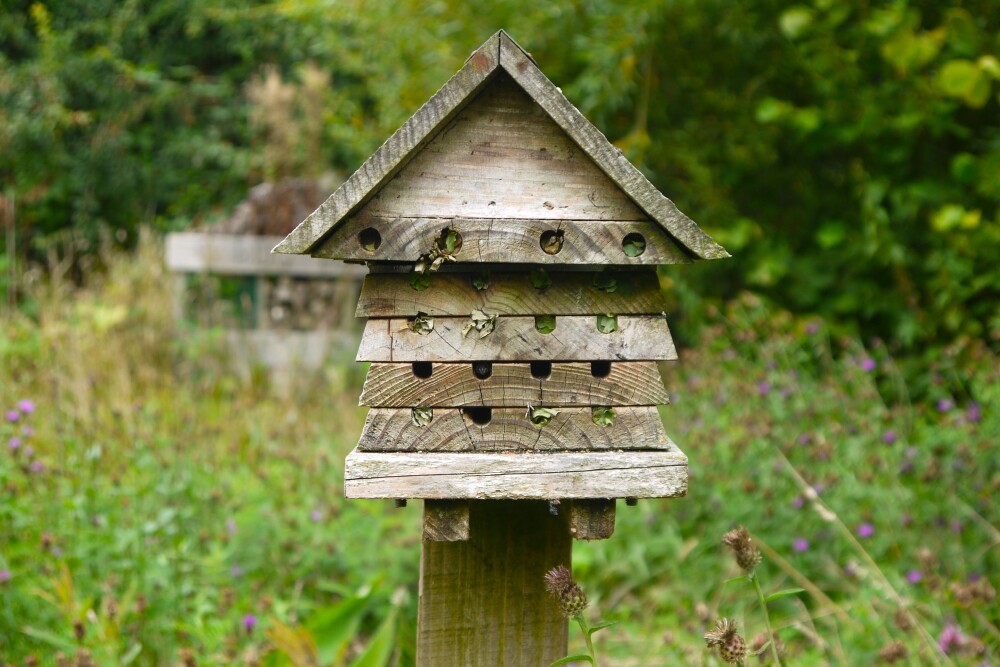
But who chooses to make their home in our handmade bug hotels? Solitary bees!
While wandering through the gardens one day, I spotted a little bee using one of our hotels and lining one of the cavities with leaves. I was certain I’d spotted a leafcutter bee - one of 250 species of solitary bee.
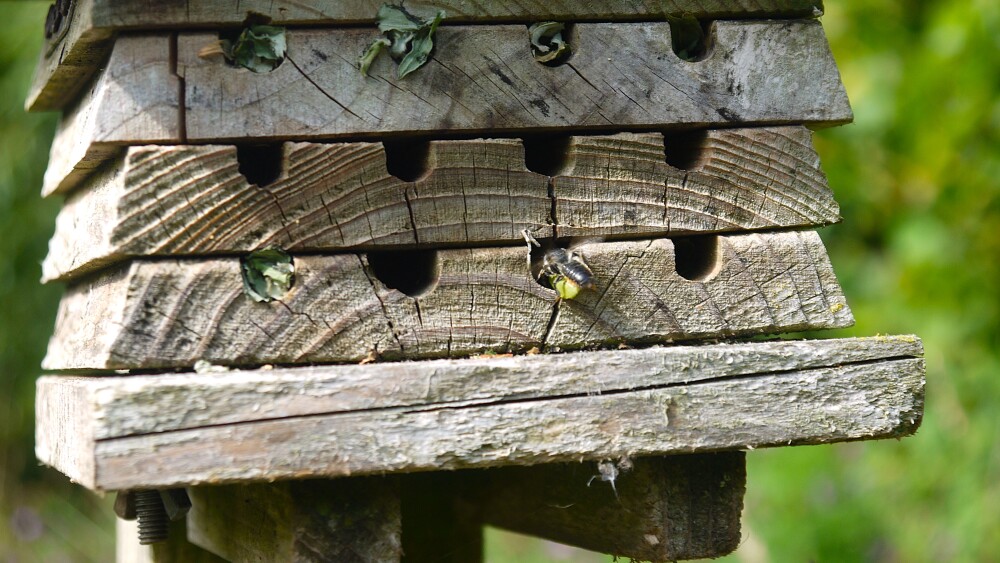
What are leafcutter bees?
These master crafters carefully take circular pieces of nearby leaves, leaving behind perfectly shaped semi-circles. They then carry these tiny pieces of greenery back to a suitable cavity, whether that’s a hollow stem, a piece of wood or one of our handmade bug hotels. Here, they begin one of the most important parts of their lifecycle: building a nest.
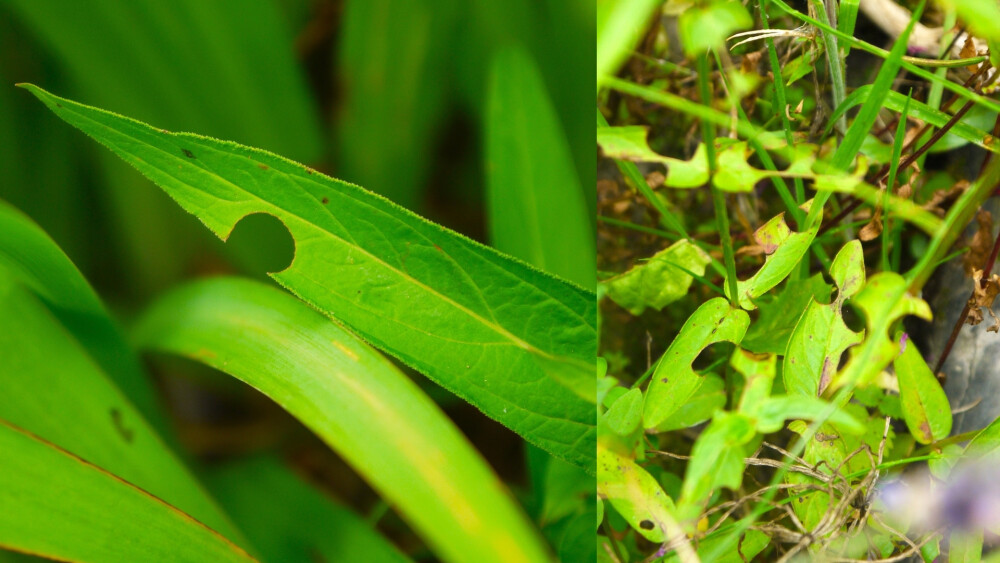
Female leafcutter bees can lay around 30–40 eggs, creating individual cells within a single cavity. By overlapping pieces of leaf and sealing them together within the cavity using secretions, they form neat, tubular chambers. A single egg is laid in each cell, the leaves creating a kind of ‘sleeping bag’ that provides warmth and nourishment as it develops.
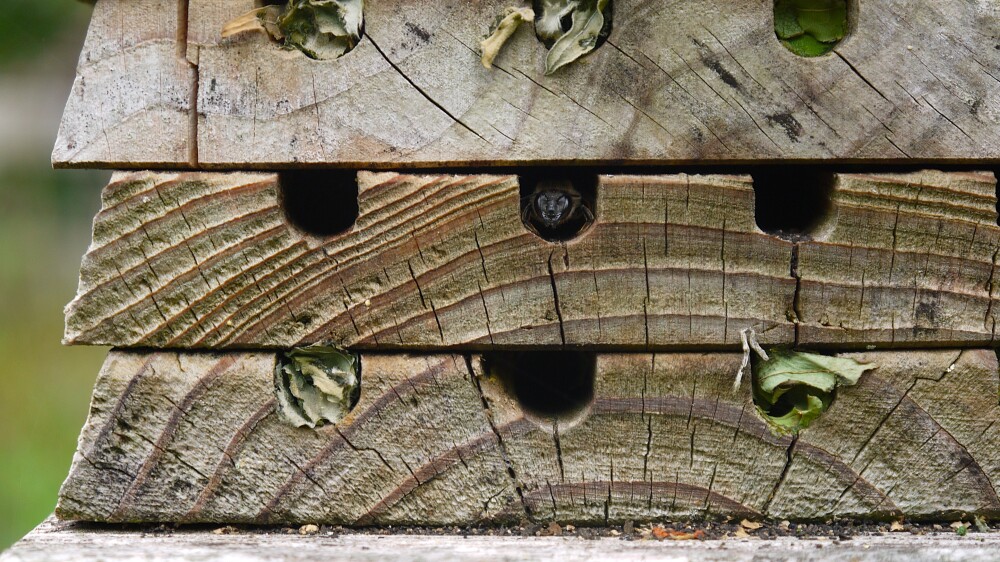
The life cycle of a leafcutter bee
With a lifespan of only around two months, there’s no time to waste. Leafcutter bees mate, build their nests, and provide for their young during their short adult lives. The eggs hatch and the larvae feed on the stores of pollen and nectar left for them, continuing their development through the winter. When spring arrives, the males emerge first, followed by the females, ready to begin the cycle all over again. After mating, the males soon die, while the females set off to find nesting sites and collect their precious little leaf circles for new nests.
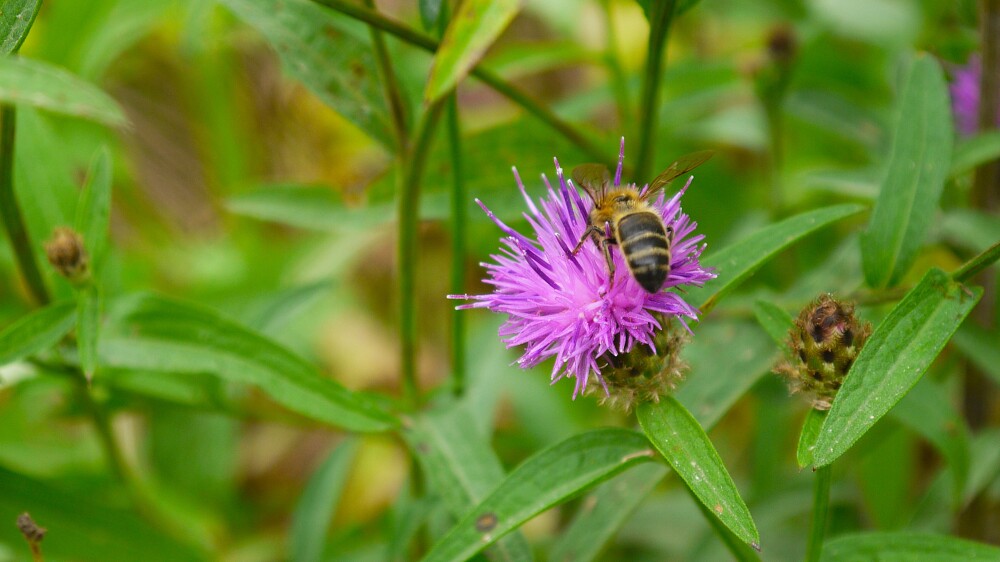
How leafcutter bees help pollinate flowers
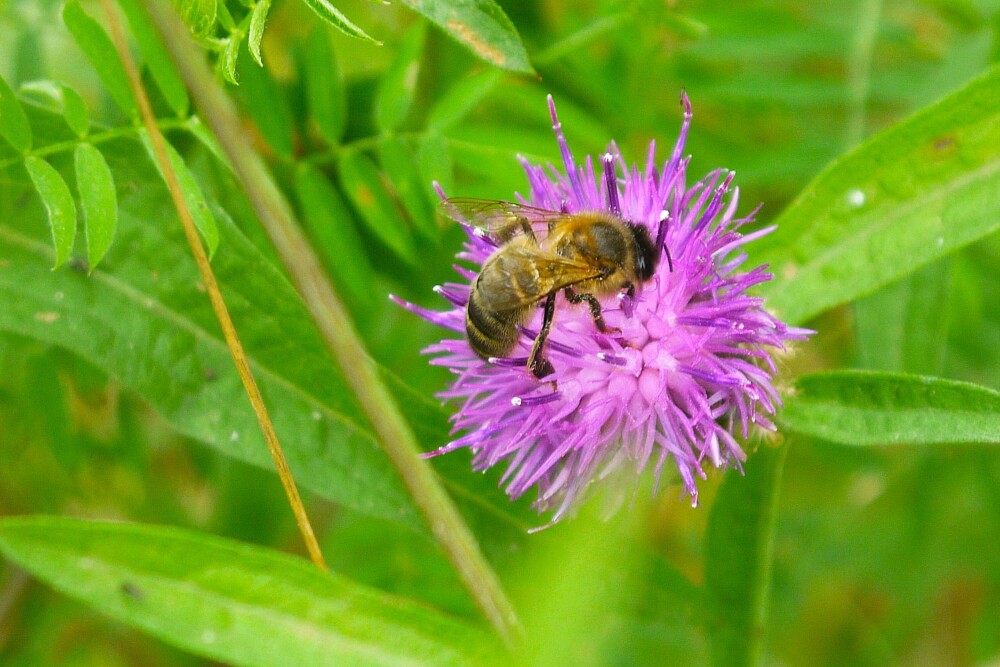
Leafcutter bees are also excellent pollinators. Unlike honeybees, which carry pollen in specialised pollen baskets, leafcutter bees collect it on the Velcro-like underside of their abdomens using hairs that help pollen stick to them. As they move from flower to flower, some of this pollen drops, making them super effective pollinators.
Here in our Wildlife Gardens, I’ve been lucky enough to spot female leafcutter bees busy preparing their nests for the next generation. Being able to witness such a fascinating, age-old, natural process up close is an honour, and we’re so glad that this area, which used to be the farmhouse garden and septic tank, has become so full of life.
So, what else do you think you might spot in our wetland and wildlife paradise?
By Georgia Pope, Engagement Officer