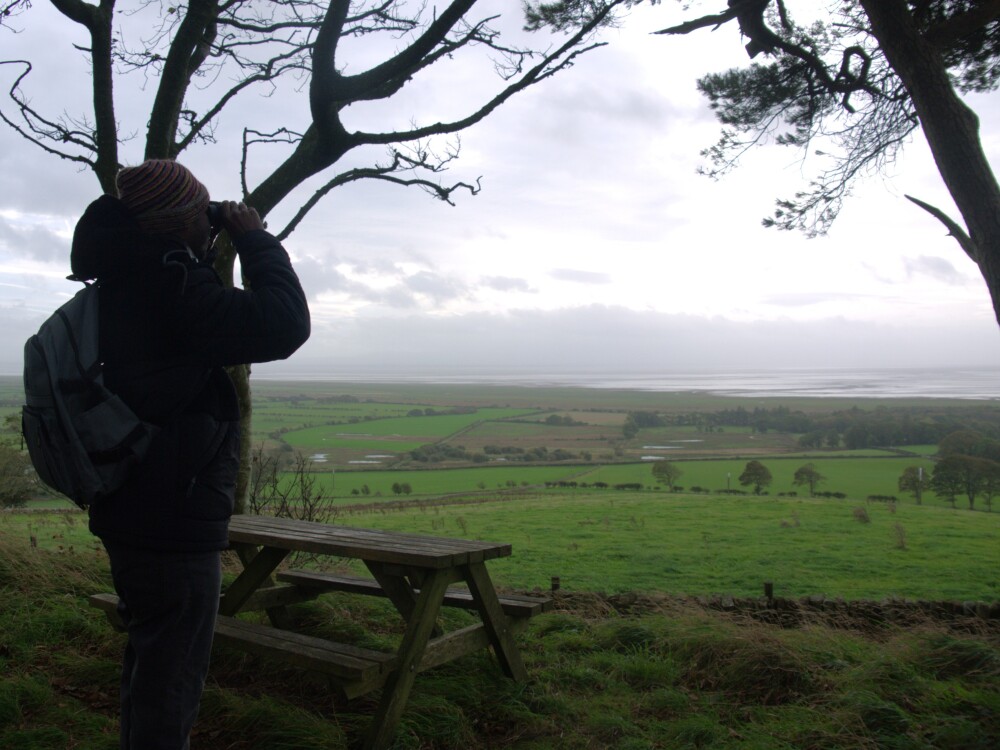
With the Wild Goose Festival underway, WWT Caerlaverock recently hosted a guided 6-mile walk up Wardlaw hill and beyond.
We walked with a brilliant group of people from all walks of life, enjoying a peaceful wander through the dramatic landscape of Caerlaverock, and we learned about the thousands of geese that flock here every year.
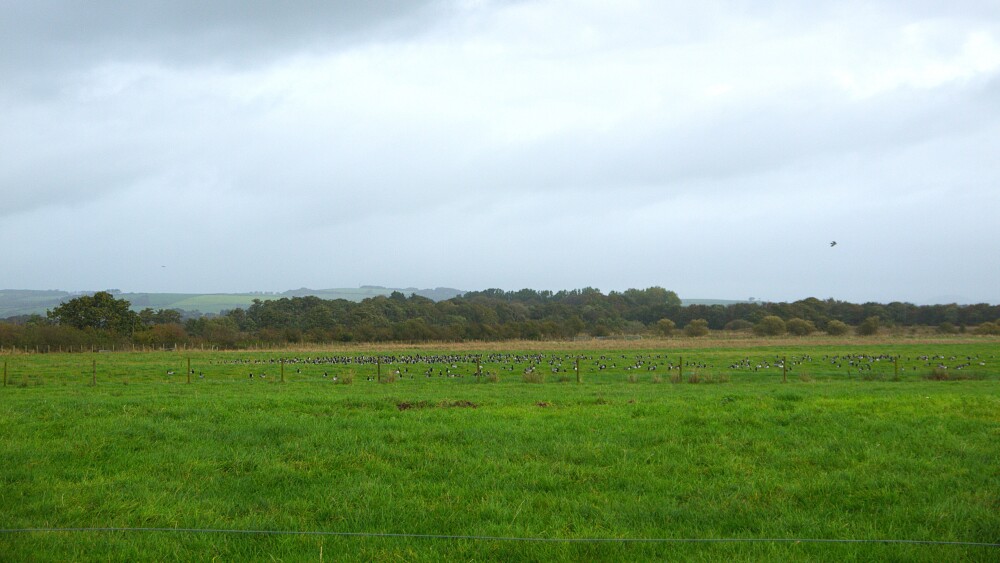
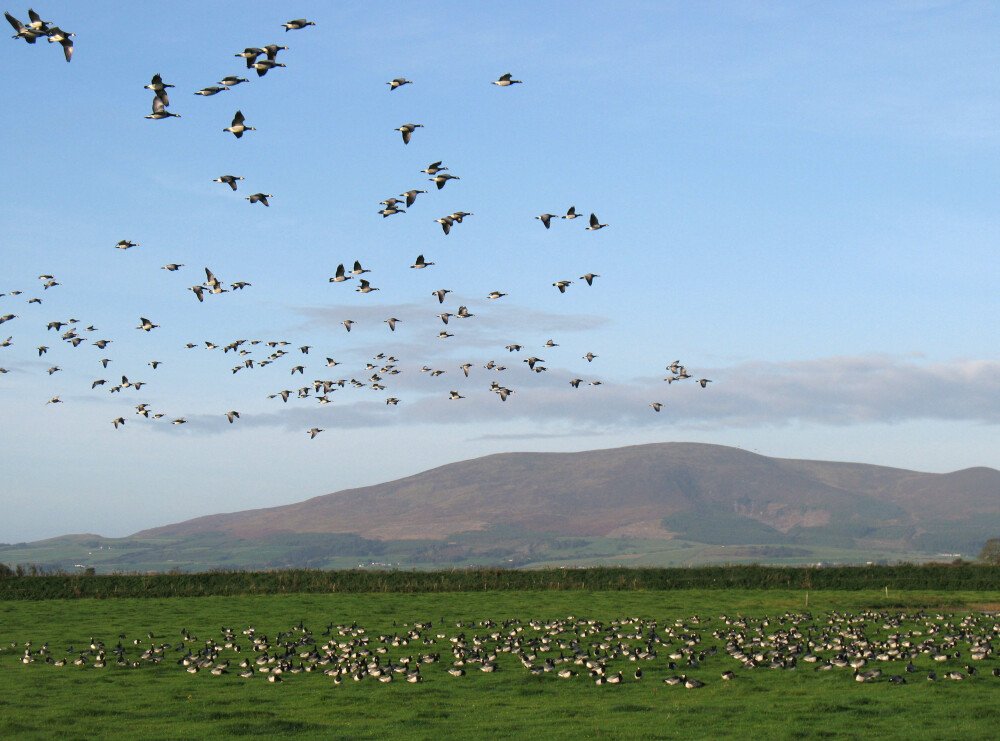
Although grey skies, it was a rather nice mild morning. Normally, if I saw this scene from the window, I would choose against going for a walk, but I was very glad to be outside enjoying the countryside. After some brief introductions, we set off down the quiet lane away from the reserve. Five minutes in we had our first stop to marvel at a flock of barnacle geese sitting in a nearby field. Everyone had a go with their binoculars, and, for some, had their first look at a barnacle goose. Dave, our site manager and guide, then gave everyone the run-down of different goose calls, so when more geese flew overhead, we all pricked our ears to pick out the tell-tale ‘yap’ of the barnies.
We continued down the lane and stopped again, where Dave painted a picture of what the landscape would have looked like a thousand years ago. Some small bumps in the road tell a hidden secret – they are actually evidence of old storm beaches, meaning the ground we stood upon was once submerged by the sea. Due to something called isostatic rebound (the rise of land after the removal of the huge weight of the ice sheets after the ice age), as well as sediment secretion on the salt marsh, the current coastline now lies several kilometers away, showing just how dynamic this landscape can be.
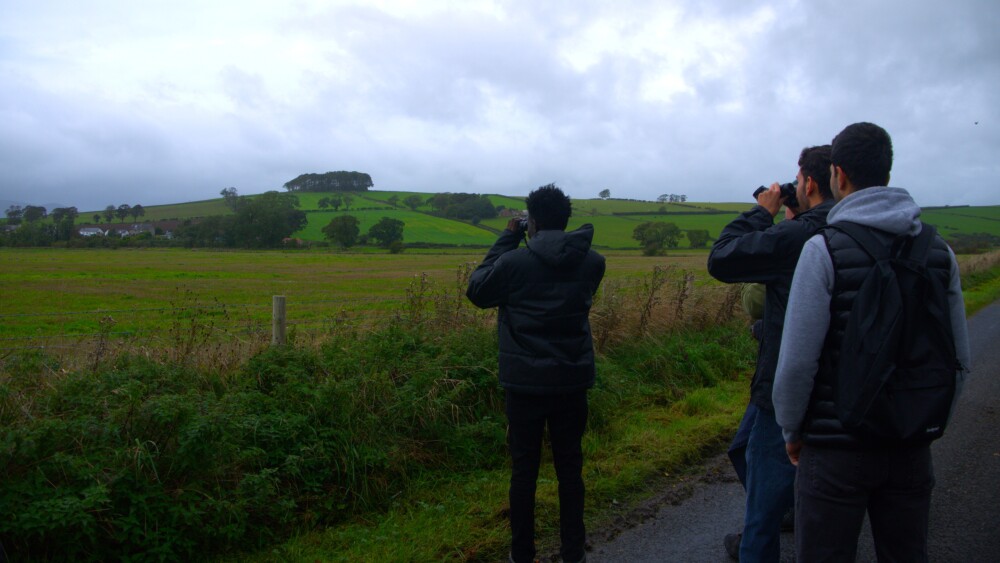
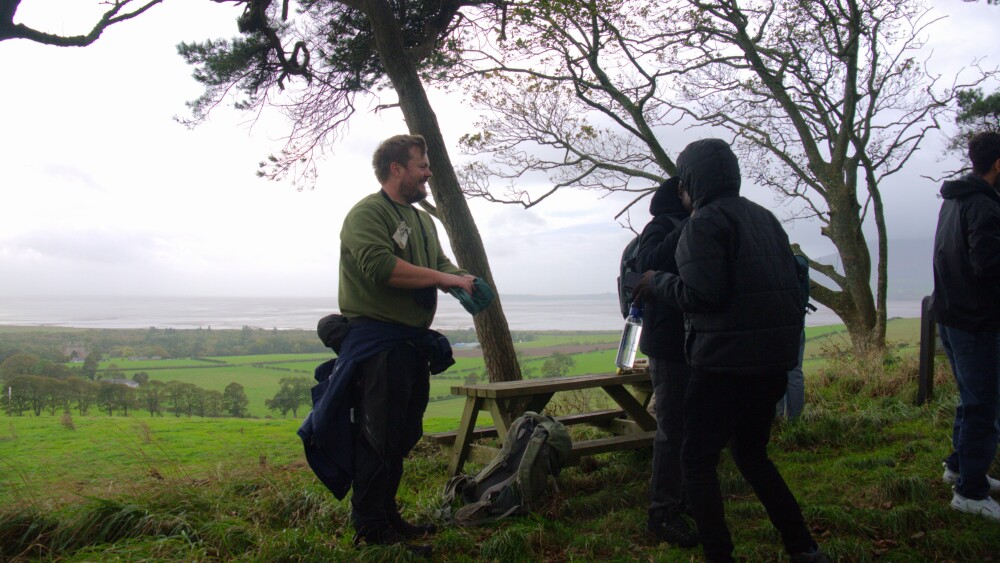
Then the slog up the hill began. Steady pace meant we reached the top with ease, with thankfully no casualties from hopping over and side-stepping the many badger sett entrances. We were greeted by the fantastic panoramic views and howling winds found atop Wardlaw Hill, stretching the entire width of the Solway to the Moffat hills behind. Brief celebrations of flapjacks and photographs were had, and then we descended to less exposed ground.
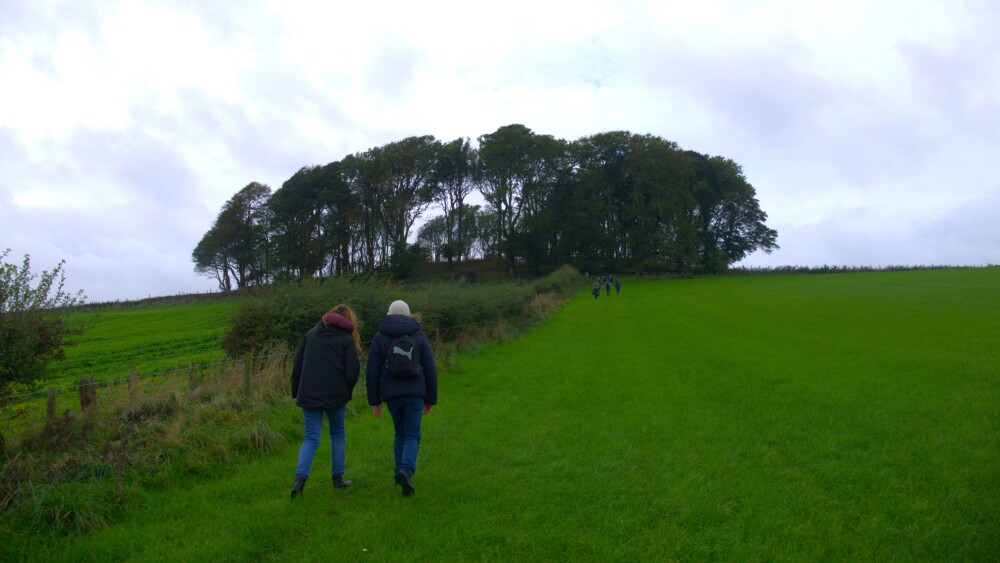
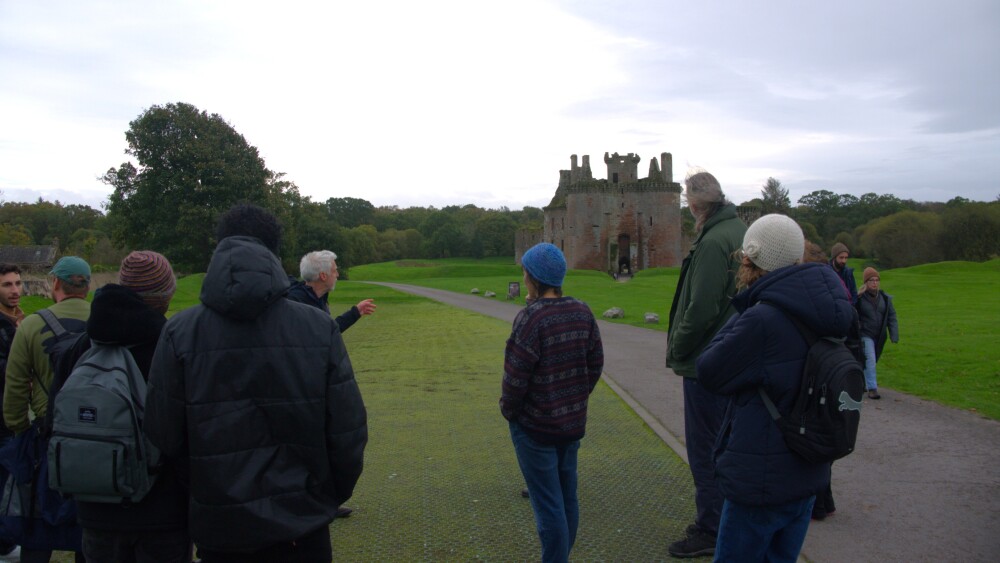
Making our way to Caerlaverock Castle, we learnt of its rich history and its ability to withstand the test of time. Built over 800 years ago and witness to many great battles and sieges, the castle still stands proud today.
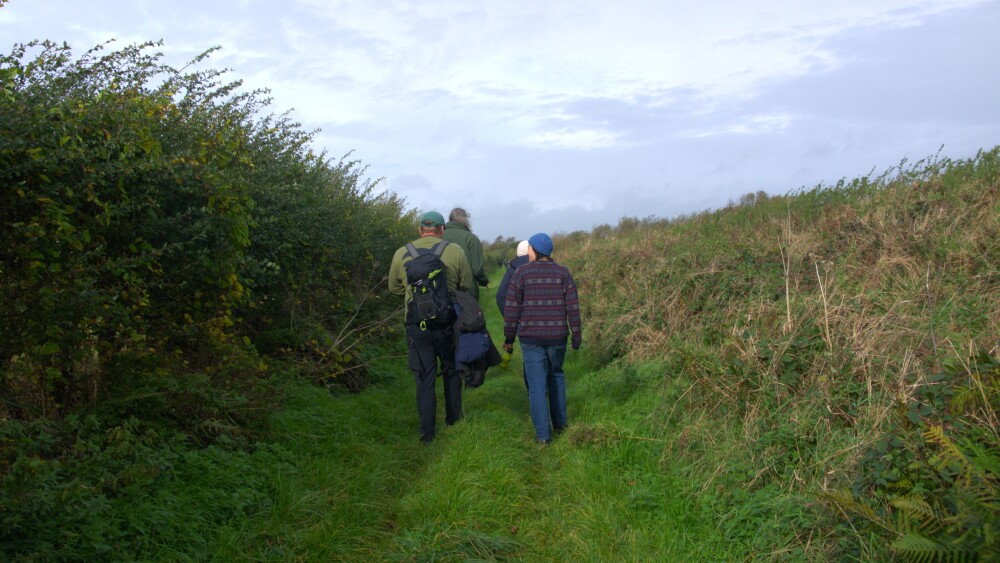
Winding through Castle Wood, we passed the old castle ruins and followed the meandering pathway until we emerged on the edge of the saltmarsh. Looking out at the vast expanse, we spotted the brilliant white of a little egret, swooping between the creeks. We plodded along the boardwalk of the NNR and made our way down the hedge lined link path all the way back to WWT Caerlaverock gates.
Obviously, any can read about Caerlaverock’s rich history, learning of the clan and tribal warfare, the development of the nature reserves, and the geographical changes this dynamic area has experienced. But reading about it pales compared to actually being in it – taking your time to feel the air, the trees, the winds, see the lines and waves of the horizon, hear the calls of the iconic barnacle geese above you.

Photos and words by Izzy Rigby, Reserve Warden