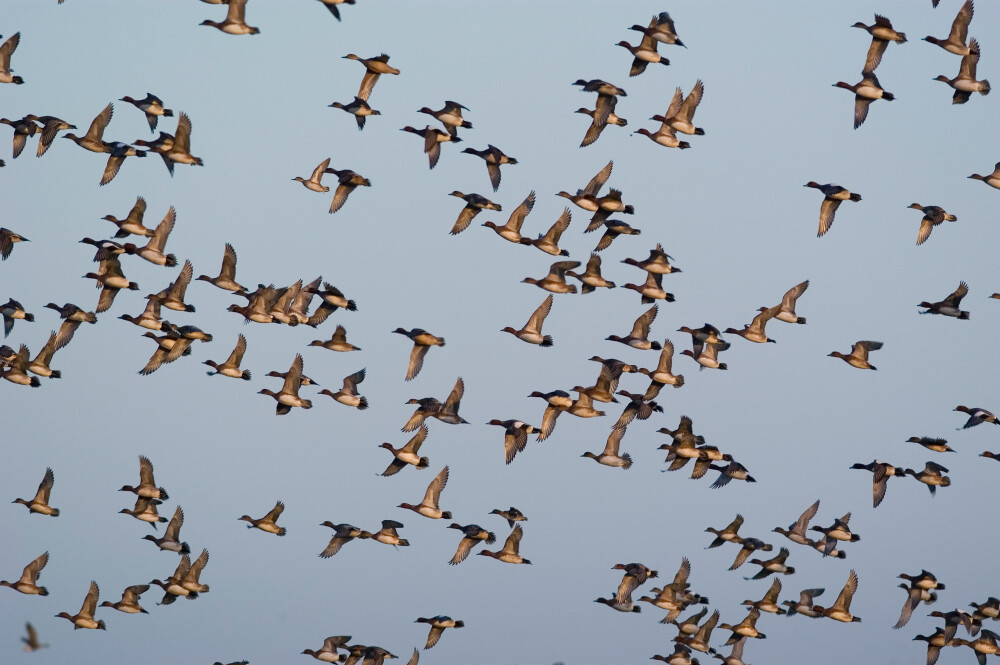
As autumn and winter approach, the number of ducks we have at WWT Caerlaverock in increasing. Their arrival heralds the start of the colder months and provides a friendly welcome for our other wintering birds.
Almost every single pond at our reserve is home to ducks now. As a currently guaranteed WWT Caerlaverock sight, we want to help you learn about the various duck species we have here, and help you build your duck identification skills, so have created this handy Duck Directory to support you.
Some identification tips
Firstly, when identifying duck breeds, you need to take into consideration whether they are in their breeding plumage or eclipse plumage. The males get their best feathers after their first autumn, marking the start of winter with bright and vibrant colours, helping them impress and secure a life-long mate.
Secondly, you can find help in identifying ducks by the colour of their speculum, that is, the block of coloured feathers on the trailing edge of their wings. Derived from the Latin word speculus, meaning ‘mirror’, a duck’s speculum can appear incredibly vivid because it reflects light and appears shimmery and iridescent. Each duck species has a different coloured speculum.
Thirdly, if you are able to notice how and where a duck feeds, then you’ll have more clues as to what species they are. Ducks are either dabbling ducks or diving ducks. Dabblers feed at the top of the water, sometimes sticking their tail feathers in the air or ‘dabbling’ across the water’s surface. Divers, unsurprisingly, submerge completely to feed, finding fish, clams, and other underwater snacks to feed on. Dabblers are more likely to be found in shallow ponds or at the water’s edges, while divers are more likely to be found in the deep, central areas, where there is depth beneath them to dive.
Commonly found/already here
These duck species are regular visitors, in large numbers. You can see most of these ducks already here at the reserve.
Mallard (Anas platyrhynchos)
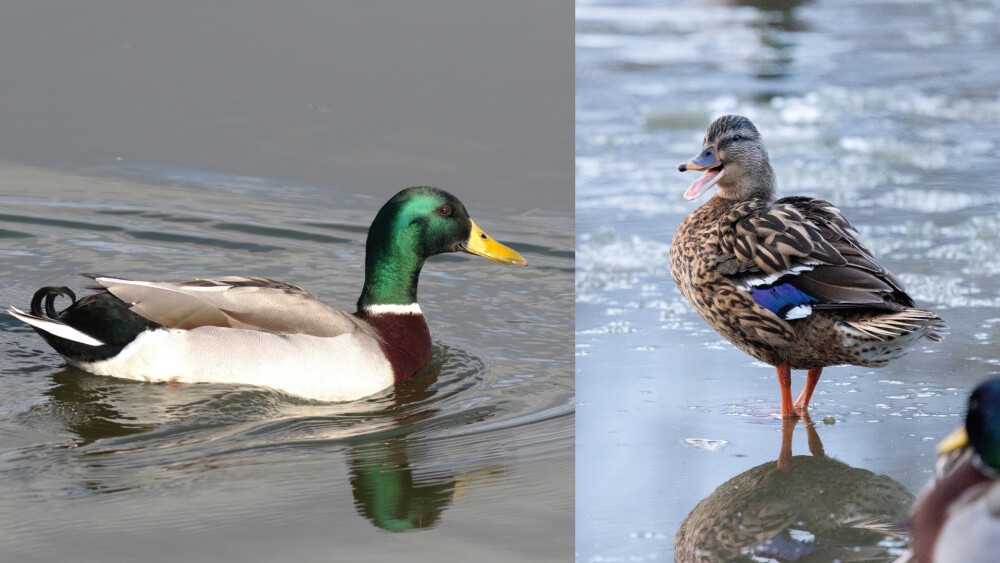
Our most familiar duck, the mallard, is a large and heavy duck. While both sport bright orange legs, it is only the female who quacks. These ducks are dabblers, so are often seen eating grain and with their tail feathers pointed to the sky.
- Male: iridescent green head, yellow bill, brown breast, light grey body with lighter flanks
- Female: mainly brown, pale orange and grey bill
- Speculum: purple-blue with white edges
Wigeon (Mareca Penelope)
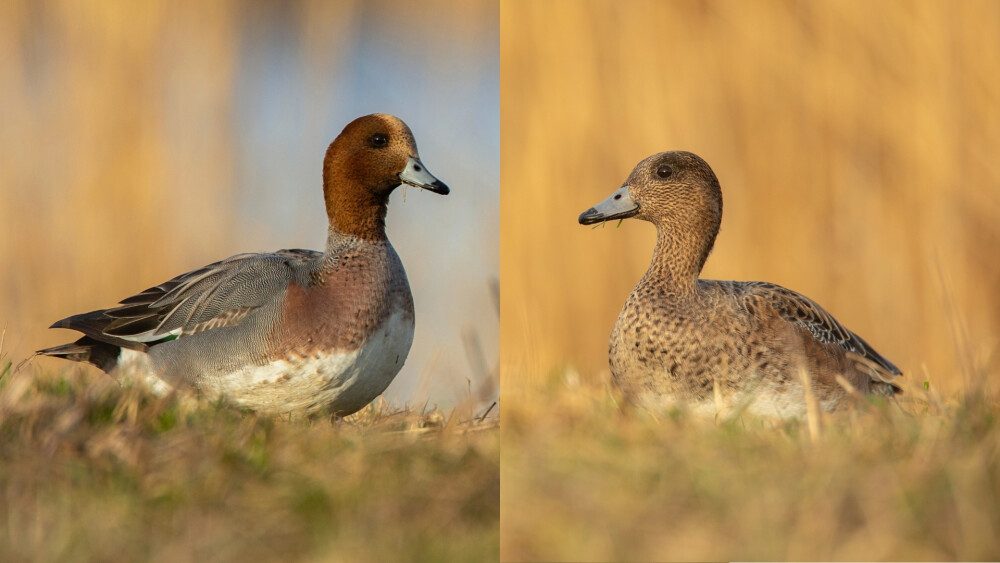
These are a small sized dabbling duck with a round and small head, whose favourite habitats are open wetlands. They are also very vocal, and the males have a high-pitched ‘wee-yoo’ whistle.
- Male: chestnut head with a yellow forehead, large white wing patch, white bellies, brown bodies, sometimes sporting a metallic green blob behind their eyes
- Female: grey-rust upper bodies with a white belly, bill and legs are blue-grey
- Speculum: dark green
Shoveler (Anas clypeata)
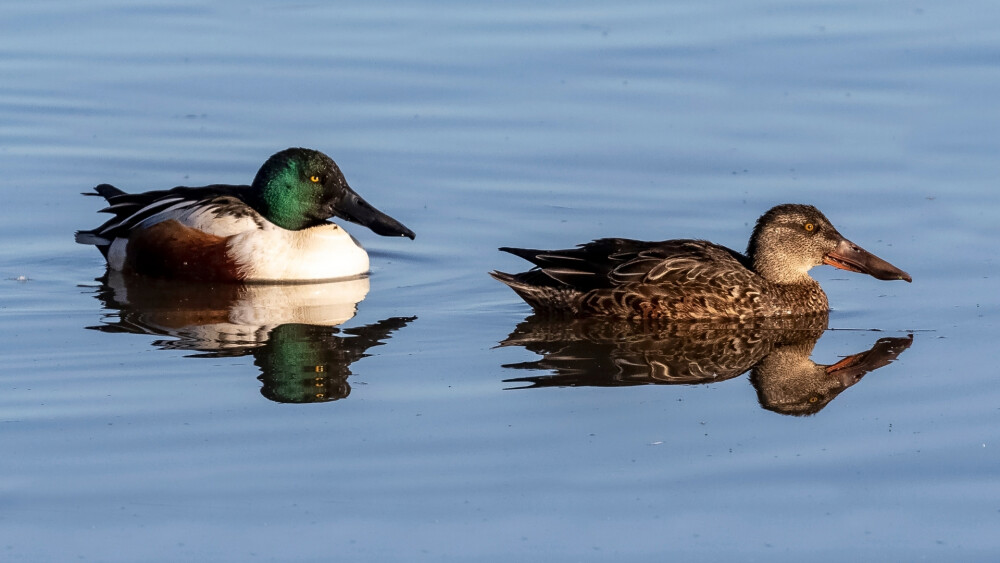
These dabbling ducks have unmistakable spatula-shaped bills, larger than any other duck breed you’ll find at WWT Caerlaverock. Once paired up they feed together – male and female swimming round in figures of 8 sifting the cloud of debris stirred up by their partners, in their own duck-styled ceilidh dance
- Male: dark green head, white bodies with chestnut sides, black feathers along back
- Female: mottled brown, can look similar to males in eclipse plumage
- Speculum: green with a white edge
Teal (Anas carolinensis)
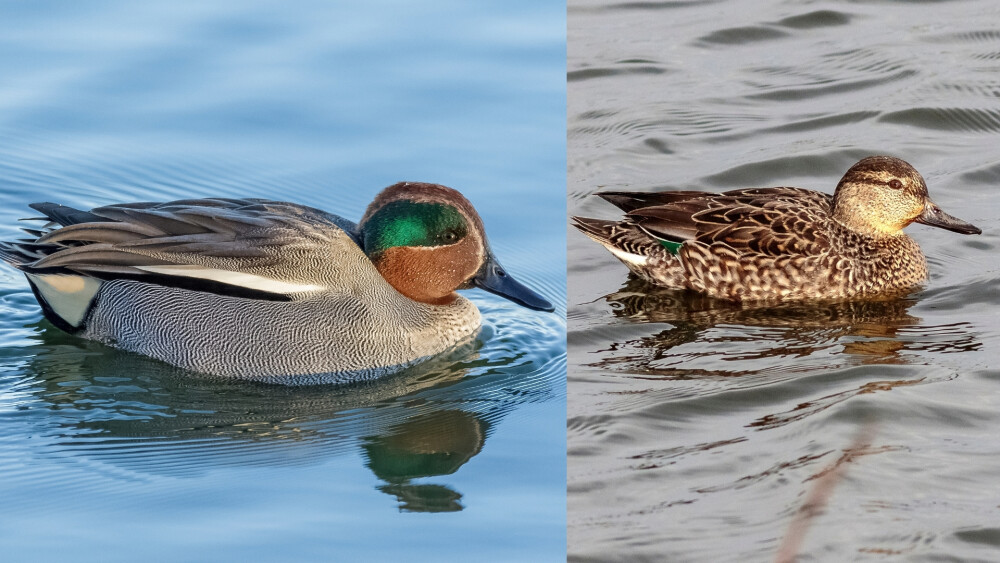
The smallest duck species native to the UK, the teal is a cute dabbler that enjoys low-lying wetlands. Our Teal Pond is named after them as they frequently make this waterbody their home over the colder months.
- Male: chestnut head, broad green eye patches, black-edged yellow tail, grey speckled body
- Female: mottled brown, sometimes an orange base to the bill
- Speculum: bright green
Gadwall (Anas strepera)
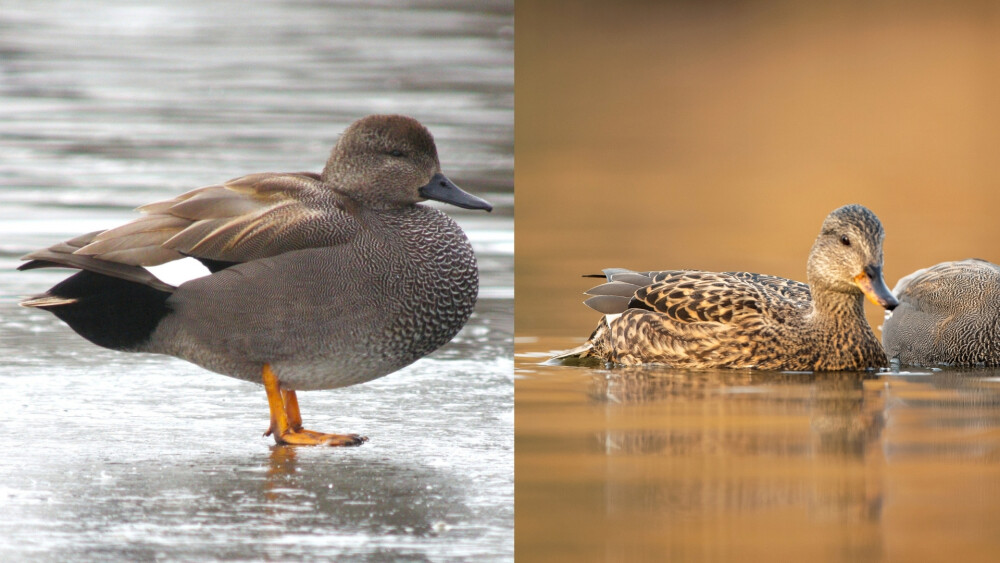
A little smaller than the mallard, the dabbling gadwall can be quite hard to distinguish (especially the females). They are greyer than the mallard, and their breeding population in the UK is steadily increasing.
- Male: grey-brown bodies, lighter belly, dark scaled appearance to breast, white underwings, grey-brown head, darker on top
- Female: mottled brown with similar white flashes in the underwings, yellow bill with dark spots. The female gadwall is almost indistinguishable from the female mallard – the key differences are a bright orange stripe along the bill, darker tail feathers, and a lighter belly
- Speculum: white, can be small
Tufted Duck (Aythya fuligula)
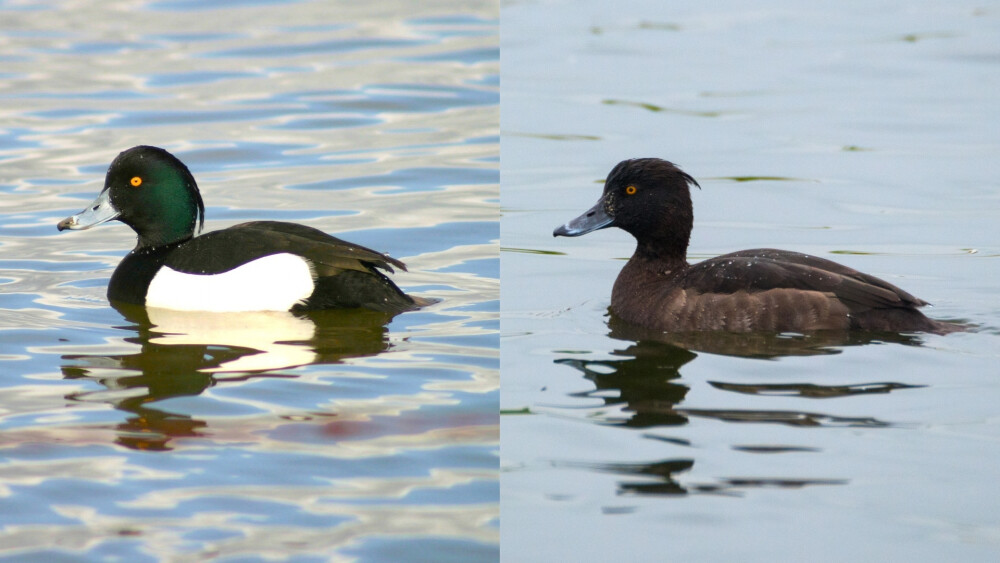
This species is a medium sized diving duck, smaller than a mallard. Our visitors of this species will reside in the Whooper Pond for the stretch of winter.
- Male: tufted black heads with green or purple iridescence (shorter crest in winter), brown-buff coloured plumage, black feet, pale blue bills with a black tip, white flanks
- Female: dark brown, white belly, shorter crest than the males, darker bill
- Speculum: white
Special guests
The following ducks make appearances over the reserve during autumn and winter. They aren’t as common or numerous as the first bunch, but they are still regular visitors to WWT Caerlaverock.
Shelduck (Tadorna tadorna)
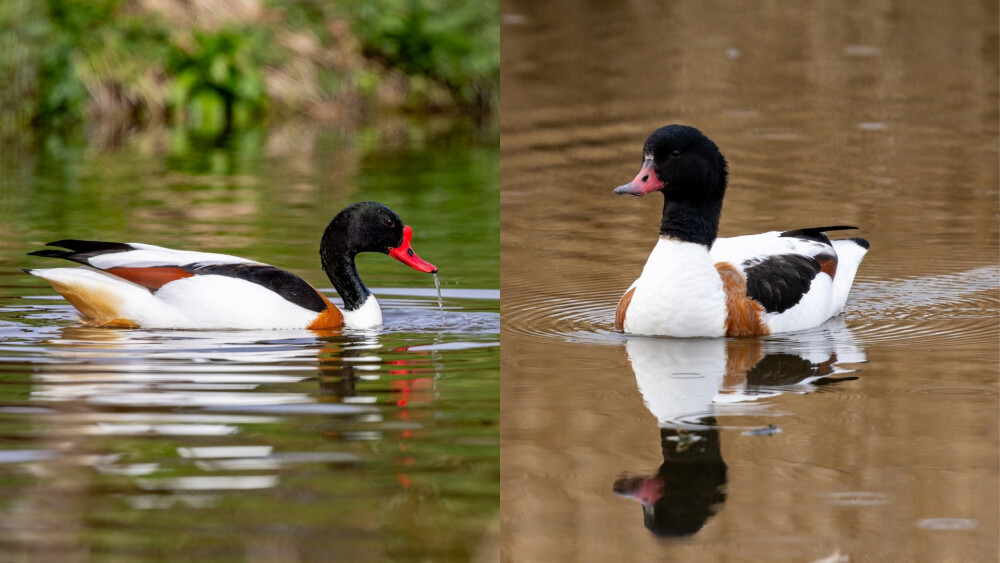
A large, colourful duck, larger than a mallard but smaller than a goose. This species is a diving species, so will be seen in the centre of deeper pools.
- Male: white body, broad chestnut band across shoulder area, a dark black-green head, bright red bill with round knob at the base
- Female: similar, but duller in colouration, bill is a paler red with no round knob
- Speculum: iridescent green, visible in flight
Pintail (Anas acuta)
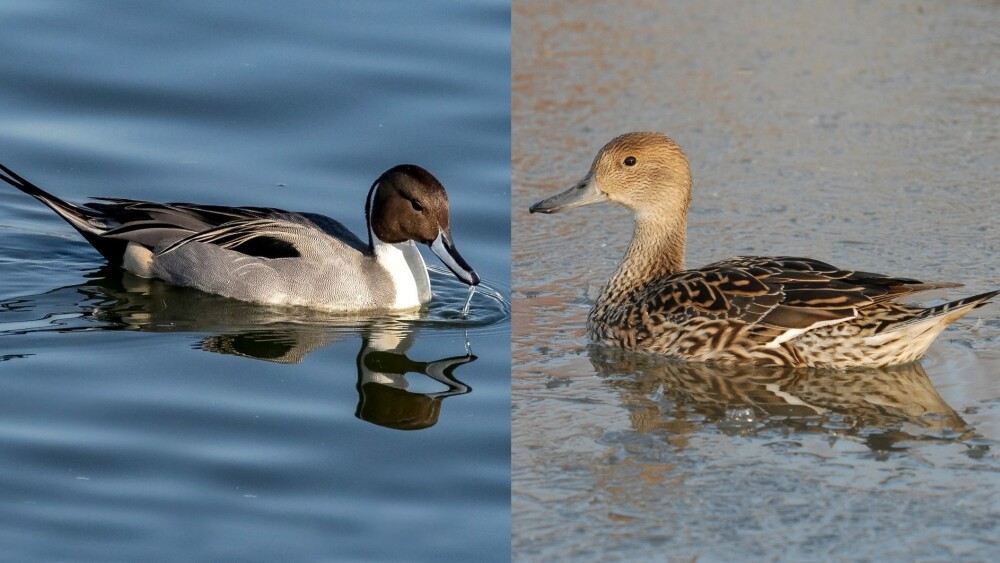
Slightly larger than a mallard, with small heads and long necks. In flight, this species tapers its tail downwards, making them much easier to identify in the air than other ducks. The most elegant of ducks – like catwalk models of the duck world.
- Male: chocolate brown heads, white stripe either side of the neck, grey bodies flecked with brown, and a long, pointed tail, bluish grey bill with central stripe, grey feet
- Female: pale brown head, mottled body, duller bill than males
- Speculum: green on males, bronze on females
Extra special guests
The following ducks have been known to visit the reserve, although they are very infrequent visitors, so if you spot one of these, you’re extremely lucky!
Goldeneye (Bucephala clangula)
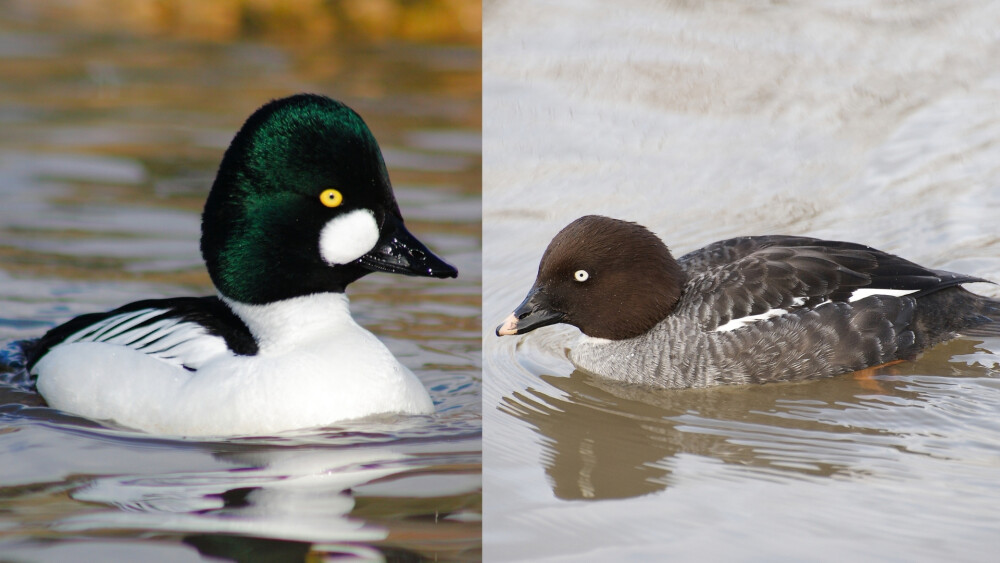
A medium sized diving duck, first nesting in Scotland in 1970. They have short bills, and make a distinctive whistling sound in flight.
- Male: white bodies, black back and rump, glossy green-black heads with striking white cheeks, bright yellow eyes, and a short black bill
- Female: slate grey-black plumage, white edges to the wings and lighter bellies, thin white neck band, black bulls with an orange tip
- Speculum: white
Greater Scaup
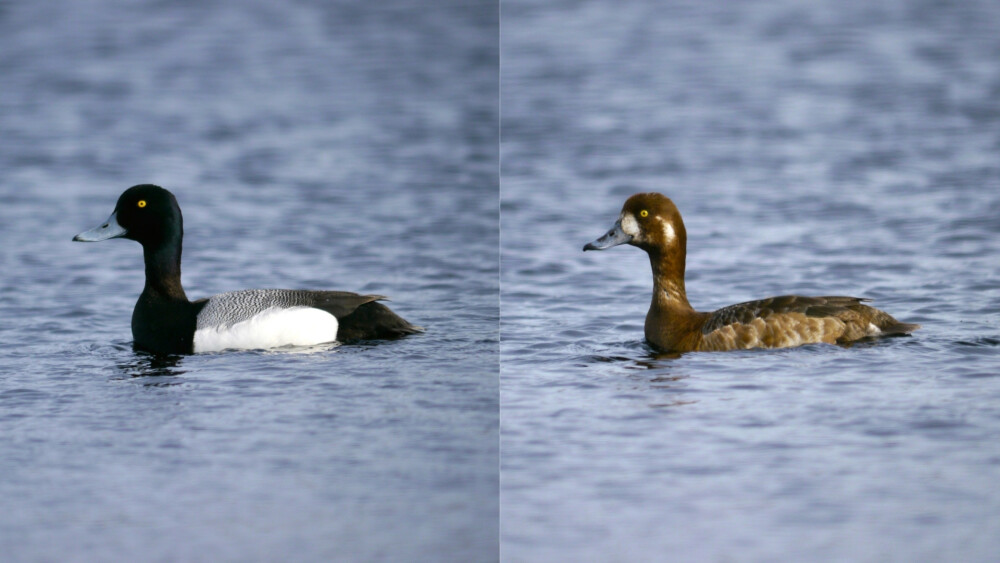
The scaup is a diving duck with a similar appearance to the tufted duck. They are the UK’s rarest breeding duck, enjoying marine and intertidal habitats.
- Male: black heads, shoulders, and breast, with white flanks and a black tail, and a grey bill with a small black tip
- Female: brown body with lighter flanks, and distinct white patches around the grey bill
- Speculum: white
Long-tailed duck (Clangula hyemalis)
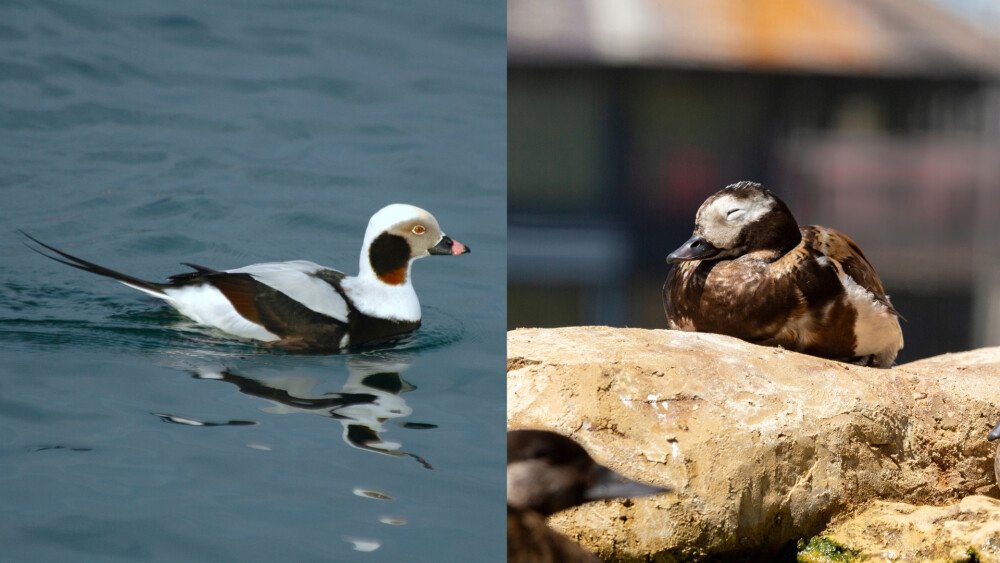
This is a small sea duck that is a Schedule 1 listed species. As they are typically found on sea waters, their diving abilities are incredible; they are able to swim as deep as 60m, about the same height of a 20-storey building.
- Male: white head and neck with grey and brown face patches, black bill with pink-red band, grey feet, breast and underwings are black, grey back and white underneath, extremely long tail plumes
- Female: grey-brown back and breast, no tail plumes, light head and neck with dark brown cheek patches
- Speculum: brown and black
Bonus round: Summer visitor
To finish off our Guide to Ducks, we wanted to throw in a bonus: a summer visitor, the garganey.
Garganey (Anas querquedula)
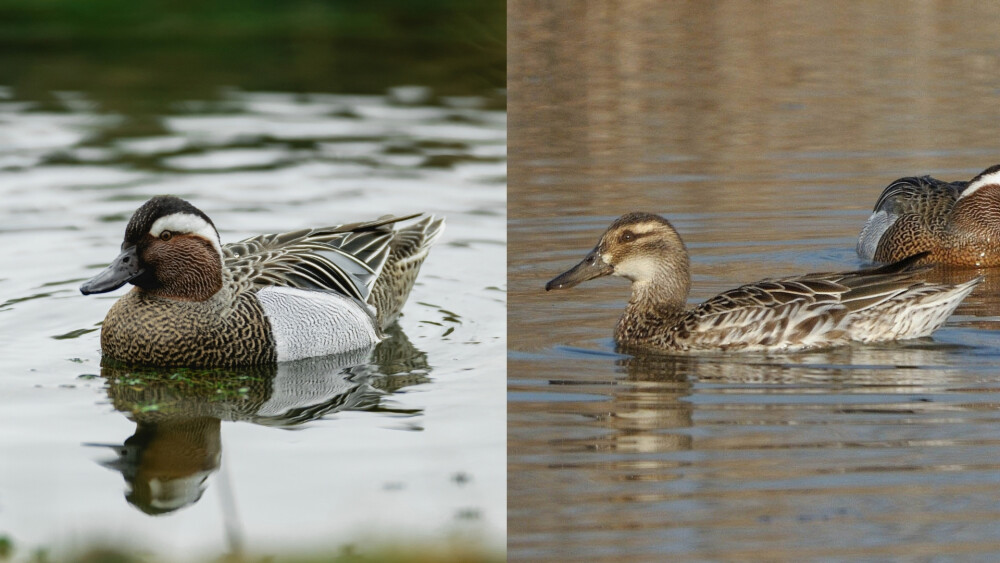
This dabbling duck is scarce and secretive, bigger than a teal but smaller than a mallard. They are a Schedule 1 listed species.
- Male: dark brown forehead and crown, broad white band along the side of the head, dark grey bill, grey feet, slate grey wings with dark green, black, and white stripes
- Female: a dark cap, mottled brown body, dark stripe through the eye (like eyeliner), white spot near the pale grey bill
- Speculum: green with thick white edges
Ducks are wonderful water birds, with signature waddles and quacks. They are possibly my favourite kind of bird because of their versatility, vibrancy, and all-round cuteness.
How many of these species do you think you’ll see at WWT Caerlaverock? There’s only one way to find out.
By Georgia Pope, Engagement Officer