A recent study by Heidi McIlvenny of Queens University Belfast confirms the negative anthropogenic impacts on seagrass generally on Strangford Lough. The exception however are the seagrass meadows at WWT Castle Espie which are thriving.
Eelgrass is a crucial part of the ecosystem in Strangford Lough. This seagrass (Zostera sp.) is a flowering plant that grows underwater in shallow, sandy, or muddy seabeds. The lough’s calm, nutrient-rich waters create ideal conditions for dense underwater meadows to flourish.
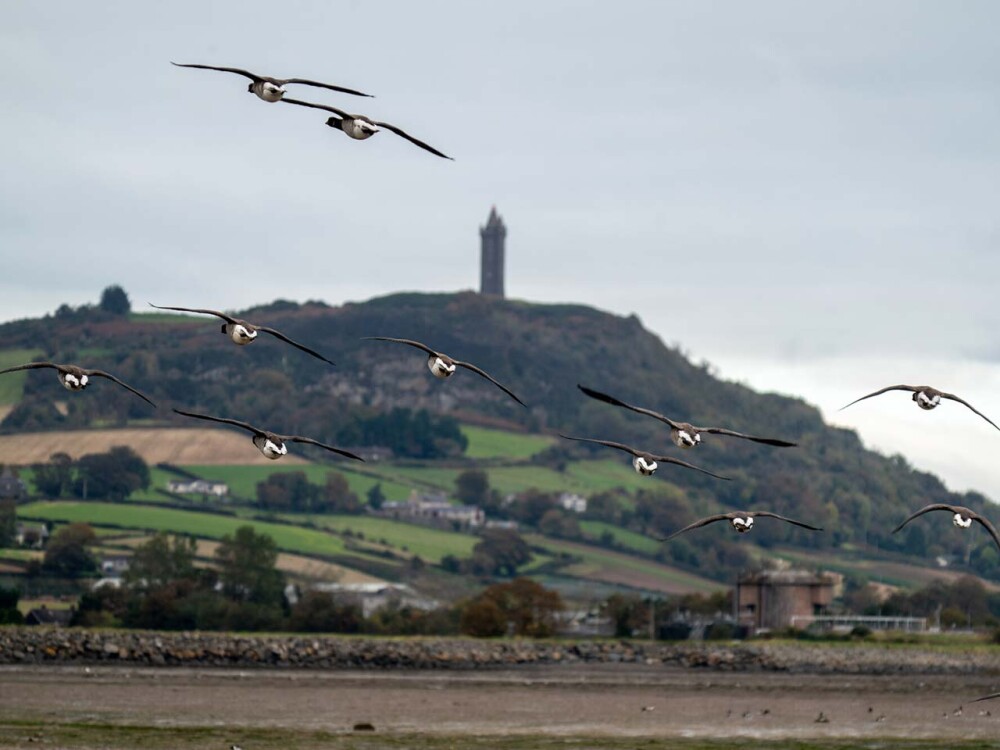
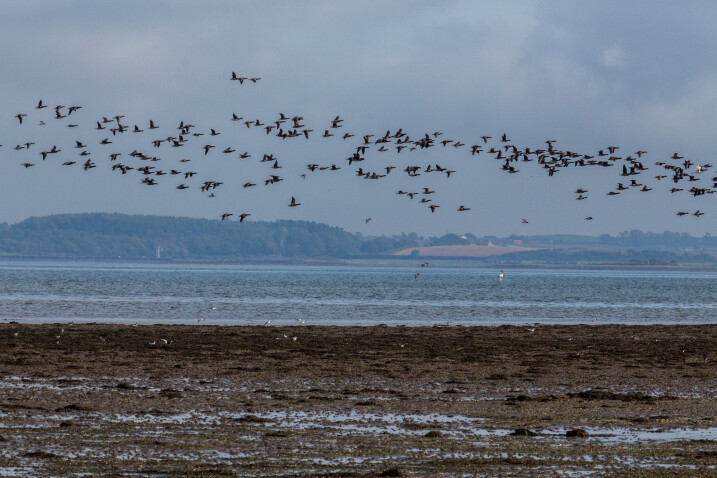
These eelgrass meadows play an essential ecological role by supporting a diversity of marine life. They provide nursery habitats for fish and invertebrates, as well as feeding grounds for birds. Eelgrass is particularly important for the light-bellied brent goose, which depends heavily on eelgrass during winter. As a result, the health of these meadows is closely tied to the survival of many species.
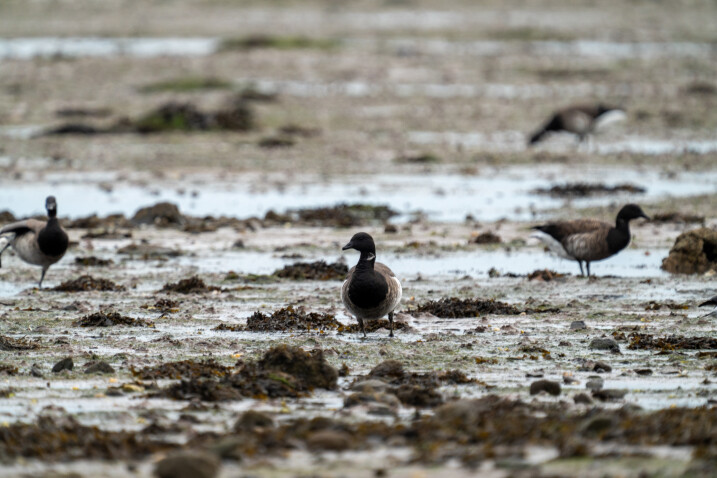
Light-bellied brent geese.
Eelgrass also has valuable environmental benefits. It stabilises sediments, helping to reduce coastal erosion, and improves water quality by trapping suspended particles. It also stores carbon within the seabed, making it an important example of a “blue carbon” habitat that helps mitigate climate change.
Despite its importance, eelgrass in Strangford Lough faces several threats, including pollution, invasive species, physical disturbance, and climate change. These pressures can damage or shrink eelgrass beds, with consequences for the wider ecosystem. Even with protected status, this habitat remains under threat.
Research from Queens University Belfast (1. McIlvenny et al., 2026) has found that many seagrass meadows in Strangford Lough and along nearby coastlines are in poor condition. However, at WWT Castle Espie, the seagrass meadow is thriving. Interestingly, these plants share the same genetic population as struggling meadows elsewhere in the lough. The key difference seems to be the water quality: reedbeds, wetland vegetation and willow trees at the WWT reserve act as natural filters, ‘cleaning’ runoff before it reaches the sea.
Aerial view of Strangford Lough from WWT Castle Espie.
This contrast shows that even with the same species and level of marine protection, outcomes can vary dramatically depending on land-based influences. Yet current monitoring methods are not always able to detect these problems early enough.
Eelgrass is a defining feature of Strangford Lough’s marine environment. Its ecological value, alongside the threats it faces, highlights the need for stronger protection and better management of pollution sources. Seagrass meadows can recover- but only if pollution is tackled at its origin. This means improving the management of agricultural and urban runoff, investing in effective sewage treatment, and recognising that marine conservation must extend beyond the shoreline. Losing these meadows would mean losing vital carbon storage, wildlife habitat, coastal protection, and an important part of the heritage of the Lough.
Centre Manager Paul Stewart said:
"Castle Espie seagrass meadows stand out as an exception in Strangford Lough, something the author’s attribute to the work of WWT reserve manager Maurice Turley and his team. The state of the seagrass adjacent to our reserve is thought to be the result of a combination of natural filtration from adjacent reedbeds and willows buffering nutrient pollution and runoff and the absence of intensively farmed landscapes in the surround catchment. "
Director of Wetland Conservation, Clare Dinnis, said:
“We know that one of wetlands’ superpowers is their ability to improve water quality. It’s an area of research where there is much work at the moment to understand this better and allow us to harness the benefits. So it’s great to see this evidence of our likely positive impact our Castle Espie wetlands are having on seagrass in the amazing Strangford Lough.”
You can access the full paper here: Revised nitrogen benchmarks identify a critical transition zone in seagrass meadow degradation
Limekiln observatory at WWT Castle Espie.