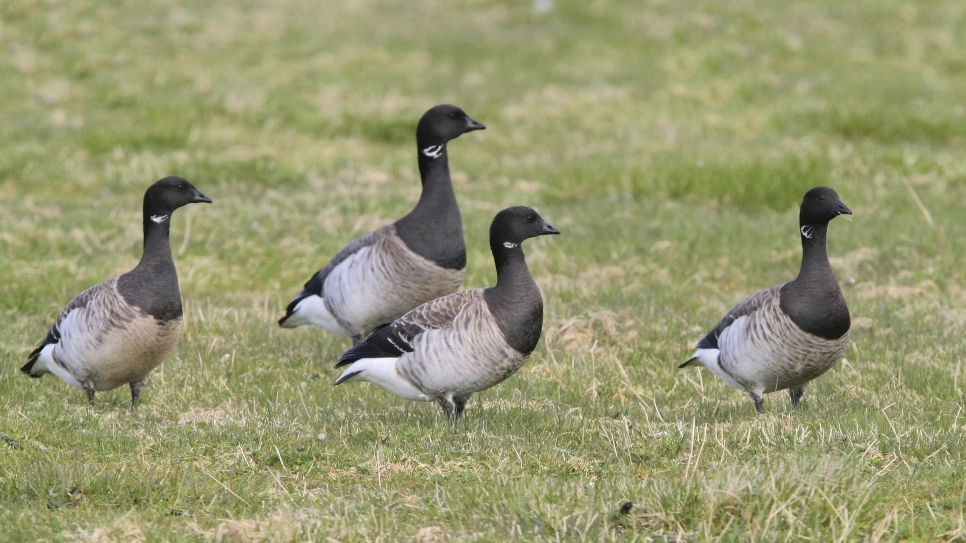
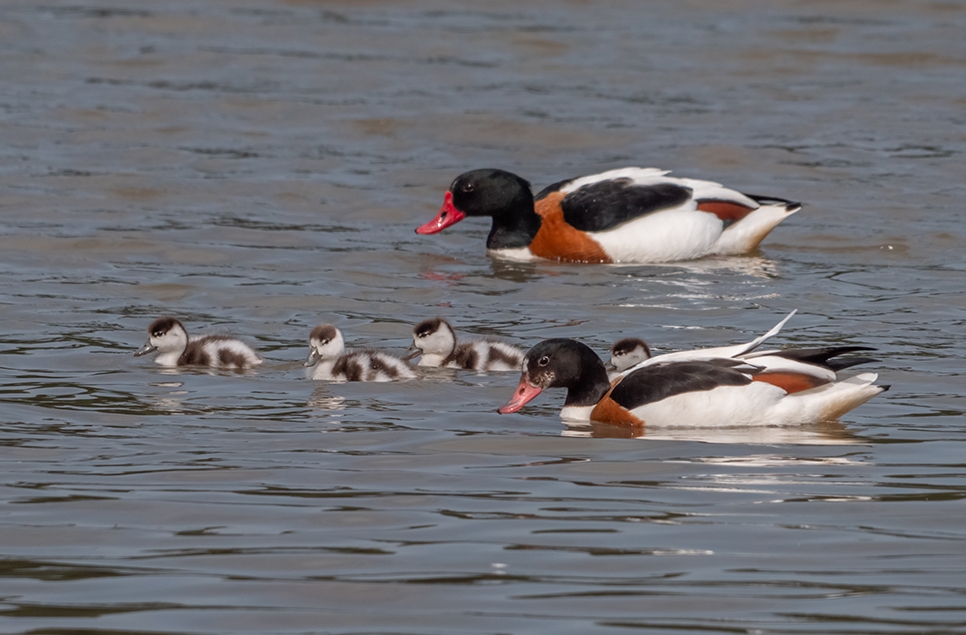
The following sightings were taken from the reserve at Castle Espie during a rising tide. The bird of the week this week is the Shelduck. Shelducks are ducks the same size as a brent goose. They have a mostly white body, a chestnut breast stripe, a green head and pink feet. Their name is thought to come for the old English word ‘sheld’ which translates to pied, referring to the bird’s mixed colouring. Unusually for ducks the male and female Shelducks look similar, although females are slightly smaller and males have a red lump on the top of their beak. Shelducks nest in tree holes or old rabbit burrows, where both parents care for large clutches of up to 10 eggs. They tend to be found near estuaries and mudflats, but are becoming more common on inland lakes. Shelducks have an annual moult around autumn time, and they are unable to fly for a few weeks because of this. Many other species of birds will moult feathers gradually so they don’t lose their ability to fly. Due to the fact they cannot fly, the Shelducks are very vulnerable to predators during their moult. Most Western European Shelducks travel to the Wadden Sea (an area of the North sea near Germany) to complete their moult with tens of thousands of other Shelducks in the mudflats and estuaries near there.
Estuary - visible from the Brent Hide and the Limekiln Observatory
Herring Gull 3, Hooded Crow 2, Black-headed Gull 12, Lesser Black-backed Gull 1, Little Egret 1
Main lake - visible from Sensory Garden and Visitor Centre
Common Gull 1, Goldeneye 1, Gadwall 3 (plus 10 ducklings), Tufted Duck 2, Moorhen 1, Little Grebe 5, Shelduck 1, Mallard 7 (plus 6 ducklings), Cormorant 1, Sand Martin, Dunnock, Blackcap, Long-tailed Tit, Jackdaw 1, Robin, Goldcrest, Wren, Chaffinch, Willow Warbler, Pied Wagtail, Woodpigeon, Reed Warbler
Shingle Bank - visible from Sensory Garden and Visitor Centre
Lesser Black-backed Gull 1, Shelduck 2 (plus 6 ducklings), Mallard 2
Wadermarsh - visible from Wadermarsh lookout and Brent Hide
Common Gull 2, Black-headed Gull1, Blackbird, Willow Warbler, House Sparrow, Pied Wagtail
Freshwater Lagoon - visible from Brent Hide and Crannóg
Mute Swan 2, Sedge Warbler, Gadwall 2, Moorhen 1, Robin, Song Thrush, Woodpigeon, Wren, Swallow, Reed Bunting
Saline Lagoon - visible from Limekiln observatory
Mallard 3, Black-headed Gull 5, Common Tern 12
Brickworks
Blackbird, Song Thrush, Swallow, Pied Wagtail, Robin, Blue Tit, Linnet, Jackdaw 4
Limestone Lake
Little Grebe 1, Cormorant 1, Tufted Duck 1, Little Egret 1, Black-headed Gull 2, Swallow, Great Tit, Sedge Warbler, Chaffinch
Peninsula Saltmarsh
Gadwall 2, Mallard 1, Starlings
Peninsula Field
No birds seen
Woodland
Blue Tit, Wren, Blackcap, Song Thrush, Blackbird, Goldcrest, Jay, Woodpigeon
Sensory Garden
House Martin, Swallow, Mallard 3, Chaffinch, Song Thrush, Woodpigeon, Wren, Robin, Blue Tit, Blackbird, Goldcrest