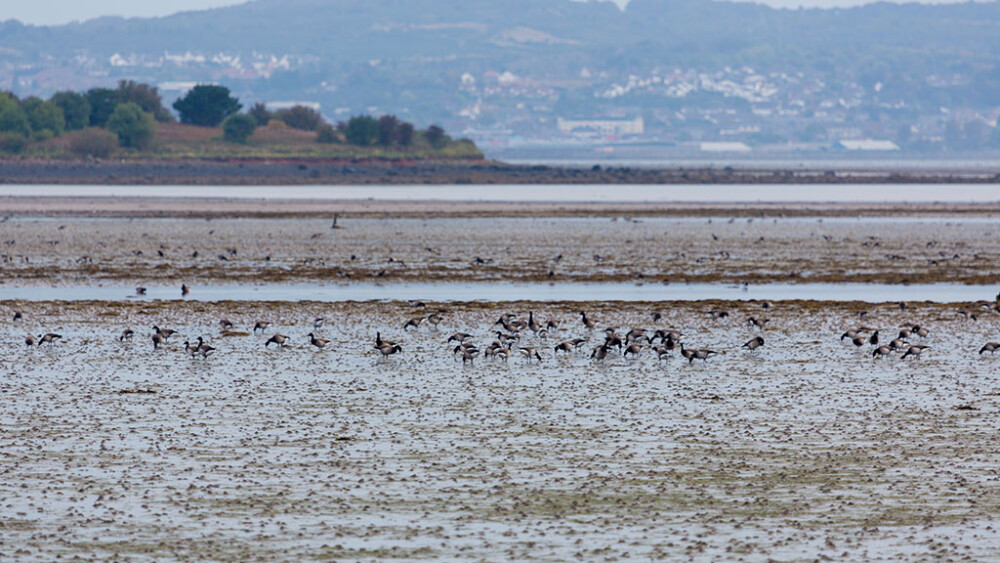
Header image: Strangford Lough is the winter home to thousands of brent geese
Autumn is the start of peak migration season, when many species of bird leave their breeding grounds to head south for the winter. Most of them are on passage, looking to stop-off and use our wetlands to rest-up and feed. And you’ll be able to enjoy the wonderful sights and sounds of returning ducks, geese, swans and more at all our centres.
Up and down the country, the wintering wildlife is arriving, and WWT can help you make the most of this extraordinary season. The discovery hides at WWT Martin Mere, WWT Arundel, WWT London and WWT Slimbridge are a great way of getting to know the wonders of wildlife, no matter what your level of experience is.
If you’re new to wildlife-watching, then why not spend time with our guides in the hides or take a walk with a warden? By spending time with these experts, you’ll see wildlife as you’ve never seen it before. Fancy an incredible journey of your own? Many of our centres are offering trails through the grounds that will help to bring your surroundings to life.
And what amazing life it is. Sometimes it’s hard to believe the sheer magnitude of what these birds undertake each year, coming all the way from Canada, Russia, Scandinavia, Arctic Svalbard and more, to end up upon these tiny islands, where they’ll spend the winter months.
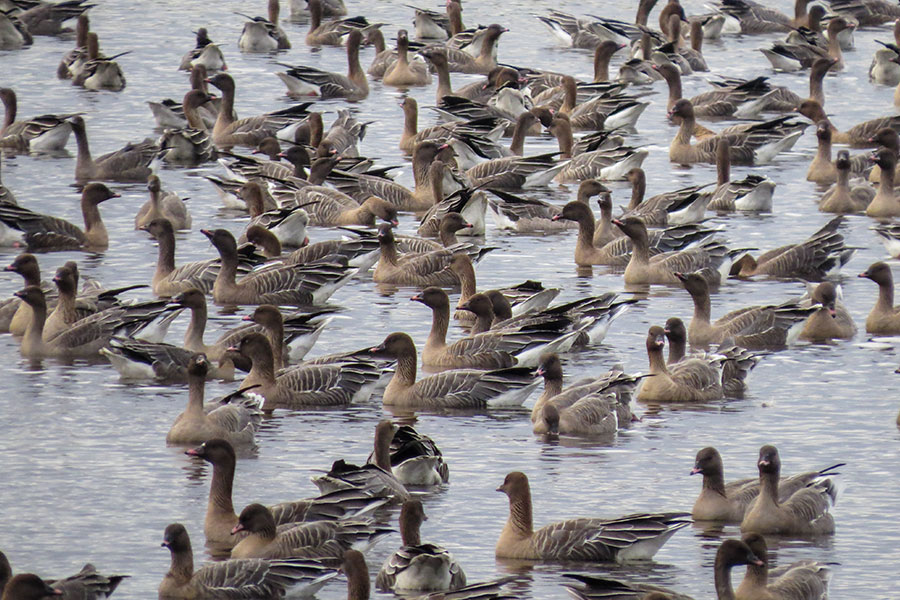 Martin Mere is a prime spot for pink-footed geese.
We’re still in the process of finding out more about their precise routes, the hardships they endure and the threats they face on the way. Each year, we tag birds so that we can discover more about their incredible journeys and help to find ways to ease their passage – and the picture is steadily building.
What we do know is that, once they reach our centres, we are able to provide a welcoming environment that looks after them and allows them to thrive before preparing for their long migratory journeys back to their breeding grounds in the spring.
So when you come along and see them this autumn, do take a moment to consider their stories. Those thousands upon thousands of birds that are now gently grazing on the bank, or idly swimming on the surface of the water, or calling from the skies, have performed amazing feats just to get here, putting them among the great marvels of nature. And for these coming months, they’re right on your doorstep.
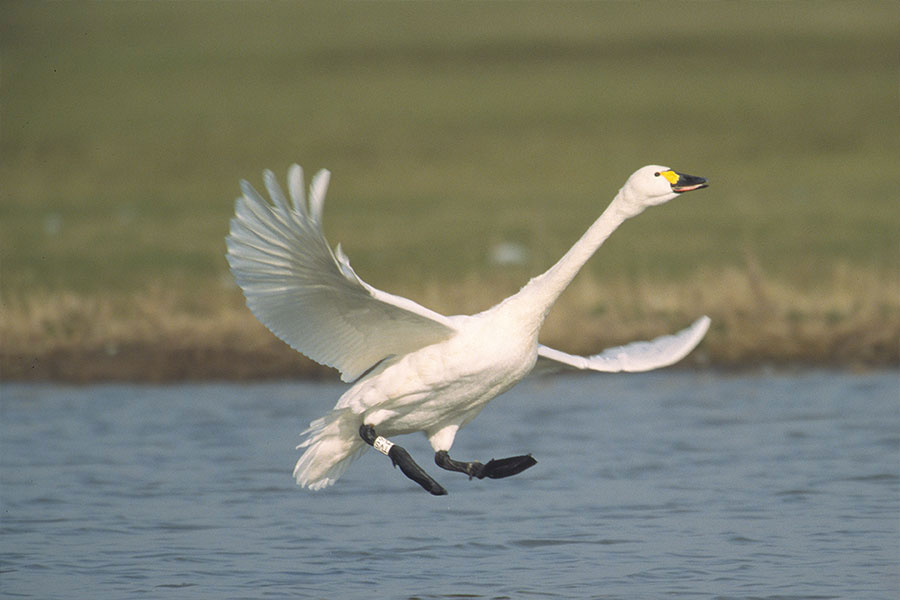 Bewick's Swan coming into land at Slimbridge
Migration in numbers
4,600km Distance travelled by the light-bellied brent geese from the Canadian High Arctic to WWT Castle Espie.
45,800 Record number of pink-footed geese recorded at WWT Martin Mere.
150 Combined weight, in tonnes, of the Bewick’s and whooper swans that migrate to the UK. That’s the equivalent of about 12 double-decker buses.
36 Time, in flying hours, that barnacle geese can travel the 3,000km trip from Svalbard to WWT Caerlaverock.
440,000 Total number of wigeon that spend their winter in the UK.
29 Age of Brimstone, the oldest Bewick’s swan on record.
Centre sights and sounds
A round-up of just a few of the winter highlights across the WWT wetland centres.
Caerlaverock is the place to go to see and hear thousands of barnacle geese that arrive from Svalbard.
Slimbridge is famous for the Bewick’s swans that arrive from Arctic Russia. Welney is another good centre to look out for them.
Visit Arundel to see huge gatherings of starlings, and great views of snipe.
For the whooper swans that make their way from Iceland, visit Caerlaverock, Martin Mere and Welney.
Your best chance to see European white-fronted geese in good numbers is at Slimbridge.
Almost the entire world’s population of East Canadian High Arctic light-bellied brent geese winter at Castle Espie.
Martin Mere is a prime spot for pink-footed geese.
Up to 50,000 wintering waterbirds fill the estuary at Llanelli each year, including pintail, shoveler, shelduck and teal.
Wigeon and pintail are among the many species that use Washington as a vital refuelling station during their autumn migration.
Wigeon are a true highlight of the Lady Fen and Bank Farm expansions at Welney.
Numbers of gadwall and shoveler overwintering at London are of national significance.
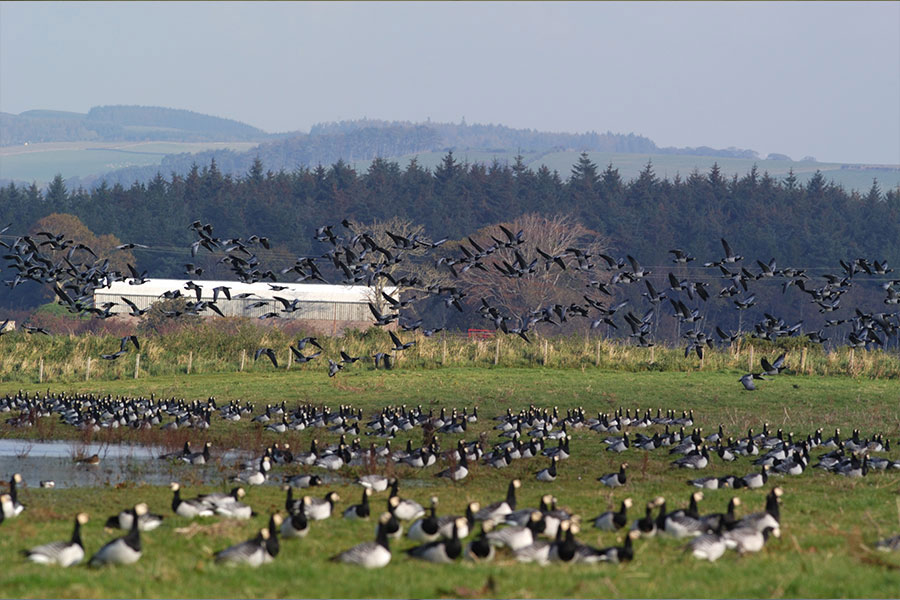 Barnacle geese, flying and on the ground, at Caerlaverock