There was a time when conservation was about building fences. Keep the animals in, and keep the people out. It’s an approach that has been tried for some decades around the world, but it is short-term thinking. Habitats aren’t just for wildlife, they’re for people, too, and the solution is not to segregate, but to find a way of sharing to mutual benefit. To find the long-term solution, rather than building fences, we should be building bridges.
Cambodia, in the Lower Mekong, is a perfect example. The landscape was once a mosaic of wetland habitats, supporting people and wildlife alike, but years of conversion to rice paddies, pollution, hydrological changes and more have whittled those natural wetlands down to just a handful of sites.
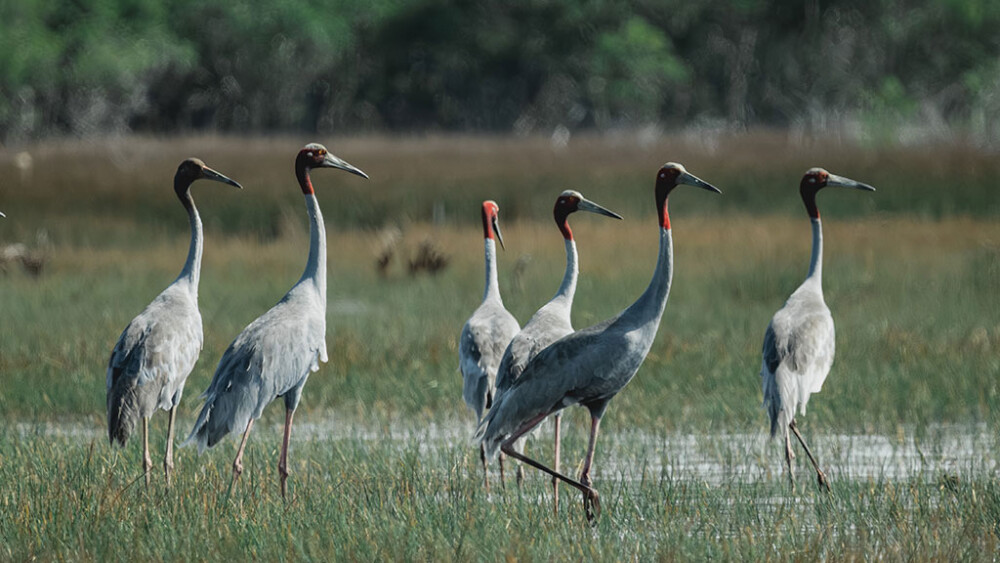
Two of those wetlands, Boeung Prek Lapouv (BPL) and Anlung Pring (AP), are among the three final Cambodian wintering sites of the Eastern sarus crane, a globally threatened bird. Each November, several hundred cranes arrive to spend the next few months at these ever-dwindling habitats, because they have few other places to go. As BPL and AP themselves continue to degrade, so the cranes’ future becomes increasingly bleak.
They’re not alone in their struggle. The two sites are surrounded by villages, which are themselves dependent upon the diminishing wetlands for survival, but it’s not easy. If each villager lived on about £2 a day, that would be tough enough, but it’s not the case: £2 per day is actually the average income per household!
Thriving together
The cranes and other wildlife need the wetlands, and the people need the wetlands. Is there a way in which both can thrive together? WWT believes there is, and over the past five years, we have been helping to build strong relationships with the Cambodian government, with local non-governmental organisations (NGOs), such as Mlup Baitong and Chamroen Chiet Khmer, and with local communities to find solutions.
There’s still plenty of work to do, but those solutions are taking shape – in one case, quite literally. At AP, there’s a wetland area that, some decades ago, had been created as an irrigation reservoir supplying water for local vegetable-growing, but which had been slowly degrading ever since. We have sensitively restored it to include wildlife zones as well as an area for water supply.
In addition, we have been working with the communities on reducing pesticide use, demonstrating how to create natural composts and pesticides made from invasive pest species to encourage stronger crops. The resulting organic produce will not only feed the communities, but link to another initiative: ecotourism.
Eastern sarus cranes are a draw for wildlife-watchers, and there’s a real opportunity to create a locally managed ecotourism business at AP. Along with local NGO Mlup Baitong and BirdLife Cambodia, we are working with local people to develop a marketing and business development plan, create a management committee and train people in guiding, homestays and more.
The first two seasons welcomed a couple of hundred visitors. The cranes are only on site between November and March, but this wetland area is home to many wildlife wonders, and could comfortably entertain all year round. Many wader species arrive outside of the crane season, marsh harriers are a great draw and there are invertebrates galore to discover.
With boat trips, guided tours and a hide that will provide wonderful views over AP all in the offing, this wetland can provide a wealth of sustainable tourism opportunities, all run by the local communities, with every penny earned being distributed between community funding schemes, reserve management and local staff. It will become key to the financial wellbeing of the communities themselves, while providing yet another reason for good, long-term wetland management.
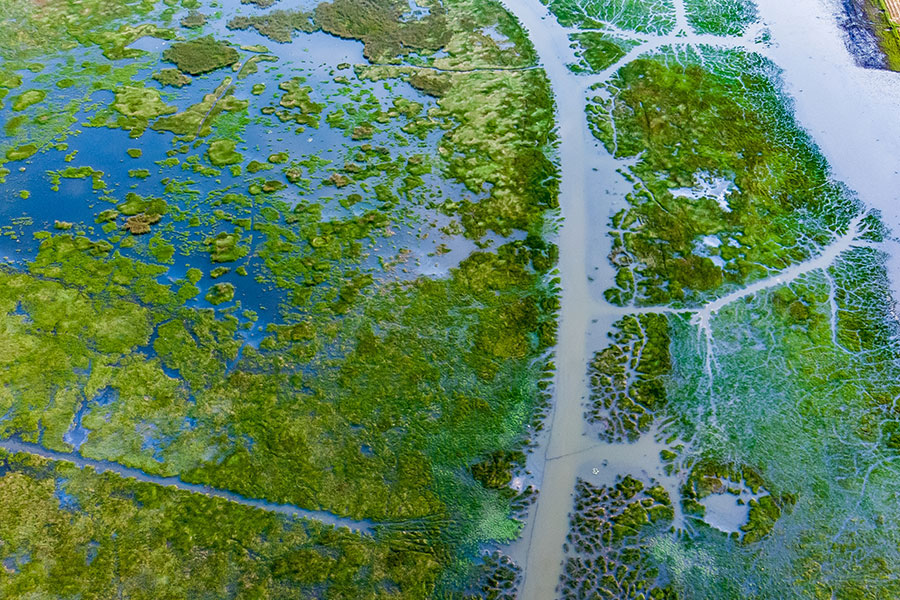 An aerial shot of Anlung Pring, a wetland in Cambodia
Local communities
There are other projects, too. We have been supporting the development of community fisheries, designed so that a local committee monitors and manages the fishing process so that it’s more sustainable, and that, one day, the community can benefit from profits. A fish habitat restoration programme is planned for this year, and we’ll also be creating inundated forest areas, which will be great for fish-spawning and brilliant for birds.
We’ve even launched a Buffalo Bank. This is an innovative idea, in which WWT has purchased seven water buffalo, and loaned them to villagers for a conservation grazing regime that will open up the habitats and create more areas that are suitable for cranes.
Next year, the projects will quite literally start to bear fruit as, for the first time in years, the restored wetland at AP will provide a vital water supply in the dry season. This will be a wonderful moment, and the work there has already led to initial discussions between WWT and the Cambodian government on the development of a national approach to wetland management.
Key to all of this, of course, is the involvement of the local communities, and it has been so exciting to see how enthusiastically these ideas have been discussed and supported by them. There are two wetland apprentices working with the WWT team, learning and building upon the projects under way, and many other local people are involved in various ways.
What’s important is that it continues. The early days of the creation of sustainable practices are the most difficult, and the people of these areas will need as much support as possible to build on what has been started. Their livelihoods depend upon it, as do those of the cranes and other wildlife.
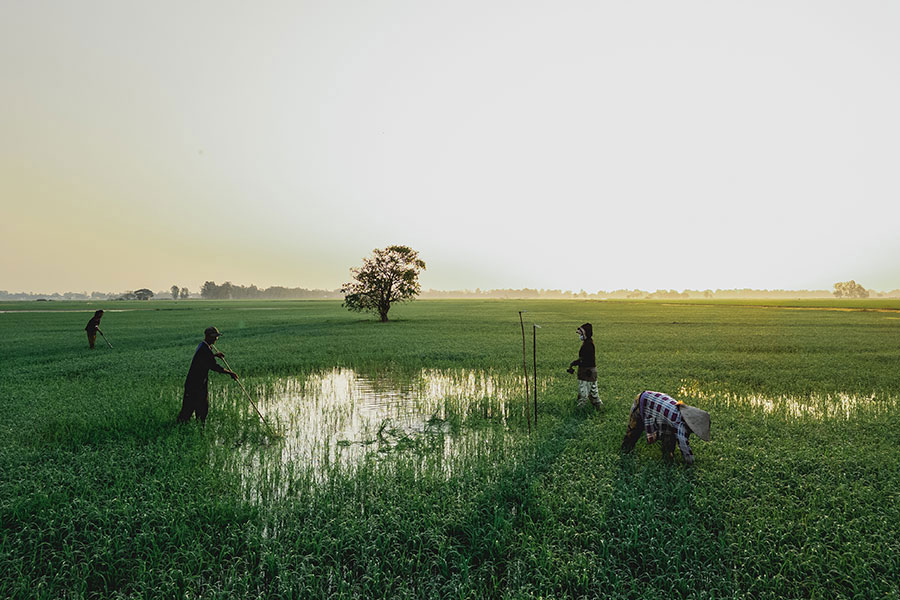 Landscapes of core conservation zone rice farms in Cambodia.
This project has been grant aided by the Darwin Initiative through UK government funding and by the Critical Ecosystem Partnership Fund, a joint initiative of l’Agence Française de Développement, Conservation International, the European Union, the Global Environment Facility, the Government of Japan, the MacArthur Foundation and the World Bank.
This article was originally published in 2014 by WWT's Waterlife magazine