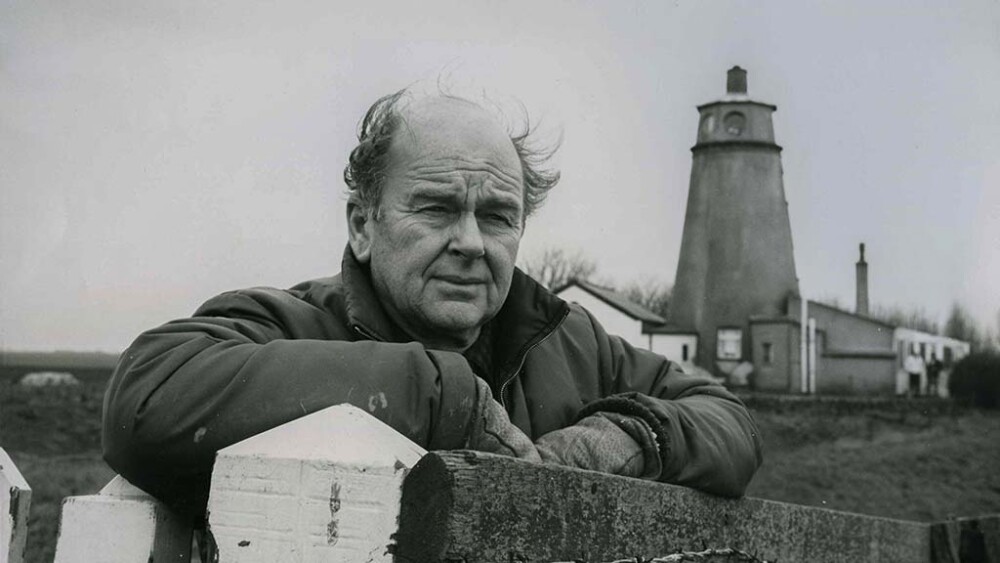
Header image: Tim McGrath looking over newly flooded Steart
As a young lad, growing up in Frimley in Surrey, Tim McGrath used to lay on a bit of a treat at the family home. The McGraths had a decent-sized garden, and he’d offer to take visitors around it on nature trails, showing them the wonders of nature with great enthusiasm.
Today, he’s scaled up. In fact, he’s scaled up considerably. As WWT’s project manager at Steart Marshes, he has overseen the transformation of hundreds of hectares of the Steart Peninsula in Somerset into a vast new landscape of saltmarsh and freshwater wetlands. In September this year, WWT Steart Marshes was officially opened and Tim can now reflect on an extraordinary project.
‘This was a truly ambitious and exciting scheme,’ says Tim. ‘The rise in sea levels has started to squeeze wetlands along our coast, causing problems for wildlife and coastal communities alike. The Severn Estuary is suffering more than most regions, with an estimated 660 hectares of coastline expected to be lost in the next decade.
‘This represents a real threat to local communities – in particular the village of Steart, sitting on the Steart Peninsula, which juts out into the Bristol Channel, and is flanked by the River Parrett. The peninsula was already equipped with a coastal defence wall, but the threat was that, in the event of a high tide, it could fail, with disastrous consequences for those who lived within. Our plan, then, was to breach the defences before nature had a chance to, so that we could manage the outcome.’
That breach took place last September, and it’s a perfect example of wetland creation. By setting back the defence embankment, and allowing the tide to wash over parts of the peninsula, you achieve two things. First, you create a brand new saltmarsh habitat, which has the potential to become rich in wildlife. Second, you create an environment which can now, quite naturally, absorb tidal surges, keeping the village protected from flooding.
‘Working with the local community was key to making this project happen,’ says Tim. ‘Essentially, you’re saying to people “the best way to avoid being flooded is to create an area of managed flooding”. Once they saw the argument, they went with the idea and, one year after the breach, they’re already beginning to see the benefits.’
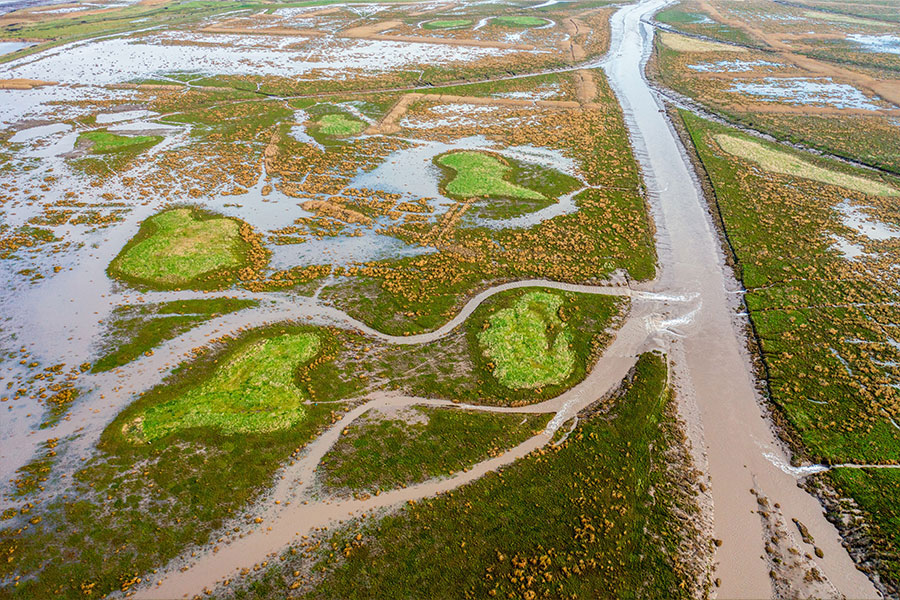 An aerial view of saltmarsh at Steart Marshes.
Project spearhead
Tim was the ideal man to spearhead this project. Armed with a degree in biology and chemistry, he moved on to work with various wildlife trusts, covering a wide range of habitats from grasslands and ancient woodlands to wetlands themselves. By 2009, he had become Head of Nature Reserves with Avon Wildlife Trust, with his skills in habitat management, as well as liaison with local communities, well honed.
‘A friend of mine mentioned to me one day that there was a role going at WWT Slimbridge Wetland Centre,’ he recalls. ‘I applied and got the job. My first major role was to oversee the restructuring of the water channels in the grounds at Slimbridge. A few months later, the Environment Agency approached us about the Steart project, and it has dominated my working life ever since.’
Tim has been building a team around him, and he’s delighted that there’s so much support coming forward from the Steart community itself. ‘Alys Laver, the site manager, and I set up a volunteer warden scheme, and a remarkable number of local people have got themselves involved, helping out with valuable maintenance work and talking to visitors. The team is expanding, too: we now have an assistant warden, Chloe Date, on board, and two further roles have been established. Joe Cockran has been hired for six months to monitor the wildlife, and soon we will have another member of staff to help enhance public engagement, expanding our volunteer network and getting as many people involved as possible through learning about this fascinating new habitat.’
So the engagement with the local community is working very well. How is the wildlife coming along? ‘Just one year on from the breach,’ says Tim, ‘we really couldn’t have hoped for a better start. The landscape has been changing rapidly, and we’ve got the first saltmarsh plants growing. English scurvygrass, sea spurry, sea lavender, sea plantain and more have already started to appear, which is wonderful.’
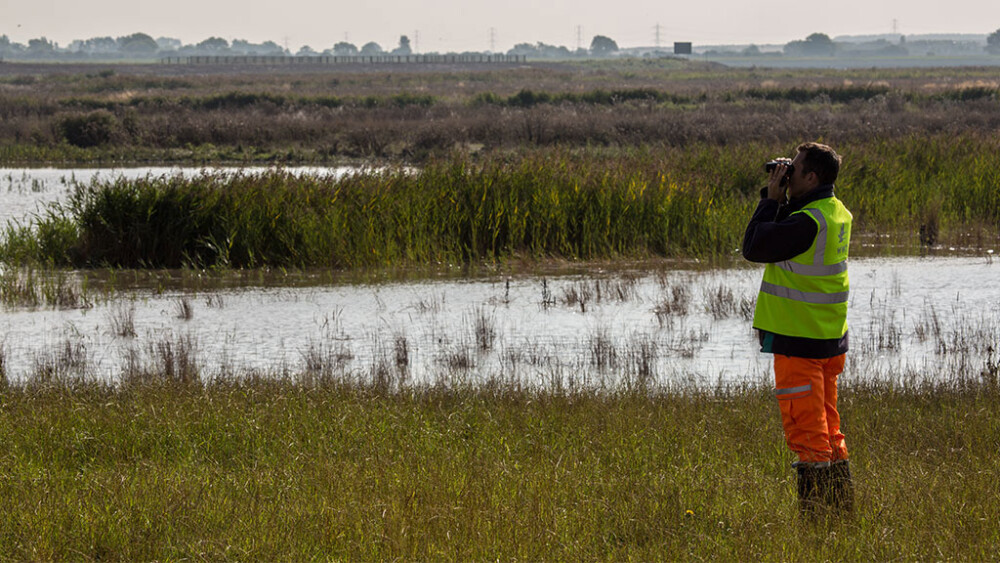
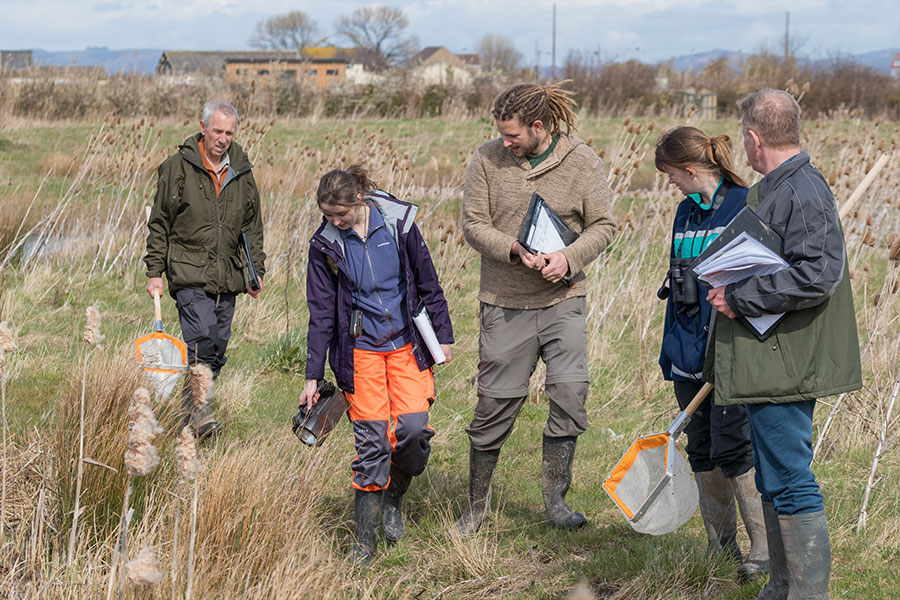 A group of staff members and volunteers performing a survey at Steart working wetlands.
An incredible start
As the habitat transforms, so the wildlife responds. ‘There have never been avocets, for example, on the reserve, but, last May, in the very first season after the breach, they not only turned up, but hatched four eggs. What an incredible start! Water voles are doing well, too, as are great crested newts and otters. We’ve had little ringed plovers, oystercatchers and lapwings, too, plus golden plover in the winter. There are now a number of hides, made from shipping containers, clad with timber and with sedum roofs, to watch them from. What’s also pleasing is that skylarks, more associated with the type of farmland that existed before the breach, have remained in the area, too.’
So, in just one year, the community and the wildlife have already started to see the benefits. There’s one story that particularly pleases Tim, as it draws both aspects of this project together in one tale. ‘Late last year, a pallid harrier, a real British rarity, arrived at Steart and stayed for about three weeks,’ he says. ‘Unsurprisingly, such an exceptional bird proved quite an attraction, and drew in birders from up and down the country. Did the locals object? Not at all. If anything, it was reported that they were mildly amused at the interest generated by their home patch.’
All in all, WWT Steart Marshes has welcomed around 11,500 visitors in the past 12 months, and among them was another McGrath. Tim and his wife, Kate, live in Bristol with their children, Amy, Ben and Sam, all of whom are active youngsters, currently working towards their Duke of Edinburgh’s Awards, and Sam, the youngest, did some work experience at Steart. ‘I think my children are sometimes a bit surprised at what I do,’ says Tim, ‘but when Sam spent time working at the marshes, he absolutely loved it.’
It’s not surprising. Under the watchful eye of Tim McGrath, WWT Steart Marshes has already become a magical place. If you’ve not yet visited it, then you’ve got a treat in store.
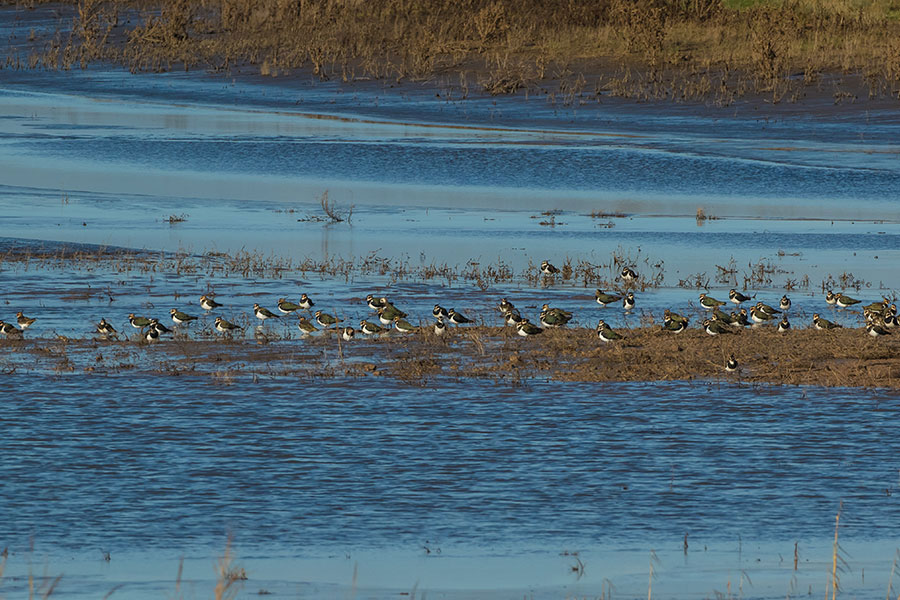 A group of lapwing resting on a small island at Steart Marshes.
This article was originally published in 2014 in WWT's Waterlife magazine