With the fairly recent arrival of thirty cattle out on the saltmarsh, a number of Cattle Egrets (Ardea ibis) have lived up to their namesake and decided to join them! These little guys (even littler than Little Egrets!) are seeing a gradual increase in numbers throughout the UK, and it’s lovely to have a handful of them here. Their bill will often remain yellow year-round, unlike the little egret’s dark bill. They also don auburn plumage on their head and breast and can appear a little more hunched and “grumpy”-looking!
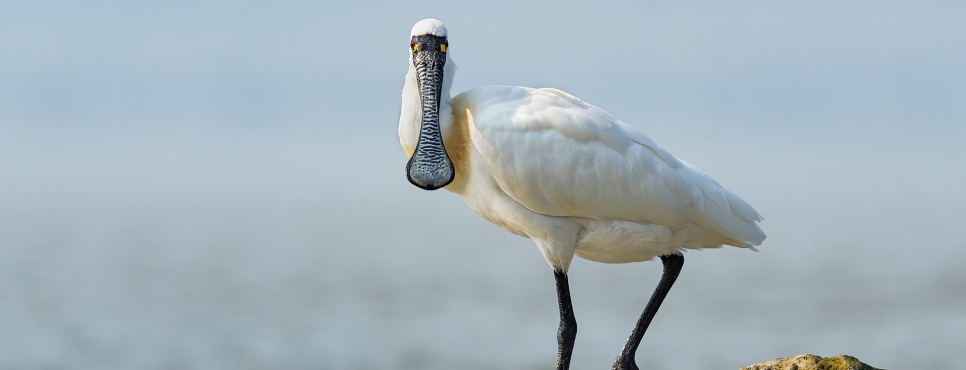
Spoonbills (Platalea leucorodia) have also arrived on the Saline Lagoon in even larger numbers than the cattle egrets this week. Over the weekend up to ten were spotted feeding in the shallow waters. Spoonbills are also making a bit of a comeback in the UK, with successful breeding attempts occurring for the first time since the 1600s!
Though much, much smaller than cattle egrets and spoonbills, Ruff (Calidris pugnax) have also been spotted this week, mingling among the growing numbers of Black-Tailed Godwits (Limosa limosa), Knot (Calidris canutus) and Redshank (Tringa totanus). One was even seen on the Deep Water Lake! It likely goes without saying, but we’re really excited to see these vibrant-legged waders. Since being hunted to near-extinction in the 19th century, Ruff have struggled to repopulate in the UK and are increasingly threatened. A key threat is the loss of wetland habitats. So, we’re incredibly proud to see Ruff making use of our precious wetlands here at WWT Llanelli.
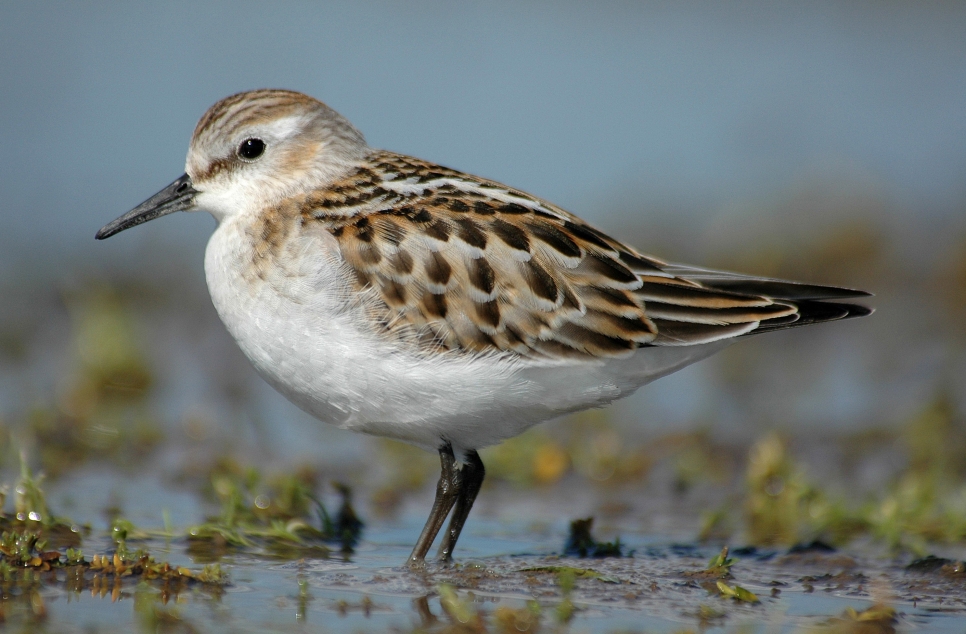
Another little visitor this week was a juvenile Curlew Sandpiper (Calidris ferruginea). We’re glad to see it taking a break and fuelling up before continuing southward on its maiden migration. This species can migrate between their breeding wintering grounds in Africa all the way to their breeding grounds in the Arctic Tundra or Siberia. Just this year, Wetlands International have been tracking 20 curlew sandpipers on their migration routes. Astonishingly, one particular member of the study group flew for 60 hours straight, covering a distance of 3,870km! This requires an average flying speed of 64km/h, and saw the bird start in South Africa and end in Sudan. The same distance could fly you from Greece to Iceland! Here’s a link to a brief article if you’re interested in learning more.
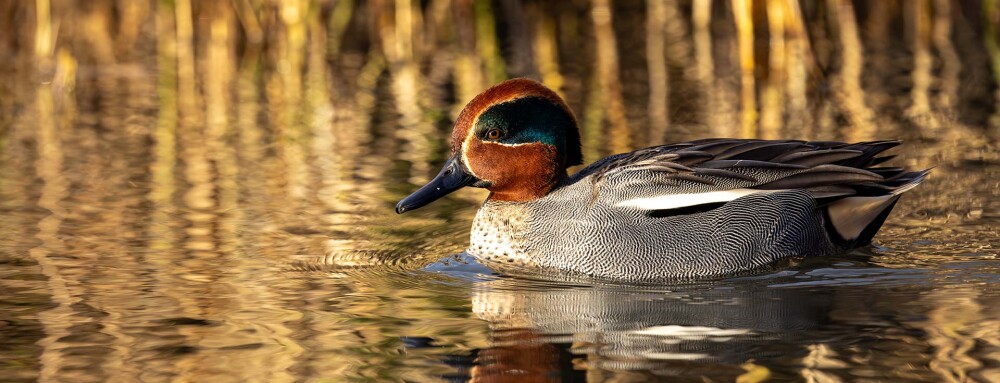
Finally, Teal (Anas crecca) have returned to the reserve in huge numbers! Our volunteer and lifelong bird enthusiast, Rob Taylor, counted 142 on the Saturday. With their eclipse plumage mostly behind them, this beautiful species is beginning to display some of its famous dazzling streaks of metallic green.
This is an incredible time of year to spot a vast array of different species here at WWT Llanelli. Osprey (Pandion haliaetus)are still being seen from the British Steel Hide, Spotted Redshank (Tringa erythropus) are still among the waders on the Saline Lagoon, Kingfishers (Alcedo Atthis) are busy hunting around Deep Water Lake, and our resident Marsh Harrier (Circus aeruginosus) is always gliding between our lagoons, lakes, ponds and reedbeds.