Whether rain, shine or blizzard, our reserve team do a daily count of the wild animals on our site.
In these monthly blogs, we look at that data from years gone by and explore trends, observations and records, and talk about how we manage the site and how it impacts those animals.
This month we talk about ecosystem health and explore the damselfly and dragonfly data
The height of summer is here at last – and the blazing sunshine and long hazy days brings an abundance of life to the wetlands. The breeding season for birds is slowly coming to a close, with fledglings and juveniles spotted across the site. Many wetland birds are out and about down on Wader Lake and the saline lagoon – grey heron, avocet, lapwing, redshank and the occasional black-tailed godwit are typically spotted during August. Kingfisher are also spotted more often this month too. The hot summer weather also brings the deep buzz of insect life as the sky fills with wetland loving invertebrates…
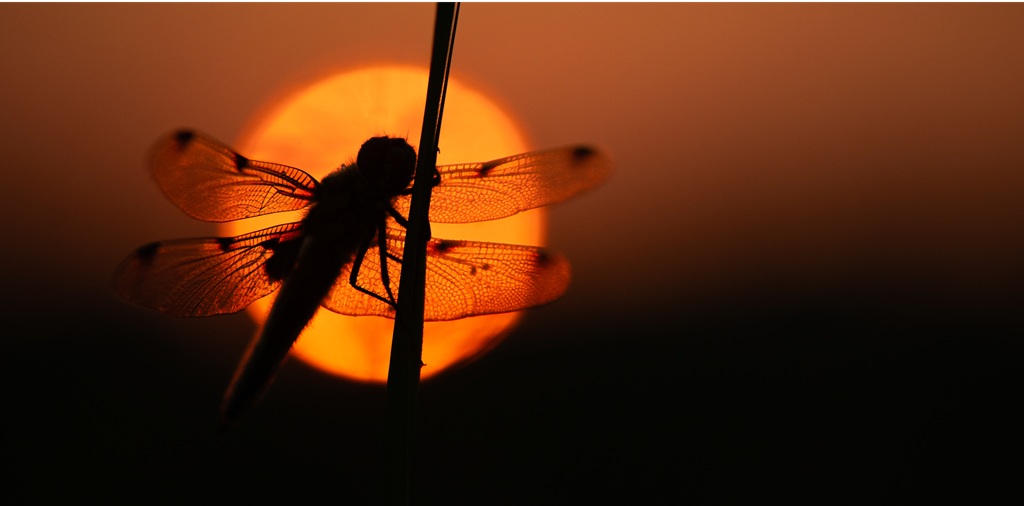
The invertebrates perhaps most associated with wetland habitats would be the damselfly and the dragonfly. Often seen darting across ponds, marshes and reedbeds, these two fantastic insect families not only bring a lively flair above the waters during the summer but are also excellent indicators of just how alive the water is.
Habitat health can be (and is) monitored with technology such as water testing kits and analysing soil samples, which gives us a great wealth of information, but bioindicators are perhaps the greatest tell-tale sign of exactly how healthy that ecosystem is. Bioindicators are living organisms whose presence, wellbeing and/or absence are remarkable sources of insight regarding ecosystem condition.
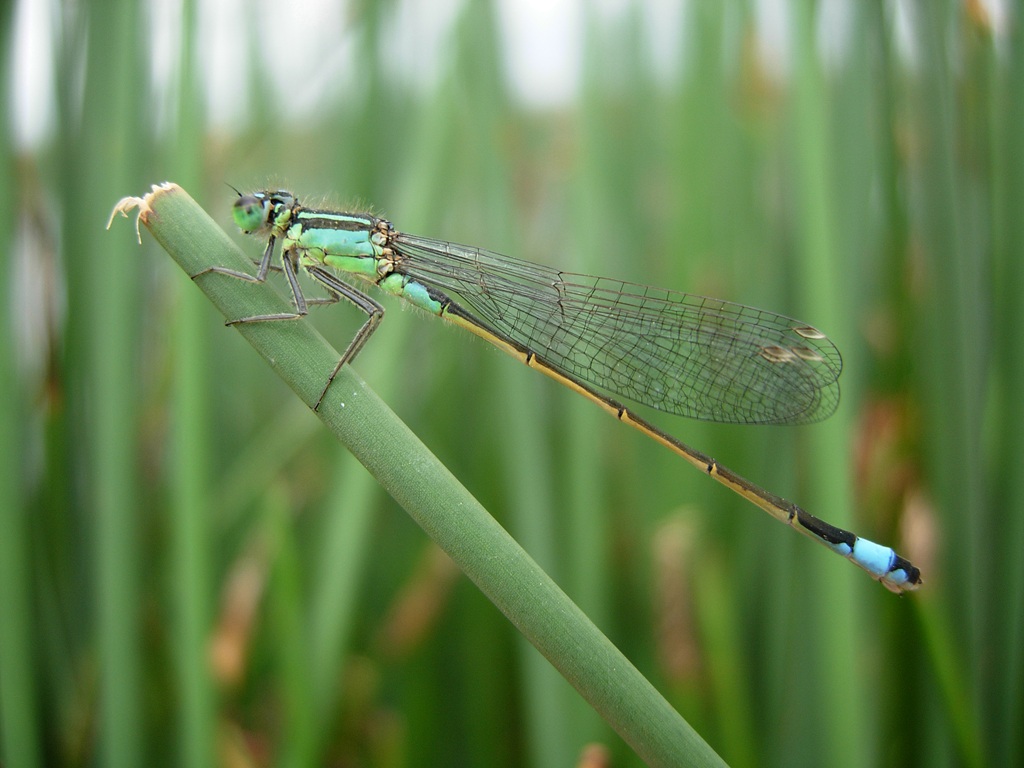
Due to their sensitivity to environmental changes, damselflies and dragonflies make fantastic bioindicators as to how healthy an area is. Too much pollution or excessive nutrients in the water and they won’t survive their early life stages – they both spend two life stages underwater as eggs and nymphs. They are also in the middle of the food chain too, being both predator and prey, indicating that the ecosystem isn’t just healthy but thriving.
Starting to emerge from wetlands, ponds and marshes, when the weather is right - usually starting around May (depending on the species). Both damselfly and dragonfly are aerial predators and spend their summer feeding on other small insects, using their huge eyes, specialised legs and incredible agility to hunt.
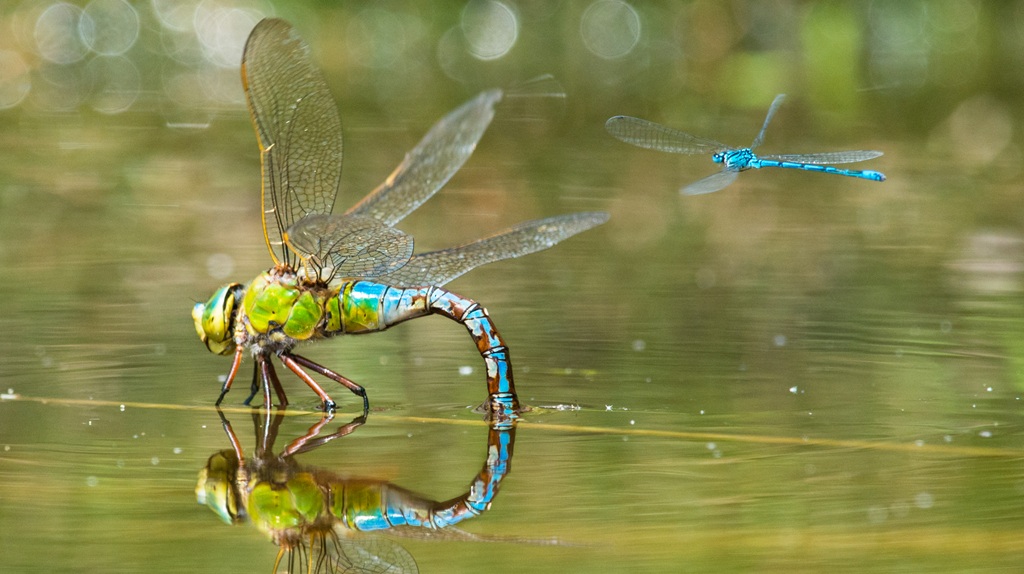
During summer they will also find a mate and lay eggs using an ovipositor on their tail – their eggs are typically laid just under the surface of the water. The picture below shows an emperor dragonfly ovipositing eggs beneath the water, there’s also an azure damselfly watching closely.
The eggs will generally take 2- 5 weeks to hatch, but they may also over-winter as eggs and hatch the following spring. After hatching as a nymph, they will spend the majority of their life underwater, hunting small invertebrates, tadpoles and even small fish. They will spend between one and five years as nymphs, depending on the species, before finally moulting into a full-fledged winged adult.
Similar to the butterflies in last months data dive, both damselflies and dragonflies also enter a diapause state (similar to hibernation) as eggs or nymphs during the winter, however unlike some butterflies, they don’t over-winter as winged adults – the adults will tend to die off at the end of summer or migrate.
In the United Kingdom we get 17 species of damselfly and 36 species of dragonfly and here at WWT Washington we get a strong population of both right across the summer. Last year we recorded 7 damselfly species and 8 dragonfly species active around the site. Including two site firsts!- The lesser emperor dragonfly which was recorded in July and the willow emerald damselfly in October – The willow emerald was even spotted mating at the Amphibian Ponds.
Like last month’s Data Dive about our butterflies; dragonflies and damselflies aren’t specifically looked for when conducting the daily sightings and are only added on when one happens to be spotted, often getting recorded later in the day. This means that the data is not a particularly accurate depiction of their overall populations here at Washington, but more of a rough guide as to what is about and when.
The graph below shows the frequency of dragonflies and damselflies across a typical year. The data is taken from the last 7 years, starting at 2019 and uses a combination of species recorded, days counted, and locations sighted to give us a overview of their general activity across the months. Damselfly populations are dark green and dragonfly populations are light green allowing us to see a noticeable trend, where damselflies are more prominent towards the start of the season and dragonflies towards the end.
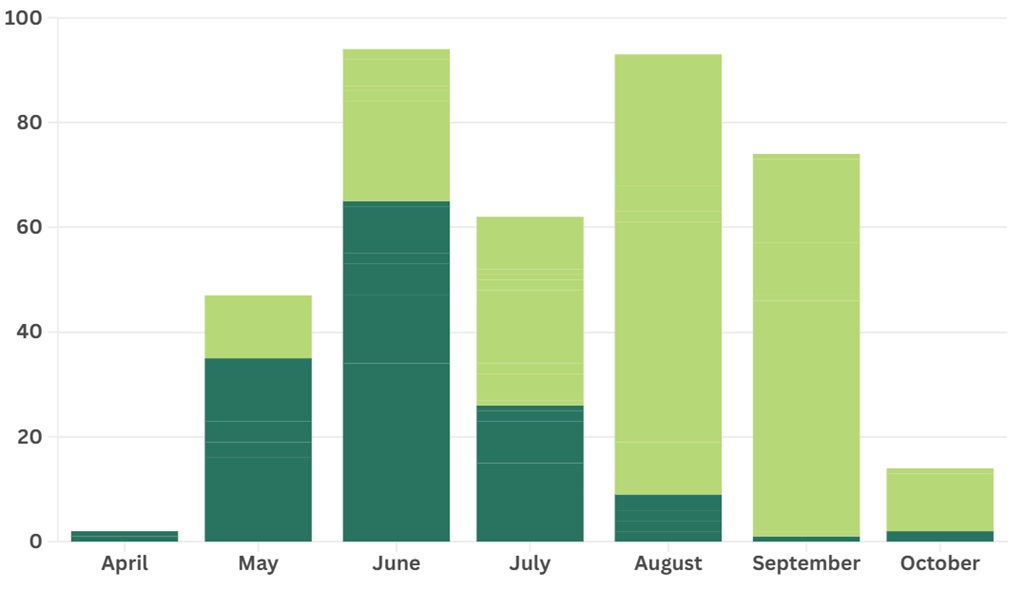
This occurs for a few reasons: damselflies emerge sooner so that there is less competition, with both being aerial predators it makes sense to arrive as soon as possible to the buffet of summer wetland insects, before the dragonflies turn up and start hoovering up all the midges. Also, the damselfly are a more delicate and typically smaller creature, meaning after they emerge from their nymphal cast they can begin to take flight sooner. This makes them less vulnerable to predation. Dragonflies, however, need a longer time after emergence to dry their wings off in the sun before they can take flight, making the hotter days of mid to late summer more favourable.
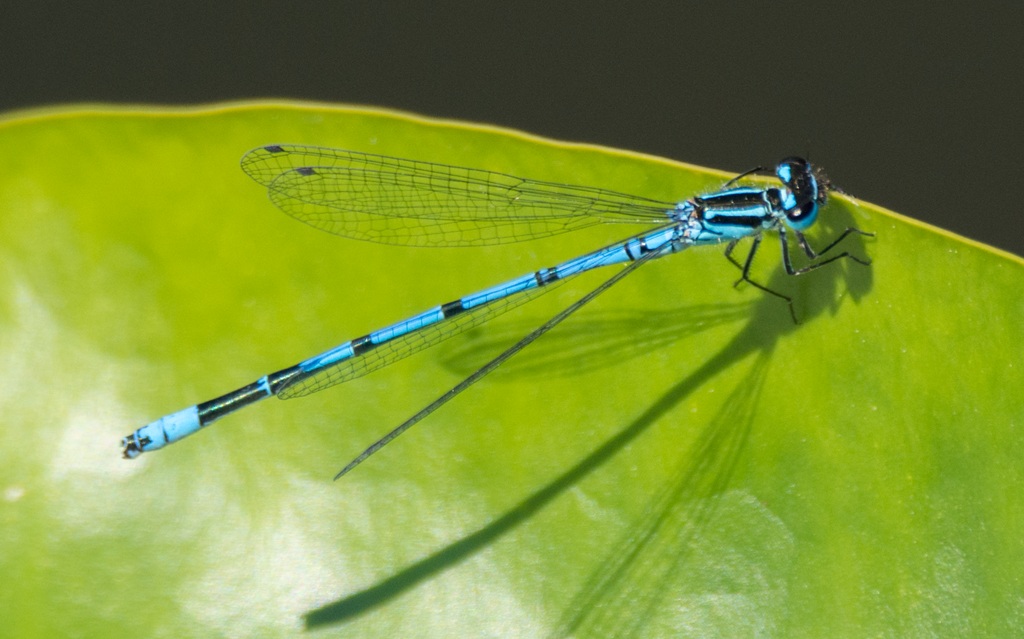
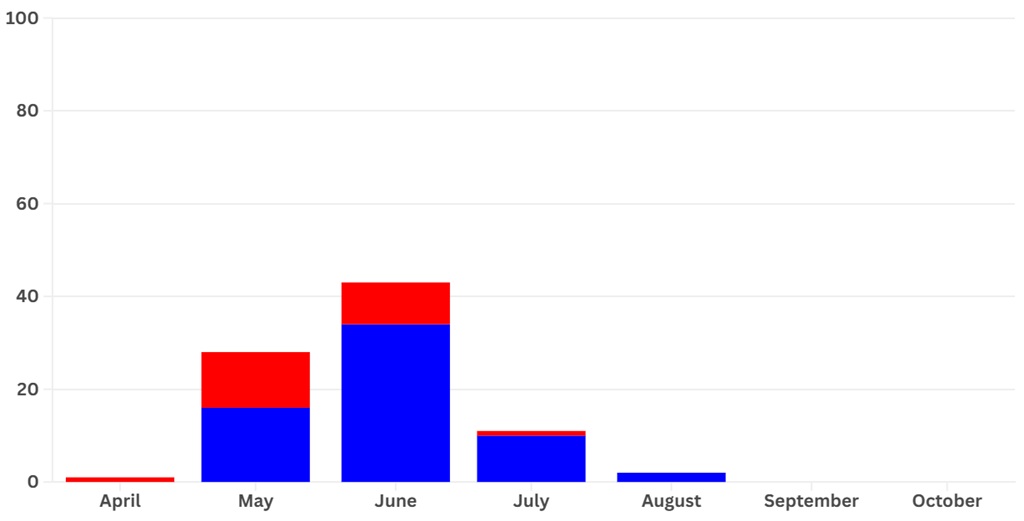
We can also look at individual species to show some of our more prominent visitors. On the graph below, we can see the azure damselfly (blue) and the large red damselfly (red). The azure damselfly makes up a sizeable chunk of our damselfly sightings – about 45% of all damselfly records. The large red damselfly is one of our earliest arrivals on site - back in 2019 we recorded one in late April.
Looking at some other species on the graph below, we can see that the common darter dragonfly (orange) makes up the majority of later season dragonfly sightings and is present at the same times as the southern hawker dragonfly (yellow). Another of our prolific damselflies, the blue-tailed damselfly (green) can be found across the start of the season, similar to the azure damselfly.
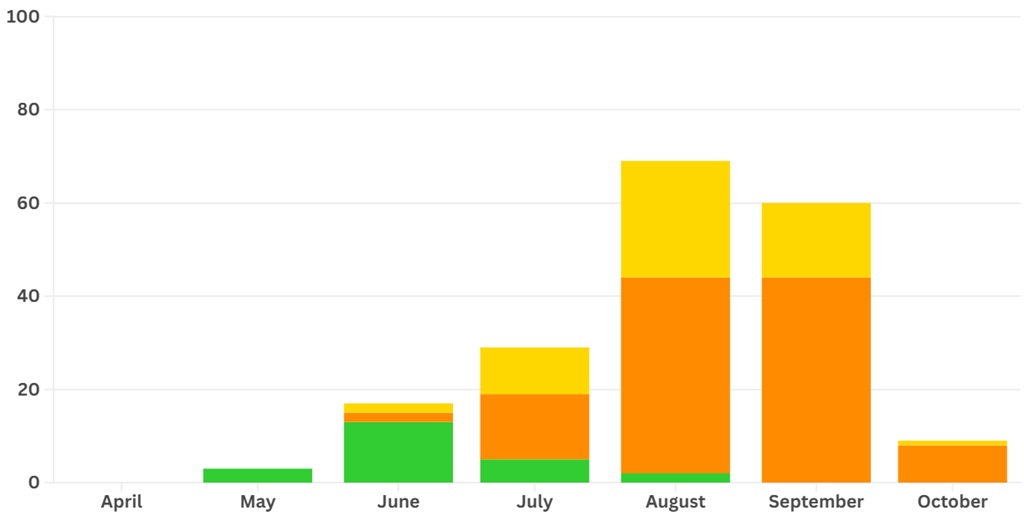
The common darter and southern migrant make up two thirds of all our dragonfly sightings. The common darter counts for 44% and southern migrant counts for 22%, making these two species our most prolific here at Washington across late summer.
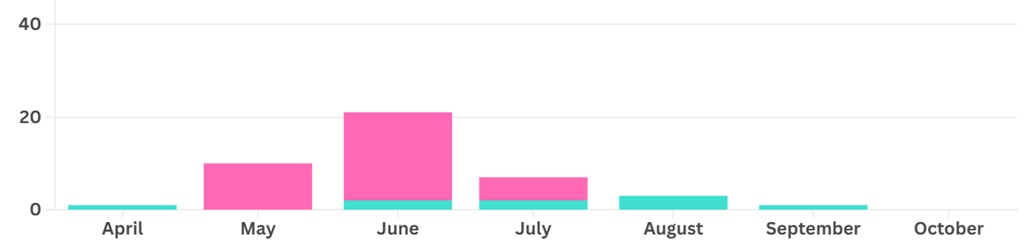
We can also highlight some trend-breakers, species which don’t necessarily follow the same rules as most of the others. On the graph below, the emerald damselfly (turquoise) shows that not all damselfly are gone by the end of summer. Mirroring this, but on team dragonfly, is the broad-bodied chaser (pink), often seen early in the season alongside more of the damselflies. The broad-bodied chaser usually disappears around the same time most of our other dragonfly species begin to emerge.
Finally, to put these species into the context of our overall damselfly and dragonfly populations. On the graph below we can see how the highlighted species fit into our original columns, now coloured dark grey for damselflies and light grey for dragonflies – in an attempt to make this slightly easier to follow.
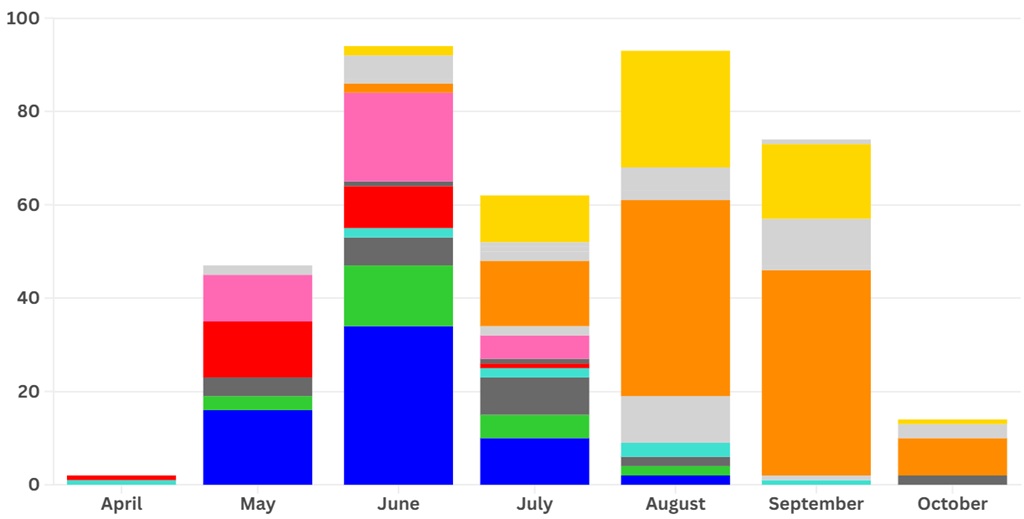
To round out the information, the damselfly (dark grey) in Octobler is our new species; the willow emerald damselfly. The dragonfly (light grey) chunk below the orange, which is most noticeable in August but also present in July and September, is the brown hawker. The common blue damselfly makes up the largest dark grey chunks in May, June and July. The light grey chunks directly above the orange are divided amongst the four-spotted chaser, migrant hawker and emperor dragonflies. Finally, the tiny light grey chunk at the top of September is the southern migrant hawker, of which we’ve only ever spotted once during our daily sightings back in 2023 on the 4th of September.
According to the records, damselfly and dragonfly species are seen across the whole site, but as you can probably imagine, most of our sightings take place around our smaller bodies of water – mostly the Amphibian Ponds and Dragonfly Ponds to the east of Wader Lake. These two locations count for over half of all sightings (56%). However, considering the names of these locations, it might be surprising to learn that the Amphibian Ponds actually beats the Dragonfly Ponds in number of sightings, by a substantial margin. The pie chart below shows the percentage of total sightings that took place at each location, Other Areas consists of pretty much everywhere else on site, with species being recorded across the woodlands, meadows and visitor centre grounds – there was even one recorded beside the outdoor compost toilet!
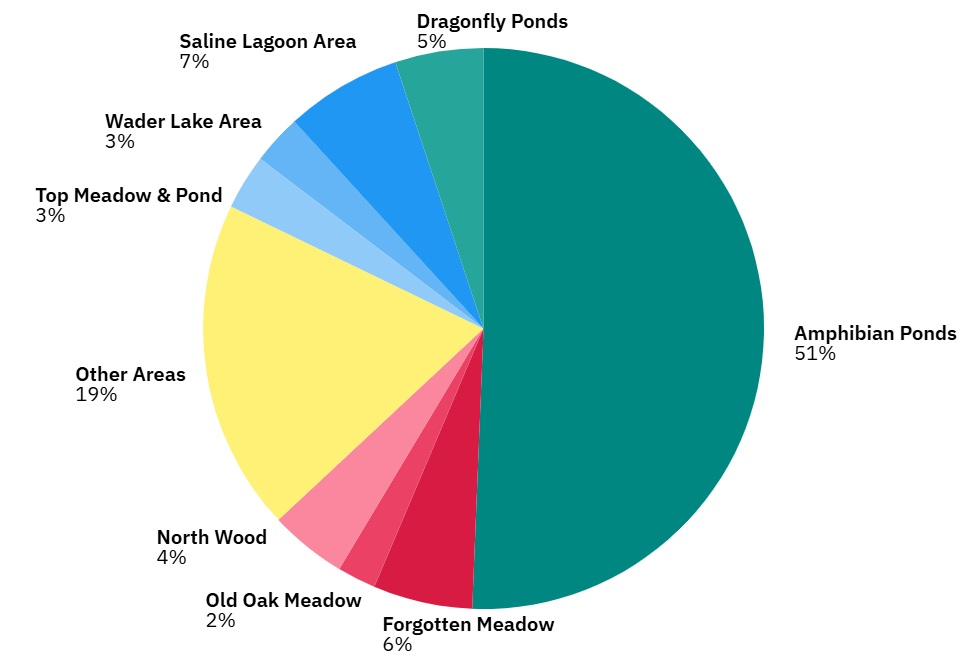
With 10 times as many sightings at the Amphibian Ponds than the Dragonfly Ponds, it may appear like these animals prefer the Amphibian Ponds -or no one has told them they have their own ponds! This can mostly be explained due to the Dragonfly Ponds being at the far end of the site, away from the typical morning fence-check route - which is often when the reserve team also do the daily sightings counts. In comparison, the Amphibian Ponds are closer to the fence-check route, potentially making them more frequently overlooked, and the path that runs through the Amphibian Ponds meanders between them, allowing great observation of them during the day.
Considering the proximity between these two areas (they’re only seperated by a path), the damselfy and dragonfly on site most likely consider this to be all one large habitat and species that are recorded at one location are likely to be present at both.
Interestingly, the only species that has been present during the daily counts but not recorded at either of the pond areas is the single sighting of southern migrant hawker in 2023, which was recorded at North Wood (an area of woodland here in the north of the site). North Wood sees other species activity too, with southern hawker and common darter dragonflies and the large red damselfly being present here during counts.
Another location on site where we frequently see damselflies and dragonflies is Forgotten Meadow near the reservoir in the west. This spot is just over the path from Hawthorn Wood Hide, and often has common darter and southern hawker visitors, particularly in August. These likely emerged from their nymphal stage in either the reservoir or the small pond on that meadow.
Pulling all this information together we can see that August is a fantastic month for spotting dragonflies, mostly down at the Amphibian (and Dragonfly) Ponds but also at other areas across the site wherever there is water. We can also determine that the water bodies here at Washington are thriving and healthy, able to support an ecosystem that contains these delicate invertebrates. It also highlights just how important wetland conservation is - to create, maintain and protect habitats where these creatures can continue to exist and thrive.