Whether rain, shine or blizzard, our reserve team do a daily count of the wild animals on our site.
In these monthly blogs, we look at that data from years gone by and explore trends, observations and records, and talk about how we manage the site and how it impacts those animals.
This month we talk about the shelduck reappearance and take a look at the elusive water rail and the berry-gorging redwing
With cold, dark nights and frost covered mornings, many animals begin to slow down to overwinter at this time of the year. Mammals like hedgehogs and bats begin hibernation, remaining sedentary until March or April. Some species of mouse; the hazel dormouse and the non-native edible (we don’t eat them) dormouse also hibernate. All native amphibians will also enter a hibernation-like state around this time of year, frogs and newts will find a safe place to hibernate, often in compost heaps, under dense vegetation where the frost can’t reach them, buried in leaf-litter or even underground in the soil or old animal burrows. Sometimes, they will dive deep down into an oxygen rich water body and lie dormant at the bottom, but this brings increased risks, such as predators or the water freezing over, preventing light from reaching underwater oxygen creating plants.
However, while a lot of species are preparing for the long dark, looking at past data we can see that the wetlands are still teeming with activity. Autumn and winter migrators are seen regularly at this time of year, such as pink-footed geese which are often sighted flying overhead, curlew are recorded feeding on Wader Lake and roosting at the meadow inside our fox-proof fence line, teal and goosander are also regular visitors seen in November.
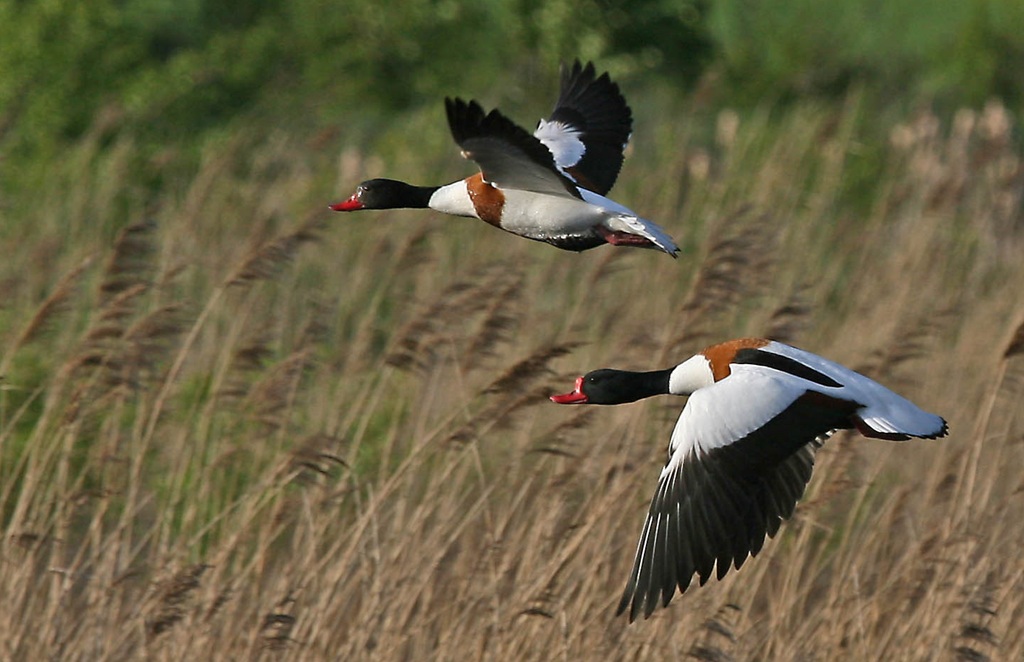
An interesting occurrence at this time of year is the reappearance of the shelduck, which usually fly off site around August time to moult. Unlike most birds, which moult gradually, replacing feathers yet still retaining the ability to fly, northern hemisphere wildfowl birds go through a more dramatic moult, during which they are unable to fly for up to a month. To help survive this period, the shelduck gather in large numbers for safety in areas away from predators.
Most British shelduck travel to the northwest coast of Germany and the Netherlands, particularly around Heligoland and the Wadden Sea, while others remain in the UK but travel to river estuaries and large mudflats like those found at The Wash and the Humber and Mersey rivers. After moulting they then disperse once again and fly back to mating sites, most of the same birds that leave our site in August will return here November after their moult vacation.
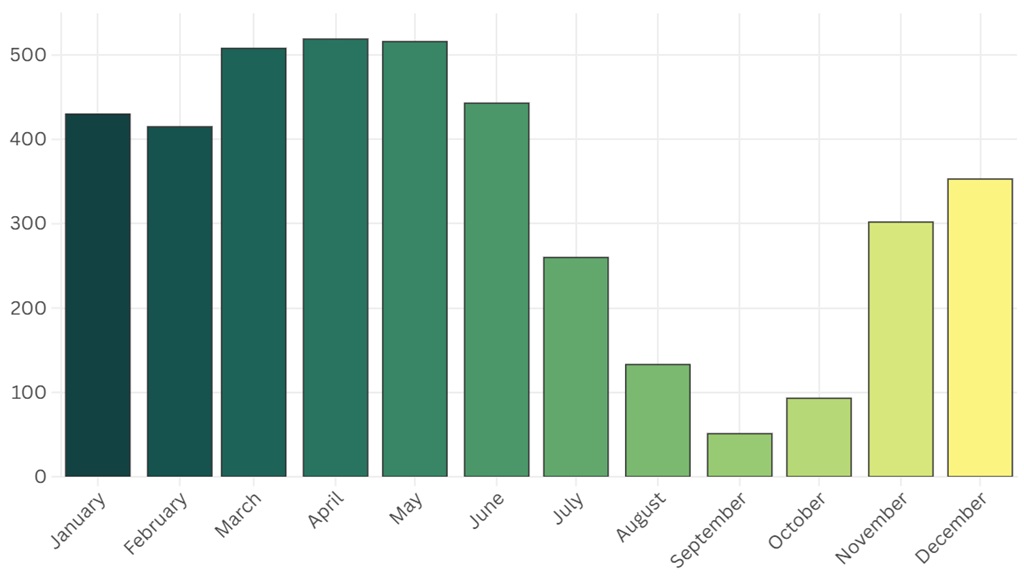
The graph below shows the total days per month shelduck were recorded across the last 10 years, displaying an obvious dip in activity across the August-October period.
While a lot of wildfowl and waterfowl are ground nesters (where they build their nests on the ground, often amongst long reeds and grasses), the shelduck take this one step further and nest underground! Usually commandeering old rabbit burrows or tree root hollows - they snuggle down in the earth and incubate their eggs safely away from predators. Because of this, the shelduck once again differentiate themselves from the majority of other birds by both male and female birds having brightly coloured feathers. Female birds are often quite drab in comparison to the males, due to needing to remain hidden while incubating eggs on nests, but because the shelduck nest underground and are unlikely to be within the gaze of predators, the females can wear the same fancy outfits as the males.
A few years back, the reserve team built about 10 very specific nest boxes just for the shelduck and dug them into the ground around Wader Meadow. These were large boxes with tunnels for the shelduck to enter. The shelduck have remained steadfast to their natural approach however, rebuffing the help of the reserve team and continue to nest in burrows and holes. Interestingly, a shelduck was even found nesting inside a wooden pallet at our maintenance sheds - Perhaps a pallet-like redesign of our shelduck nesting boxes may prove more enticing!
One of the rarer birds that has been recorded more in November than other months is the water rail.
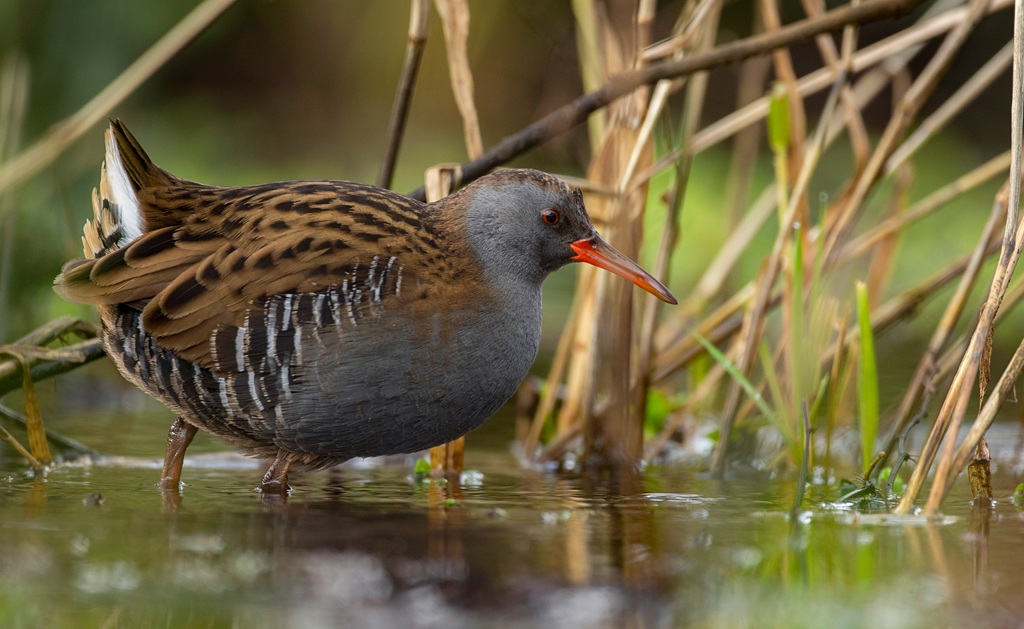
This rather small bird has a long neck (which is not evident on the picture above) and a rounded rear body (which is) and is often hidden away amongst dense sedge or reeds but can occasionally be seen scurrying across the mud between the reedbeds, or in winter, it may also be seen out on the ice.
Interestingly, water rail have quite a curious diet when compared to other rails. As well as the usual fare of seeds, shoots, snails and small crustaceans, the water rail can also be a vicious predator, catching and killing small birds and mammals with their spear-like bill. Surprisingly adept at climbing, they can even reach fruit and raid the nests of other birds for eggs and small chicks.
While not recorded often here at Washington, which is probably due to how excellent they are remaining hidden, November sees an increase in sightings. Looking at the chart below, which shows how many times per month across the last 10 years we have recorded water rail on the daily sightings. We can see that water rail are rarely spotted throughout spring and summer, but in late autumn numbers shoot up.
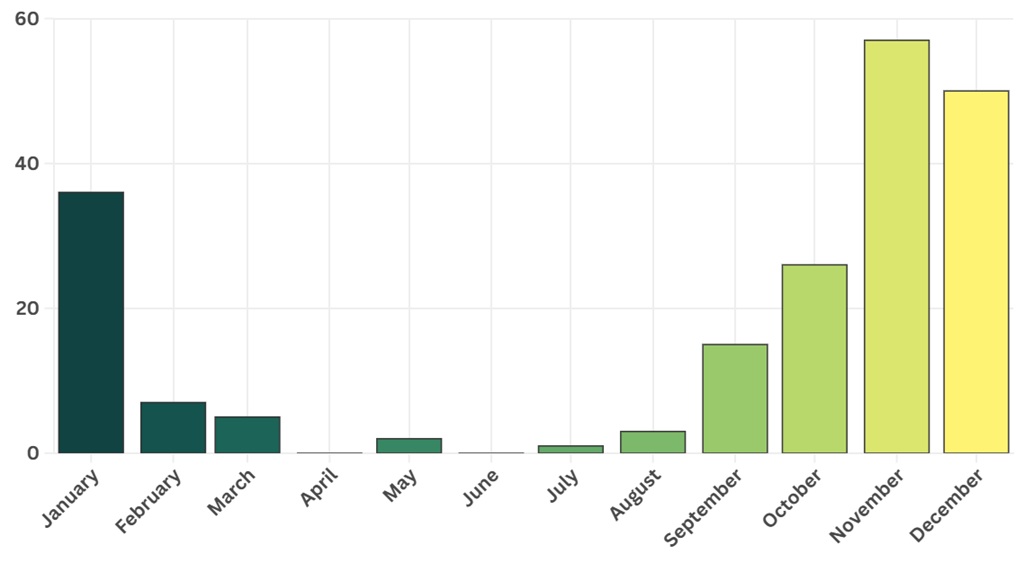
While the water rail is primarily a resident here in the UK, winter numbers do get boosted by some European migrators flying across mostly from the Netherlands, Belgium and northern France. However, unlike similar charts in past Data Dives - where migration has been the leading cause of increased sightings - the increase in water rail can be explained by a behavioural transition...
Shy and elusive, the water rail remain fairly local to their territories and don’t fly particularly well and prefer to travel at night to minimise risk, not only from predators but also air turbulences caused by heat thermals during the day. This suggests that water rail are likely to be in the area all year-round but are not recorded on the daily sightings because of how adept they are at not being seen, being extra sneaky during the breeding season, as shown on the chart. This sneakiness seems to wane during the winter months however, when the water rail becomes a vocal “piglet in the reedbed”. Making grunting and groaning noises, purring like a cat and pig-like squealing - water rail become far more obvious at this time of year and a lot easier to record.
Similar to the chiffchaff we looked at way back in the March Data Dive, where we spoke about records based on audio and how sometimes birds are heard but not seen. There is a similar story with the water rail, where almost 20% of all water rail records were made based on sound, of which, 95% were taken during the autumn and winter seasons, as the reserve team recognised them from their distinctive winter noise.
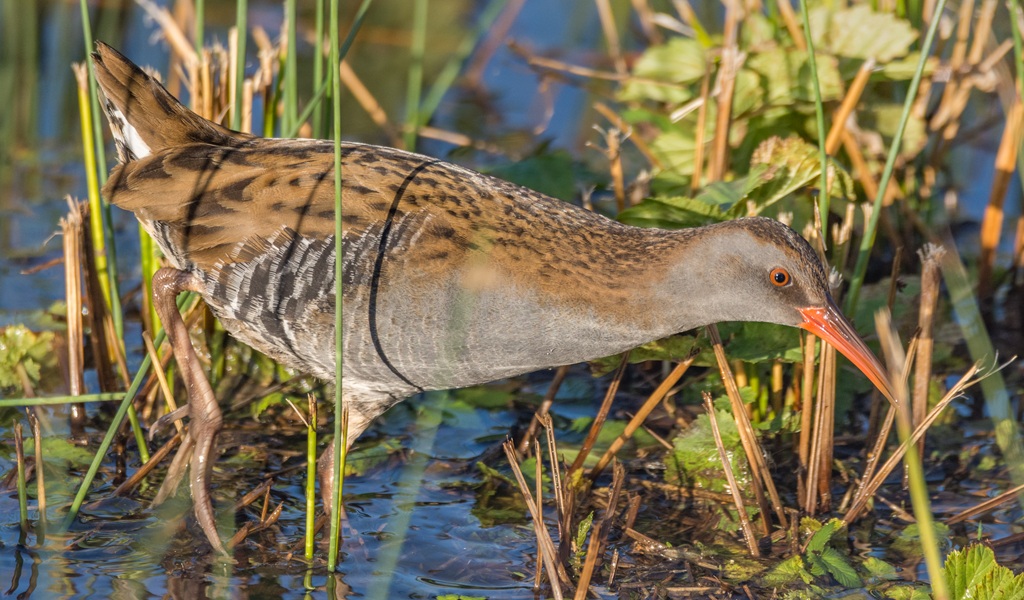
(There’s the long neck!)
The water rail is mostly a solitary bird, especially during the breeding season and while they have been known to congregate in larger groups of up to 30 outside of the breeding season, here at WWT Washington we usually only record a single bird. Just over 92% of all our water rail records are of singular birds and the remaining sightings have been pairs. Except for on the 8th of January in 2019 when we recorded 3 water rail poking around Wader Lake.
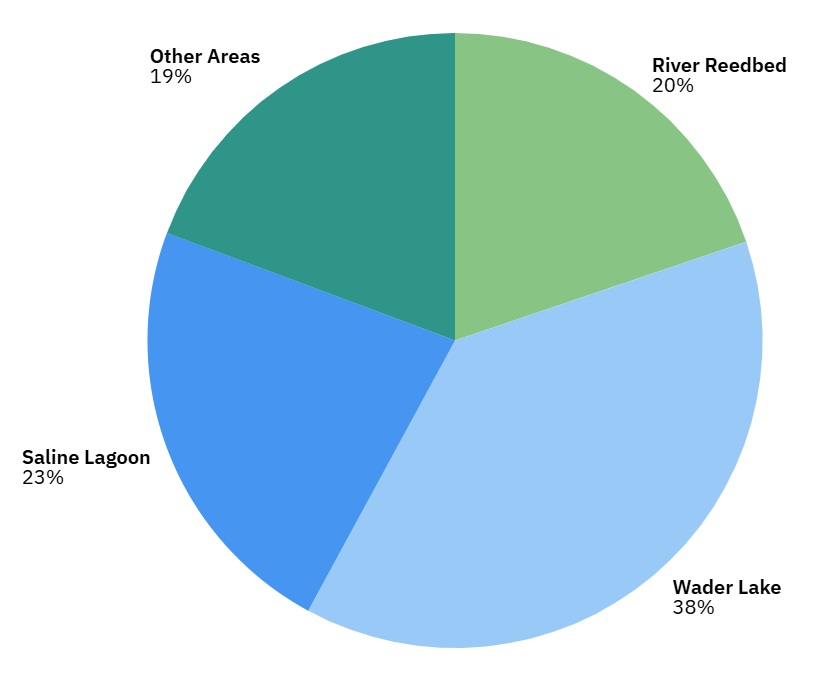
Looking at the chart below, which shows the areas on site that water rail have been recorded, we can see that Wader Lake and Saline Lagoon take up the majority of the sightings. These larger bodies of water have longer stretches of reedbeds for the birds to mill about in and be spotted darting between the reeds and sedges. River Reedbed also takes a substantial portion of the sightings, this is the strip of dense reedbed that runs parallel to the river Wear, close to our Saline Lagoon Hide, another perfect habitat for water rail. The other areas are similar habitats - smaller ponds such as Round Table Ponds and Amphibian Ponds. Water rail have also been recorded at Wet Woodland and even poking around the feeders at Hawthorn Wood Hide. Another spot where water rail are frequently seen is the Filter Reedbed, the area of reedy water that feeds into the Reservoir beside Hawthorn Wood.
During November we also see increased sightings of some none wetland birds too, such as the blackbird, that are recorded more in winter due to migratory birds joining our local ones. Siskin numbers ramp up in October, but continue to grow through November and December. Other smaller birds such as bullfinch, chaffinch and coal tit, while active on site all year round, see an increase in sightings during winter due to more activity at feeders and less leaves on the trees, allowing for easier observation. Another winter visitor we see in November, and a cousin of the blackbird, is the redwing.
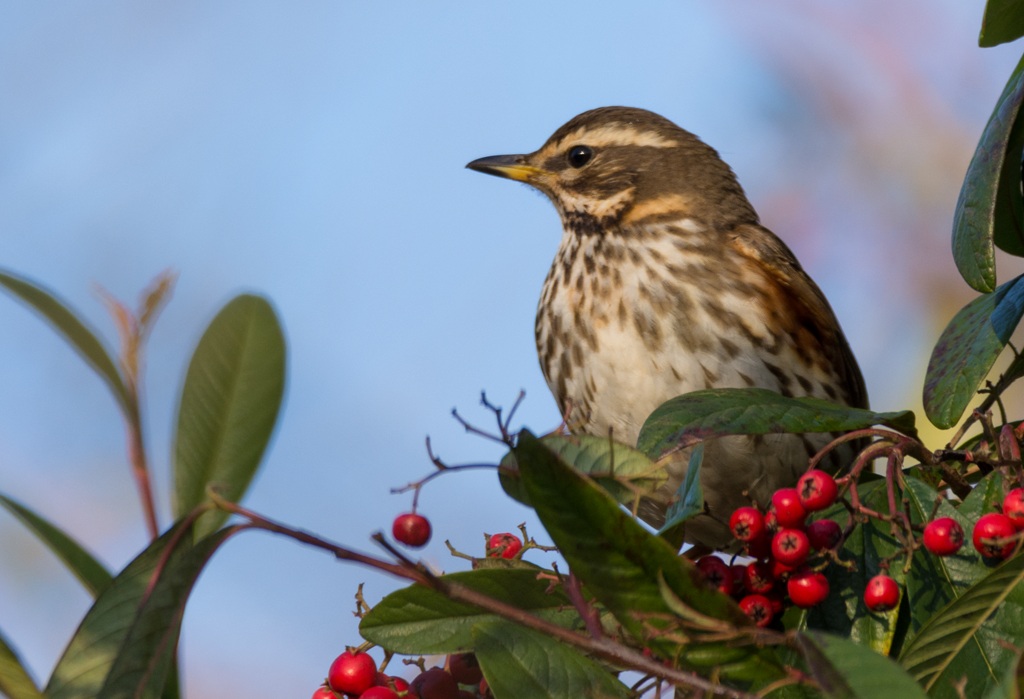
A beautiful passerine bird, the redwing is a migratory bird that arrives in the UK in early autumn and remains until spring. The redwing comes across from Scandinavia and Eastern Europe on the hunt for berries - their favourite food. In years where the berry yields elsewhere have been low there can be up to 700,000 redwing overwintering in Britain.
Interestingly, the redwing is the smallest true thrush (birds within the Turdus genus) in the United Kingdom and despite there being a large winter population –depending on the berries- there is a tiny breeding population here too. An estimated 30-60 breeding pairs of redwing remain in the UK and nest in the Highlands of Scotland and Shetland.
The graph below shows the total times across the last 10 years that redwing have been recorded on the daily sightings per month. We can see that throughout spring and summer, the redwing are fairly absent from the site, with no sightings in June or July. Yet from mid-autumn through winter we see redwing fairly regularly, especially in November.
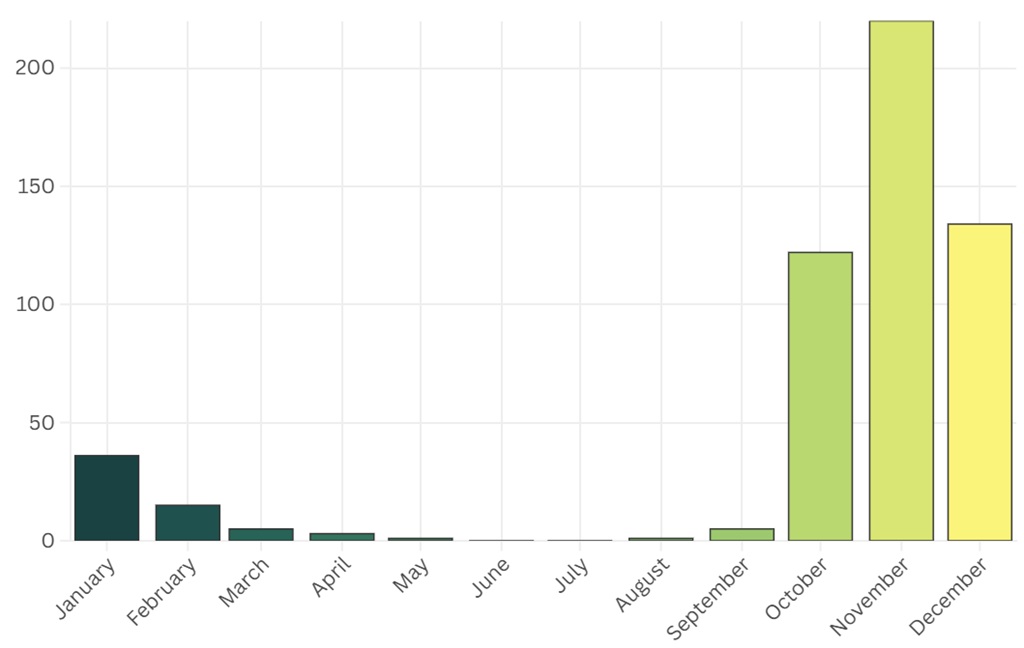
Redwing are a fairly nomadic bird, meaning they are not loyal to individual locations and will often travel in large groups, foraging and eating berries in an area before moving on. The data suggests that November may be the month where the redwing visit WWT Washington to strip us of all our berries, before moving on through December. The redwing are sometimes spotted alone and other times travelling in large flocks. Our highest counts were in the autumns of 2017 and 2018 when we recorded 200 redwing at a time. More recently we recorded 80 in 2023 and last year we counted 50 at East Downs in December. However usually when they are spotted, they’re counted in numbers between 1 and 15.
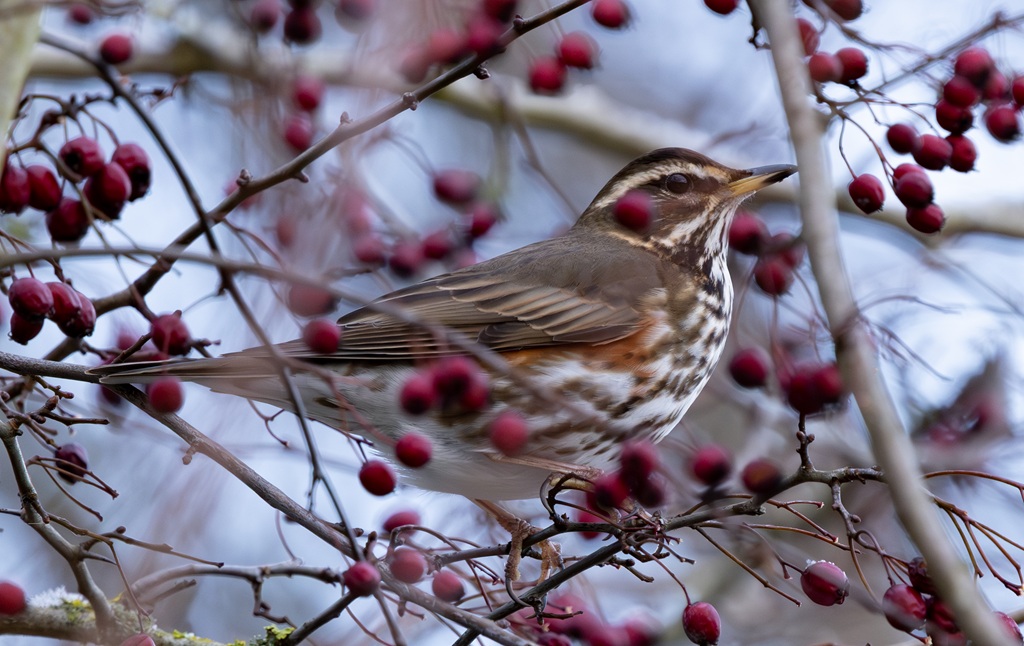
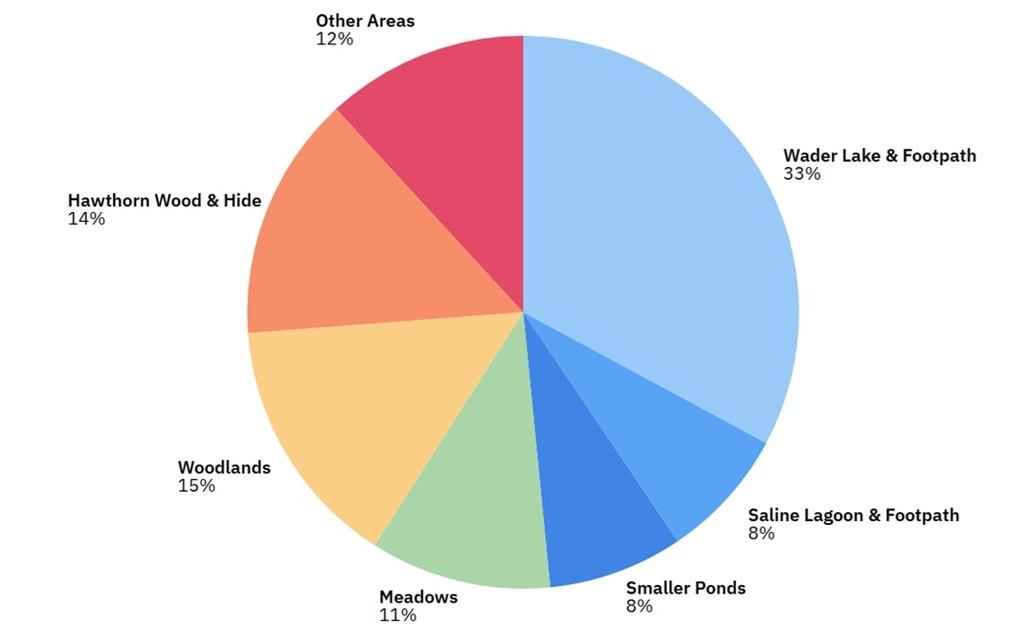
Looking at locations where redwing are recorded, shown on the chart below, we can see that redwing have been spotted pretty much all across the site. Found mostly around the footpath that runs alongside Wader Lake, this is likely caused by the abundance of food found in the hedgerows between the river Wear, the path and the lake. Hawthorn Wood also sees a good portion of redwing, with them also frequently being sighted near the Hide. In fact, all woodlands and meadows at Washington have had redwing sightings, as well as other ponds and bodies of water such as the Amphibian and Dragonfly Ponds, the Reservoir and Forgotten Meadow Pond.
With 220 records on the daily sightings in November across the last 10 years, we can determine that on average we see redwings around 2 out of every 3 days across the month - making it a great time of the year to hopefully catch a glimpse of this fantastic berry munching passerine.