

Whether rain, shine or blizzard, our reserve team do a daily count of the wild animals on our site.
In these monthly blogs, we look at that data from years gone by and explore trends, observations and records, and talk about how we manage the site and how it impacts those animals.
This month we explore the October data, looking at the teal and the somewhat spooky jackdaw
We are now well into autumn and as the nights draw in, the weather gets both wetter and colder. Most of our migratory summer birds that leave for winter have gone - yet activity on site remains high. Winter migrators are seen flying overhead with some landing on site (mostly around Wader Lake and the meadow) to rest. Curlew are seen regularly on site in October, as well as redshank and goosander. In fact, our goosander October visitors are becoming more present in more recent years – across the 2022-2025 period, they have been counted on 59 days in October, while in 2016-2019 they were only counted on 3 days in October, showing a substantial increase!
October also usually brings the arrival of some less wetland specific birds, such as the redwing, the brambling and the siskin. Across the last ten years, redwing have only arrived before October three times, in 2016, 2022 and 2024, we also have seen our largest flocks of redwing in October with 100 being spotted at one time at Forgotten Meadow on the 20th of October, 2017. We also have counts of up to 200 redwing in one day, but spread out across the site.
Another bird, whose numbers grow in autumn is the teal.
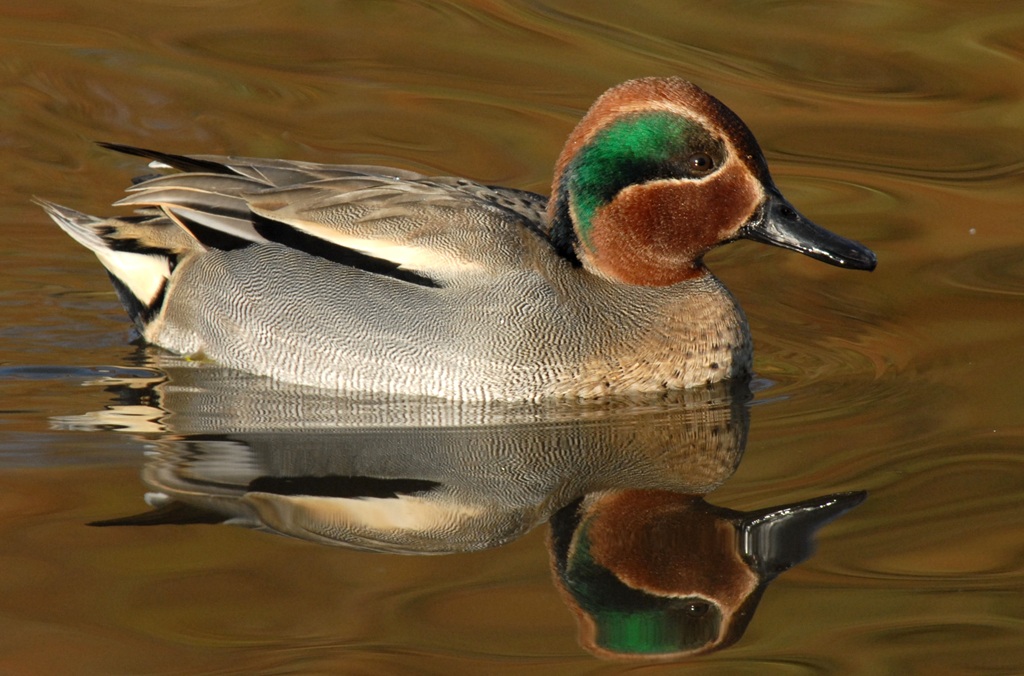
An amber listed, uncommon sight across UK marshlands, the common teal (or Eurasian teal) is the smallest duck in Britain – measuring only around 35cm (for reference a mallard measures around 55cm). It’s also one of the smallest ducks globally, alongside the blue-billed teal, African pygmy goose and cotton pygmy goose.
The teal is both a summer breeding bird and a winter migrator to the UK. Smaller numbers are present throughout the breeding period (Britain has an estimated 4000 breeding pairs of teal), which then get boosted dramatically in the autumn and winter as we receive over half a million from the continent – mostly coming from the Baltic and Siberia.
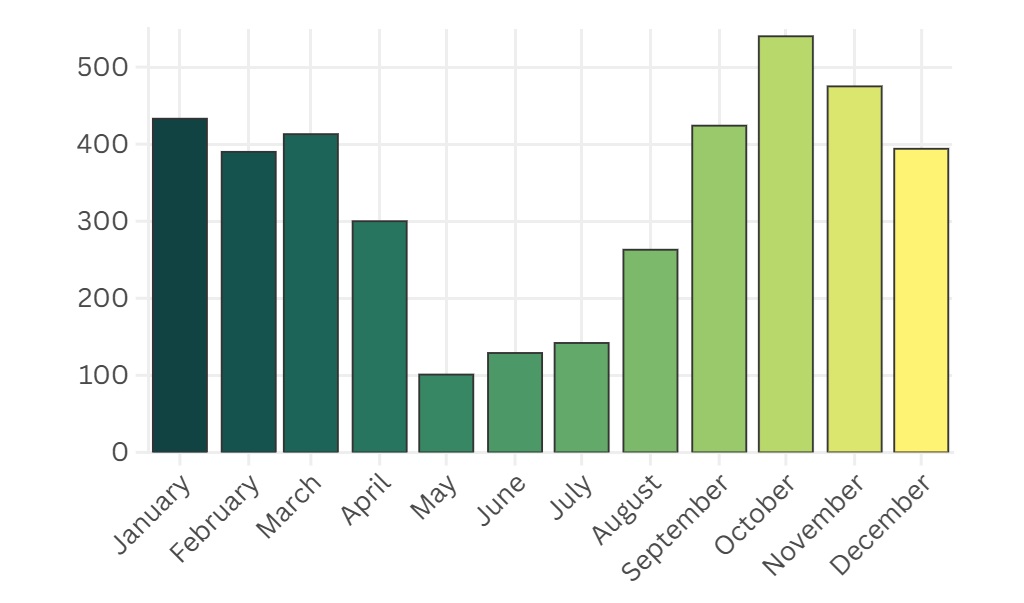
Here at Washington we often see teal across the year. The graph below, shows a total of days and locations where teal were counted across the last 10 years to display how prevalent teal are across a typical year. We can see that teal are present throughout the year and as expected, are higher throughout the colder months when we get those winter visitors.
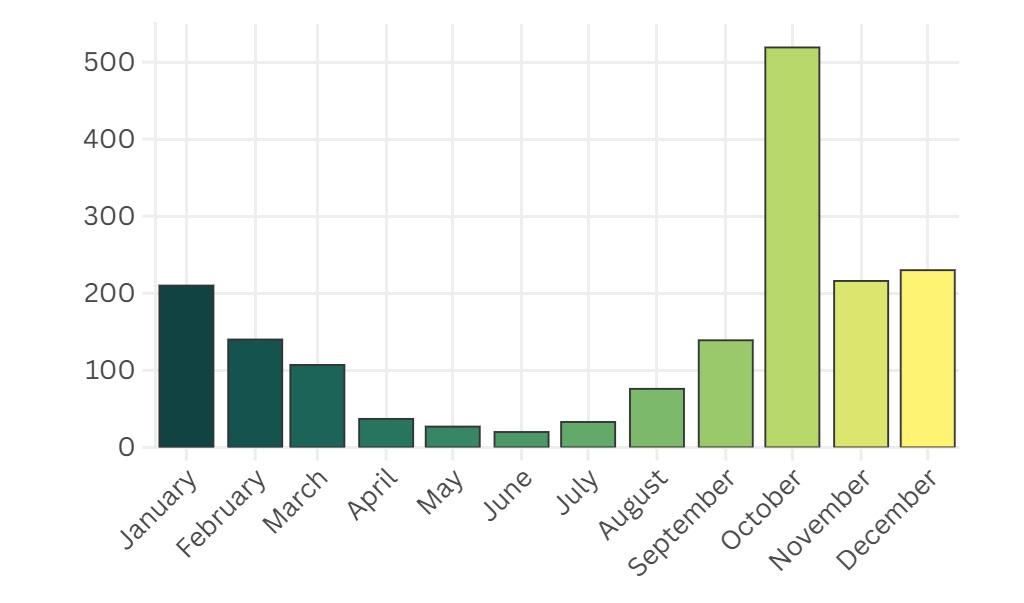
Comparing that with the following graph, which shows the highest daily count per month from the last ten years, we see a similar pattern. Lower numbers of birds are recorded across the summer but then numbers gradually ramp up through autumn and into winter. Interestingly, is the large peak in October which is caused by a record of 519 teal being spotted last year on the 21st of October at Wader Lake. Hopefully, this year will see similar numbers!
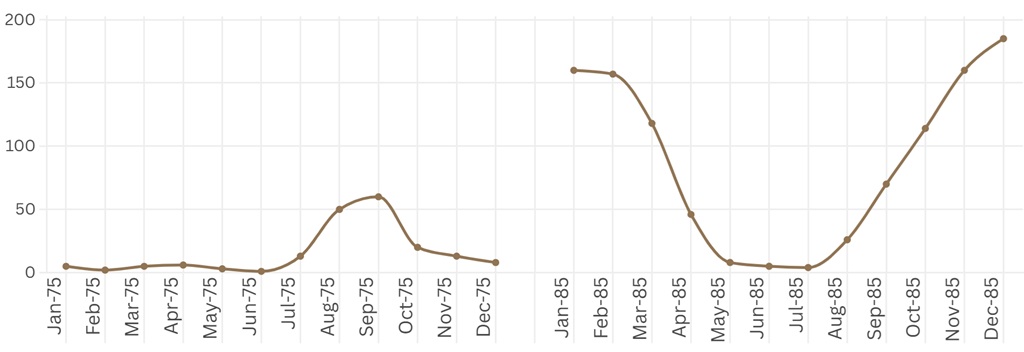
Looking at historical sighting data on the graph below, which shows the peak counts per month for 1975 and 1985, we see that teal were active on site 60 years ago. Strangely, in 1975 teal were most numerous during August and September, although a decade later in 1985 the sightings are of a more expected shape, with highs throughout winter and lows during summer.
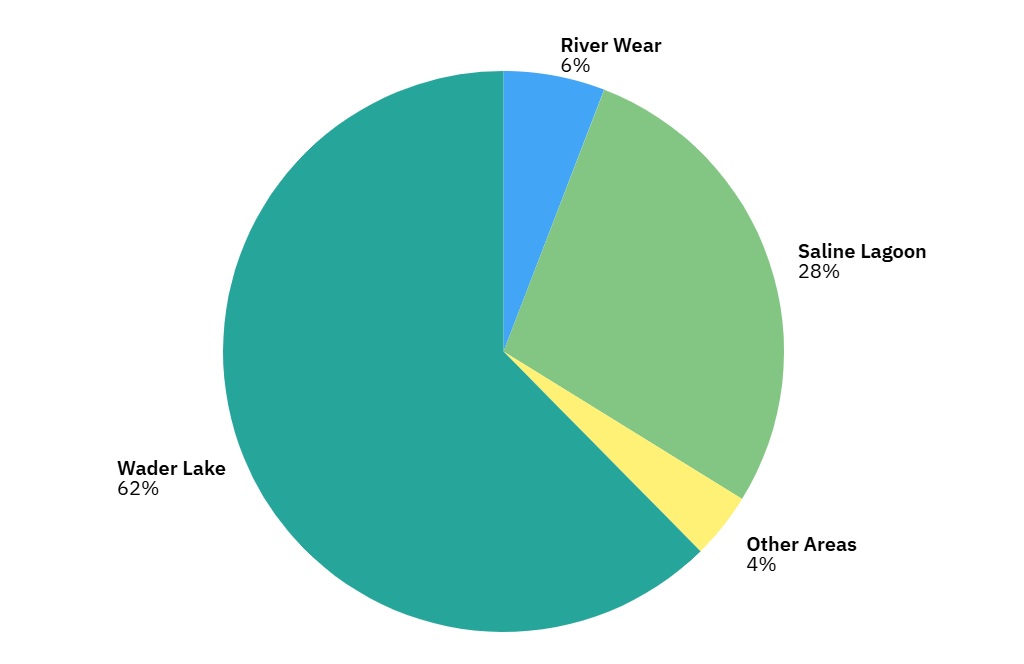
Unsurprisingly, we see this small duck most often around our larger water bodies, the chart below shows the locations where they are recorded. Most sightings are made at Wader Lake and Saline Lagoon. 10% of all sightings are split amongst the remaining locations, with 6% out on the river. Other Areas are mostly made up of the other sizeable water bodies on site, such as the reedbed and reservoir – back in 2021, during March one was even sighted in the Flamingo Exhibit!
Another interesting occurrence that happens around this time of year involves a member of the corvid family – the jackdaw.
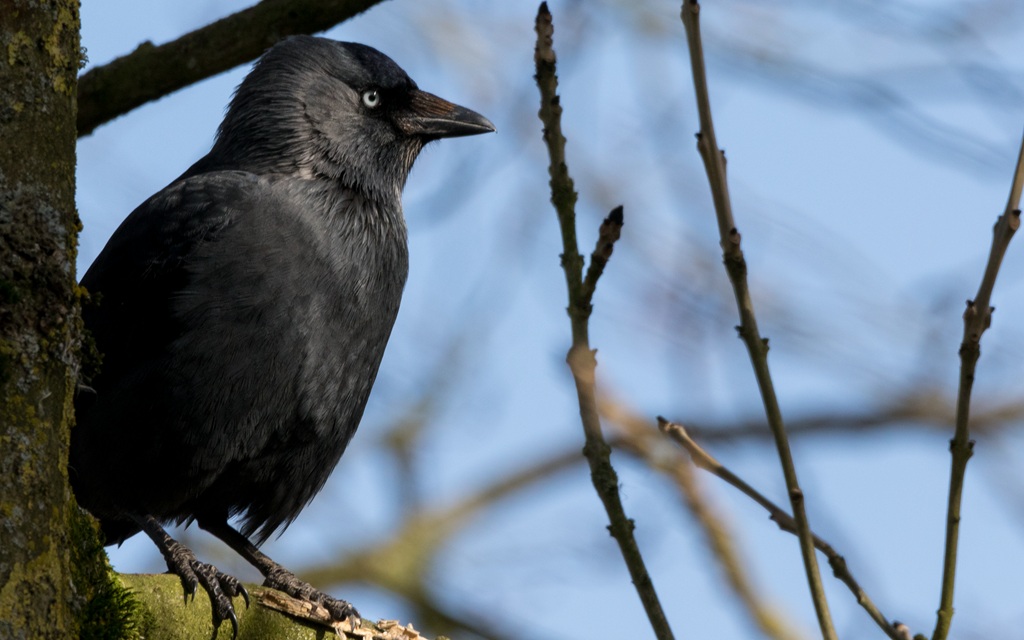
Quite an appropriate bird, considering how close we are to Halloween, the jackdaw (as well as some other corvids) are quite synonymous with this spooky time of year. Jackdaw like to nest in cavities and crevices and have often been seen around church rafters, steeples and graveyards. This, combined with their intelligence, black hood and pale silvery eyes has given them a somewhat unnerving presence. Adult jackdaw have pale silvery yellow eyes, but younger birds have bright blue ones. In Celtic folklore the jackdaw is sometimes referred to as a messenger between worlds - spooky!
While not migratory, jackdaw’s behaviour changes in the autumn and winter, transitioning from singular pairs and small flocks throughout the summer while nesting, breeding and raising young, to living and roosting in large communal flocks through the colder months. This is not only for warmth and safety through the winter, but also a response to food scarcity. Larger flocks can forage more efficiently, covering a greater area and because they conserve heat by roosting together, they do not require as many calories to maintain body heat.
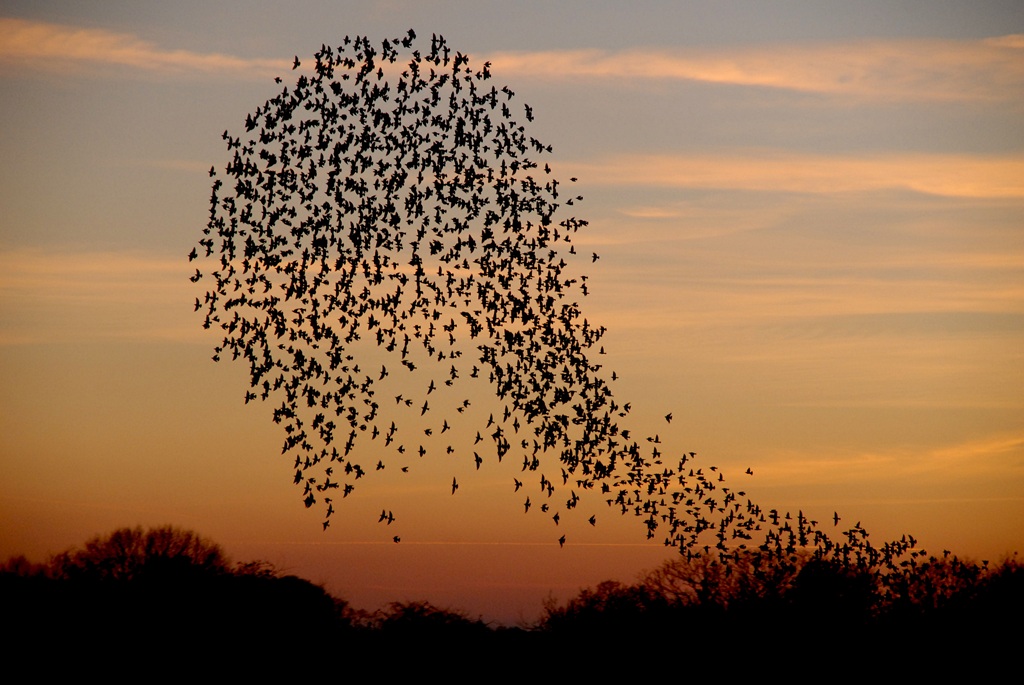
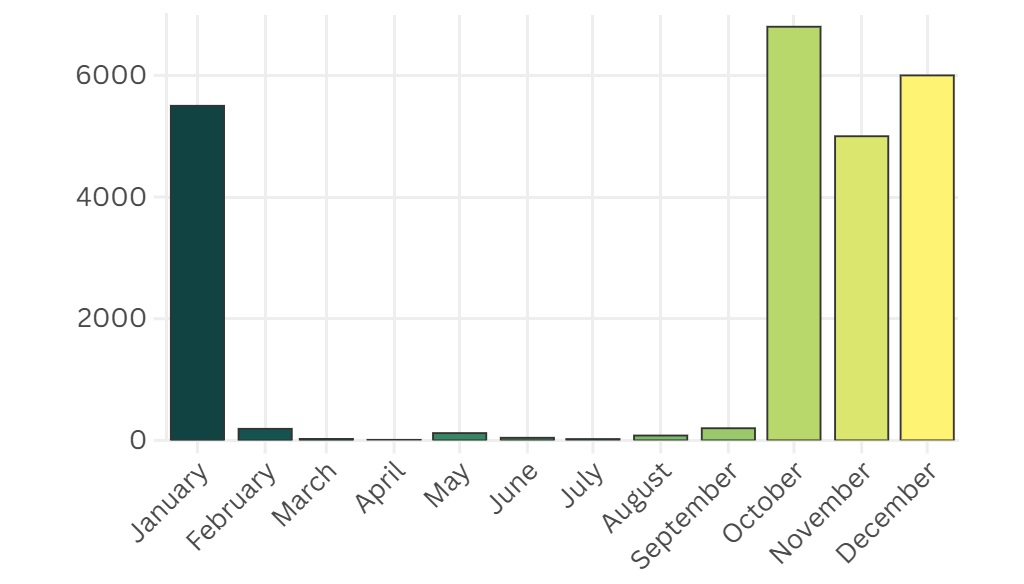
Here at Washington jackdaw are recorded throughout the year, often seen flying over Wader Lake, but their numbers really ramp up in autumn, going from only a handful of birds being spotted at once to flocks of thousands. Looking at the graph below, which shows the peak daily count per month across the last ten years. We see that the numbers are low across the spring and summer, but in mid-autumn, they rocket up. In the evenings during the autumn and winter, a steady stream of thousands of noisy jackdaw cross the sky for well over 5 minutes as they make their way to their roosting spot.
Like we did with the teal, we can also compare this graph to the one below, which shows total of days and locations where jackdaw were counted across the last 10 years showing how active jackdaw were around the site and we see an interesting pattern. Unlike the teal, where more sightings were recorded during the months where more birds were seen daily, the jackdaw is seen more often during months when their flock counts are lower.
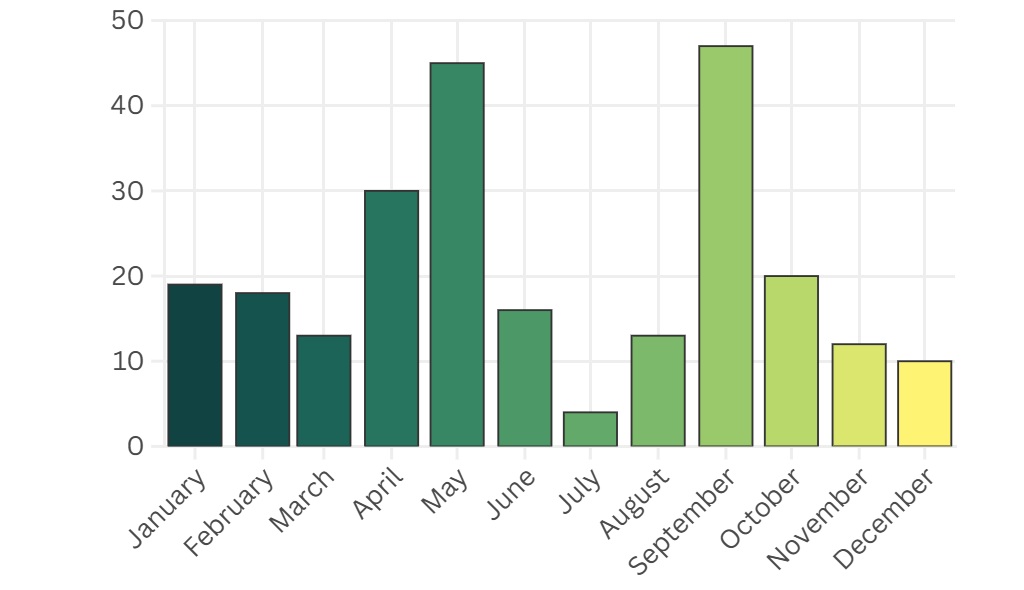
This can be explained by timing. Particularly in autumn and winter, the jackdaw flock to roost in the early evening but the reserve team do their daily sightings first thing in the morning while performing other duties around the site. This means that while the jackdaws fly over the site pretty much every evening, the sightings have already been completed earlier in the day. Any large counts of jackdaws are usually sighted purely by chance while closing down the site for the night and the records are added retrospectively the next day.
Jackdaw are also our record holders for most birds spotted at a time - and not by a small margin.
In the last ten years our 7 highest daily counts for an individual species are all jackdaw and the highest one of those - a whopping 6800 jackdaw, was recorded in October last year… on Halloween!