Whether rain, shine or blizzard, our reserve team do a daily count of the wild animals on our site.
In these monthly blogs, we look at that data from years gone by and explore trends, observations and records, and talk about how we manage the site and how it impacts those animals.
This month we take a break from our feathered friends and instead look at summer-loving butterflies.
Here in the United Kingdom, the warm summer weather brings with it the silent flutter of butterflies. From the strikingly vibrant peacock and red admiral to the more muted -but still beautiful- ringlet, meadow brown and speckled wood, our countryside and gardens become home to these fantastic, winged insects.
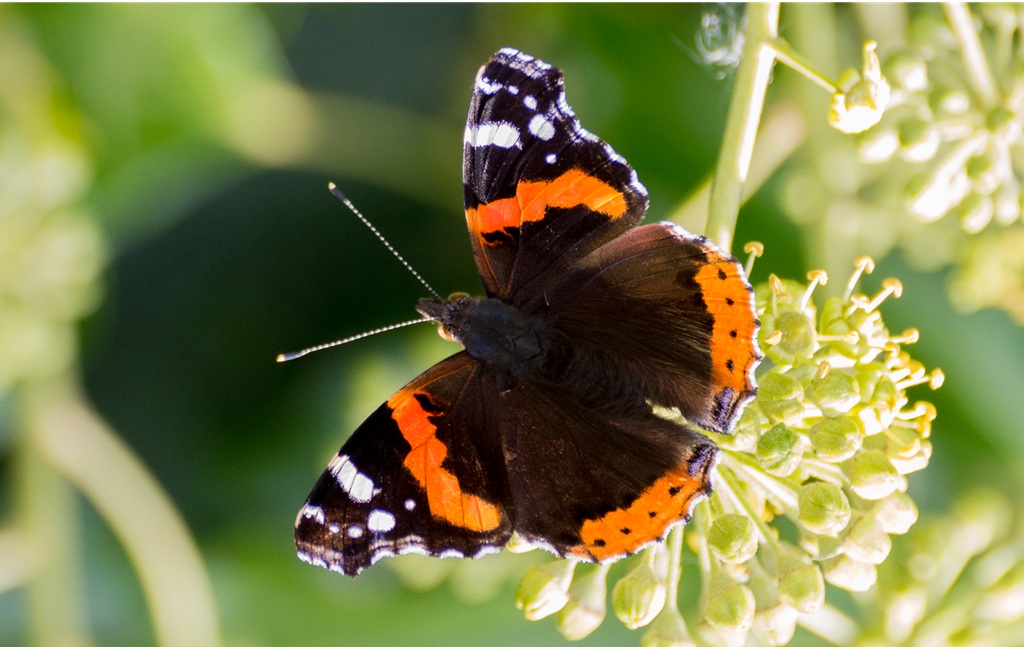
A red admiral
From all the butterfly species that are found here in Britain, only 45% of them are considered of “Least Concern” from a conservation perspective. Worryingly, 34 species of butterfly are now on the red list, meaning that they are threatened, vulnerable, endangered, critically endangered or even regionally extinct. For context, the red list in 1987 had 11 species on it, then 19 in 1997, displaying a worrying trend for our butterflies. This means that the work we do at WWT to create, restore and protect rare British habitats is exceedingly important for our fluttering friends, many of which thrive amongst the meadows, hedgerows and woodlands here.
While most of the butterfly species are residents, meaning they stay here all year-round, two are migratory and will arrive on our shores with the warm weather and then travel away once the cold starts to creep in. The painted lady and clouded yellow spend their winters in Africa and southern Europe before travelling to Britain to spend their summer.
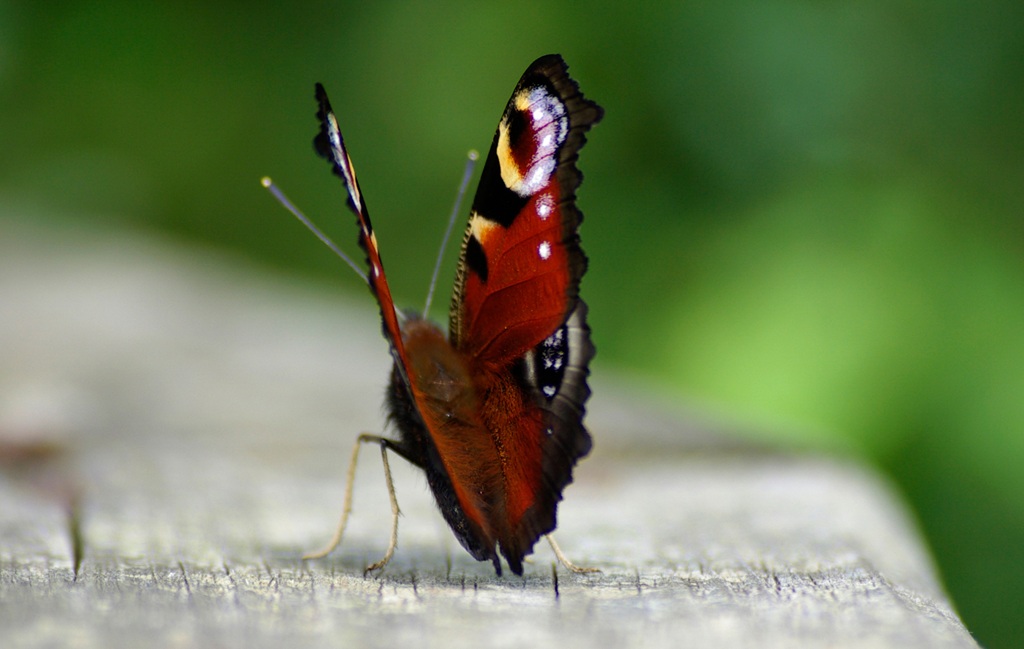
A peacock
Interestingly, butterflies over-winter at different stages of their life cycle depending on the species. Some do it as caterpillars by entering a state called diapause (which is similar to hibernation), where their metabolism slows down and they will lie dormant, only moving occasionally to feed. Others will form a chrysalis as an autumnal caterpillar and then emerge as a butterfly in spring.
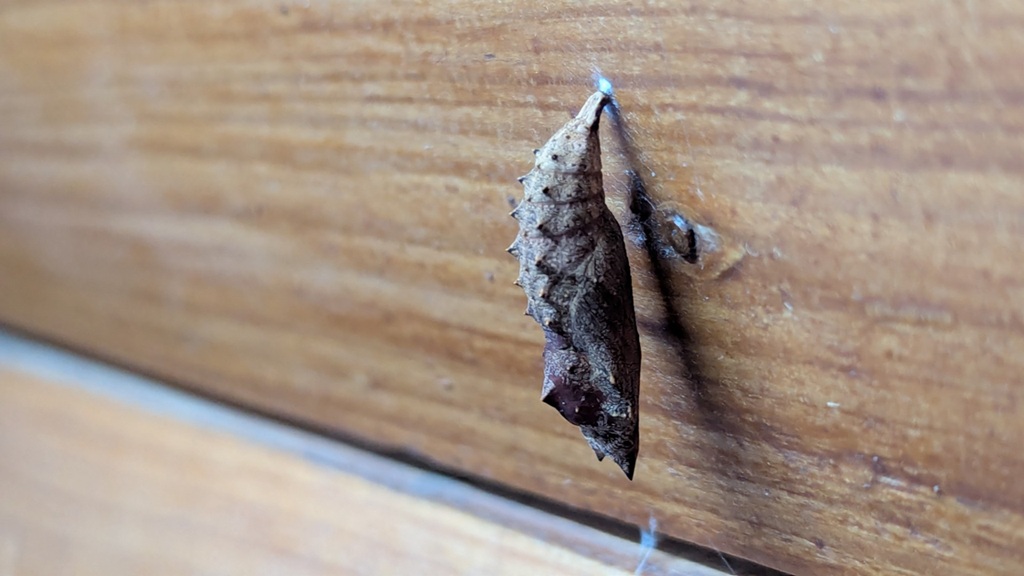
Sometimes they’ll over-winter as eggs, the adult butterfly will lay her eggs before the cold sets in and then those eggs will hatch into caterpillar the following year. Butterflies can also over-winter as adult butterflies, entering the same diapause state as the caterpillar and taking refuge in warm locations – some even have their own anti-freeze formula, by storing glycerol in their bodies to prevent them from freezing Last winter we had two chrysalises over-winter inside the visitor centre – the picture below was taken all the way back in January!
Taking a stroll around the site in the sun, you’re likely to spot a butterfly or two. Whether flying throughout our flower beds, sunning themselves at the insect garden or dancing in the dappled light beneath the trees, butterflies can be found all throughout the warmer months here at WWT Washington. Across the years we have had numerous different species identified on site, on the daily sightings we have had 20 different butterfly species recorded since 2019 and last year alone we had 18 varieties visit us across spring, summer and early autumn – That’s a whopping 30% of all UK species!
The two species absent last year from the daily sightings but have been recorded in the past here were the wall and the brimstone. The wall butterfly, sometimes called wall brown, is an orange and brown butterfly that is often seen sunning itself on bricks, stones or rocky surfaces - being seen spending a lot of time on walls is how it got it’s name! We last recorded a wall here in 2022.
The brimstone is beautiful brightly coloured butterfly with leaf-shaped wings. The females are an almost white pale green, while the males have a yellow upperwing and yellow-green underwing. We’ve only ever recorded one brimstone in the daily sightings on the 29th of June back in 2021 – There is a theory that the word “butterfly” comes from the yellow of some butterflies, such as the brimstone.
Looking at the graph below, which uses a combination of days sighted, locations sighted at and species recorded to display the prevalence of butterflies across the months last year. We see that butterflies begin to be spotted in March, when most come out of their over-wintering period. By the end of October they have then begun their over-wintering again. We can see that butterflies are most active on site during July.
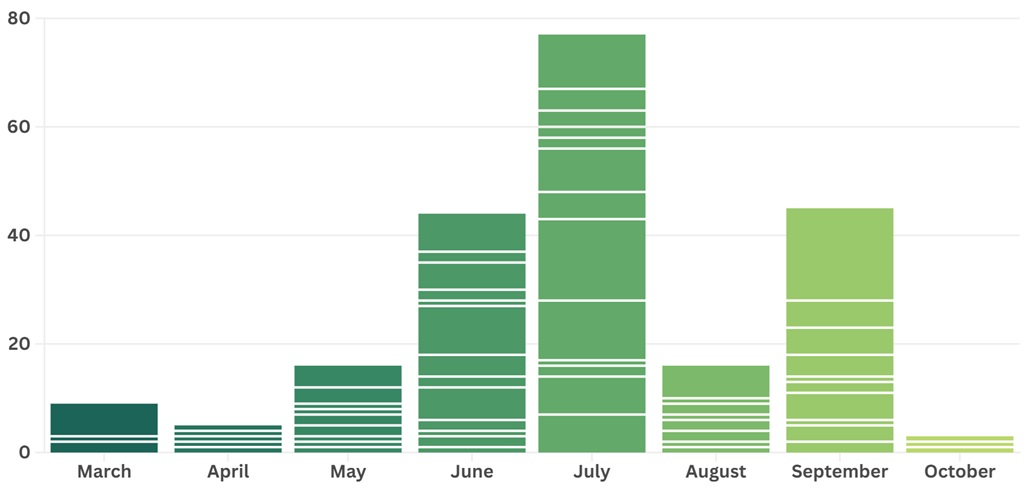
We can also count that there were 13 different species present during July, (each chunk of the column is a separate species), which we can see in more detail in the chart below, highlighting which species were recorded during our daily sightings across the months.
It’s important to remember that our daily sightings only take place during a specific time each day, usually first thing in the morning, so the numbers on the graph aren’t suggesting that we only had one butterfly on site the whole month, but that one was sighted during the daily count. When in reality it displays that the species was present on site and, to a degree, how visible they were.
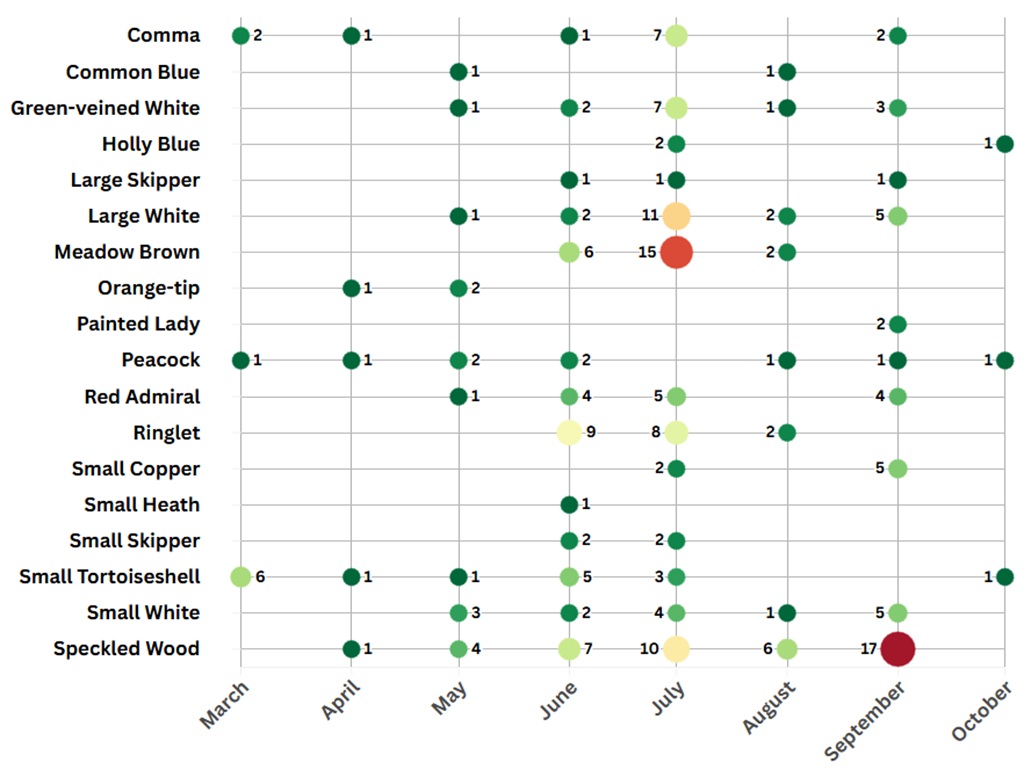
A few notable talking points from the graph would be the numerous species present in July, with the meadow brown, large white and speckled wood being particularly prevalent - making it an excellent month for butterfly spotting. The comma, peacock and especially the small tortoiseshell in March, being species that over-winter as adults, this shows that they have survived the winter and were sighted at the start of spring. Also, the migratory painted lady in September showing that they’re still active in the area after travelling so far.
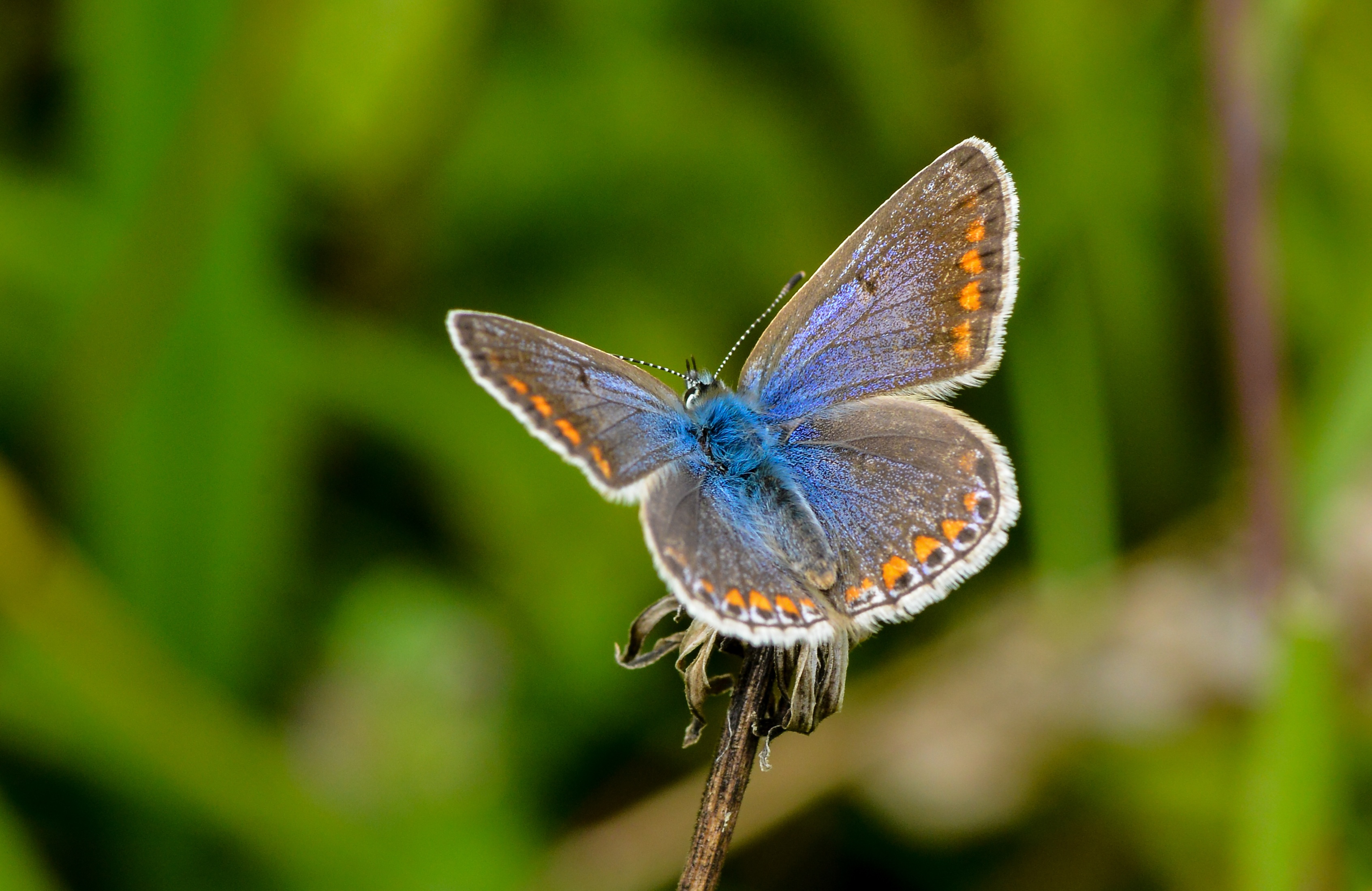
A common blue
Curiously, there is a phenomenon known as the June Gap -although not always strictly occurring in June- where butterflies become less present midway through the summer and butterfly conservation groups get concerned emails and phone calls from people worried about where all the butterflies have gone. This is caused by some of the butterflies which have more than one brood of eggs across the season going through the period when the first batch of adult population (that were the first brood of eggs in spring) wanes while their brood are still eggs, caterpillars or chrysalis in the middle of summer. Also, some of the single brood butterflies have yet to begin their yearly activity while at the same time others have already finished.
Looking at our species graph again, we can see these moments for individual species with the comma in May and again in August and the peacock in July, where their presence dips between months of activity. However, if we look at the first graph, showing the general butterfly activity across the year, it would appear that we may have experienced our June Gap in August last year.
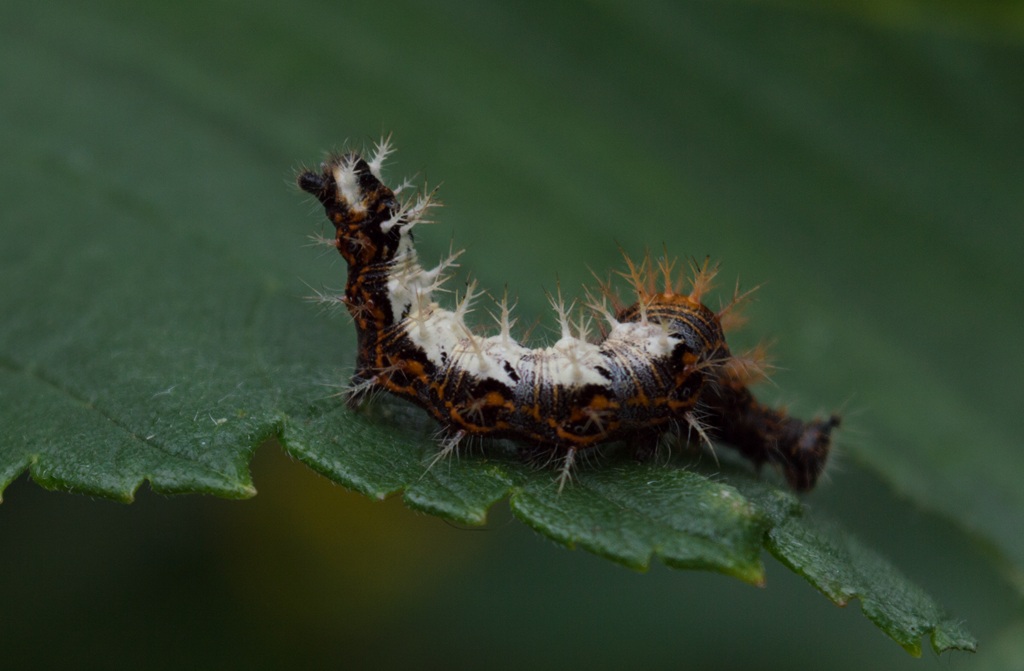
A comma caterpillar
From the data we can also determine where the butterflies are seen most around the site (at least during the daily sightings). While 40% of the sightings were simply recorded as being present on the site without a specific location given, 12% were recorded at the Amphibian Ponds, the footpaths that run along Wader Lake and the saline lagoon saw 15% and 7% of butterfly sightings. Our meadows were also quite prolific for butterfly spotting, with 6% being recorded at both Old Oak Meadow and Forgotten Meadow, then 5% at Top Meadow. The various woodlands and grounds around the visitor centre made up the rest of sightings.
Here at Washington, we strive to create a perfect habitat for our butterflies to thrive in by maintaining our wonderful insect garden, which houses many insect attracting plants and flowers. We also protect our wild meadows and grasslands, which are home to many plants which the butterflies love. Thistles which are an excellent provider of nectar to a lot of insects are found in areas across the site like Forgotten Meadow and Old Oak Meadow, as well as around our Amphibian Ponds. Both field scabious and devil’s-bit scabious flowers provide ample nectar, especially late in the summer and are often found within our grounds and also at forgotten meadow. We also have several caterpillar friendly plants across the site like the cuckooflower (sometimes called Lady’s smock), which are fantastic for the caterpillar of both orange-tip and green-veined butterflies.
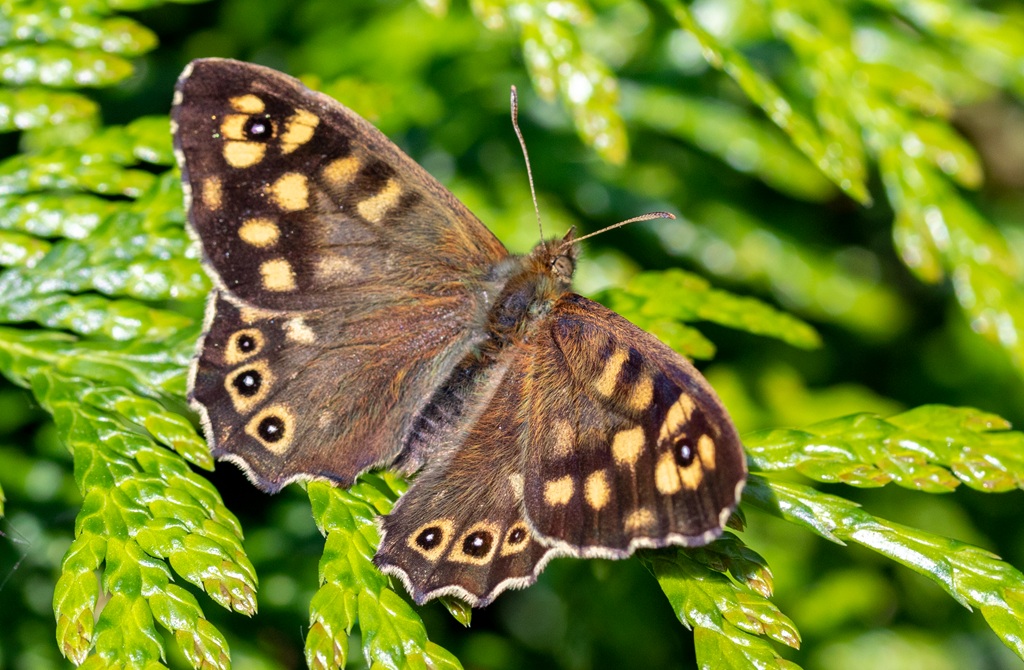
A speckled wood
Many plants which most may consider a weed, such as dandelion, nettle, thistle, ragwort and dock, are actually an incredibly reliable food source for the butterflies and their caterpillars. In fact, the common stinging nettle is the main egg laying plant of the red admiral, whose larvae feed on the leaves.
From all the data, we can see that July is a fantastic month for seeing butterflies here at WWT Washington, where several different species are in their adult stage and can be seen across the whole site!