Whether rain, shine or blizzard, our reserve team do a daily count of the wild animals on our site.
In these monthly blogs, we look at that data from years gone by and explore trends, observations and records, and talk about how we manage the site and how it impacts those animals.
This month we flip the rules and talk about a bird you’re less likely to see in May and another one you’re more likely to, for the same reason - the redshank and the grey heron.
May is normally a month of mixed weather, bringing warm sunny days one week and then cool rain showers the next. Last year however, May marked the peak of an intense dry period with record breaking high temperatures and sun across most of the United Kingdom. These high temperatures and incredibly long periods without rain caused some issues for the reserve team, mostly with a lack of invertebrate life causing breeding birds to postpone laying eggs until later in the season, during which competition and predation were increased. Our smaller ponds were also affected by the drought - in-fact, many of our amphibian and dragonfly ponds dried out, causing concern for the underwater life, such as damselfly and dragonfly nymphs which need to spend several years in the water before emerging.
Looking at the data from years gone by, May out on the reserve typically sees steady populations of seasonal wetland breeding birds such as avocet, common tern, shelduck and shoveler. Some smaller migratory birds like sedge warbler and common whitethroats are seen more frequently throughout May too. Rarer sightings in May include cuckoo in 2023, 2022 and 2016 and garganey, which were sighted back in 2022 and then again last year. Back in 2017 we even recorded a long-eared owl on 2 days in May, roosting in Hawthorn Wood!
Readers of previous monthly Data Dives will have become familiar with the graphs and charts and trends seen - that high numbers and peaks means there are birds and low numbers and troughs means there are fewer birds - but what if that’s not actually the case? Last month we touched on recorder bias, how external influences can affect data and how incredibly important it is to understand what we’re looking at, as sometimes zero might not necessarily mean zero… Let’s take a look at the redshank.
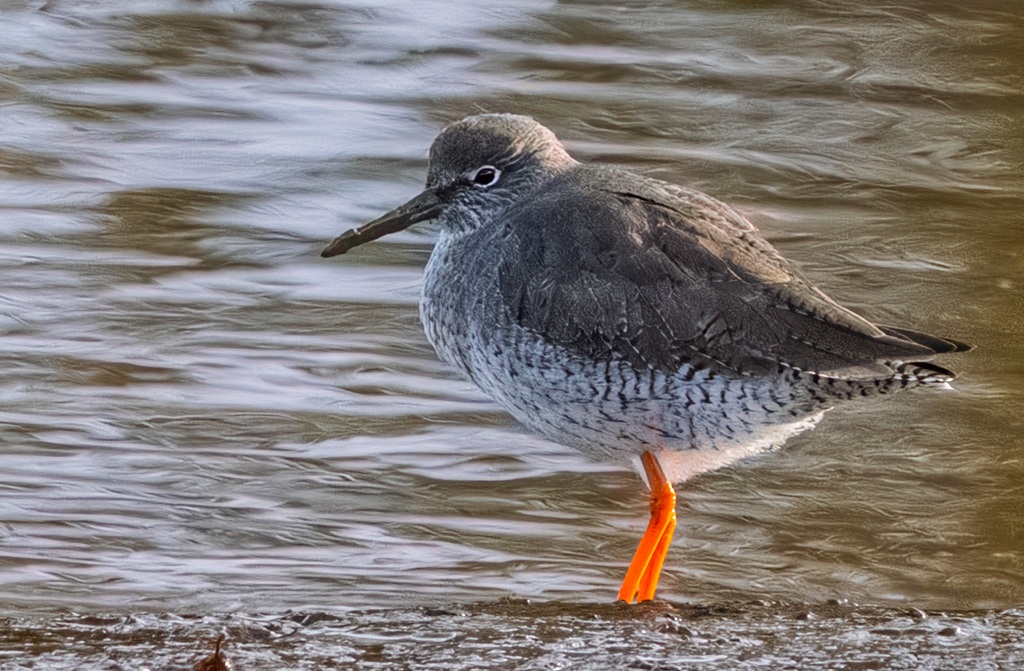
Redshank are a common sight throughout the year here in the United Kingdom, with breeding populations during spring and summer and over-wintering populations coming from Iceland and the Faroe Islands to join our UK breeders - which move to more coastal areas during the winter. Named for their iconic red legs (shanks), the redshank population has decreased significantly over the last few decades. This is mostly attributed to loss of habitat, largely marshes and reedbeds, which are the redshanks 2nd and 3rd most utilised habitat after coastal areas.
In fact, wetland sites such as ours are incredibly important for many shorebirds like the redshank. As well as coastal areas and tidal flats, habitats such as marshes, mudflats, saltmarshes, wetlands and reedbeds are vital for these birds, providing them with food, shelter and nesting locations. Unfortunately over the last few centuries however, these crucial habitats and ecosystems have declined by around 90% here in the UK. Making it essential that those that remain are protected and conserved.
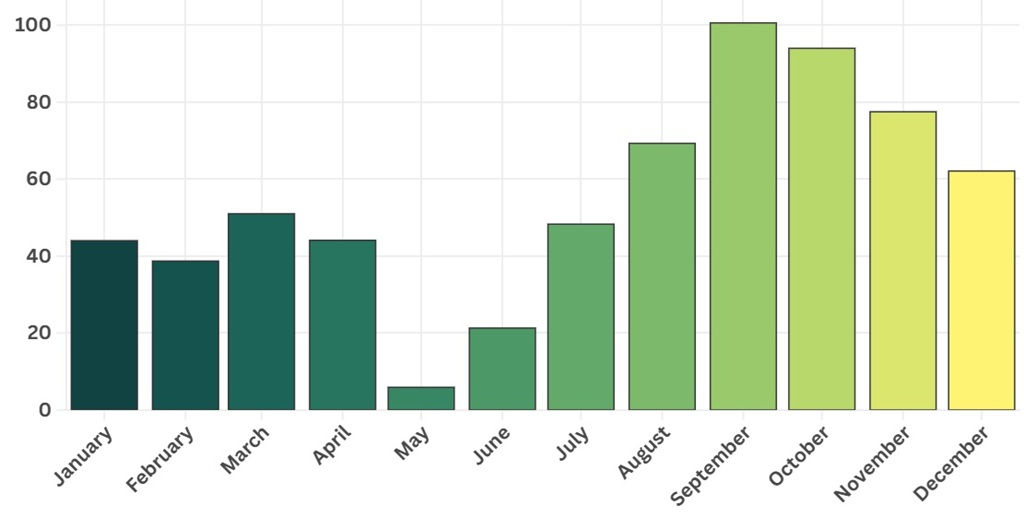
When we look at the chart above, which uses data from the last 10 years to show the average peak count of recorded redshanks across a typical year. We notice that they are visitors to the site all year round, with larger groups being spotted around September and October, -despite the highest single daily count in the last 10 years being 207 in November 2022. Even more interesting is what can be observed happening in May; a seemingly drastic dip in our redshank population. This is even more evident on the graph below, which plots the highest monthly population counts over the last 10 years beside one another.
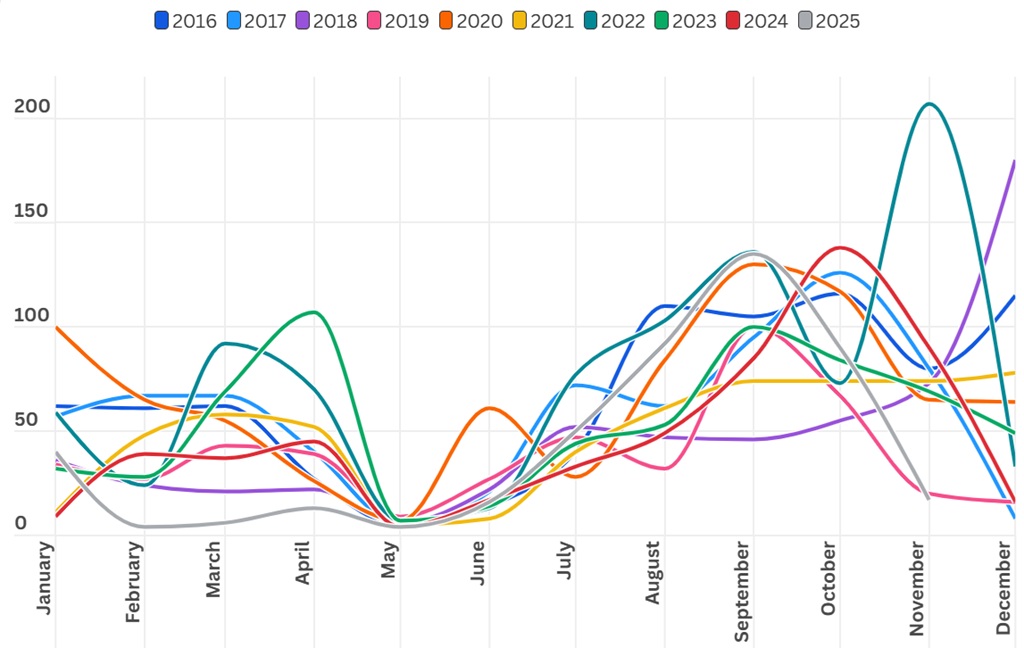
To the humble data viewer this spaghetti could suggest that redshank go elsewhere during May, but much like last month’s Data Dive -where we saw recorder bias around blackcap locations- this is also a similar story.
“We don’t see the birds because they’re hiding.”
Redshank are a ground nesting bird, that prefer to remain amongst the vegetation whilst incubating their eggs. They typically nest in the reeds and tall plants around wetlands and salt marshes, so while we’re unable to see them to record them, they are still here, hidden away caring for their eggs. We can see evidence of these nests by the end of May and early June when redshank chicks are often sighted and recorded on Wader Lake. 2019 was a particularly good year for redshank here at WWT Washington, where multiple broods and groups of chicks were recorded between the 20th of May and 9th of June.
One conclusion that we can make from this is that while May might not be a particularly great month to see a lot of redshank because of their hiding, it is potentially a good month for seeing redshank chicks towards its end!
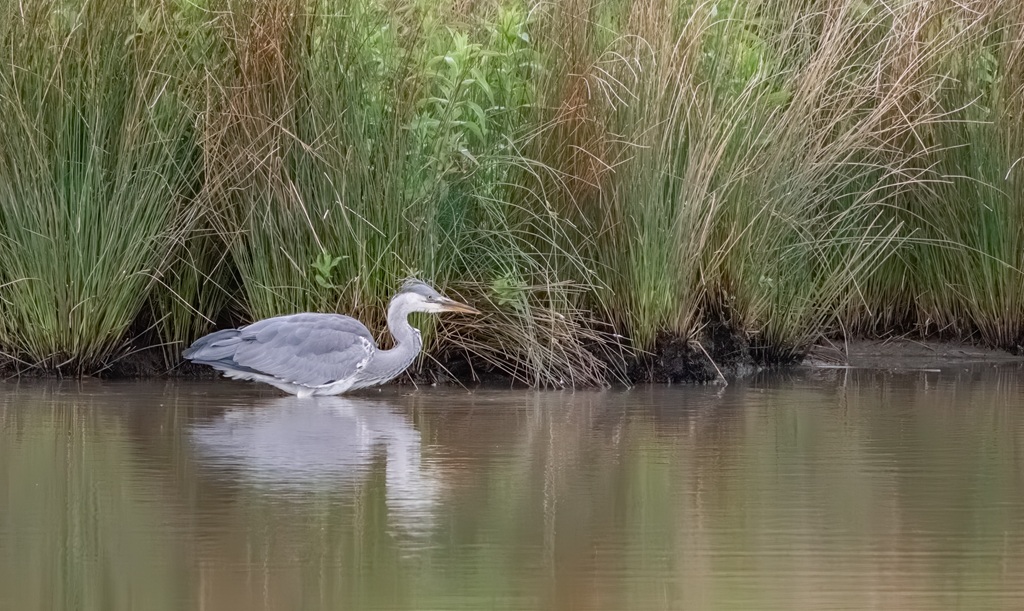
While the redshank are squirreled away on their nests, hiding from us, the grey heron is a prominent sight during the month of May. A resident here in the UK, grey heron populations spread out across the country during the winter season and then return to nesting locations during the breeding season. These nesting locations are communal treetop sites called heronries and we have a well-established heronry on site. The Heron Hedge, as it’s affectionately called, is a 140 metre long stretch of dense, tall trees that runs alongside a portion of Wader Lake opposite the viewing hides. The viewing hides are a fantastic spot to watch these birds nesting and even snap a few photographs!
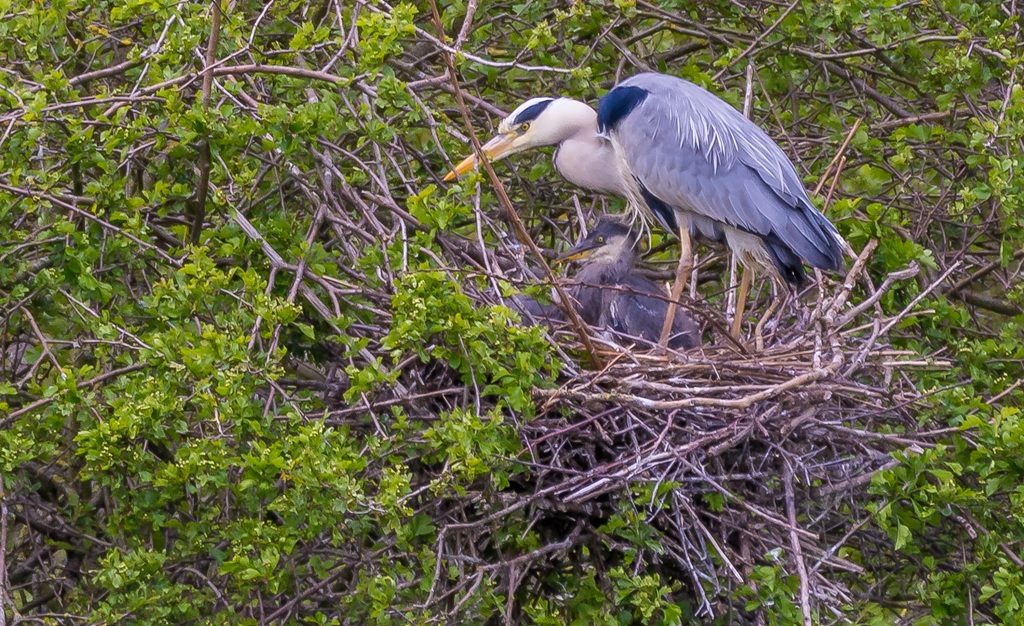
Grey herons are renowned for being an early nester, sometimes starting to display their breeding season plumage from January and February, and even beginning to actively nest soon after. It is thought that this is because of their vast and varied diet -which includes amphibians, fish, small mammals and birds, meaning that whatever the climate, the grey heron can adapt and still source food while nesting.
At Washington, we see grey herons across the year, but higher numbers are recorded during the breeding season, particularly around May. Interestingly, the same reason we don’t see redshank is the same reason grey heron are more prolific at this time of year; they are usually nesting and actively feeding their young - and it’s much easier to see and count large birds that nest in the treetops than smaller ones that hide in the reeds!
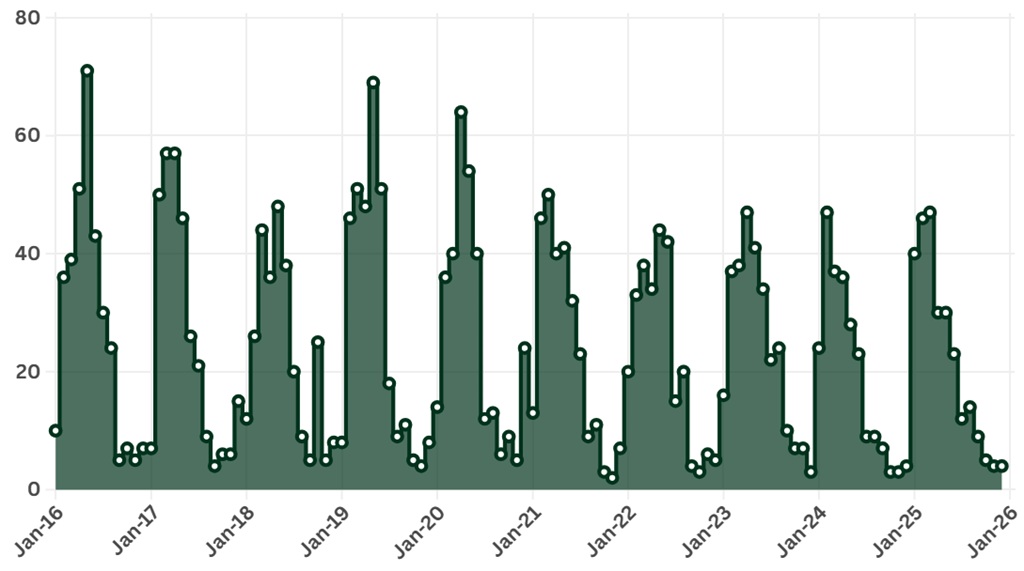
The graph above shows peak monthly counts of grey heron over the last 10 years, we can see a strong population of grey heron on site from late winter well through the breeding season, after which they disperse in autumn. Our highest peak count recorded was in May 2016 when 71 grey herons were counted at one time. More recent peaks of 47 recorded for the last 3 years suggest a steady breeding population at our heronry here at Washington.
The reserve team have done several things to maintain the heronry here and ensure the population of grey heron remain healthy and stress free. Aside from the on-going management of Wader Lake, which we’ve spoken about in a few of the previous Data Dives -maintaining healthy ecosystems through water level management and attracting wading birds – which in turn provides food for the herons. The heronry is also inside the fox-proof fencing, giving it added protection from predators – foxes are the primary predators of grey heron, often predating their chicks once they leave the nest. It is also in a position that does not allow the public access within close proximity of the heronry, ensuring that the birds do not get disturbed and stressed. To further help keep disturbances to a minimum, the reserve team installed a screen and cover to the section of the fox-proof fence line that runs alongside the heronry. This allows the reserve team to do their daily fence check (looking for fox-shaped holes), while hiding them from the view of the grey herons.
Unfortunately, some of the ash trees that make up a portion of the Heron Hedge are suffering from ash dieback, an untreatable fungal disease that eventually kills the tree. To counter this, the reserve team have planted new trees amongst the hedge, including oak. The hopes are that as the quantity of ash trees drop within the hedge, these new trees will take their place for the grey herons to nest in. Thankfully, the hedge is also made up of other species of trees, including hawthorn, which make great nesting spots for not only grey heron, but other birds as well.
Looking at the location data, it’s no surprise that the majority of grey heron are spotted at the heronry and on Wader Lake, but we can also tell that the best wildlife viewing hides to visit to get a good view of them would be Diageo and Princes Trust which overlook the eastern side of Wader Lake and the Heronry. Making May a great month for a wildlife watching walk along Wader Lake!