As St Mark’s Day comes around each year in late April, one of the reserve’s most recognisable spring insects begins to make its appearance. The St Mark’s fly, known for emerging at this time, is now starting to drift across the site in noticeable numbers.
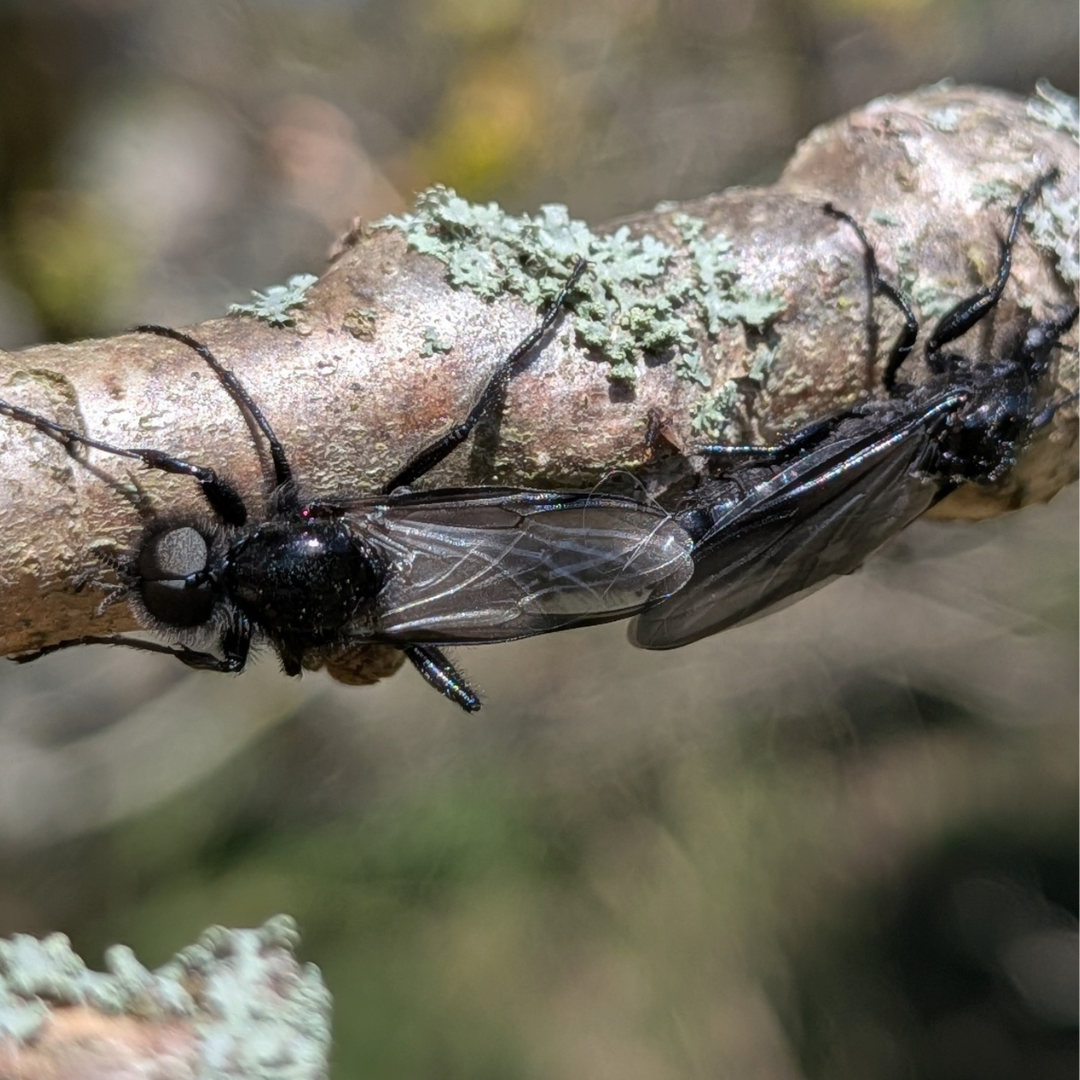
These flies are easy to identify. They are relatively large, completely black, and move slowly through the air with their long legs hanging beneath them. Although their appearance can seem a little dramatic, they play an important role in the landscape. St Mark’s flies are valuable early pollinators, helping fruit trees, hawthorn and other spring blossoms as they begin to flower.
Michael, our Reserve Warden, recently photographed a pair near the Old Oak shortly after breeding. Their arrival is a reliable sign that the season is shifting fully into spring.
“Once you spot them, you realise they are everywhere at the moment, drifting slowly through the air.” Michael Jones, Reserve Warden
The species is also sometimes called the Hawthorn Fly, likely due to its close timing with the flowering of hawthorn. Their emergence provides an important food source for birds and other wildlife, making them a small but significant part of the spring ecosystem.
If you are visiting the reserve at this time of year, keep an eye out for these distinctive insects. Their slow, hovering flight makes them surprisingly easy to spot, especially around hedgerows, grassland edges and blossoming trees.
Ready to visit?
Come down and explore what else the WWT Washington Wetland Centre has to offer, find out more and plan your visit now!