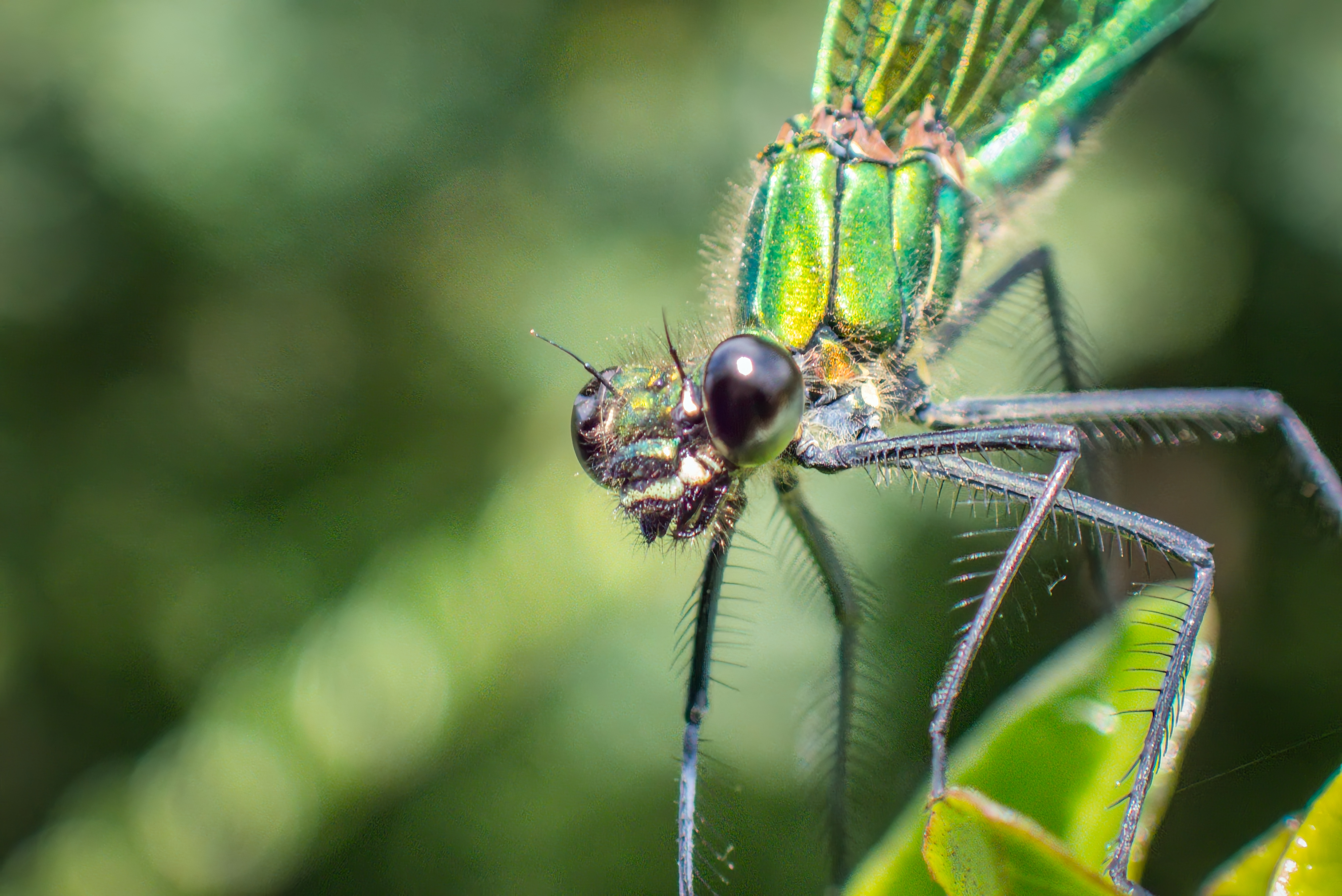
Dragonfly Week is the perfect time to shine a spotlight on some of the most fascinating creatures found across our WWT Washington Wetland Centre.
While recent weather conditions have made surveying difficult, our Reserve Warden Michael has been taking every opportunity to get out onto the reserve and monitor the dragonflies and damselflies that call our wetlands home.
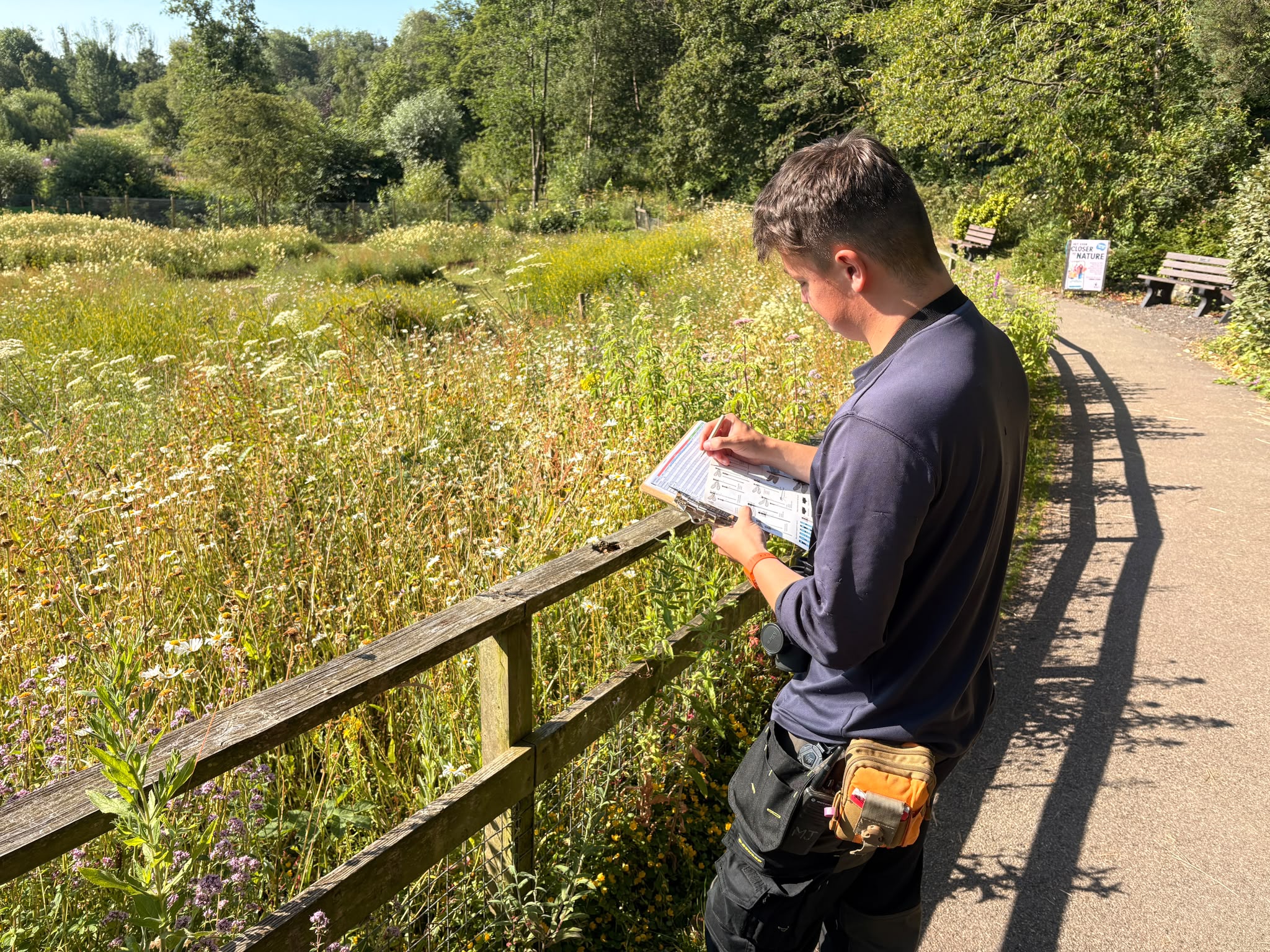
Michael has been leading this season's surveys, recording species, tracking population numbers and helping us better understand how dragonflies are responding to changes in our wetland habitats. Following a recent sighting of a Small Red-eyed Damselfly, the season is already proving to be an exciting one, with 11 species and 311 individual dragonflies and damselflies recorded during just five surveys since the end of May.
Why we're expanding our dragonfly monitoring
Dragonflies are more than just beautiful insects. They are important indicators of wetland health and can tell us a great deal about how our habitats are responding to environmental change.
In recent years, prolonged dry periods and hotter summers have caused some ponds to dry out more frequently and remain dry for longer. This poses a significant challenge for species that rely on year-round water sources.
Dragonflies spend most of their lives underwater as larvae, often for two years or more before emerging as adults. If ponds dry out before they complete their development, eggs and larvae can be lost, potentially affecting local populations.
Michael has expanded the survey work this year to collect more detailed data, helping build a clearer picture of which species are present on site and whether they are successfully breeding and emerging.
The work has become even more important following several exciting sightings in recent years, including the reserve's first-ever Lesser Emperor and breeding Willow Emerald Damselflies. Just a few years ago, Willow Emerald Damselflies were rarely recorded in significant numbers in the North East, making their appearance and successful breeding on site particularly noteworthy.
Dragonflies have been steadily moving northwards, with new species appearing and established species becoming more widespread across the region. Once considered a local rarity, the striking Banded Demoiselle is now a much more familiar sight on nature reserves throughout the North East.

Improving habitats for dragonflies and visitors
Following the success of last year's Dragonfly Festival, improvements have been made around the dragonfly ponds to benefit both wildlife and visitors.
Two new viewing areas have been created, allowing visitors to enjoy closer views of the ponds without disturbing sensitive habitats. Natural willow barriers help protect the area while providing safer and better opportunities for wildlife watching.
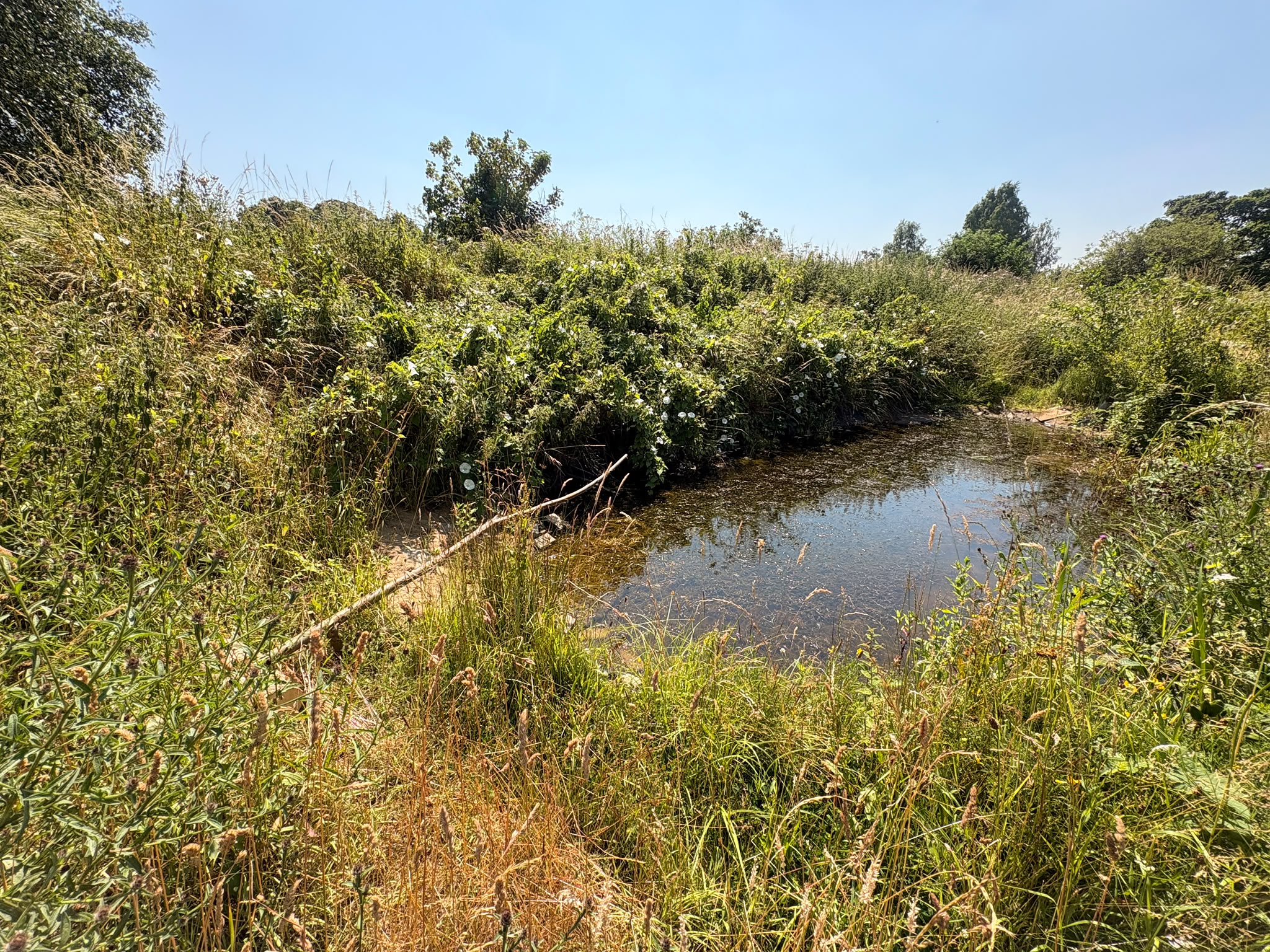
Over the winter, Michael also installed several new dragonfly perches around the ponds. Many species use these sunny resting spots as lookout points for hunting and defending territories. The perches not only benefit dragonflies but also provide excellent opportunities for visitors and photographers to enjoy unobstructed views of these remarkable insects.
What we've recorded so far
Since Michael began surveying at the end of May, he has recorded:
- 11 species
- 311 individual dragonflies and damselflies
- 6 species of damselfly
- 5 species of dragonfly
Here are some of the species visitors may spot around the reserve this summer.
Damselflies
Damselflies are slender insects that usually hold their wings folded behind their bodies when resting. They are often seen around ponds in large numbers and can frequently be spotted in mating pairs laying eggs among aquatic vegetation.
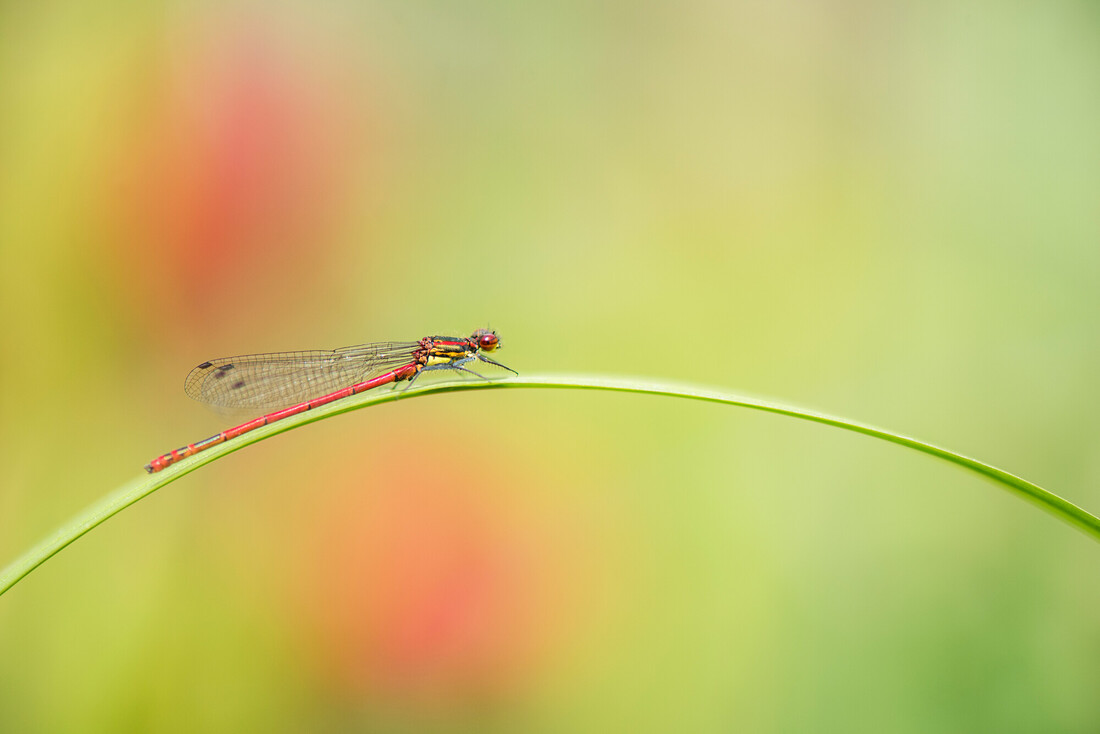
Large Red Damselfly
Usually the first species to emerge each year and the only red damselfly regularly found in North East England, making it one of the easiest species to identify.
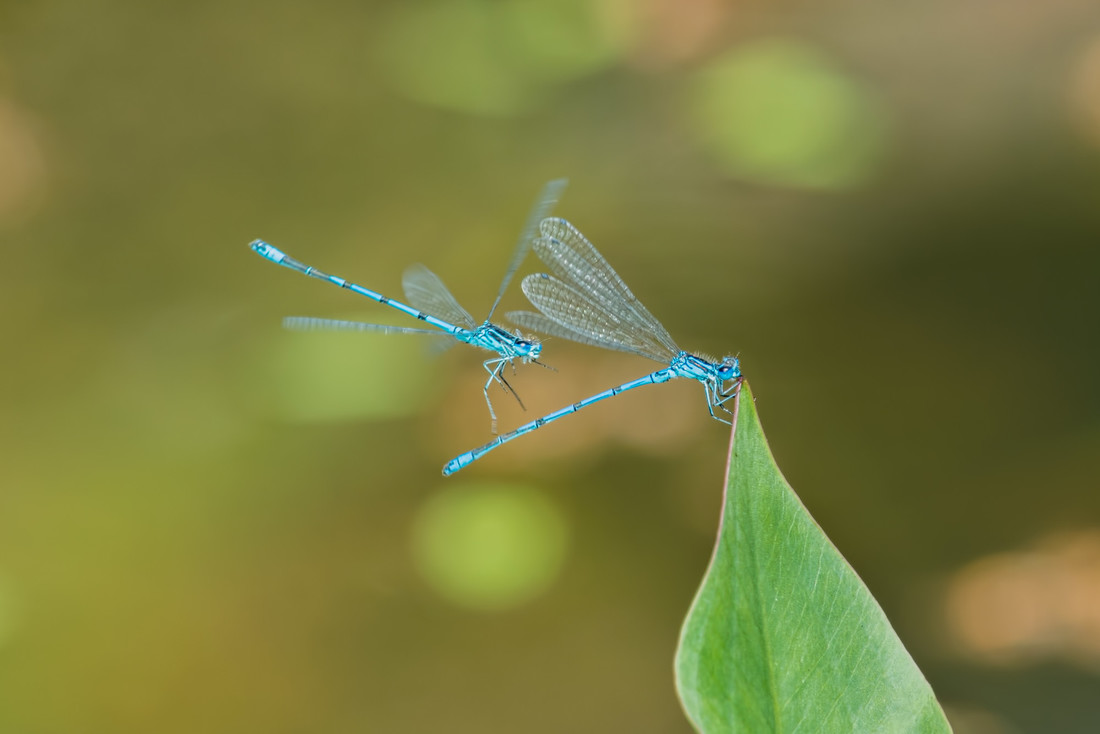
Azure Damselfly
A bright blue species that is often confused with the Common Blue Damselfly. It has more black markings on the thorax and an additional small stripe known as a spur
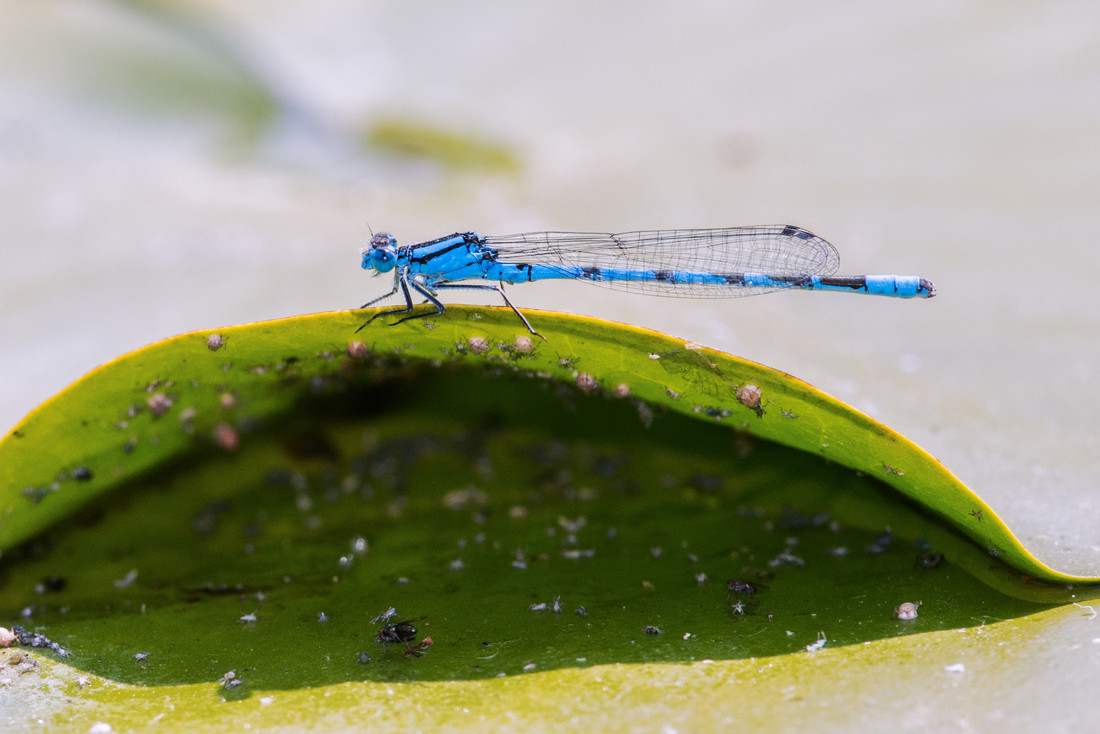
Common Blue Damselfly
One of the UK's most widespread damselflies, recognised by its vibrant blue colour and narrower black markings.
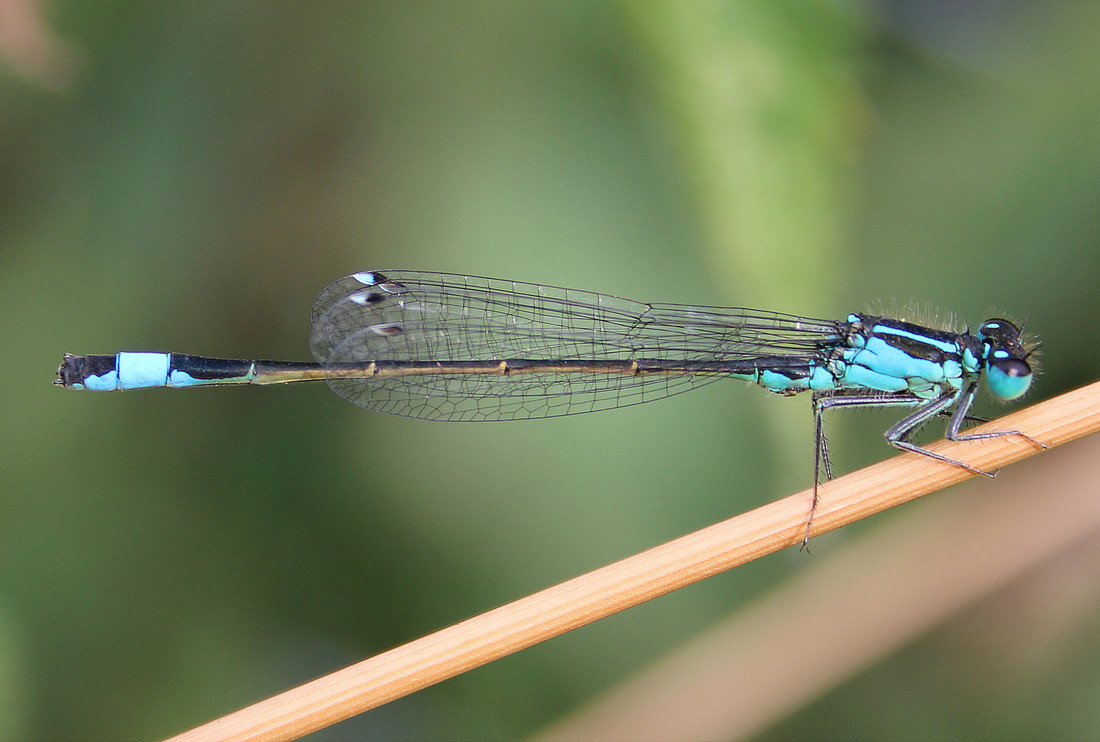
Blue-tailed Damselfly
Named after the distinctive blue segment near the end of its abdomen. Females can appear in a surprising range of colour forms, including blue-green, pink, orange and purple.

Small Red-eyed Damselfly
One of this season's most exciting sightings. Similar in appearance to the Blue-tailed Damselfly but with a brown thorax and unmistakable bright red eyes. This is one of County Durham's locally important dragonfly species.
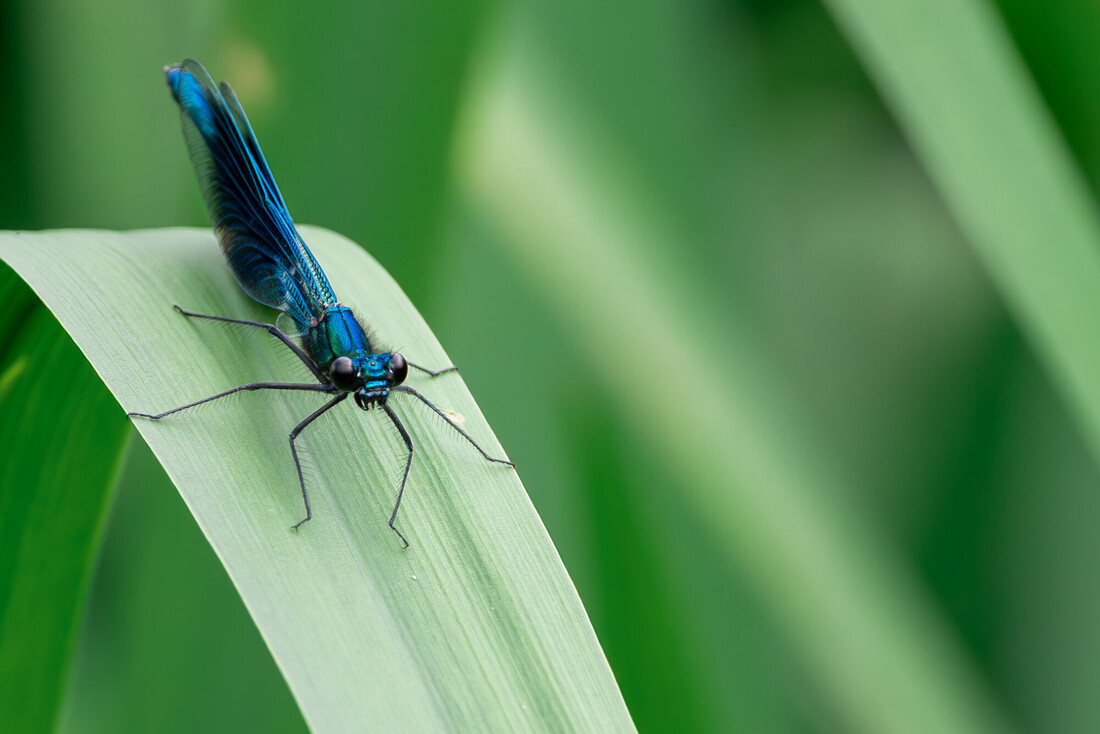
Banded Demoiselle
One of Britain's most striking damselflies. Males are metallic blue with a distinctive dark band across their wings, while females are metallic green with smoky brown wings.
Dragonflies
Dragonflies are larger and more robust than damselflies, holding their wings out to the sides when resting. Their large eyes meet in the middle of their heads and they are powerful aerial hunters.
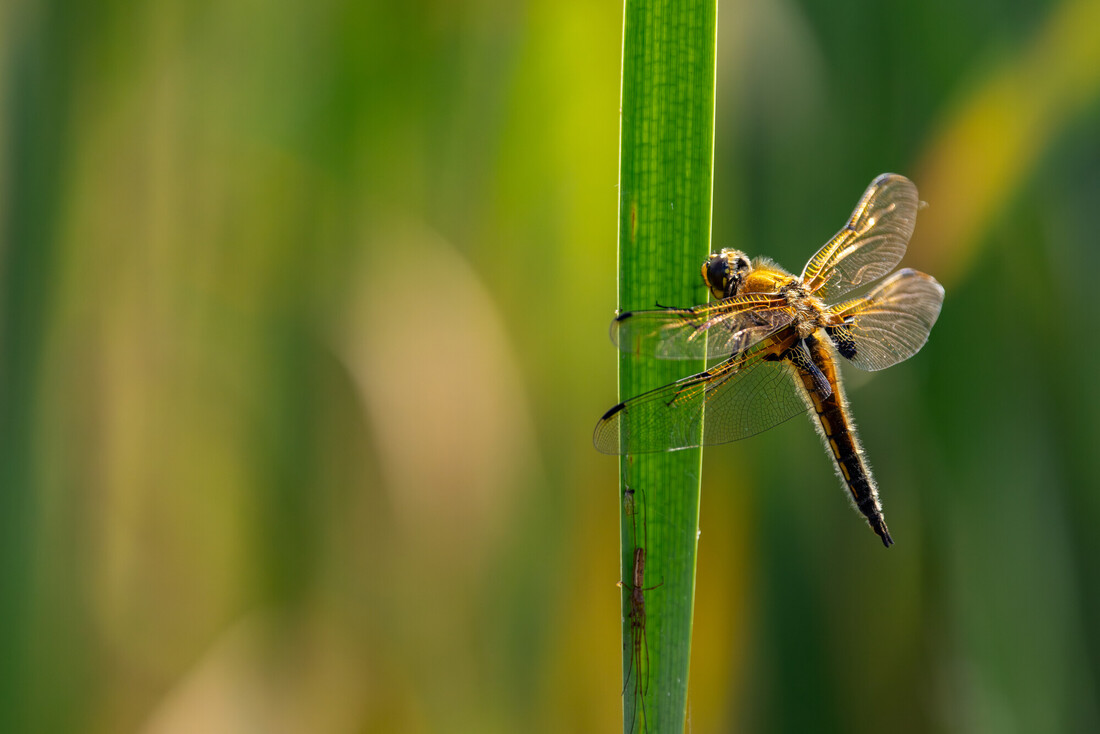
Chasers
These dragonflies often perch on vegetation before making short flights to chase prey, rivals or potential mates.
Broad-bodied Chaser
One of the first dragonflies to emerge each year. Males are powder blue, while females are golden brown.
Four-spotted Chaser
Named after the four distinctive dark spots on its wings, making it relatively easy to identify.
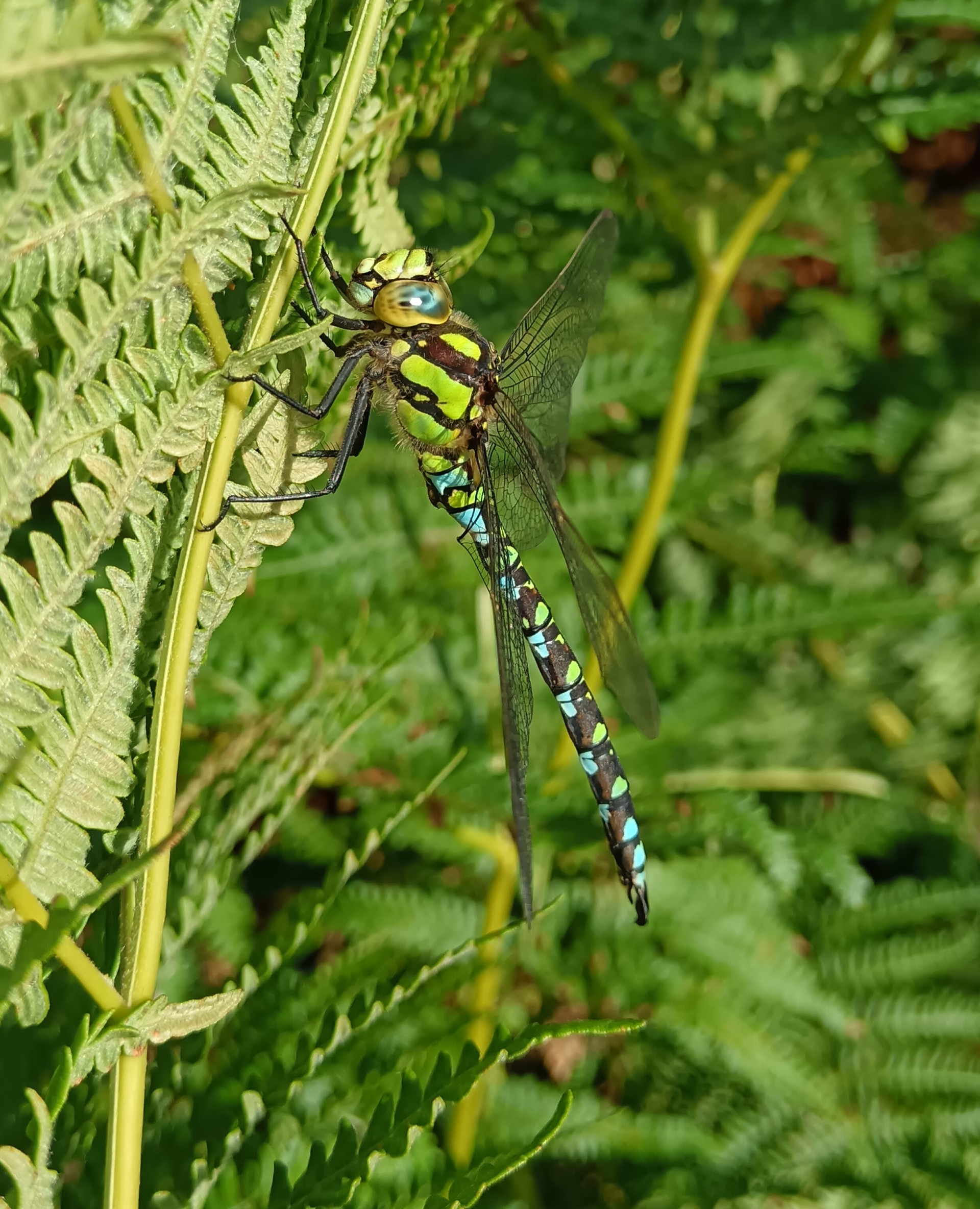
Hawkers
The classic dragonfly group, known for patrolling ponds and waterways on long, purposeful flights.
Southern Hawker
A large dragonfly often seen along woodland edges and streams. Look for bright green markings against a darker body.
Emperor Dragonfly
The UK's largest dragonfly. Males have a vivid blue abdomen and bright green thorax, while females are predominantly green and black. They are often seen chasing other dragonflies around ponds.
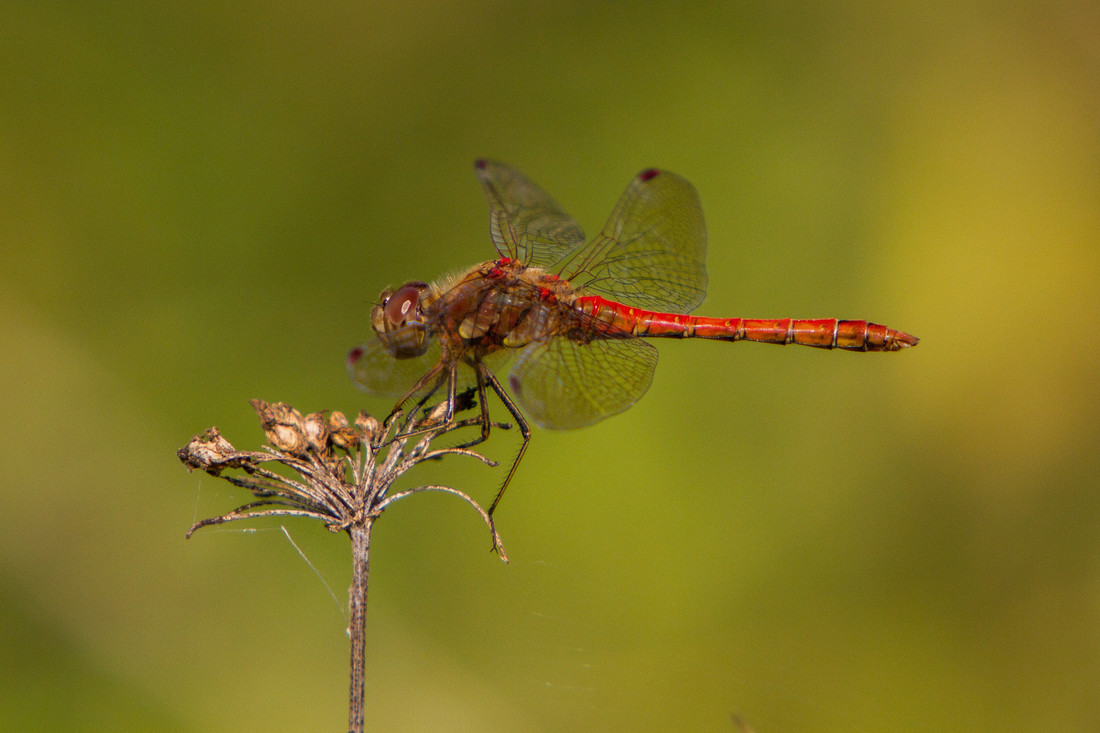
Darters
The smallest of our dragonflies, often seen perching on fences, pathways and sunny surfaces.
Common Darter
A familiar summer and autumn species. Males are bright red, while females are browner with hints of green.
A season of dragonflies
For Michael, one of the most rewarding parts of the project is seeing how the reserve continues to support both familiar favourites and species that are gradually expanding their range northwards.
With every survey, we're learning more about the dragonflies that depend on our wetlands and gathering valuable information that will help shape future conservation work.
Dragonflies have been part of our wetlands for millions of years and remain one of the best indicators of healthy freshwater habitats. By monitoring their populations and improving habitat across the reserve, we can better understand how these remarkable insects are responding to a changing climate.
With 11 species and 311 individuals already recorded this season, there is plenty to look out for on your next visit.
Keep your eyes on the ponds, streams and sunny pathways. You never know what might land nearby.
Ready to visit?
If you've been inspired to explore Washington Wetland Centre, find out more and plan your visit below.