Our reserve is full of activity at the moment, and Reserve Warden Michael has been out early capturing some brilliant photos and videos of the insects enjoying the site. With so many species buzzing, crawling and hopping around, it’s a great reminder of how alive the reserve is at this time of year.
Early Bumblebee on Burnet Rose
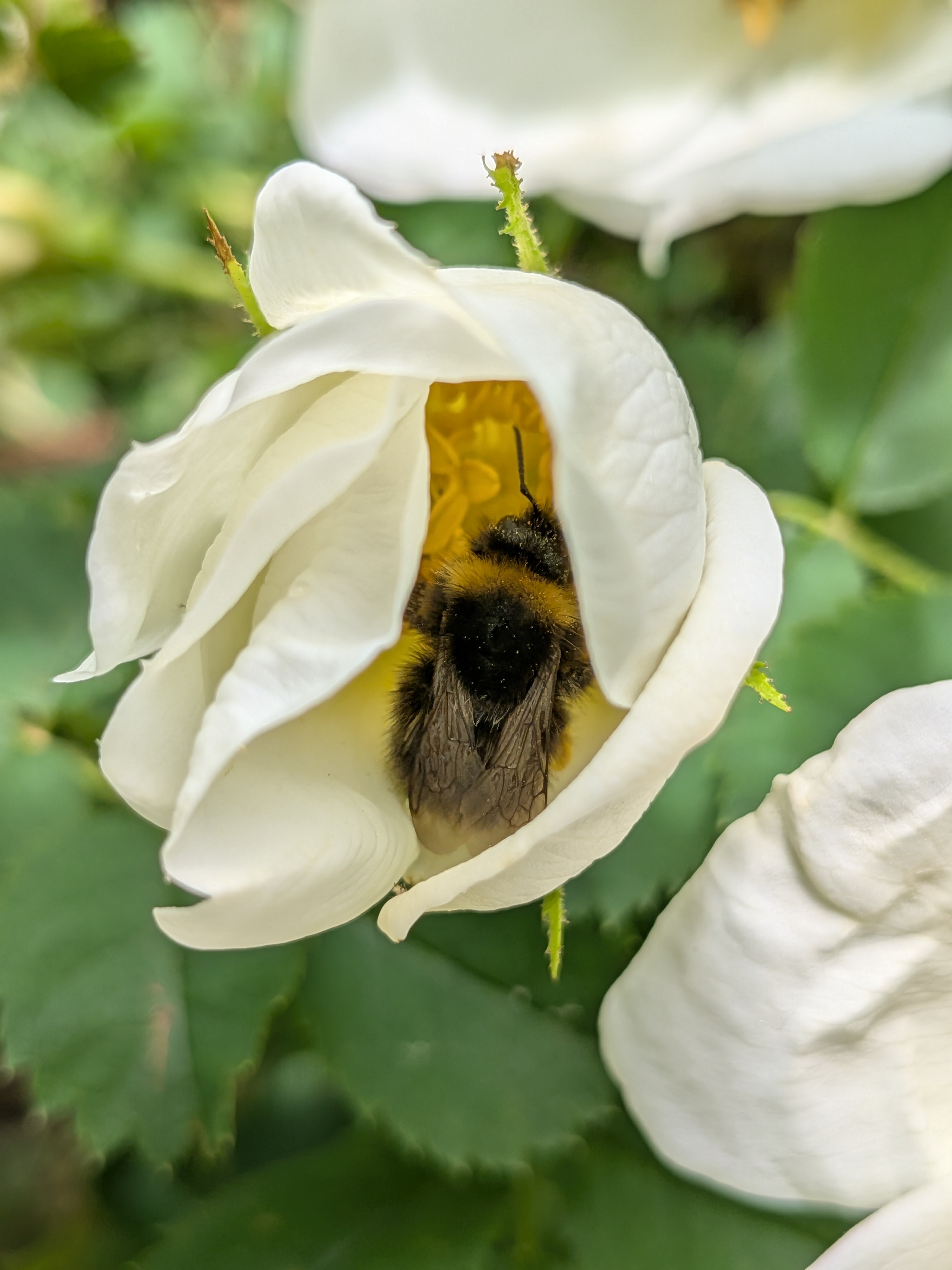
Along Wader Lake, Michael spotted an Early Bumblebee making the most of a Burnet Rose in full bloom. The bee was completely dusted in pollen, and if you look closely you can see the bright orange pollen baskets on its back legs. These are the packets of pollen it carries back to the hive, showing just how busy these bees are at this time of year.
Beetles, Flies and Ants Doing Their Part
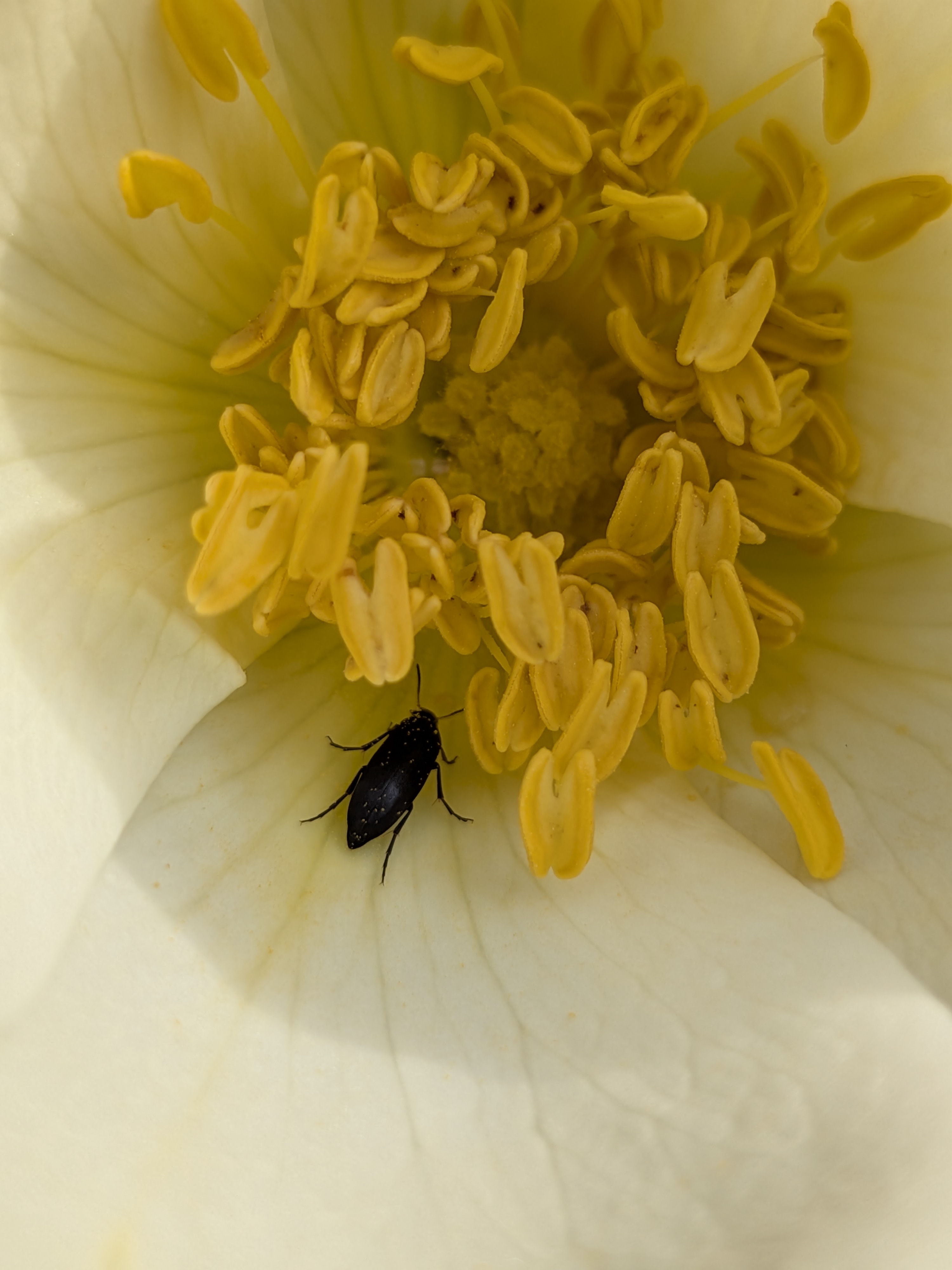
Sharing the same flower was a small black beetle covered in tiny specks of pollen. Although Michael couldn’t identify this one, it’s a perfect example of how pollination isn’t only done by bees and butterflies. Beetles, flies, ants and many other small insects also help move pollen around, often without even realising it.
Red and Black Froghopper
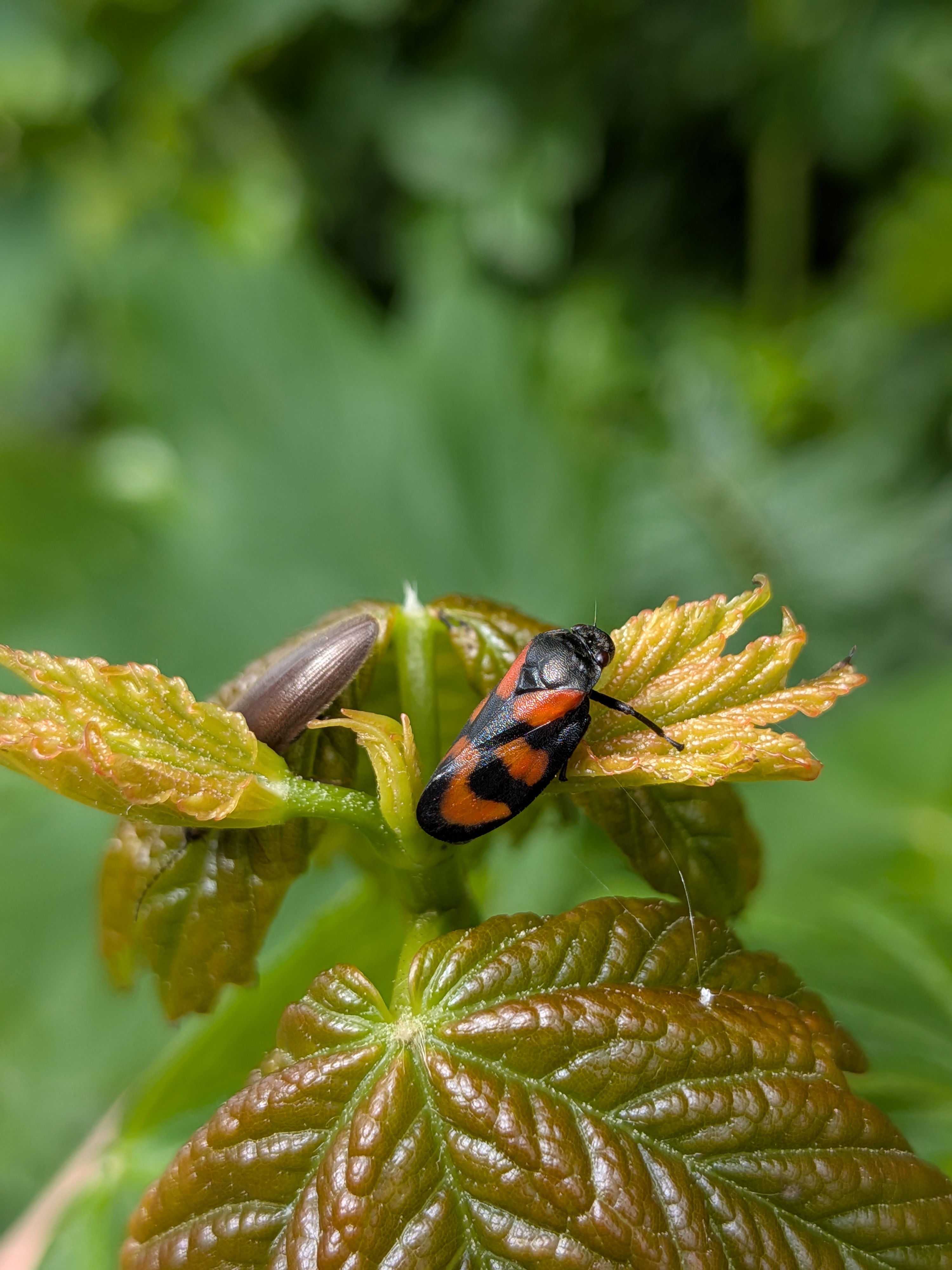
Another great find was a Red and Black Froghopper. These insects are known for their impressive jumping ability, and their bright markings make them easy to spot when they sit still long enough for a photo.
A Mystery Sawfly
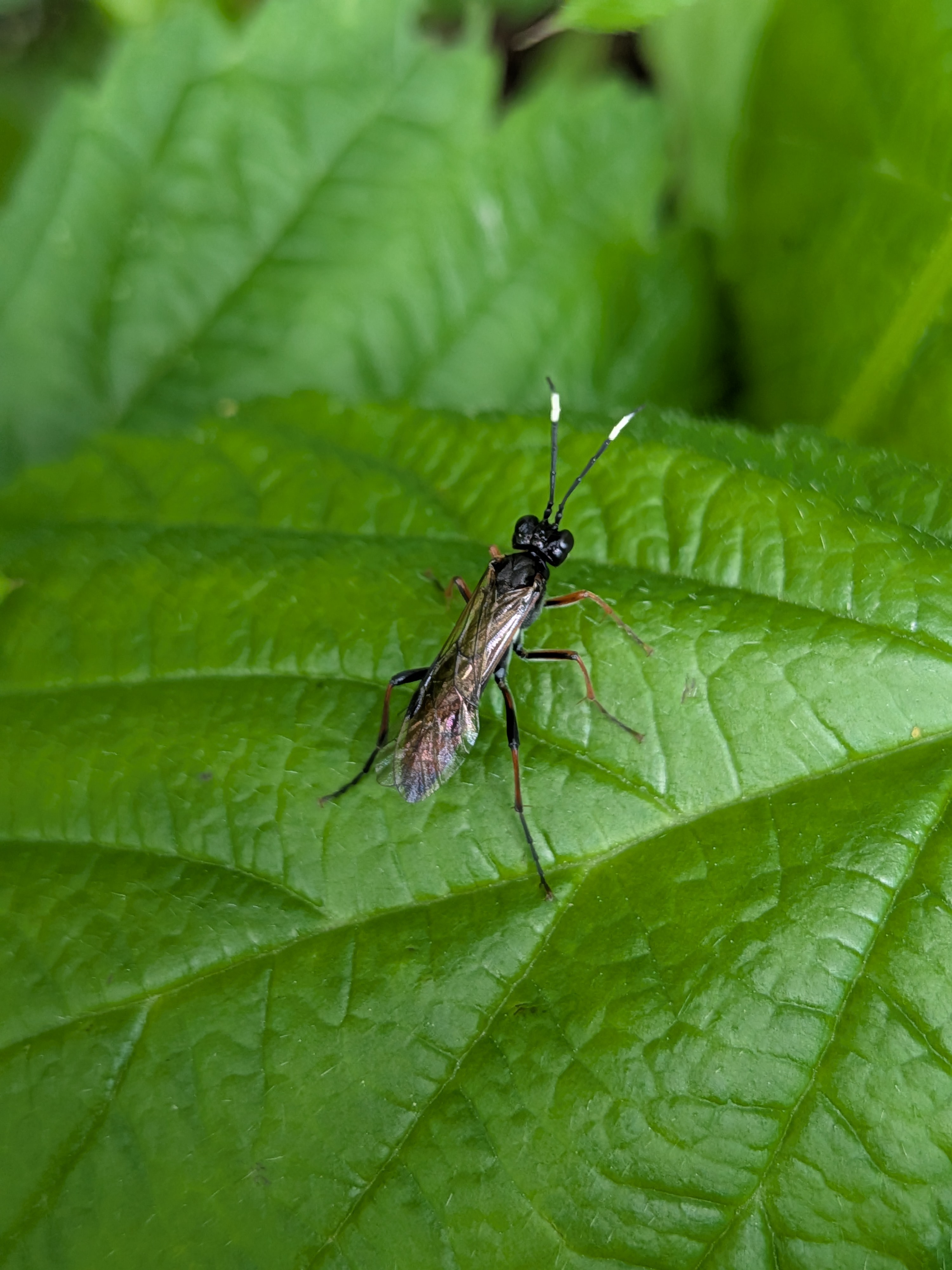
Michael also photographed a sawfly with distinctive white-tipped antennae. Sawflies look a little like wasps but don’t sting. This one will remain unidentified for now, but it adds to the variety of species currently active around the reserve.
The Cornflower Hotspot
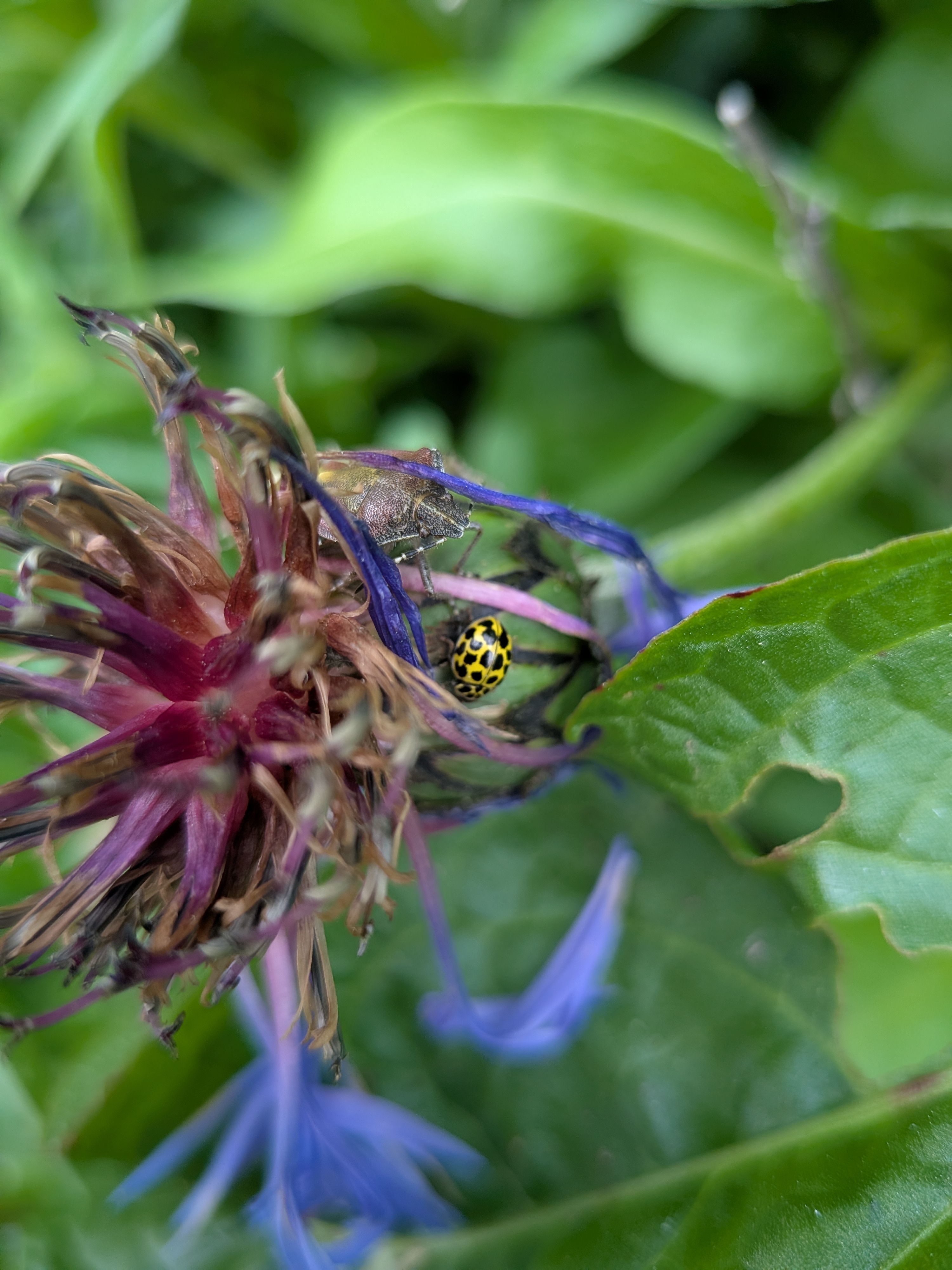
Just outside the centre, near the Pond Zone, the Cornflower has become a favourite feeding spot for a wide range of insects. Michael and other Reserve Warden Kate have been keeping an eye on it over the last few days, and it has been extremely popular.
Some of the species seen on the Cornflower include:
- The 22-Spot Ladybird, a tiny bright yellow ladybird that is easy to recognise without needing to count all its spots.
- The Hairy Shieldbug, also known as the Sloe Bug. Michael spotted several pairs on the plant, and there are dozens more gathered across the Cornflower.
- A cluster of ants tucked inside a flower bud that hasn’t opened yet. They may not be the most colourful visitors, but they are still part of the story.
Michael even managed to capture a photo showing three different species sharing the same flower, a great snapshot of how busy and diverse the plant life is at the moment.
Why These Sightings Matter
All of these insects, from bees to beetles to shieldbugs, play an important role in keeping the reserve healthy. They pollinate plants, support other wildlife, and help maintain the balance of the ecosystem. Their presence is a sign of a thriving environment.
If you’re visiting the reserve soon, take a moment to look closely at the flowers and plants around you. There is a whole world of activity happening right under our noses.
Ready to visit?
If you've been inspired to explore Washington Wetland Centre and see spring migration at its best, find out more and plan your visit online.