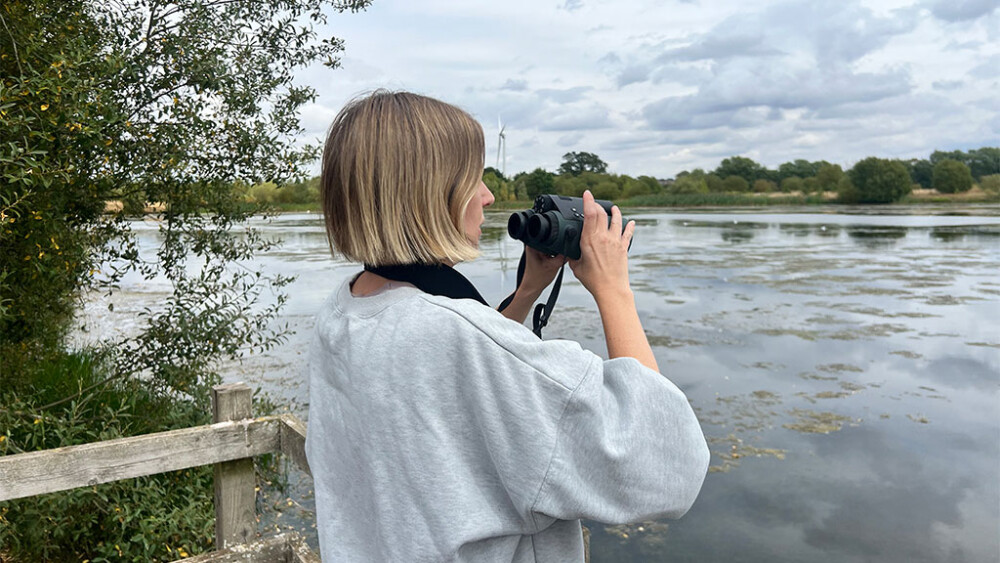
Header image: Sarah puts the AX Visio’s through their paces. All images © the Dawson family unless otherwise stated.
It’s funny how you can go through life not giving binoculars much of a second thought until *BAM* you’re caught by the birding bug and everything changes. I’m a relatively new birder, and very quickly I’ve realised the difference a genuinely good pair of ‘bins’ (what all the birders call them, I’ve been reliably informed) can make to everything from bird identification to general enjoyment. For me, the perfect pair of binoculars has to give crisp vision, powerful magnification, have an easy-to-adjust focus and be comfortable to use and carry around. When I was asked by the WWT team to test out a range of SWAROVSKI OPTIK binoculars of course I jumped at the chance.
SWAROVSKI OPTIK is as good as it gets when it comes to high spec, exceptional quality binoculars and I was lucky enough, along with my family, to put five pairs through some real-life testing, over the course of a month.
We put each pair through their paces on visits to our local lake, nearby nature reserves and a trip to see the Rutland ospreys before they headed off on migration. Taking into consideration the individual features each pair of bins offered, the magnification, size of the objective lens diameter and field of vision, as well as ease of use, quality and value for money, here are my honest thoughts.
For those not familiar with any of the techie terms included, there's some explanation at the end of this page!
Best compact binoculars
CL Curio 7x21
 © SWAROVSKI OPTIK
Price: £665
Size: 92 x 95 x 44mm
Weight: 250g
Magnification: 7x
Objective lens: 21mm
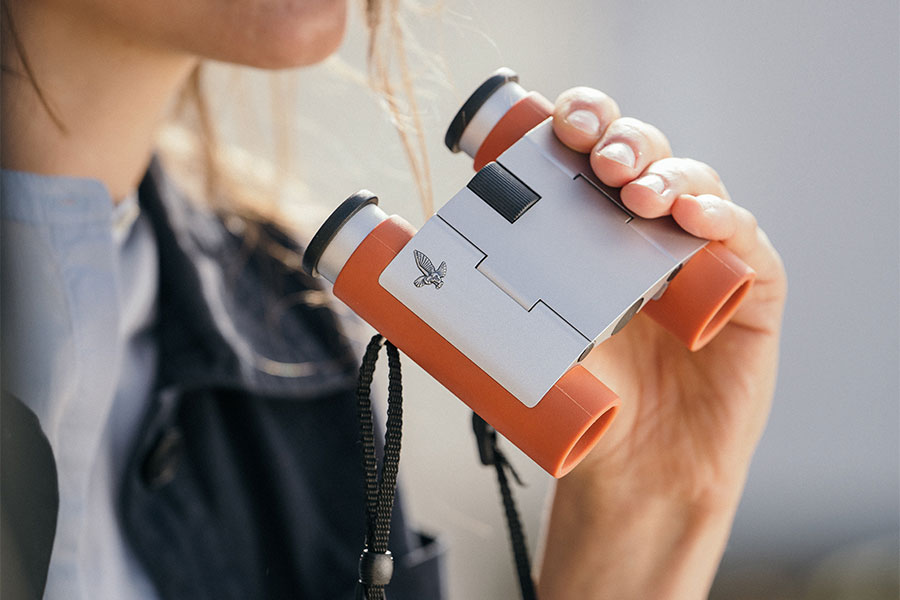
Coming with its own padded carry case and attachable strap, these compact binoculars were the lightest and smallest I tested. Despite their pocket-sized appearance, the CL Curio still had the outstanding build quality you’d expect from SWAROVSKI OPTIK and the design, by award-winning designer Marc Newson, makes these look and feel incredibly premium.
These binoculars fold down into a neat, compact size, perfect for keeping in your pocket or bag on walks – they’re also a great size for taking to concerts or sporting events – and I found them very comfortable to use and lightweight even to carry around all day, without giving them a second thought.
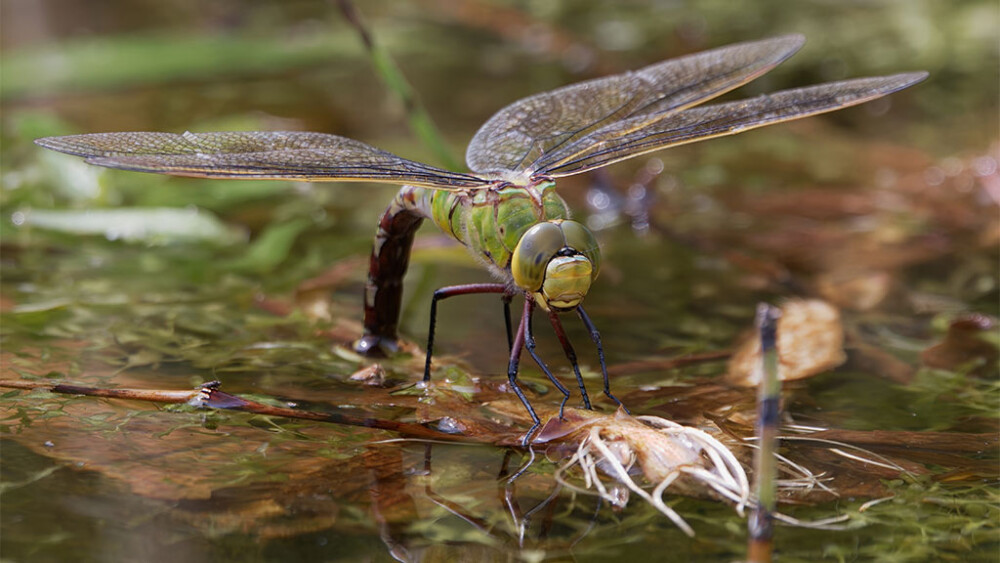
It’s the exceptional clarity which really stood out for me here. The CL Curio gives 7x magnification, and as well as offering crisp viewing of birds in flight, I also found them to be perfect for close distance viewing of a large dragonfly just a few metres away. They are able to focus from 2.5m, so are a fantastic multi-tasker when out and about.
The adjustable eyecups are easy to twist in and out, and helped give a 100% field of view with or without glasses and sunglasses – something my specs-wearing son was happy to confirm.
I think these are a perfect, ‘take anywhere’ pair of binoculars that offer all the high-spec features typical of SWAROVSKI OPTIK, but at a more affordable price point and in a pocket-friendly size.
Best easy-to-use binoculars
CL Companion 10x30
Price: £1,100
Size: 129 x 113 x 56mm
Weight: 550g
Magnification: 7x
Objective lens: 30mm
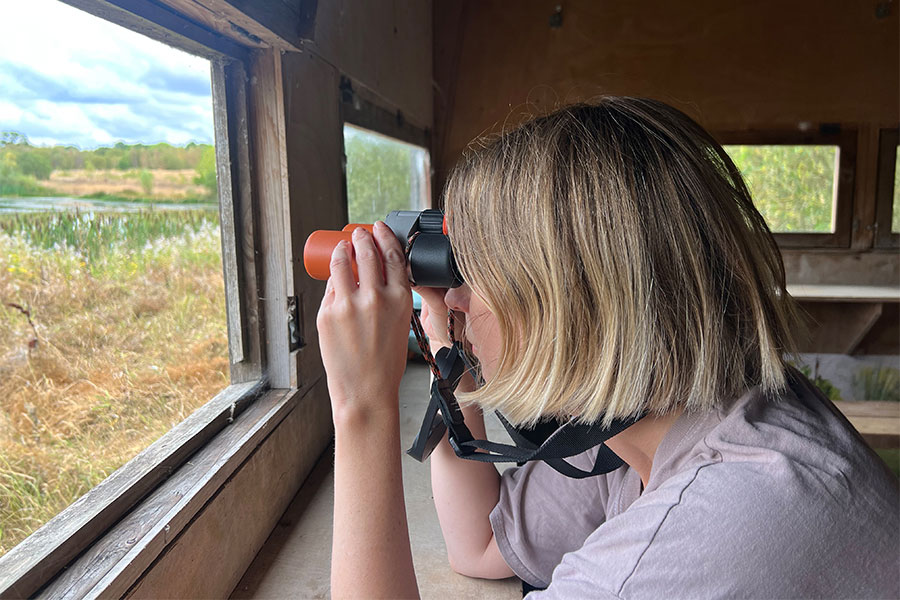
If you’re after a pair of mid-sized binoculars, the CL Companion are ideal. Still noticeably compact and lightweight (just 550g), I found them comfortable enough to carry around my neck on long walks without any bother. The rubberised coating made these so comfortable to use and helped me get a good grip. I felt this mid-sized design was the perfect size for my small hands, but did wonder if perhaps these could be a little on the small size for those with larger hands – it may be worth trying to get your hands on a pair (literally) to test the sizing out for yourself if you can.
The focusing wheel was easy to adjust and the lenses really impressed with outstanding sharpness and clarity. The colour rendition really was top tier, too. Nothing about these bins felt ‘fiddly’; instead, I was able to focus quickly and easily, and just get on with enjoying birding with no fuss, which suited me down to the ground. They’re ideal for glasses wearers, too, thanks to the adjustable eyecups.
The orange colourway definitely added a stylish touch, and the padded carry case is always a welcome addition, but it’s the size, comfort and quality which really won me over.
Best for comfort
NL Pure 10x42
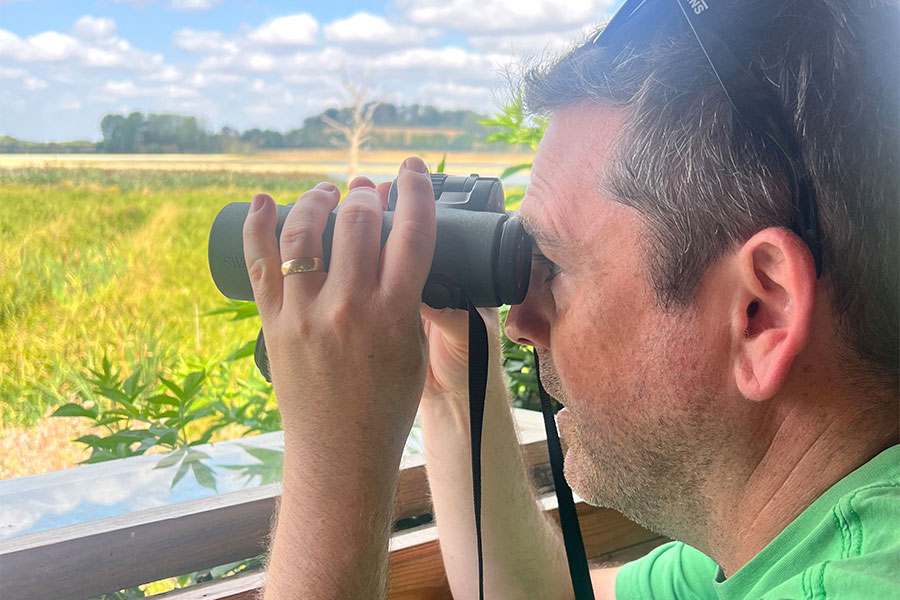
Price: £2,405
Size: 158 x 131 x 71mm
Weight: 840g
Magnification: 10x
Objective lens: 42mm
These binoculars were the first ones I tested out, and have remained a firm favourite ever since. The clarity and colour rendition theses bins offered was next-level, so much so I felt fully immersed in nature whenever I used them. The 10x magnification and 42mm objective lenses really blew me away and came into their own while I was observing a pair of ospreys resting at Rutland Water. If ever I wanted a pair of binoculars to perform it was then, and these made the moment incredibly memorable.
The feature I love about the NL Pure binoculars is the contoured wasp waist design, making these ergonomic and by far the comfiest to hold for long durations. The rubberised coating also helped me get an excellent grip and the size worked well for both me and my husband.
SWAROVSKI OPTIK describe these as striking “the perfect balance of high magnification, large field of view and detailed images” and I’d have to agree.
I was less keen on the individual rubber lens protectors – I’d have preferred a detachable dual lens cap – but really, it’s a minor niggle. These bins are genuinely hard to fault. Providing razor-sharp clarity in an easy-to-use, comfortable-to-handle package, they are the ultimate all-rounder any birder would be proud to own.
Best for bird identification
AX Visio
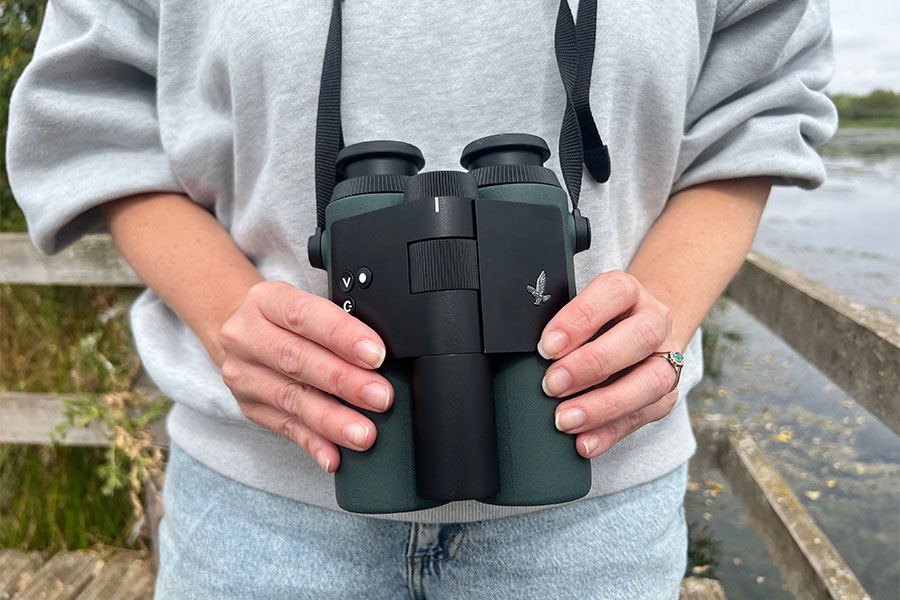
Price: £3,695
Size: 154 x 137 x 96mm
Weight: 1090g
Magnification: 10x
Objective lens: 32mm
The AX Visio are unlike any bins I’ve used before. Famously the world’s first AI-powered smart binoculars, they are absolutely packed with features that are the stuff of dreams for birders.
Because of this, it took me a while to get my head around the many different features and functions, but once I’d familiarised myself with it all (I found the videos on Swarovski’s website particularly useful) I immediately understood what all the fuss was about.
Getting started involved using the diopter adjustment – one eye at a time – before getting the focus spot on, but it’s worth taking the time. Once you’re set up, there’s a lot to explore.
My favourite feature has to be the bird identifier. As a relatively new birder, I’m still finding my way and often end up Googling bird descriptions to work out exactly what I’ve just seen. These binoculars make it ridiculously quick and easy, using built-in AI which tells you what type of bird you’re viewing in real time. It also offers the same assistance for mammals. It really is mind-blowing, and it’s a feature both myself and my fellow-birder son became obsessed with.
As well as this, the AX Visio includes a handy compass function, and a clever ‘Share discoveries’ feature where you can mark the bird or animal you have just spotted, then hand your binoculars over to someone else who will be directed to where you were viewing, using red arrow markings. There’s even a function that lets you take photos or videos of what you’ve spotted through the bins, which you can then manage and share using the SWAROVSKI OPTIK Outdoor App.
All of this tech does rely on a rechargeable battery, which can take up to five hours to fully charge – so make sure you’re prepared before you leave the house, if you want to make use of all these clever functions.
They may be on the large size and were noticeably heavy for me to use for long periods, but the AX Visio really are a step above. Are they way over spec for what I need right now? Absolutely. Am I still putting these at the top of my Christmas list this year? You bet.
Best first pair for a child
My Junior
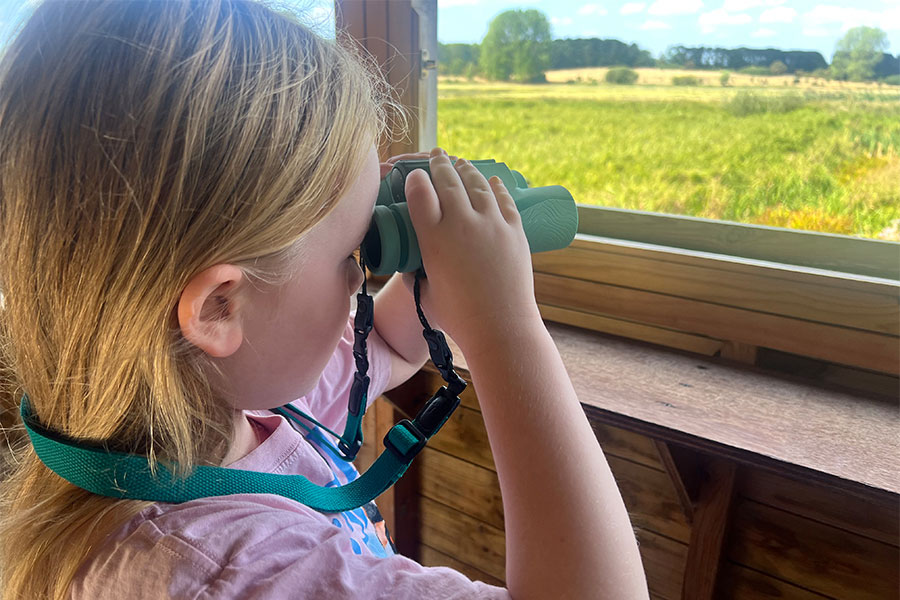
Price: £389
Size: 125 x 100 x 56mm
Weight: 480g
Magnification: 10x
Objective lens: 28mm
Designed for children aged between six and 14, and coming in a choice of Jungle Green or Glacier Blue, these binoculars were an instant hit with my 10-year-old budding birder. Up to this point, he had only used very basic ‘kids’ bins, and the difference between those and the My Junior binoculars was huge.
Yes, they are lightweight and compact – perfectly designed for kids’ hands – but the Swarovski quality is there. The 7x magnification really impressed my son, who couldn’t get over how clear his view was.
They are such a great size for children, and the rubberised coating and thumb divots made them easy to grip and keep steady when birding. My son found them straightforward to focus using the adjustment wheel – they are the perfect ‘pick up and go’ binoculars which is just what you need for kids.
While they don’t have a diopter setting, they do have adjustable eyecups which you can twist in and out, so can be used with or without glasses. They come with an attachable carry strap, as well as a carry case, and are small enough to carry around in your backpack all day without taking up much room or weighing you down.
I gave these binoculars a try too, and have to say I was very impressed. Size-wise, they didn’t feel too small, and the build quality is undeniable. If you’re on a budget, these are a fantastic buy for kids and adults alike.
Technical terms explained
Diopter: Most people don’t have identical vision in both eyes, so the diopter compensates for this, allowing you to fine-tune the focus for each eye individually. You’ll find the diopter typically on the right eyepiece or near the centre focus wheel of your binoculars. Once the diopter is set, you can use the main focus wheel to get a crisp view for both eyes.
Objective lens: Measured in millimetres, the objective lens diameter determines how much light the lens can let in. A higher number, the more light the objective lens can capture, giving a brighter view.
Magnification x: This is how many times closer an object appears through your binoculars, compared to when viewed with the naked eye. The higher the magnification, the closer the object appears to be. An 8x magnification is suitable for general birdwatching, but for wider landscapes or greater distances, look for 10x. Just be aware that a higher magnification can also mean a smaller field of view.
Field of view: This relates to the width of the area visible through your binoculars (without moving them) and is measured in feet or metres.
Eyecups: The raised rims or shields at the viewing end of your binoculars that help prevent external light from distracting your vision. Most binoculars have adjustable eyecups that you can twist in or out to alter your eye’s distance from the lens. This helps you achieve the right distance between your eye and the eyepiece, even if you’re wearing glasses.