Where do you find saltmarsh wildlife?
Saltmarshes are found in as many as 120 countries , from Algeria and Australia to Ukraine and Uraguay. They occur in places where saltwater meets land and, although mostly found in temperate climates, they can sprout from arctic coasts to tropical estuaries. The variety of plants and animals they support is truly remarkable.
These marshes are often thought of as a habitat for wading birds, but they provide food and shelter for everything from wild guinea pigs and snakes to terrapins and geckos. They also host an abundance of invertebrate life, fish and crustaceans found throughout the world’s coastal ecosystems.
The magical biodiversity of saltmarsh rests on one thing - their microhabitats. The saltwater that flows through their creeks. Still water in pools. Thick grasses. Carpets of flowering succulents. To add even more value, they’re often next to tidal mudflats or other terrestrial habitats. There is something for everyone.
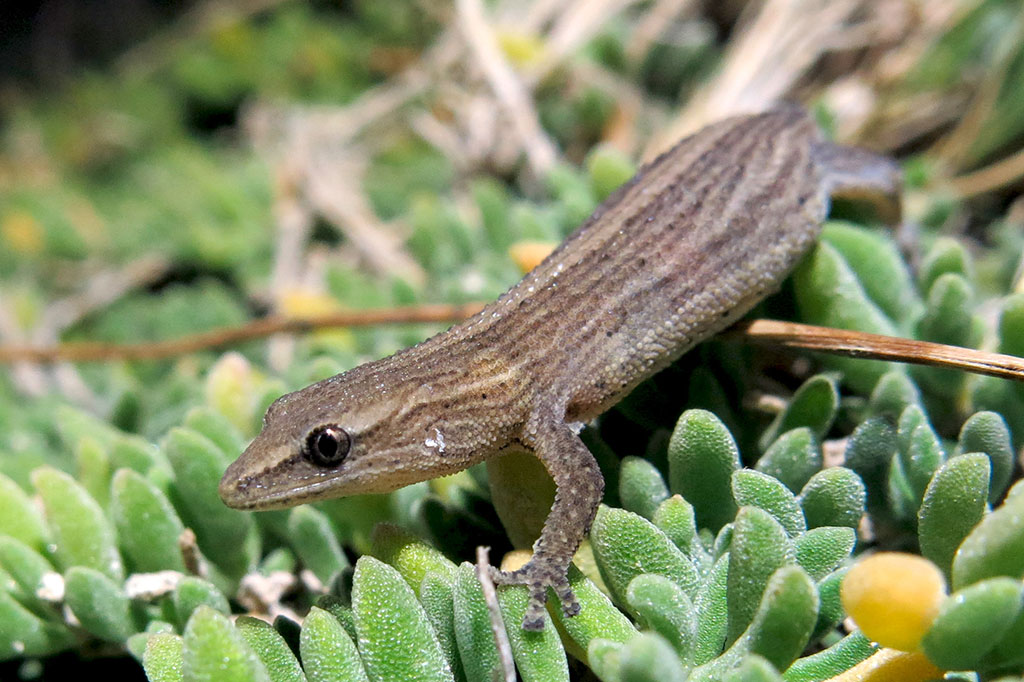 A coastal Leaf-toed Gecko crawls over succulent vegetation in South Africa © Ryan van Huyssteen/iNaturalist
The risks and rewards of saltmarsh habitats
Tidal wetlands are dynamic by nature. Life here means braving the push and pull of the tides, having little shelter from the elements and the ever-present risk of being covered by saltwater and sediment.
Although there are risks for creatures using tidal habitats – marine creatures don’t want to be deposited inland, and terrestrial creatures won’t enjoy being swept to sea – there can also be huge rewards.
As the sea pushes water up coasts and estuaries it floods their creeks. It fills pools, bringing fish, snails, shrimp and many more tasty treats directly to creatures higher up the food chain.
Those lower in the pecking order see some benefits as well. Young fish are less likely to be eaten by a larger marine creature if they’re feeding and growing in an isolated saltmarsh pool. They only need to wait until the tide comes back in at a sufficient height to escape once more.
Saltmarshes give back, too. While marine creatures might be on the menu for many saltmarsh specialists, these coastal habitats act as incubators for crab and gastropod larvae, as well as zooplankton , acting as a crucial source of food for estuarine fish.
Saltmarsh specialists
Some life is uniquely adapted to life on saltmarshes, while others are opportunists. Whether they combine the ability to move on land with strong swimming skills, fly or burrow, they all need a way to avoid the tides.
Then there are small herbivores like the semi-aquatic greater guinea pig, often found grazing South America’s coastal marshes. They can’t always escape the fearsome grisons that hunt them, but the dense, wet grasses they inhabit provide an abundance of hiding places as well as a reliable food source year-round.
In Virginia’s marshes, ribbed mussels and purple marsh crabs both seek out saltmarsh cordgrasses. The former for shelter in a mutualistic relationship that stabilises sediment, the latter in an increasing feeding frenzy that has been shown to disrupt the storage of carbon from the atmosphere within saltmarshes.
In Australia, chocolate wattled bats rely on the prodigious moth populations that saltmarshes can produce, sharp tailed sandpipers patrol the muddy fringes and kangaroos graze on the bountiful grassy vegetation.
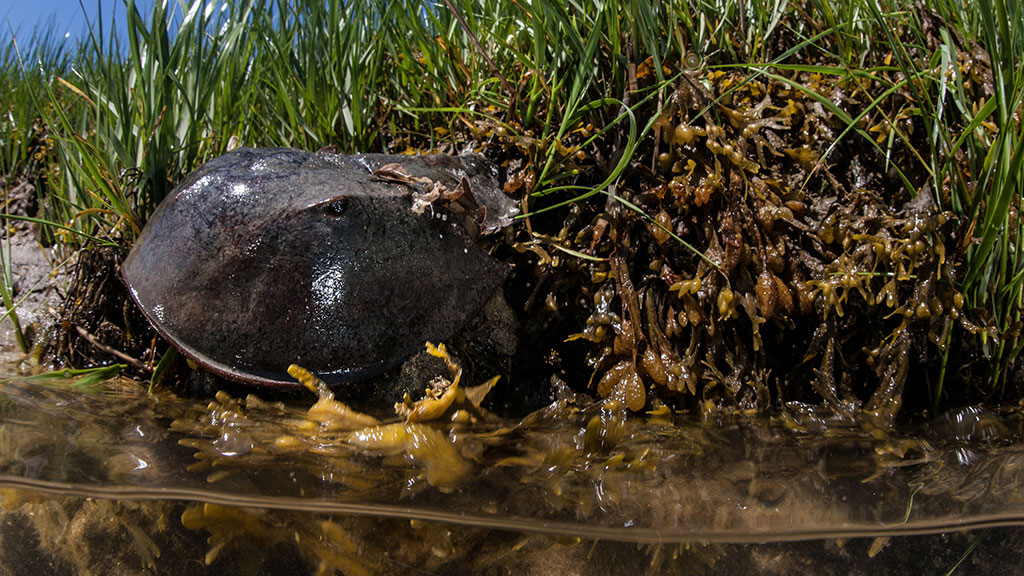
Horseshoe crabs spawn in epic numbers at just the same time as red knots stop in on migration, gorging themselves on the eggs and young of these ancient ocean-dwellers.
At the height of summer tens of thousands of flamingos flock to lagoons and marshes in the south of France to breed and raise their young in the rich, salty wetlands.
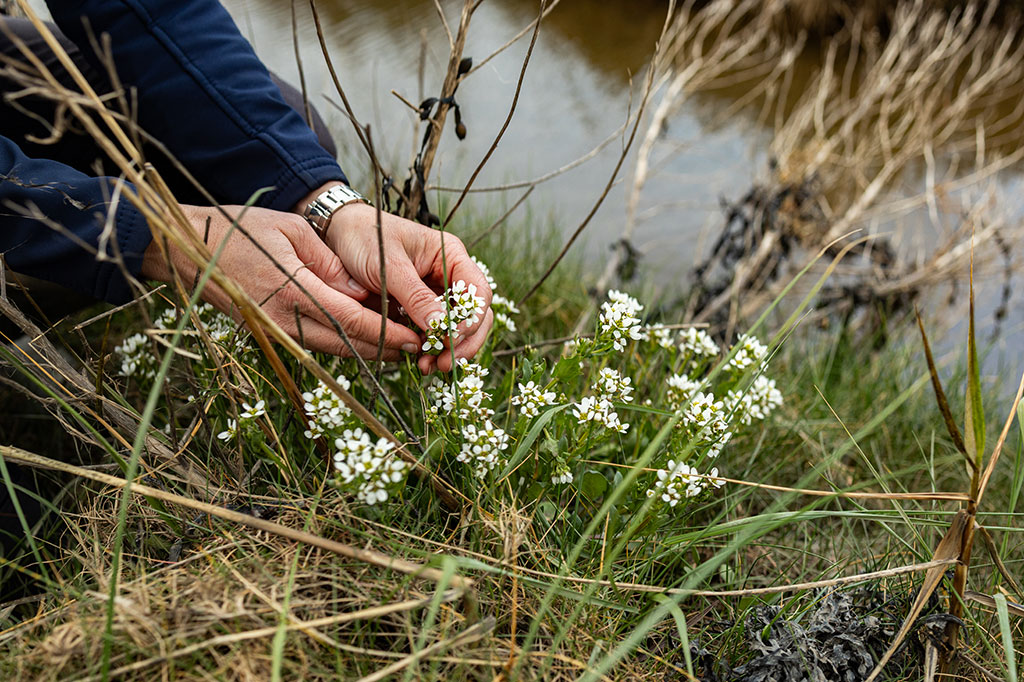
The sea aster mining bee emerges alongside the flower from which its name derives.
They are all connected by the marsh.
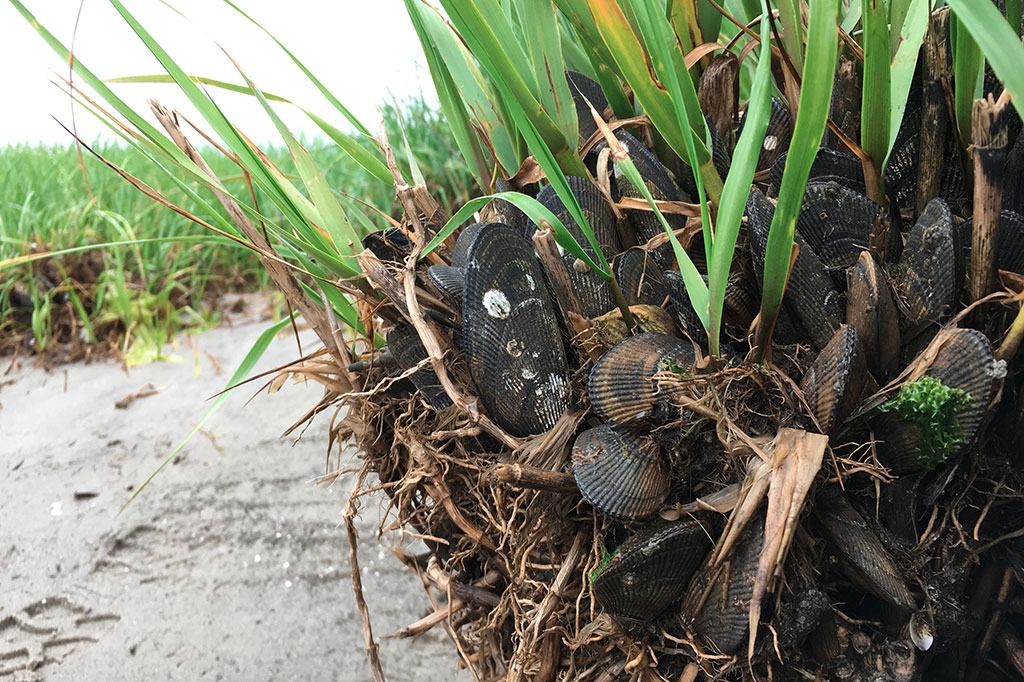 Atlantic ribbed mussels in the saltmarsh at Assateague Island, Maryland © Vi Nowak/Shutterstock
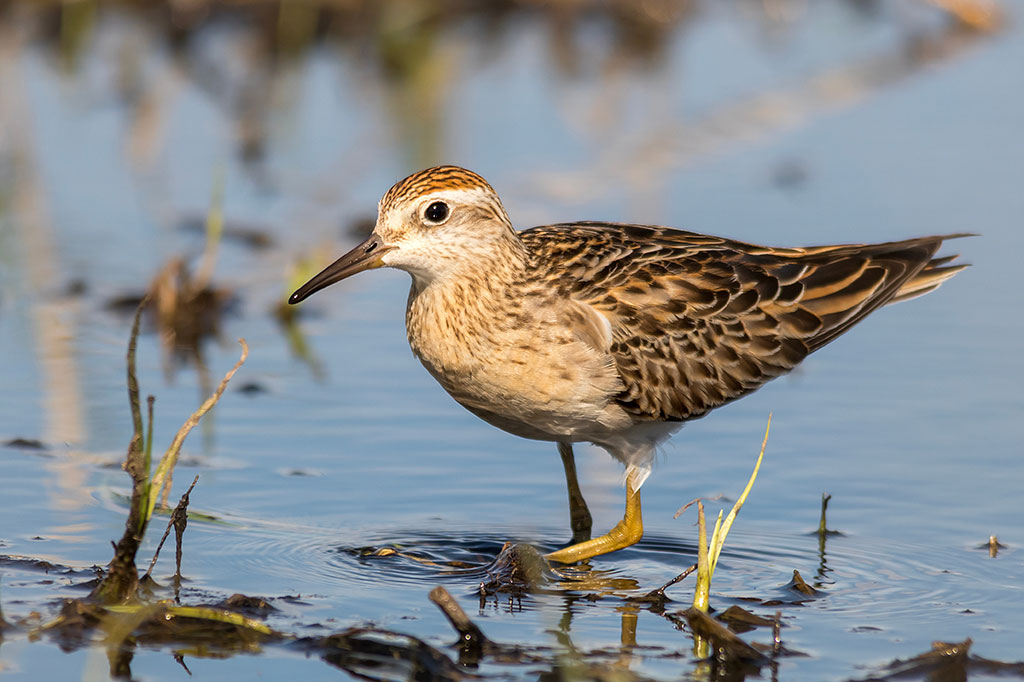 A sharp-tailed Sandpiper wading in Australia © Andrew Allen Photography /Shutterstock
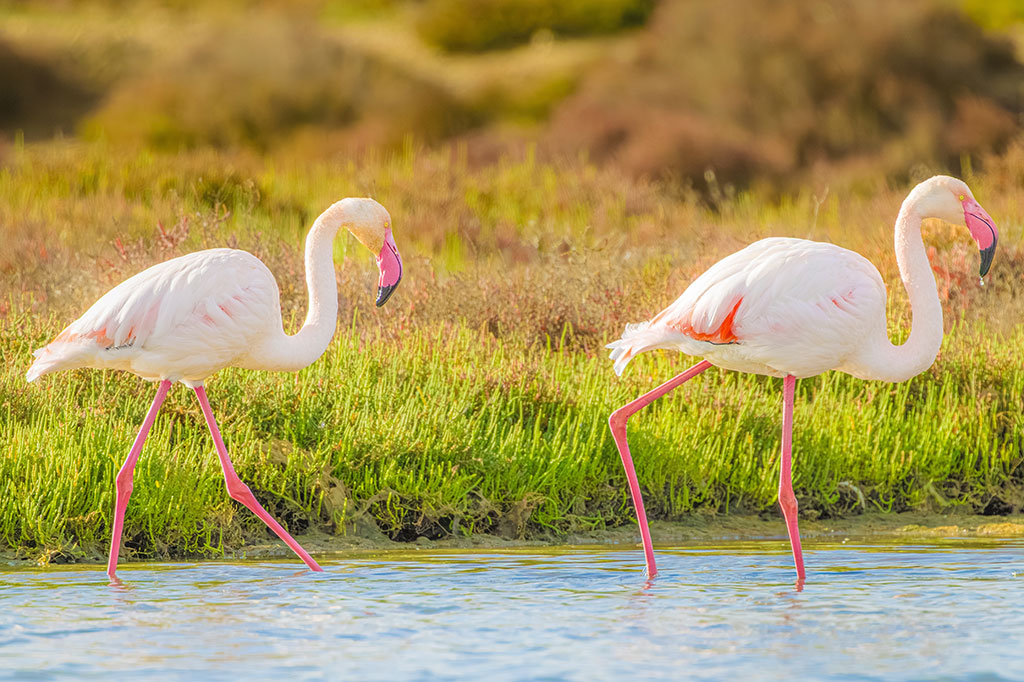 A pair of greater flamingos in colourful coastal wetlands © Oliver Freixas/Shutterstock
Superpowered, but understudied
Despite the incredible range of life they support, saltmarshes remain a mystery to most people and are hugely understudied.
It was only discovered that horseshoe crabs frequently spawned in saltmarshes in 2024. Given that this species has been around for hundreds of millions of years, long before the dinosaurs, it seems remarkable we had missed this.
Despite the crucial importance of saltmarsh populations to fish first being established in the United States in the middle of the 20th Century, the first study of how they used intertidal creeks in Asia was not carried out until the mid-2000s.
Studies across the world continue to tell us that these habitats have immense value for all kinds of wildlife as well as their incredible effectiveness as carbon sinks and in buffering coasts from storm surges. More research is needed.
How is WWT supporting saltmarsh biodiversity?
At WWT, we know saltmarsh is a superpowered habitat . Thanks to a substantial donation from Aviva, we are restoring saltmarshes here in the UK, carrying out a range of research into what makes good saltmarsh, and what the benefits of bringing back this habitat are.
A whopping 148 of the 290 invertebrate species found on saltmarshes in the UK are only found in these coastal wetlands, though many more visit them for their late-flowering plants like sea aster and sea lavender.
We’re studying how valuable these ecosystems are to pollinators as well as funding PhDs into how fish use saltmarsh here, to make the case for the protection and restoration of saltmarshes here, and all around the world.
Find out more about our saltmarsh restoration work.
Exploring saltmarsh
WWT also works to conserve and protect saltmarshes at several of its UK reserves.
You can find saltmarsh to explore up close at WWT Steart Marshes, WWT Caerlaverock, WWT Llanelli, WWT Slimbridge and WWT Castle Espie.
Header image: A horseshoe crab straddling the boundary between land and water in saltmarsh on the United States’ East Coast © Ethan Daniels/Shutterstock.