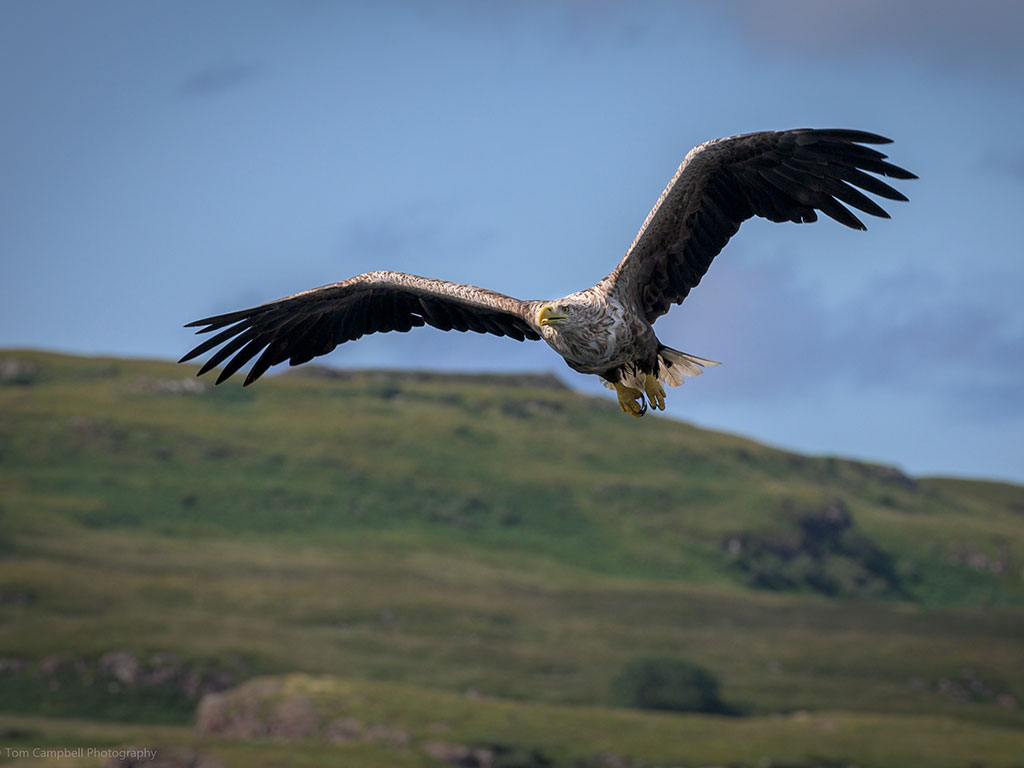
For centuries, white-tailed eagles, Eryr y Môr, the eagle of the sea, were an integral part of Welsh landscapes. They followed the rivers, stood on muddy estuaries, and soared over the coastlines, helping to shape ecosystems. By the 1830s however, persecution had driven them to extinction in Wales, with the last known breeding pair recorded at Kenfig Burrows on the Swansea coast.
Now, WWT is leading a partnership effort to return these iconic birds back to Southeast Wales and the Severn Estuary.
Our partnership
WWT is working alongside Eagle Reintroduction Wales and Gwent Wildlife Trust, combining expertise in conservation science, species recovery and reintroductions, land management and community engagement. The British Bird of Prey Centre are also playing a vital role in education and engagement, helping people connect with white-tailed eagles up close before they return to Welsh skies.
Together, the partnership has already engaged with over 11,520 local residents, 808 school children, and over 215 stakeholders; including farmers and landowners, listening to concerns and focusing on how people, wildlife and white-tailed eagles can coexist in the future.
You can find out more about the team here: Returning white-tailed eagles to South-East Wales and the Severn Estuary
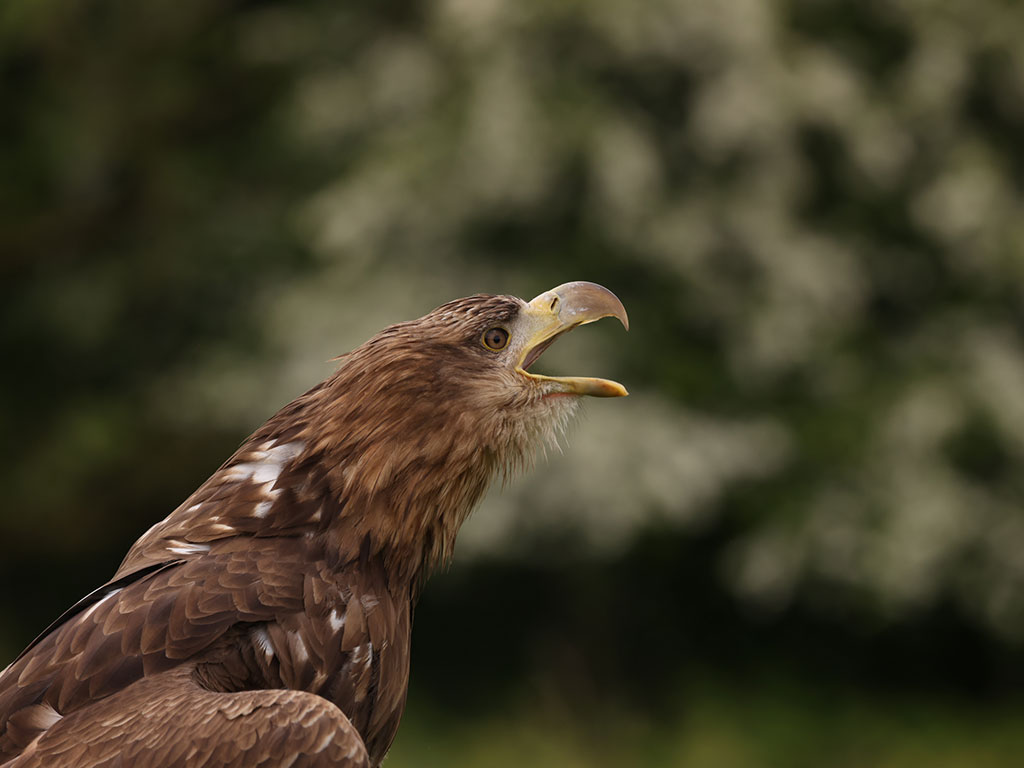 Aquarius the white-tailed eagle at the British Birds of Prey Centre
WWT’s role: restoring white-tailed eagles as part of living wetlands
WWT’s role focusses on using our expertise and experience in species reintroduction, to restore white-tailed eagles as part of healthy, functioning wetlands within Wales and across the Severn Estuary .
We bring decades of experience in waterbird recovery, conservation science and wetland restoration to the heart of the project. That means supporting research, careful licensing, ethical translocation and long-term monitoring whilst also keeping sight of the bigger picture.
White-tailed eagles are a flagship, umbrella, and keystone species. When they thrive, they shine a spotlight on wetlands and the need to protect and restore them. Through their apex predator role, they help regulate seasonal prey populations (e.g. fish and waterbirds) and encourage more natural movement and behaviour among smaller, predators (e.g. gulls and cormorants), while also acting as a natural clean-up crew by feeding on carrion and recycling nutrients. By helping return white-tailed eagles to Southeast Wales and the Severn Estuary, we hope to strengthen the ecological resilience of rivers, coasts and estuaries and the delicate balance of the food chain that exist within them .
As the population grows, white-tailed eagles from this project could one day be seen visiting wetlands and coastlines many people already love; including sites like WWT Slimbridge, WWT Steart Marshes, WWT Llanelli as well as along the Gwent Levels, the Severn Estuary and across wider Welsh shores.
Education and engagement
This is not just a species reintroduction programme, but a long-term, multi-disciplinary project that brings together ecology, science, education, cultural heritage and community engagement.
Working in partnership, we’re delivering proactive stakeholder and community engagement across Wales, alongside plans for a bilingual schools' programme. Through open dialogue, listening to local perspectives, addressing misconceptions, and sharing evidence-based information, we aim to build trust, inspire future generations and support long-term coexistence between Welsh communities and white-tailed eagles.
By reconnecting people with this lost part of Wales' natural heritage, the programme also seeks to create pride, participation and lasting public support for nature recovery across our coasts, rivers and wetlands.
Why Wales? Why now?
The deep roots of white-tailed eagles in Wales are written into the landscape and the nation’s cultural history. From placenames such as Foel Eryr (Eagle’s Peak) in Pembrokeshire, and more than 70 other eagle-referencing locations across the country, to Welsh poems like Canu Heledd, Eryr Eli and Eryr Pengwern, which speak of eagles hunting across coastal woodlands and shorelines. Together, these enduring historic references offer a glimpse into where these birds once lived, how closely they were woven into Welsh identity, and where they can belong once again.
Across the British Isles , white-tailed eagles remain rare breeders and continue to be a species of conservation concern. Southeast Wales has been identified as an ideal release area, with the potential to form an important ecological link between small recovering white-tailed eagle populations in England, Scotland and Ireland.
Research has also shown that it could take between 25 and 50 years for the species to naturally recolonise Wales. Their slow population growth and strong attachment to natal breeding areas, means that young birds released in Wales are likely to return and breed in those areas helping to establish a self-sustaining population sooner.
Wales is currently the only country in the British Isles not yet contributing directly to the conservation recovery of this species. This project offers an opportunity to help complete that network, while restoring a lost part of Wales’ natural heritage for future generations.
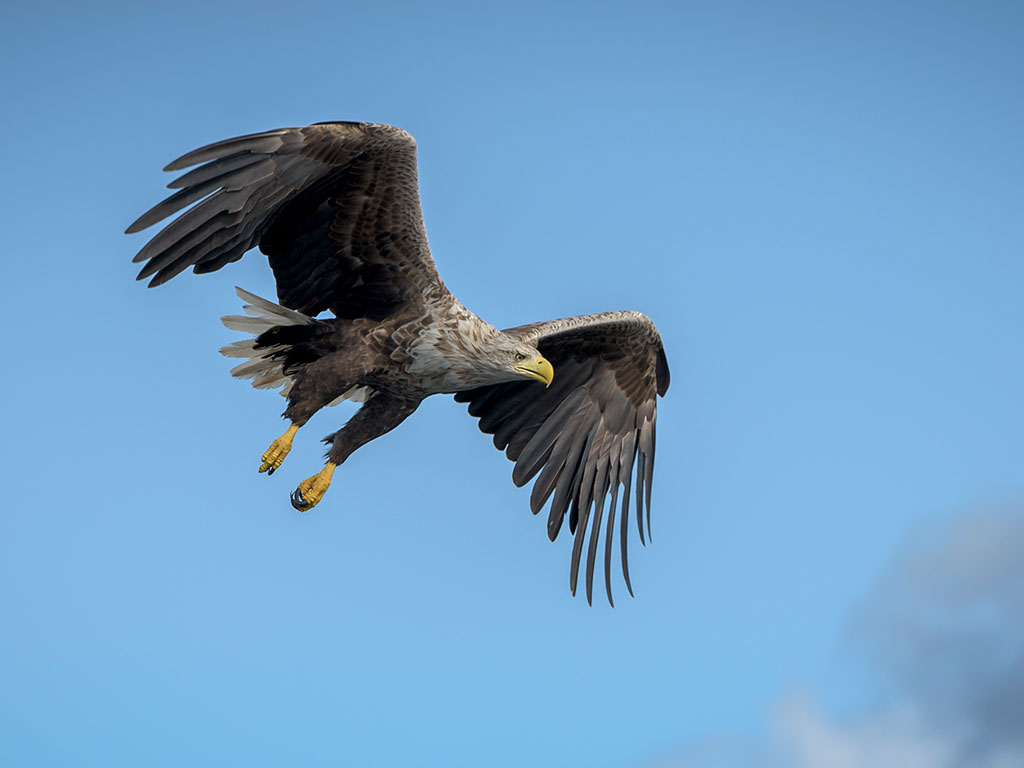 Adult white-tailed eagle © Tom Campbell
How will the reintroduction work?
Together with our partners, we plan to release up to 60 young white-tailed eagles over a five-year period.
Young birds will be ethically collected under license from wild nests in Norway, home to one of the largest white-tailed eagle populations in the world with over 2,000 breeding pairs.
Prior to release, the young eagles will undergo a quarantine period, full health check, and will be fitted with leg rings and GPS satellite tags, enabling teams in the field to track their real-time movements, survival and welfare post-release. Young eagles will be released at their natural fledging age and supported through their first winter, with supplementary feeding close to release sites to mimic natural biological cycles in the wild.
This phased approach will allow the young white-tailed eagles to learn the landscape gradually, develop natural behaviours, building familiarity with Welsh wetlands as they establish themselves.
Looking ahead
Like all species reintroductions, this project is a complex, carefully planned and long-term endeavour that relies on expertise and strong partnership working. So, you may not see a white-tailed eagle flying over the Severn Bridge just yet, but we’re committed to helping these birds once again in the future.
Over the next decade, the aim is to establish six to twelve breeding pairs across Southeast Wales and the Severn Estuary, reconnecting Wales with other small and recovering white-tailed eagle populations in England, Scotland and Ireland.
By bringing these magnificent birds' home to Wales, we’re restoring more than a species. We’re restoring natural heritage, strengthening ecological balance and unlocking the superpowers of healthy, more resilient wetlands providing benefits for wildlife and people.
You can find out more about the role of white-tailed eagles in our wetlands here: Returning white-tailed eagles to South-East Wales and the Severn Estuary.
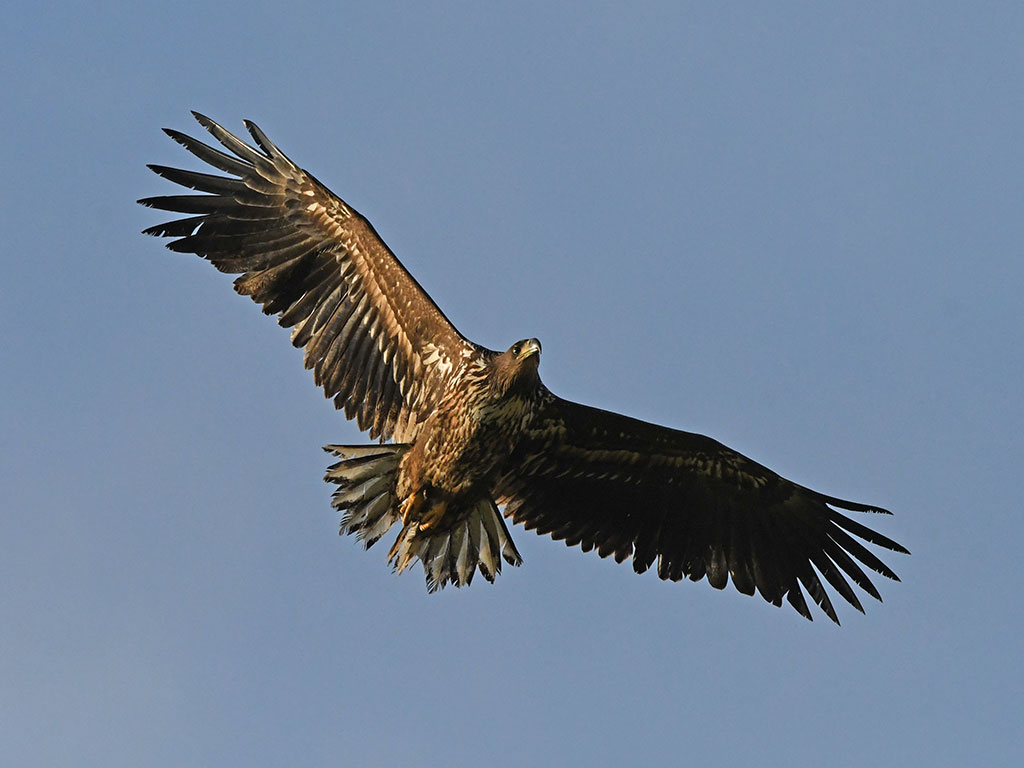 Juvenile white-tailed eagle © Billy Heaney
Header image: White-tailed eagle in flight over hillside © Tom Campbell