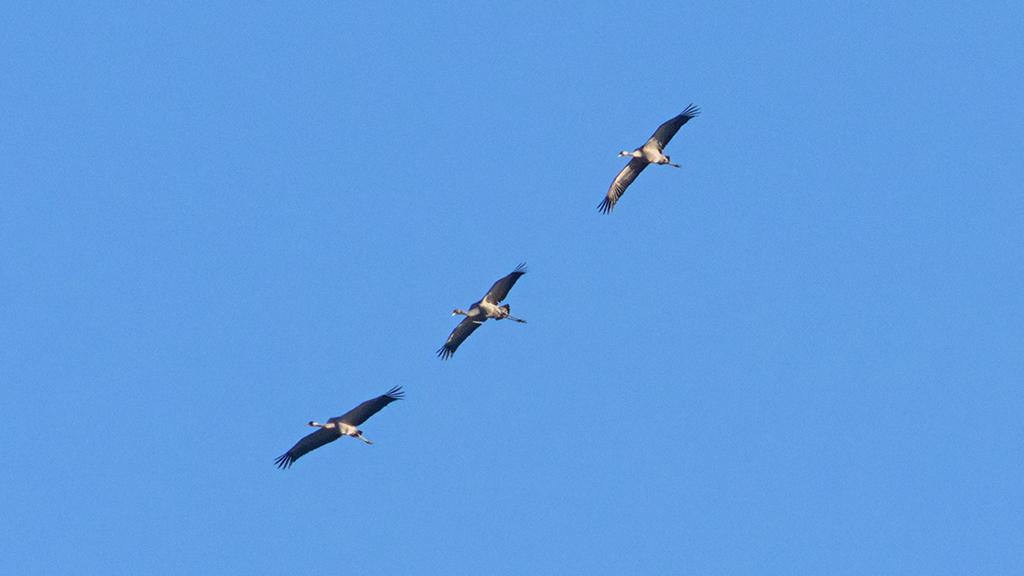
January 2026 has already delivered some incredible wildlife moments at WWT Arundel.
On 10 January, three common cranes were flushed up by a passing helicopter. They flew over the Sand Martin Hide—an unusual and exciting sighting confirmed by photos from visitor Jan‑Paul Charteris. Around this same time, nine cranes were also reported at Pagham Harbour.
The common crane is one of Europe’s most iconic wetland birds and a flagship species for UK wetland restoration. Once extinct in Britain for around 400 years, the species has made a remarkable comeback thanks to habitat protection and major conservation work, including WWT’s reintroduction efforts. Through WWT’s Great Crane Project (2010–2014), 93 hand‑reared cranes were released onto the Somerset Levels, doubling the UK population and helping re‑establish a breeding group in the southwest.
Birds of Prey
On 11 January, two peregrines were spotted at Offham Hangar. This may be the breeding pair that favour the tall trees on the steep, wooded chalk cliffs as a feeding perch and nesting area.
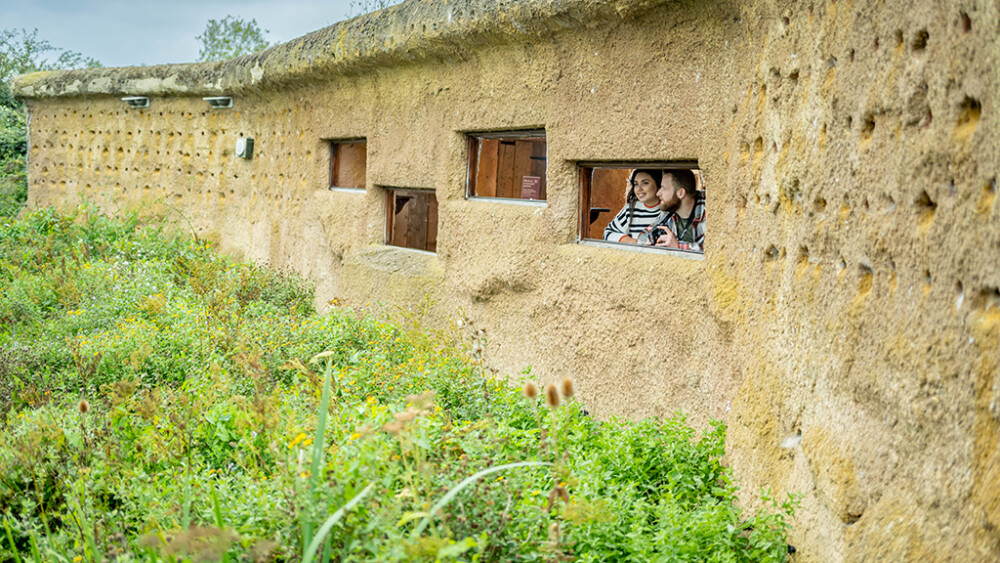
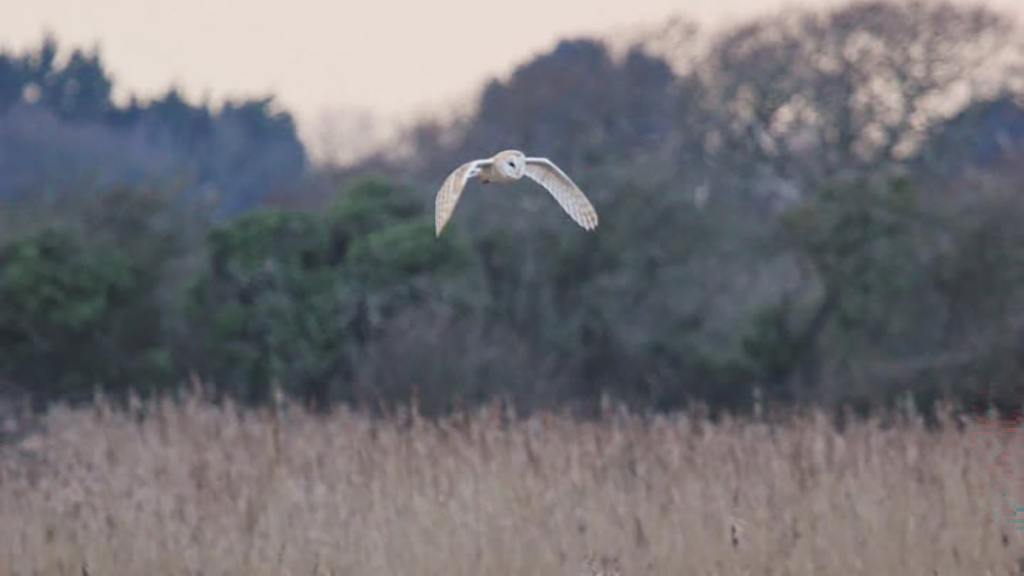
Our Facilities Manager, Sue Payne, also had a memorable owl encounter on 13 January. During the end‑of‑day closing walk, she surprised two barn owls perched inside the Lapwing Hide.
Teal on the Increase
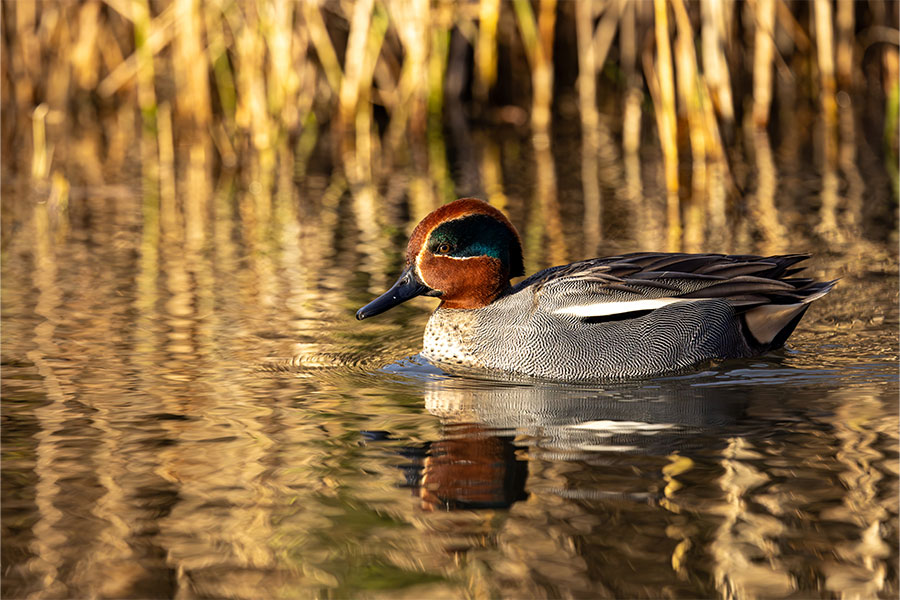
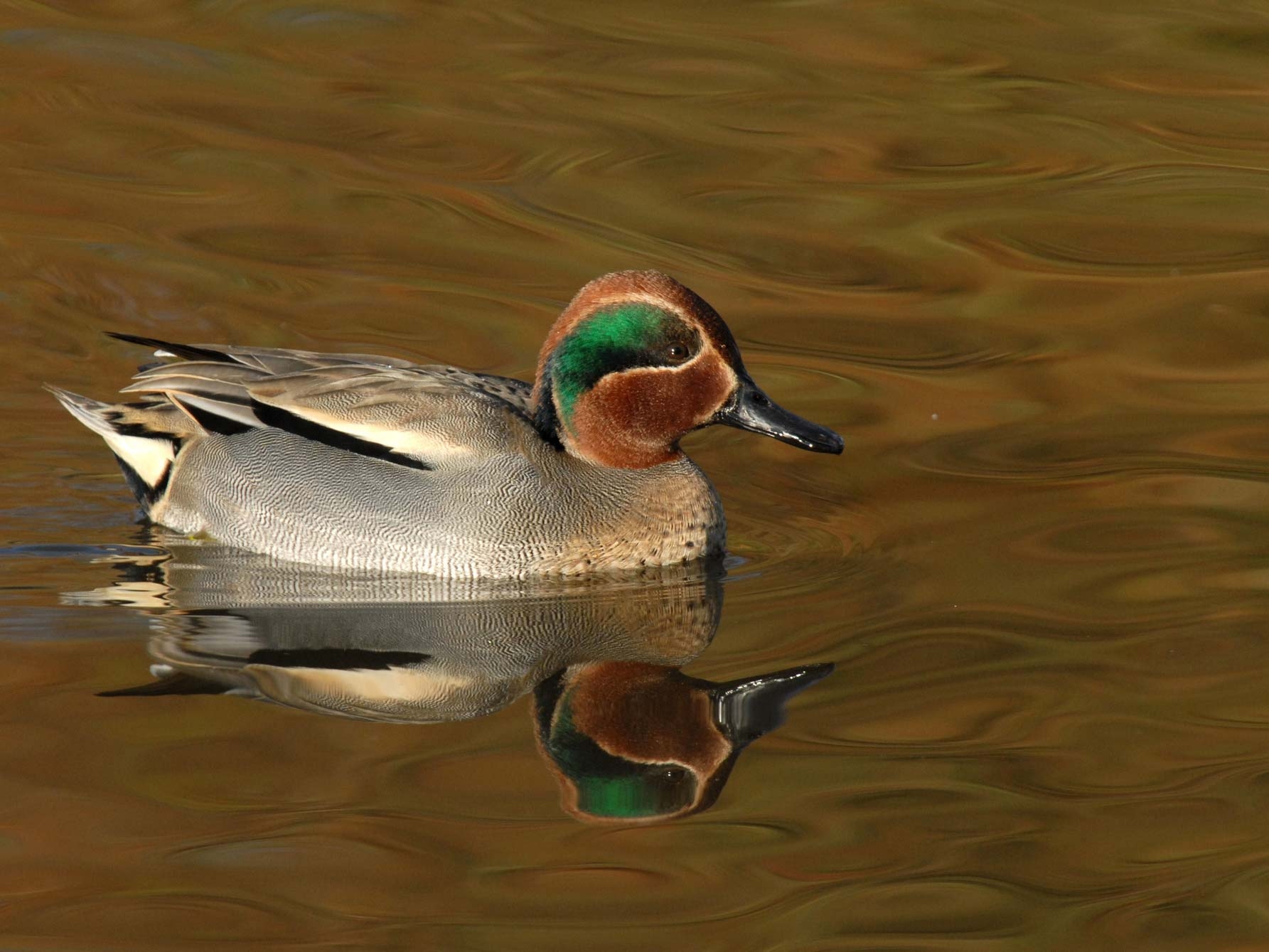
Teal numbers have been particularly strong this month, with counts including:
- 21 teal at the Scrape on 14 January
- 50 teal at the Scrape on 13 January
- Around 100 teal on 10 January
Additional teal were seen among the large mixed flocks at Ramsar and Sand Martin Hide. Across the wider reserve, regular species such as lapwing, snipe, pochard, shelduck, mallard and various egrets formed the backbone of daily sightings.
Sneaky Snipe
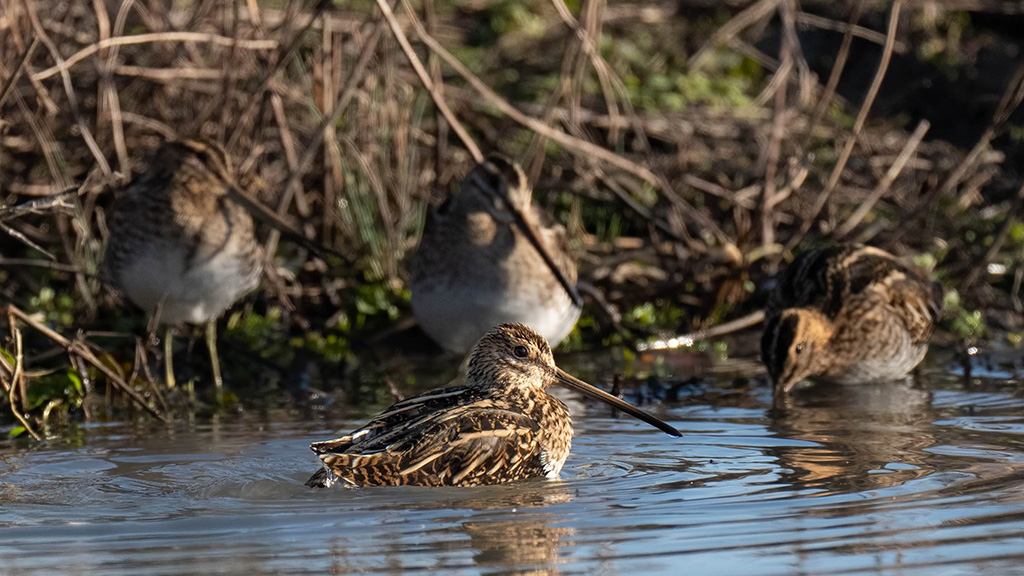
There are plenty of snipe on the reserve, though they remain tricky to spot thanks to their excellent camouflage. When our wardens—or I—walk out onto Arun Riverlife, we can flush up to 100 snipe from the rushes, along with around 50 more on the wet grassland.
Goldcrests have also been showing beautifully on almost any tree you care to look at. These tiny birds are a delight to watch as they flit around the buds.
Lots of Lapwing
On New Year’s Day, around 200 lapwings arrived at 3.30 pm on the deep lagoon between the Ramsar Hide and the Sand Martin Hide. When there’s a risk of overnight ice, lapwings seek out deeper water that won’t freeze into a bridge for four‑legged predators.
The flock’s stragglers were counted during morning observations by the Reserve Team: 8 on Friday and 30 on Sunday.
Reserve Works
It has been a challenging few weeks as we balanced our busiest work period with wintry weather and the holiday season. Our seasonal rotational cut of the main reedbed is now complete, and the desilting project on our entrance ponds has also been finished—despite the freezing January conditions.
We’re pleased the front reedbed work is done, just in time for amphibian migration. We are also extremely grateful for the generous donation from a life member that made this de-silting project possible.