Spring officially begins on 20 March, but the wetlands wake up long before the equinox.
As soon as the days turn milder, the whole landscape starts to stir. By the time March “goes out like a lamb”, the wetlands are alive with colour, song and movement — its the perfect time to visit and watch the season unfold.
Early flowers
Visitors in late winter often spot willow catkins, primroses and snowdrops swaying in the February breeze, but the wetlands hold many more early treasures.
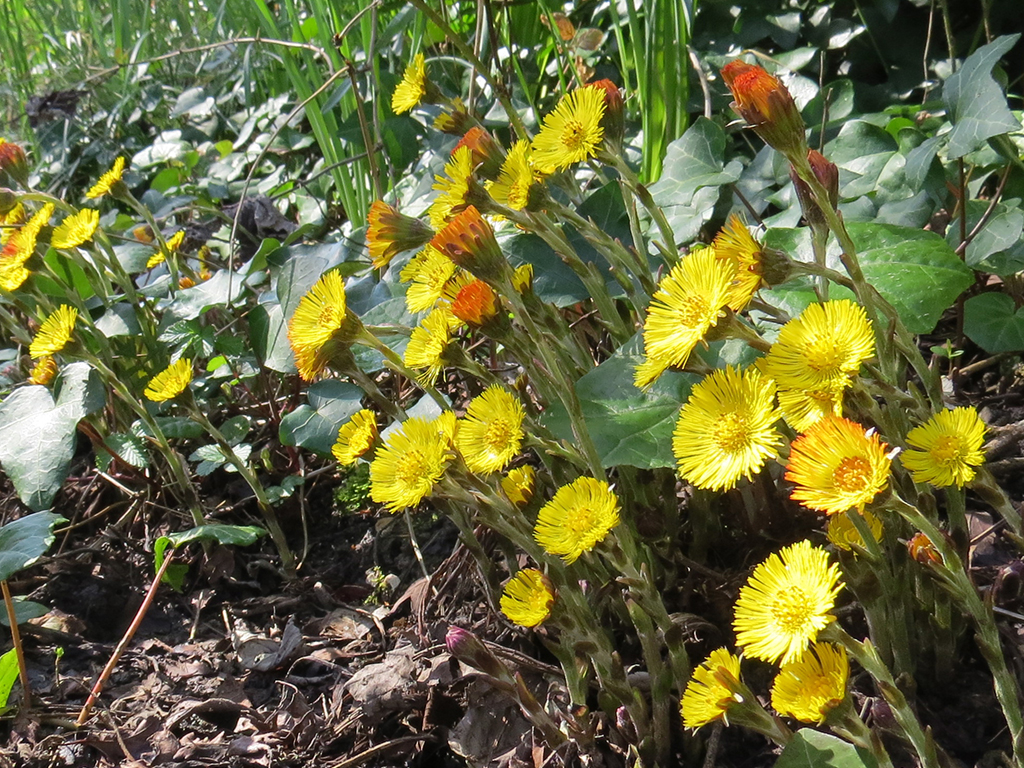
- Coltsfoot opens its bright yellow, dandelion‑like flowers before it grows any leaves. It’s one of the first nectar stops for honeybees and a food source for moth larvae later in the season.
- Lesser celandine carpets damp paths and grasslands with glossy yellow stars from late February, a cheerful sign that spring is on its way.
- Blackthorn blossom bursts into flower before the leaves appear, offering vital nectar for queen bumblebees emerging from hibernation.
These early blooms make beautiful photo opportunities along the trails.
Bees and butterflies on the move
Warm days in late February and early-March bring the first buzz of activity.
- Hairy‑footed flower bees nest around the Sand Martin Hide, with black females and red‑brown males zipping between early blossoms.
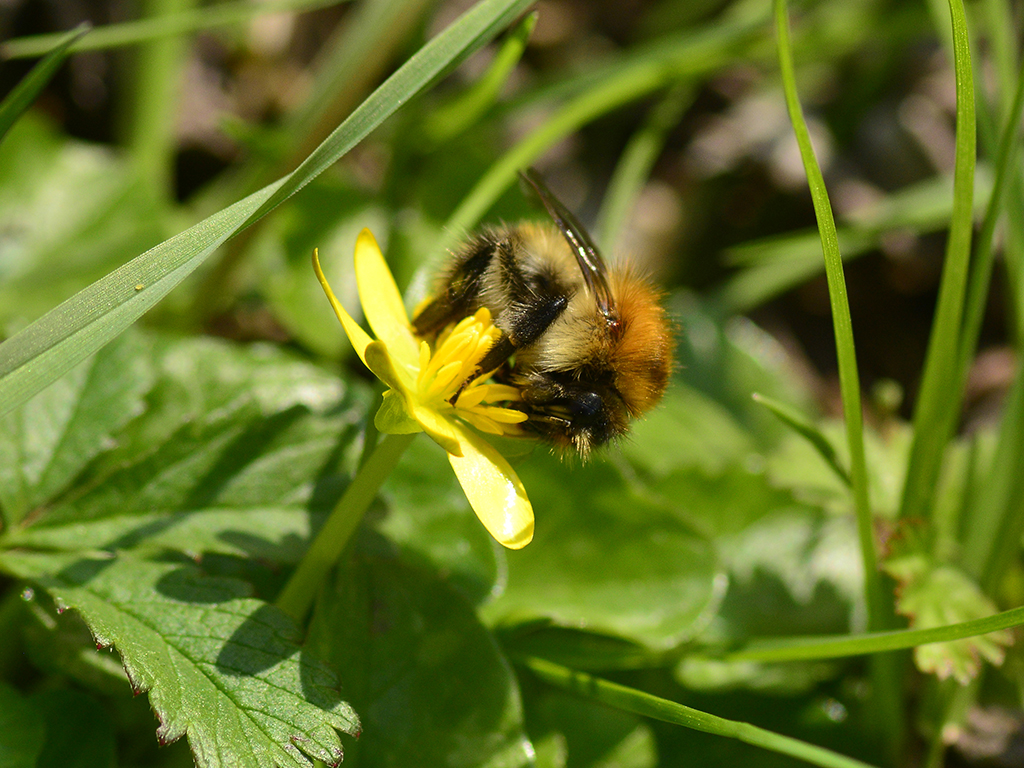
- Buff‑tailed and common carder bumblebees are among the first bumblebees you’ll see searching for nectar.
- Peacock, brimstone and red admiral butterflies emerge from their winter hiding places, fluttering through sunlit clearings.
These early insects are wonderful to watch and a great reminder that spring is building momentum.
Kingfishers near the nesting bank
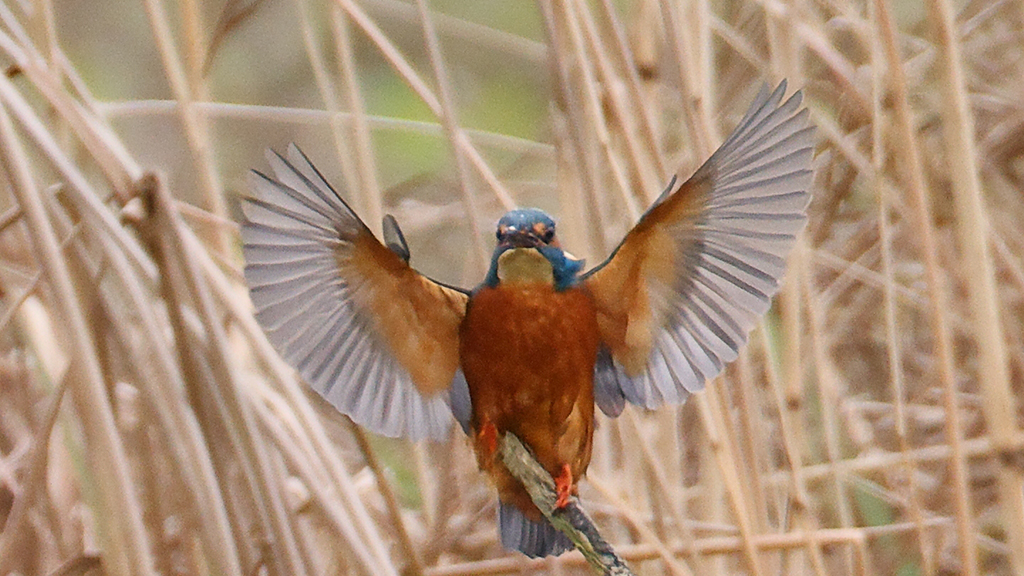
Kingfishers are onsite year‑round at WWT Arundel. In early spring, males define their territories by chasing off rivals. In February we noticed increased kingfisher activity on the Arun Riverlife Lagoon, where our nesting bank is located. Visitors have spotted a kingfisher from the left side of the gallery windows and near the nest bank from the Discovery Hide. Café staff have also seen one from their windows overlooking Pelican Cove.
Last spring the birds didn’t use the nesting bank for the first time in five years. We have our fingers crossed that a pair will return this year. Kingfisher incubation lasts about 20 days, with fledging around 25 days later. They usually raise more than one brood each year.
Lapwings displaying over the grasslands
February brought flocks of more than 200 lapwing to the reserve. As spring approaches, these flocks break into pairs, with around 6–8 pairs staying to nest on the wet grasslands.
Watch for:
- Tumbling display flights accompanied by their distinctive “slide‑whistle” calls
- Shallow scrape nests camouflaged among short vegetation
- Protective parents calling loudly and mobbing intruders later in spring
The Lapwing Hide, Ramsar Hide and the back of the Arun Riverlife Lagoon are excellent viewing spots.
Oystercatchers returning
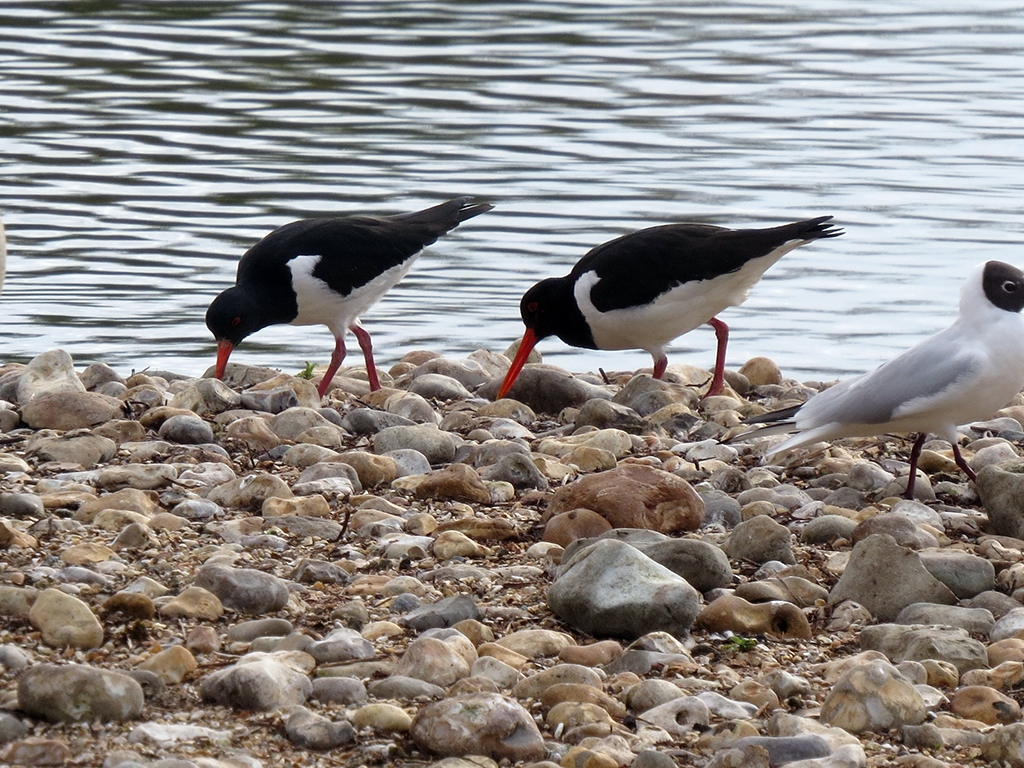
Oystercatchers returned to the wetlands in mid‑February, and we usually welcome two nesting pairs each spring. One pair favours the area near the Coastal Creek aviary, while the other often chooses the roof of the Sand Martin Hide or the nearby islands among the black‑headed gull colony.
Their bold black‑and‑white plumage and bright orange-red bills make them easy to spot.
March is the start of duckling season
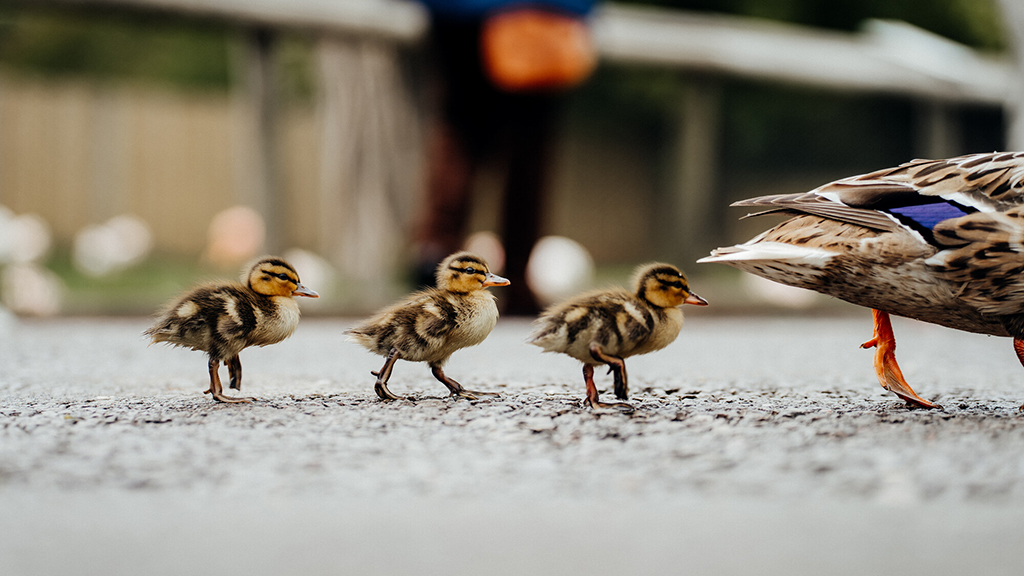
March is a wonderful month for families and photographers, with the first mallard ducklings appearing along the waterways.
Pochard numbers have been strong this winter, and for the past three years pochard parents have successfully raised ducklings on Pelican Cove.
Shoveler females slip away to nest while males remain on the water, and both greylag and Canada geese begin nesting from late March into early April.
The March chorus
The wetlands sound different in spring. Listen for:
- Chiffchaffs and blackcaps singing from hedgerows
- Cetti’s warblers and wrens, the loudest voices across the reserve
- Great‑spotted woodpeckers drumming in Woodland Loop and near Robin’s Gate
- Large gull movements, with common, Mediterranean and black‑headed gulls passing through before around 100 black‑headed gulls stay to nest
Even if you don’t spot every bird, the soundtrack alone is worth the visit!