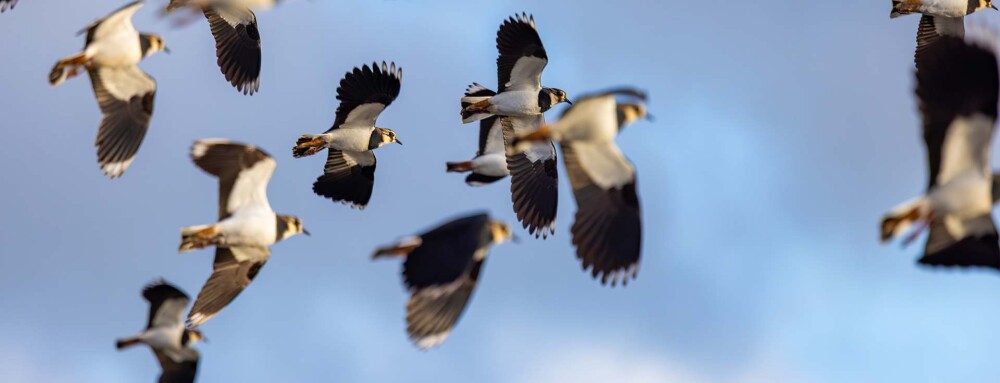
Winter is arriving at WWT Llanelli, and with it comes an influx of wetland wildlife. Across the reserve, flocks of lapwings, ducks and other winter visitors are building in number, bringing plenty of movement and colour to the wetlands. Warden Sam talks us through the latest sightings...
Lapwing (Vanellus vanellus) numbers have been steadily increasing this fall, with particularly large flocks spotted on the Dafen Scrapes and Deep Water Lake. Given the regularity with which lapwings are spotted here at WWT Llanelli, they can sometimes be a little overlooked in these updates, but I’m always thrilled to see lapwings. Watching a flock of them masterfully twist and spiral through the air is always a brilliant sight. I also found out today that a flock of lapwings are called a ‘deceit’, apparently relating to the way lapwing parents will feign injury to lure predators away from their chicks!
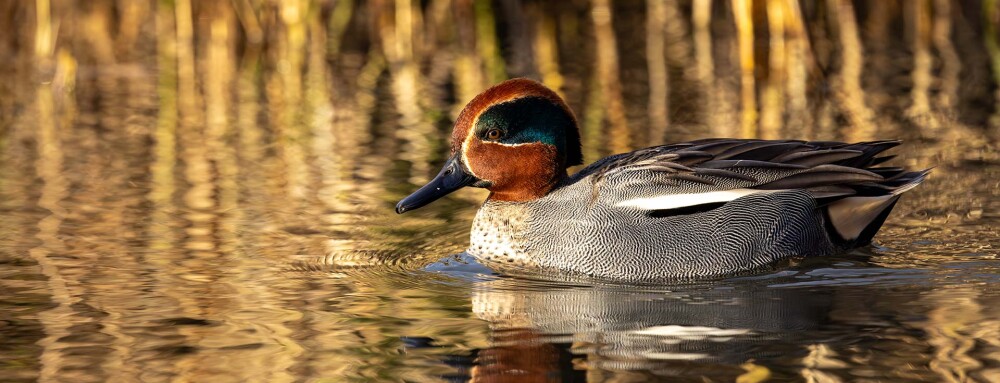
Wigeon (Mareca Penelope) and Teal (Anas crecca) have also been returning in large numbers and now seem to be out in force throughout our lagoons, ponds and lakes. Male wigeons boast a golden stripe running from their bill to the back of their reddish heads, while male teal have two metallic green stripes that start just in front of the eyes and continue down their necks. Those are just some easy ways to identify them. Like so many wildfowl species (and all bird species, really), they both have incredibly intricate and beautiful plumage that’s well worth seeing for yourself, especially if you haven’t before!
A bit larger than wigeon or teal, Shoveler (Spatula clypeata) and Shelduck (Tadorna tadorna) are another two species which have been steadily growing their numbers throughout WWT Llanelli. After a busy summer, we hope they’ll find a bit of comfort and shelter here during some of the harsher months of the year.
Lastly, we’ve also seen a lot of Green Woodpeckers (Picis viridis) recently. Living up to their name, you can usually tell them apart from greater and lesser spotted woodpeckers (which we also regularly get here) by their green plumage. Their distinct call is known as a ‘yaffle’. If you haven’t heard it, look it up! It sounds like a crazed cackle. With a slightly “bouncing” flight and the aforementioned yaffle, green woodpeckers are full character and always exciting to spot. Best of all, they can be spotted almost anywhere on site, whether you’re strolling through the grounds or out on the Millennium Wetlands!