Osprey, Peregrine Falcon, Goshawk and Marsh Harrier. Also, Yellow-legged Gull, Yellow Wagtails, rare moths and sugar-high wasps!
Wildlife sightings at WWT Llanelli from 10 to 23 August 2026.
On Saturday (22nd) an Osprey (Pandion haliaetus) was spotted from the British Steel Hide soaring over the marsh and estuary beyond. During the summer months, this species would have once been widespread across the British Isles, but in the early part of the 20th century they disappeared from our skies. However, the 1950’s saw some of the first conservation efforts to help this magnificent bird return.
Today, following decades of on-going conservation work and a broad improvement of habitats throughout the British Isles, there are now more than 400 breeding pairs of Osprey. This isn’t our first sighting this year, nor in the region, so get on down to WWT Llanelli and keep your eyes peeled for this incredible predator as the birds make their way back to West Africa for the winter!
Another star of the raptor world, the Peregrine Falcon (Falco peregrinus) has been seen recently over the Dafen Scrapes and Saline Lagoon. Not just one, but two! These apex raptors are well known for being the fastest animal on earth, with records of diving speeds exceeding 240mph! They’re also not an uncommon sight here at WWT Llanelli. There’s a pylon overlooking the Dafen Scrapes, which seems to a favourite perch for one of them.
Our resident Marsh Harrier (Circus aeruginosus) hasn’t been shy this week either, with multiple sightings from the Millennium Wetlands and Saline Lagoon. The Goshawk (Accipiter gentilis), which was sighted before our last weekly sightings update, was also seen again shortly after and may still be lurking in a tree canopy somewhere nearby!
Other than raptors, a Yellow-legged Gull (Larus michahellis) was seen recently. While not particularly uncommon, they can be easily overlooked by even the keenest eyes, but they are their own species with an amber conservation status in the UK, so it’s worth keeping an eye out for them. As the name suggests, their legs are a vibrant yellow, rather than the blander/more pinkish legs of the Herring Gull.
Continuing the yellow theme, three Yellow Wagtails (Motacilla Flava) were spotted on the Dafen Scrapes, no doubt enjoying the presence of the cattle and invertebrates they bring. They can be a little difficult to tell apart from the Grey Wagtail (Motacilla cinerea), which is also pretty yellow at a glance! However, the yellow wagtails tend to be considerably more yellow in both coverage and vibrancy, and their back and wings are generally lighter.
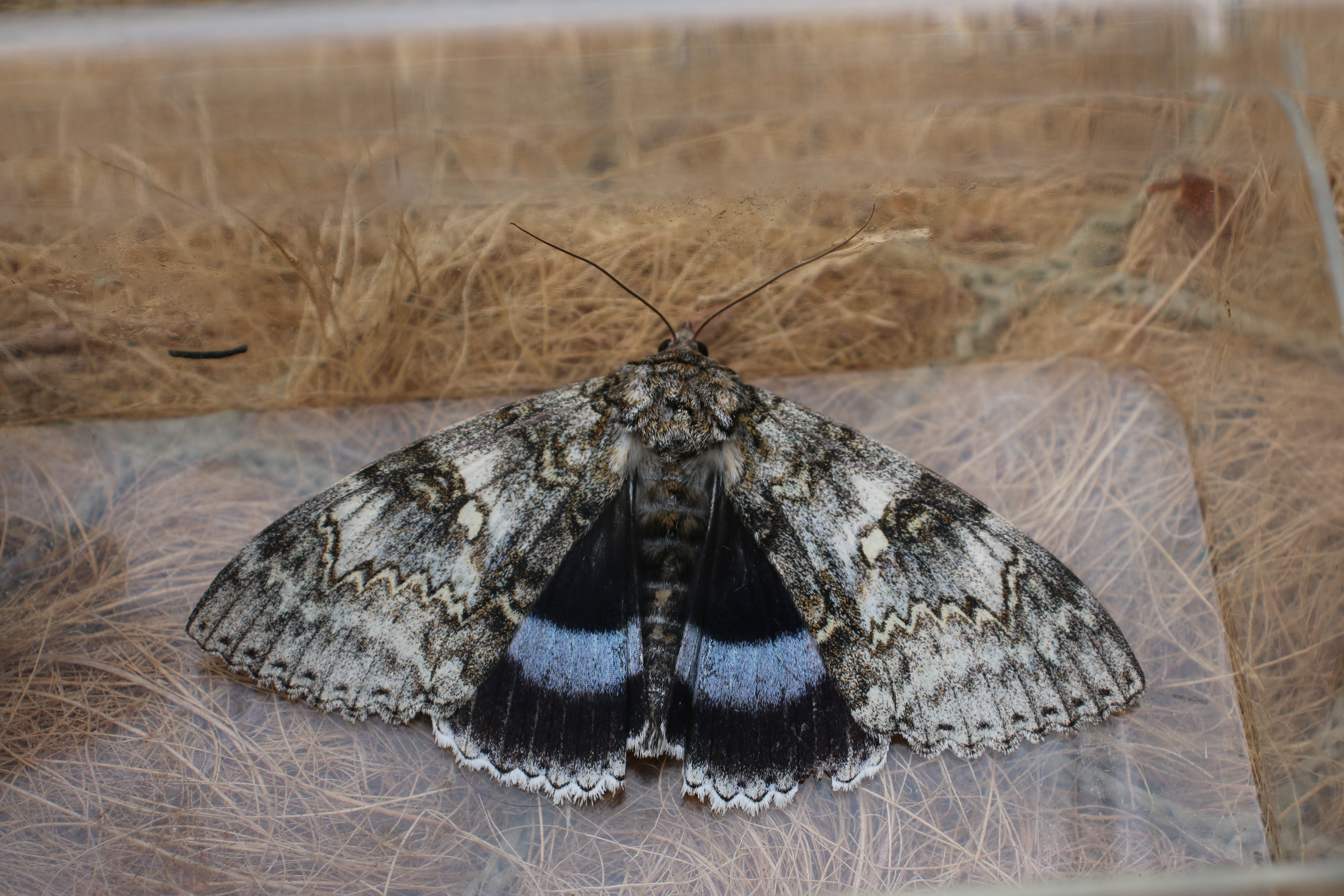
On the invertebrate front, we recently had a Striped Hawk-Moth, which created a flutter among our visitors who were excited to get a close look at this species, which is impressive in both size and colouration! Also, our long-time volunteer and moth enthusiast, Mike Evans, spotted a rare Clifden Nonpareil (Catocala fraxini), sometimes referred to as a blue underwing. See our featured image for a look at why they have that nickname.
Butterflies are still abundant, too, with numerous species fluttering around WWT Llanelli. But it won’t be long until their numbers start to dwindle into the colder months ahead, so be sure to make the most of them now!
Lastly, this time of year often sees large numbers of an insect known as a Giant Willow Aphid (Tuberolachnus salignus). While giant compared to your more common aphids, these little guys can be easily missed, which is fine because they’re harmless! However, they suck sap from the willow trees and excrete a sugary waste, commonly called ‘Honeydew’. Wasps LOVE this sugary poop and where you find giant willow aphids, you will also likely find large gatherings of wasps gorging themselves.
Wasps aren’t nearly as aggressive as we’re led to believe, and when feeding on honeydew they’re usually more focused on the sugary treat than on us, but we thought it was worth mentioning because willow is a wetland specialist. Our advice is not to get too close to willows and the drunken wasps - they could give you a sting!