
Whether rain, shine or blizzard, our reserve team do a daily count of the wild animals on our site.
In these monthly blogs, we look at that data from years gone by and explore trends, observations and records, and talk about how we manage the site and how it impacts those animals.
This month we talk about nature's clues that the seasons are changing by looking at the black-headed gull and the chiffchaff.
From the wettest March in 40 years in 2023, to the driest March since 1961 last year, this is one of our most unsettled months weather-wise here in the United Kingdom.
March some years remains icy cold throughout, with snow and bitter winds, while in others it brings balmy t-shirt weather and has us dusting off the barbeque. It can be difficult at times to pinpoint the transition between the seasons based on typical March weather, but nature leaves us other little hints that winter is coming to an end and spring is beginning.
One bird where the change of the season is particularly evident is the black-headed gull.
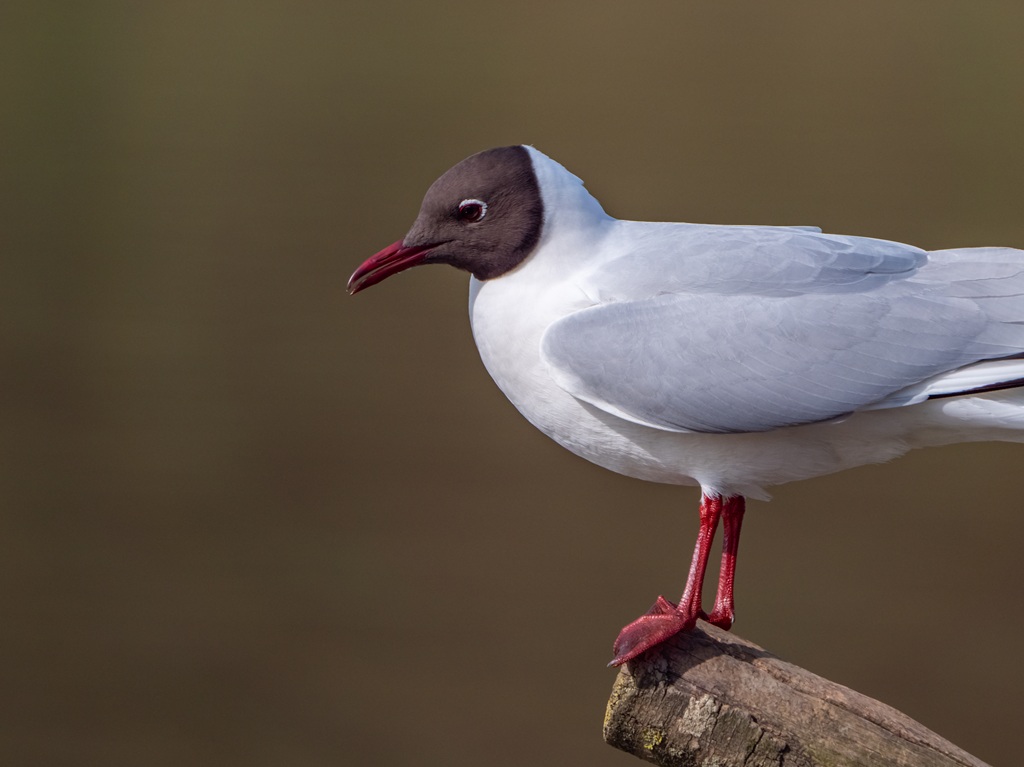
Perhaps arguably not our most exciting of visitors, the black-headed gull is by far our most prolific - accounting for 18.4% of all our visiting bird counts since 2016 and being our most counted bird annually since 2018 (our second being the lapwing, which accounts for 12.2% of counts).
A resident species here in the United Kingdom, meaning it can be seen here all year-round, the black-headed gull can be found in lots of different habitats, ranging from urban city centres and high streets to quiet coastal outcrops and inland moors. While technically not black, the chocolate-brown colouring of the head only appears throughout spring and summer, starting around February and March. This makes it an excellent indicator of how far through the seasonal change from winter to spring we are.
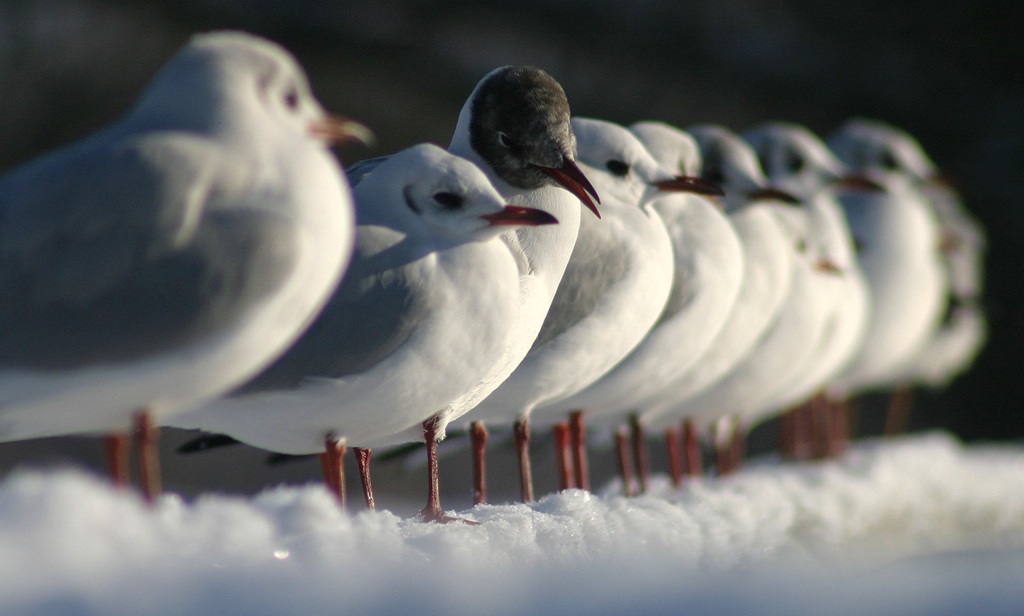
Usually, at the start of March, many of the black-headed gull still have their white winter plumage on the head. The picture below shows several black-headed gull, with all but one in winter plumage and the other still showing signs of the transition. Interestingly, the juveniles keep some of their young body markings throughout their first year, but their head will often change to the chocolate-brown plumage in the spring alongside the adults (although sometimes this is only a partial hood or not quite as defined as the adults). After their first year, their body markings will also change to match the adults.
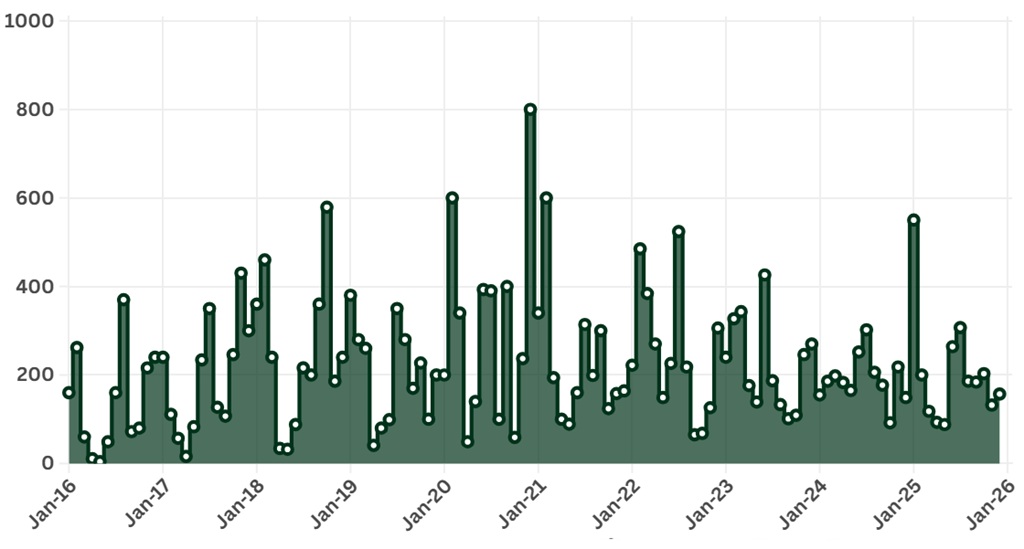
The graph below shows the highest single daily counts of black-headed gulls, per month, over the last 10 years here at WWT Washington since 2016. The highest peak being 800 counted at one time during December 2020. Despite being close to 0, the lowest dip in the graph is actually a count of 4, being counted in May 2016, meaning that in the last 10 years, we’ve never had a month without black-headed gulls visiting the site.
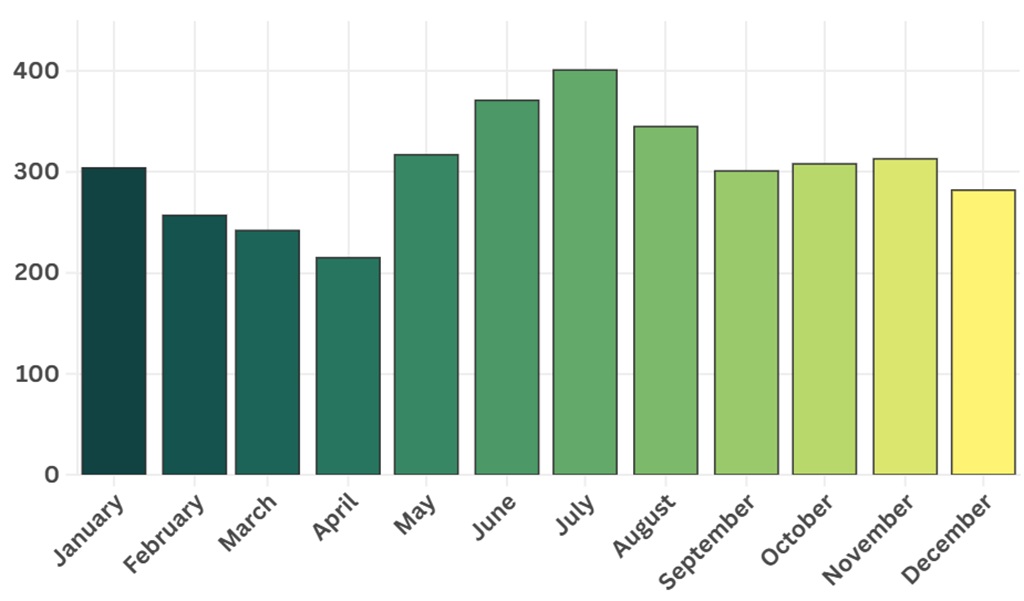
We can also take a look at monthly activity from the black-headed gull, shown on the graph below, which uses a combination of days counted and locations seen over the last 10 years to display how active the birds are each month. We can see that activity, while still high across the year, wanes during spring before spiking up throughout the summer. This is caused by the birds nesting during spring and being less evident, remaining on their nests out of sight. Then once their chicks hatch and eventually begin to fledge, activity ramps up throughout the summer.
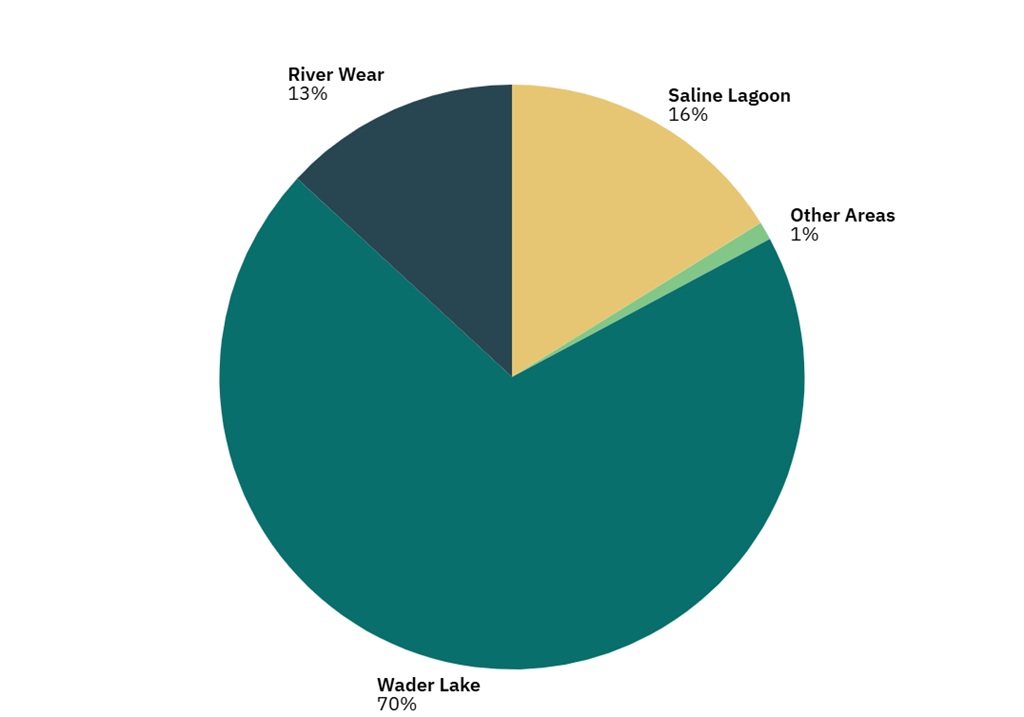
We can also use the data to see whereabouts on site we most regularly find black-headed gulls. Understandably, they prefer the areas with larger bodies of water, with the majority of sightings being made at Wader Lake, around our Saline Lagoon and on the River Wear. The pie chart below shows the percentage of sightings that were made at each location.
While the black-headed gull visitors are abundant and easy to spot, particularly on Wader Lake, let’s take a look at another visitor to the site, whose numbers are fewer and somewhat more difficult to see. It can still be easily identified however, thanks to its iconic namesake call.
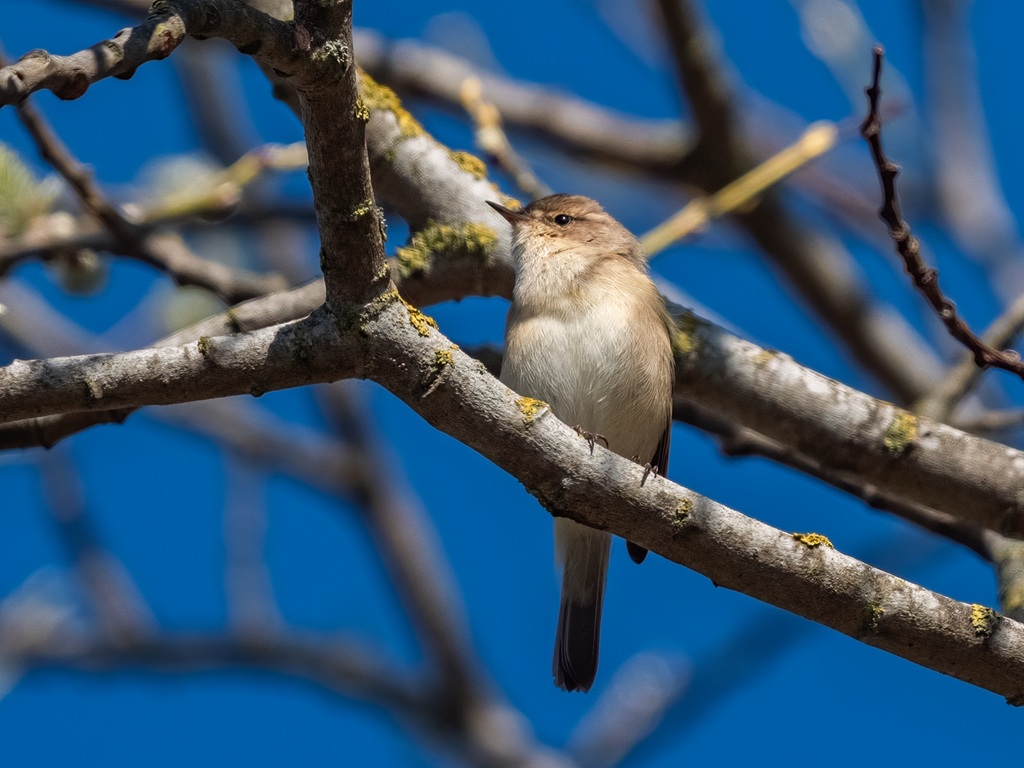
The chiffchaff is a small warbler, frequently found in woodlands and around the smaller bodies of water here from March onwards. The chiffchaff mostly flies south in the autumn, over-wintering in North Africa and southern Europe, but returns to the UK as early as February, making March a particularly good month to see them here.
Across the country chiffchaff have been growing in numbers. However, this rise has now started to level off. Another observation is how chiffchaff are now moving into the higher, colder regions of Scotland they previously didn’t, the belief being that this is due to our climate changing and becoming more favourable for them.
The chiffchaff can be heard making its “chiff chaff” call across the site. It is one of the first singers heard in the mating season, sometimes as early as February. The daily sightings records kept by the reserve team often have notes or comments attached, usually explaining markings or notable features. These notes also include when a bird is heard but not seen and recorded based on sound rather than sight. Of all the daily records over the last decade, 6% of chiffchaff “sightings” were made audibly from their unique call being heard. Understandably, it is difficult to get an accurate count based on sound alone, so most of these observations are simply recorded as “present”, and when numerical data is required, recorded as a single bird.
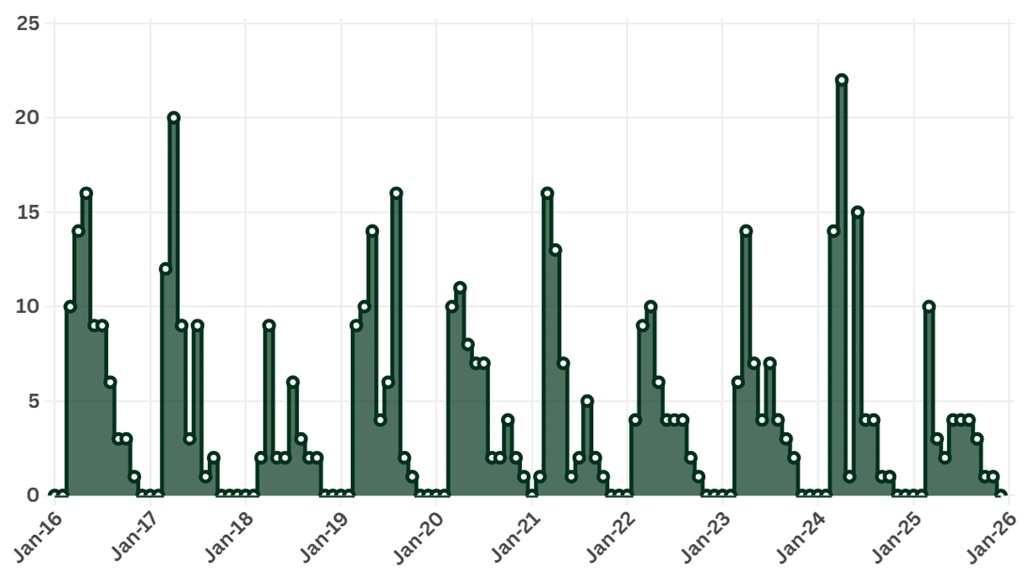
Looking at the graph above, which plots the highest daily count per month for the last 10 years, the chiffchaff arrive early in the year around March and April. This initial spike is followed by a sudden dip and then a second spike. This is because at first, the birds are much more active, establishing territories and moving through the site, looking for nesting locations and being recorded often. The dip that follows is when the birds are incubating eggs and there’s less observable activity aside from a few occasional feeders or last minute territory disputes. The second spike is after the young have fledged and the birds are more active once again. It is not uncommon for chiffchaff, particularly at this latitude within their range where the climate is favourable, to have a second brood later in the year before migrating south for winter.
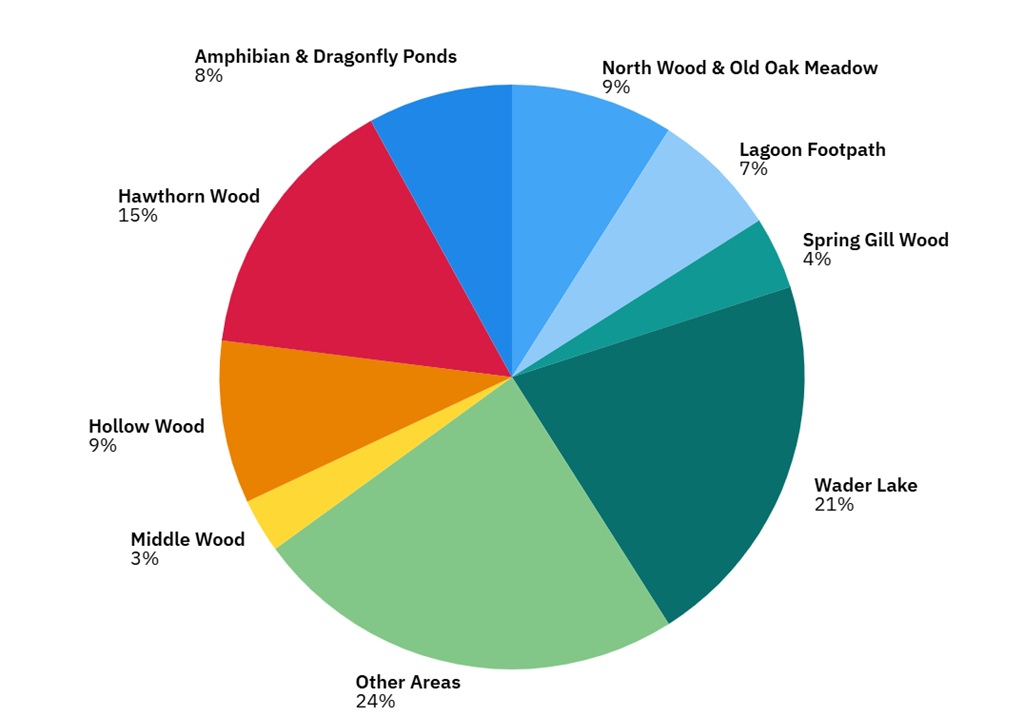
The colourful pie chart above shows where chiffchaff are mostly seen or heard across the site at WWT Washington. We regularly see them in the hedgerow that runs between the footpath and Wader Lake, as well as on Wader Lake Meadow. They are also regularly seen in Hawthorn Wood and at the feeding station beside Hawthorn Wood Hide. Although the “Other Areas” on the pie chart account for 24% of sightings, this is made up of almost every other region of the site and none of them individually count for more than 1% overall. From this information it's safe to say that chiffchaff are widespread across WWT Washington; giving us both great sights and iconic sounds to see and hear during the month of March.