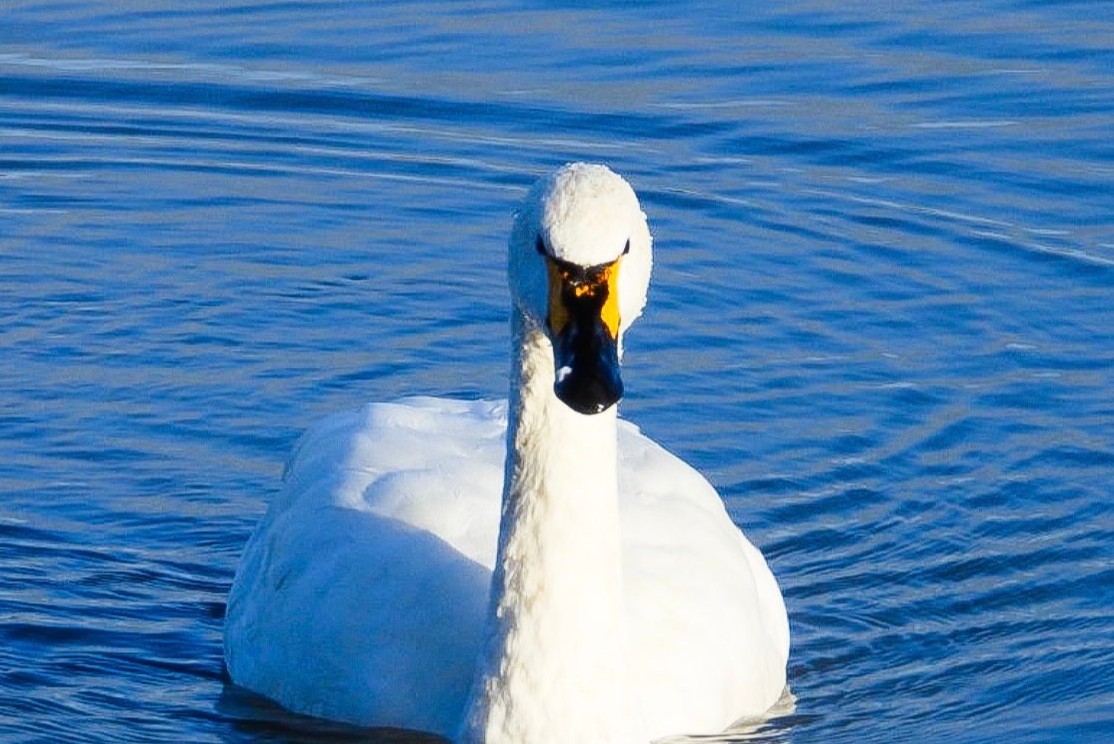
A Bewick’s swan with an extraordinary migratory history has arrived safely at WWT Slimbridge for the first time, more than 20 years after she was first recorded on the Arctic Russian tundra.
The 20-year-old female swan, Galina, was originally caught and colour-ringed by WWT researchers during fieldwork in the Pechora Delta in Arctic Russia. Since then, Galina has travelled thousands of miles across mainland Europe and has now been recorded in the UK for the first time.
Kane Brides, Senior Research Officer at WWT, said:
Because Galina carries a colour ring, WWT researchers know she has been sighted in Germany, the Netherlands, France, Poland and Estonia. Her arrival at WWT Slimbridge offers valuable insight into how Bewick’s swans rely on a network of protected wetlands across Europe.
Her return to WWT Slimbridge after 20 years is extraordinary and highlights how vital wetlands are for birds like Galina, even later in life.
Galina’s arrival is particularly remarkable given the typical lifespan of Bewick’s swans. While they usually live around 9–11 years on average, some individuals recorded by WWT have reached their late twenties.
Galina arrived at WWT Slimbridge with Grinner, a long-standing winter visitor who has returned to the wetland centre every year since 2014. Experts believe the pair are likely newly bonded, even though Galina is around 20 years old. As male Bewick’s swans typically choose wintering sites, it is thought Grinner has brought Galina to WWT Slimbridge, where she is now benefitting from a safe, protected wetland. She is his third known life mate.
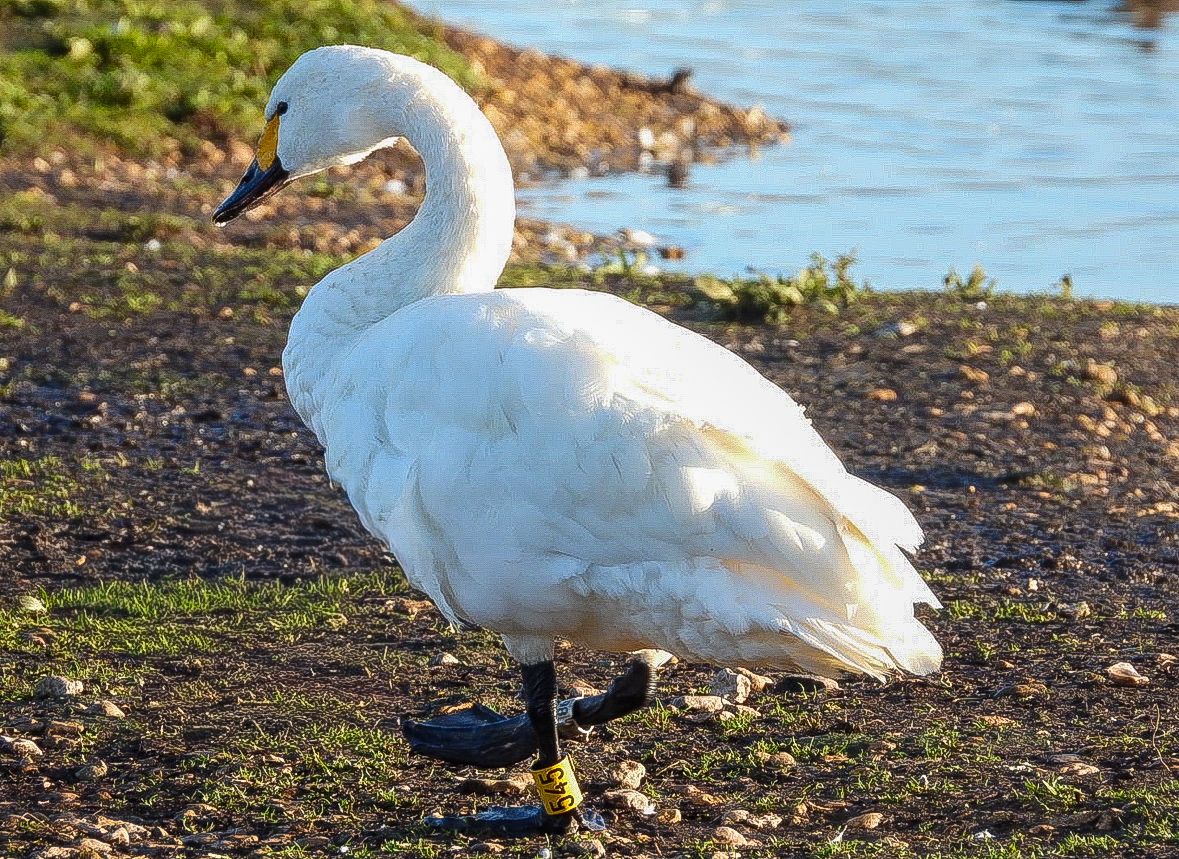
Bewick's swan, Galina. Photo credit: Tanya Grigg
Her arrival comes as Bewick’s swans are changing their wintering behaviour across the continent. Rising temperatures mean many birds no longer need to migrate as far from Arctic Russia, with increasing numbers now wintering in central Europe - a phenomenon known as short-stopping.
At the same time, recent winters have seen historically low numbers of Bewick’s swans recorded in the UK. WWT, the wetland charity, says this makes maintaining a strong network of protected wetlands across the flyway more important than ever.
Kane continued:
Wetlands store carbon, reduce flooding and support wildlife, making them one of our most powerful tools for tackling both the climate and nature crises. Climate change continues to put pressure on wetland habitats, but restoring and protecting wetlands can help species like the Bewick’s swan adapt to these changes. Galina’s story shows that when we protect and restore wetlands, they really do work
There has also been positive progress in tackling other long-standing threats. In 2025, following decades of campaigning by WWT and partner organisations, the UK government confirmed a ban on lead ammunition. For years, lead from ammunition polluted wetlands and poisoned up to 100,000 waterbirds annually in the UK. The ban is expected to save countless birds each year, including migratory swans like the Bewick’s.
Bewick’s swans can still be seen at a small number of UK wetlands, including WWT Slimbridge and WWT Welney.
For more details on the Bewick's swans which have touched down at WWT Slimbridge for the winter of 2025/2026, read the dedicated blog: