Spring is the season of fresh starts and new beginnings. It’s a joyous time of year when the dark, damp, dreary winter days finally fade away in the spring sunshine. And after an extremely wet start to the year, we can’t wait for spring to begin.
Whether you follow the Gregorian calendar which sees the season begin on the 1st March, or the astronomical calendar of the moons and stars which sees spring begin at the equinox on the 20th, March is the start of springtime.
The name of spring itself is thought to originate from the old English ‘springan’ meaning to leap, jump or burst forth. And as this new season begins, nature does indeed seem to burst into life all around us. Here’s what you can look for at your nearest wetland this spring.
Goslings
The first goslings might be spotted this month.
The earliest goslings to appear are those of the Egyptian goose. These unmistakable birds have a cream body with brown wings, pink legs and beak and a brown patch around their eye making them stand out from other goose species.
Native to sub-tropical Africa, they were introduced to the UK in the 17th Century. Initially they were mostly confined to Norfolk but are now across London and surrounding counties and there are reports of them breeding in the southwest.
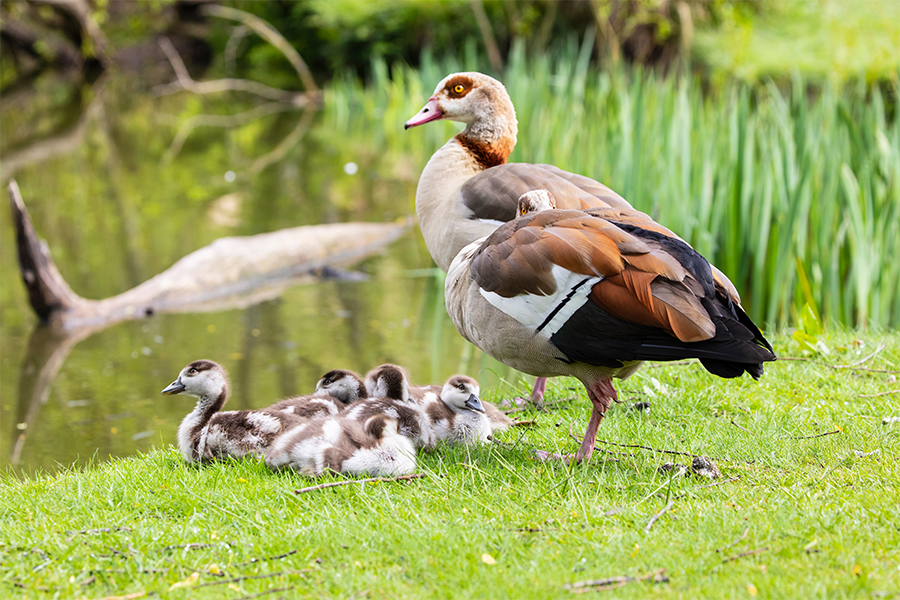 Egyptian goose family © Magdanatka/Shutterstock
Breeding as early as January, long before other geese, they’re known to nest in cavities in old trees or under bushes or on islands. Between 6 – 12 eggs will be laid and after around 30 days of being incubated by both the male and female, they hatch and these tiny goslings emerge. Look for small, downy black and white patterned chicks following their mother.
Our most common goose is also, as its name might suggest, not native to the UK. The Canada goose was introduced over 300 years ago from North America and now there is a population of over 55,000 breeding pairs. In March and April they will be building their nests on the ground near water, often on mounds or islands to offer some protection from predators.
They are a monogamous species that will pair for life and produce around five or six eggs in a single brood each year between March and June. After around a month-long incubation period, the goslings hatch, entering the world looking adorable, covered in downy yellow feathers. Within 24 hours of hatching they will have left the nest and will be following their parents.
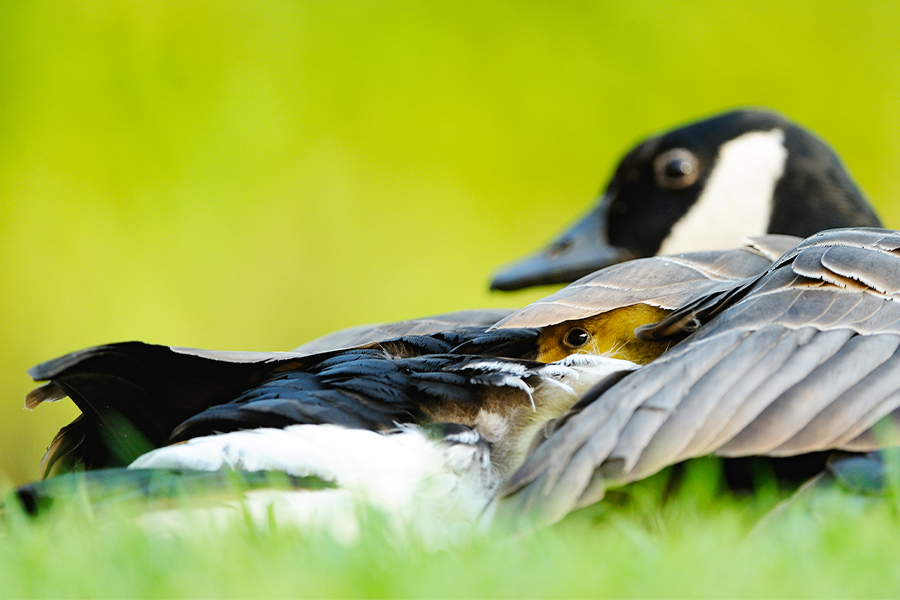 Canada goose and gosling © Ben Andrew/WWT
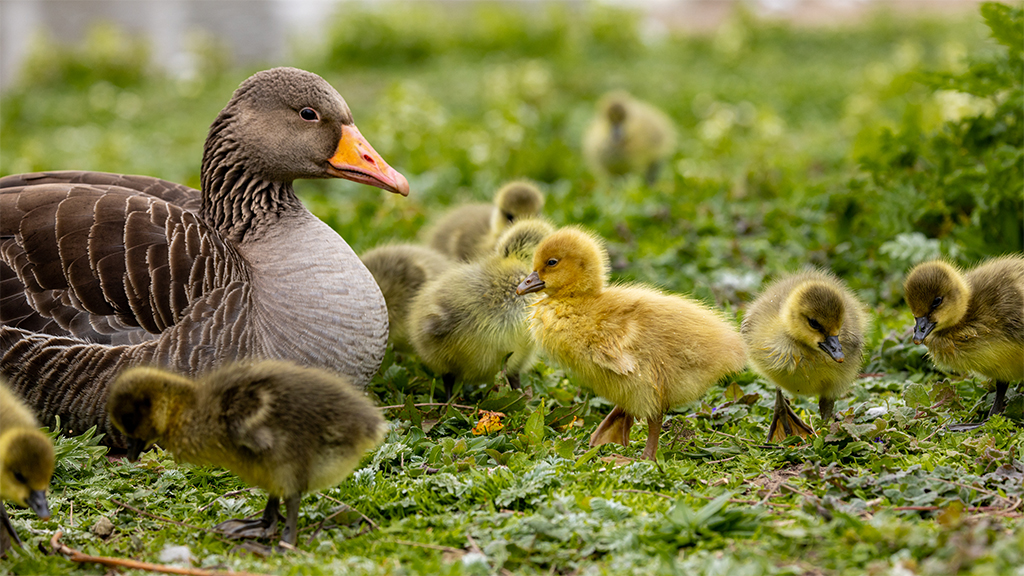
Only one of our breeding geese species is native to our shores. The greylag goose, the ancestor of all our domestic geese breeds is a large bulky bird with a pale body, pink legs and an orange beak.
Their large nests will be built out of grasses, reeds, twigs and lined with feathers, hidden away near water where they will incubate their clutch of three to five eggs for around 28 days before the goslings hatch. Both adults will then feed and look after their young who will stay together as a family until the breeding season the following year.
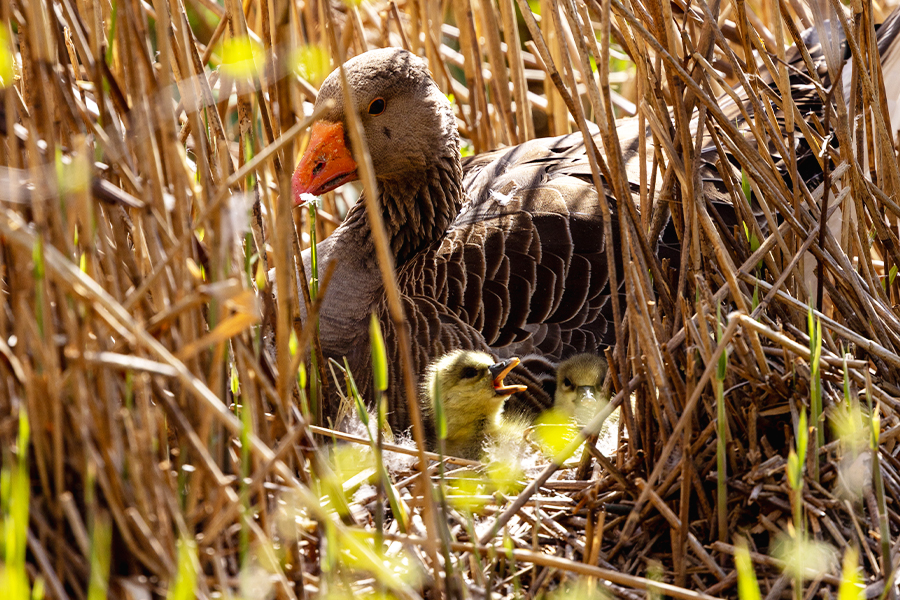 Greylags at the nest © Sam Walker/WWT
Spawn
One familiar and beloved sight of spring is frog spawn. No matter your age, spotting those fascinating large lumps of jelly-like spawn in a pond always sparks excitement and deserves a closer look. However, it’s not just frogs that lay spawn in the spring. Their amphibious cousins, toads and newts also lay spawn.
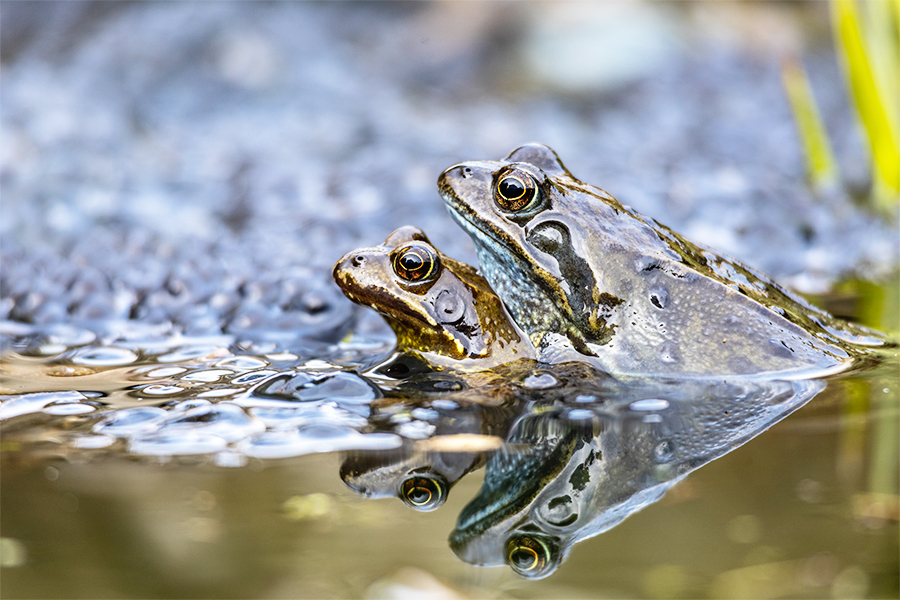 Common frogs and spawn © Sam Walker/WWT
Frog spawn is the classic spawn, clumps of gooey looking eggs often found just below the surface in shallow, still or slow-moving water in ponds, pools or ditches. Look for hundreds of tiny little black eggs surrounded by jelly casing gathered in large gloopy globs.
Toad spawn in comparison is formed of long stringy lengths and can be found in deeper water or wrapped around vegetation. Newt eggs are harder to find as they are laid on submerged plant leaves.
Out of the hundreds of eggs laid by female frogs, only about one in 50 eggs make it to adulthood. The spawn can provide food for lots of creatures in the pond, from newts, dragonfly larvae, fish, beetles, even birds and hedgehogs. After 1-3 weeks, tadpoles can begin to hatch so look out for the first tadpole tremors in your pond as the spring goes on.
Ducklings
A familiar wetland youngster could also be spotted this month, the bright bundle of yellow fluff, the mallard duckling.
Mallards are the most common and successful breeding duck in the UK. Their usual egg-laying season runs from March through to July (although they have been known to lay much earlier) so you can see mallard ducklings throughout the spring and into the summer.
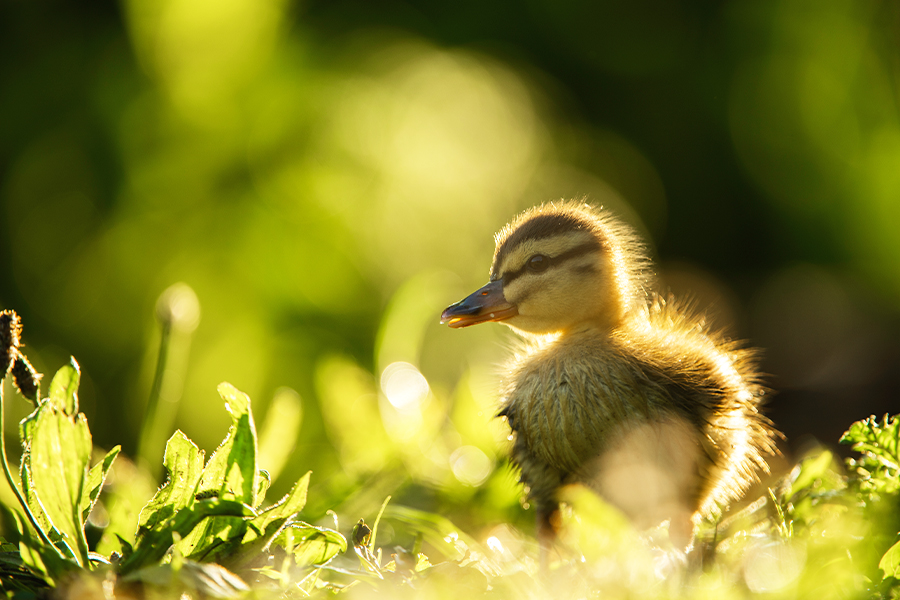 Mallard duckling © Ben Andrew/WWT
A nest is built out of nearby vegetation on the ponds, grassy banks or quiet areas of scrub and the female will lay one egg a day for a week or more. The mother will then sit patiently on the eggs for up to 23 hours and after 28 days, the ducklings will start to hatch. The little fluffballs are able to run and feed shortly after birth and the mother will lead them to water. The doting mother will try to keep her vulnerable ducklings together calling to them up to 200 times a minute!
Flowers
The appearance of flowers if another joyful sign of spring. Some, like the snowdrop or crocus, are amongst the earliest signs that spring is on the way. The yellow star flowers of the lesser celandine are also a welcome early burst of colour. A flower that has been nicknamed ‘the spring messenger’ as they are a welcome signal that spring has arrived.
Our wetland plants are also starting to burst into flower this month. The marsh marigold, a large yellow flower that resembles a buttercup, can be found blooming in ponds, damp meadows and wet woodlands bringing colour to wet places across the country.
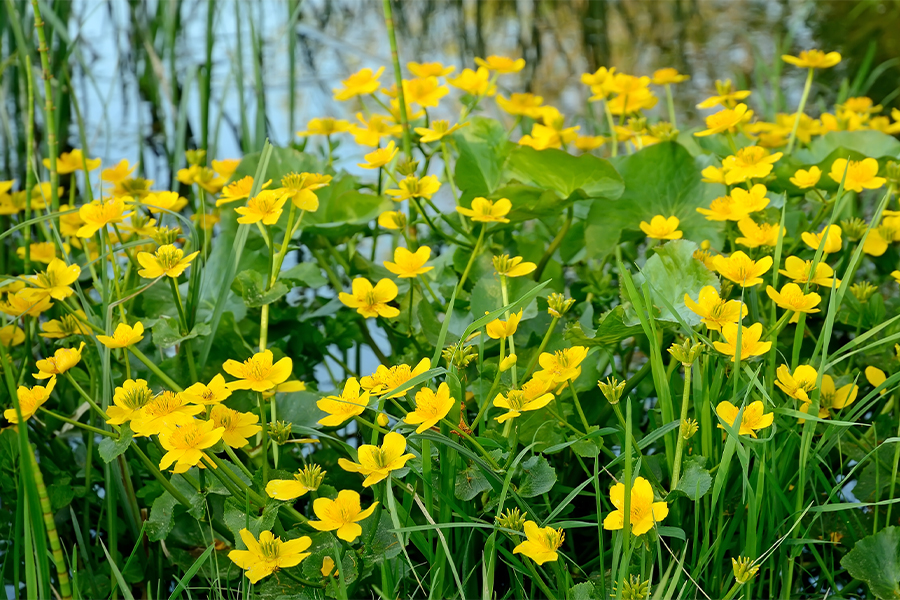 Marsh marigold © Tatiana Volgutova/Shutterstock
Trees are also beginning to spring into action in March. Blossoms can be spotted on cherry, blackthorn, plum, pear and apple and trees like the goats or pussy willow are in the flower with their catkins that resemble a cats paw.
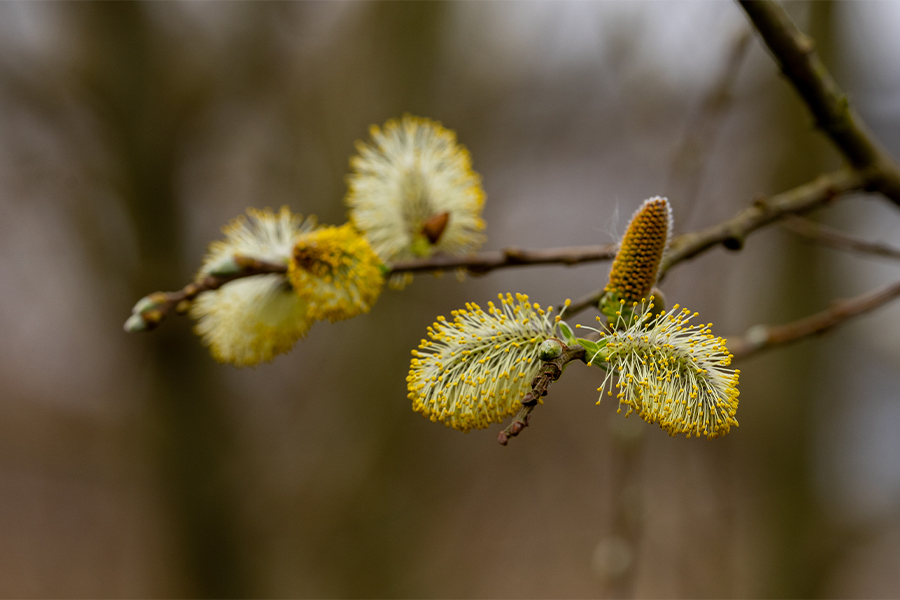 Willow catkins © Sam Walker/WWT
Coots
Coot chicks won’t win any awards for cuteness but they are certainly unique. Their little bodies are a striking colour of black downy feathers with yellow / orange tips and a bright red beak and head. Adult coots build large untidy nests out of dead vegetation on top of the water and anchored to the emerging plants above the water line.
They lay around 5 – 9 eggs in a clutch and have even been known to lay eggs in the nests of other coots – a form of ‘conspecific brood parasitism’. Keep your eyes open for these red-faced chicks on ponds, lakes, canals, and other wetland habitats from March onwards.
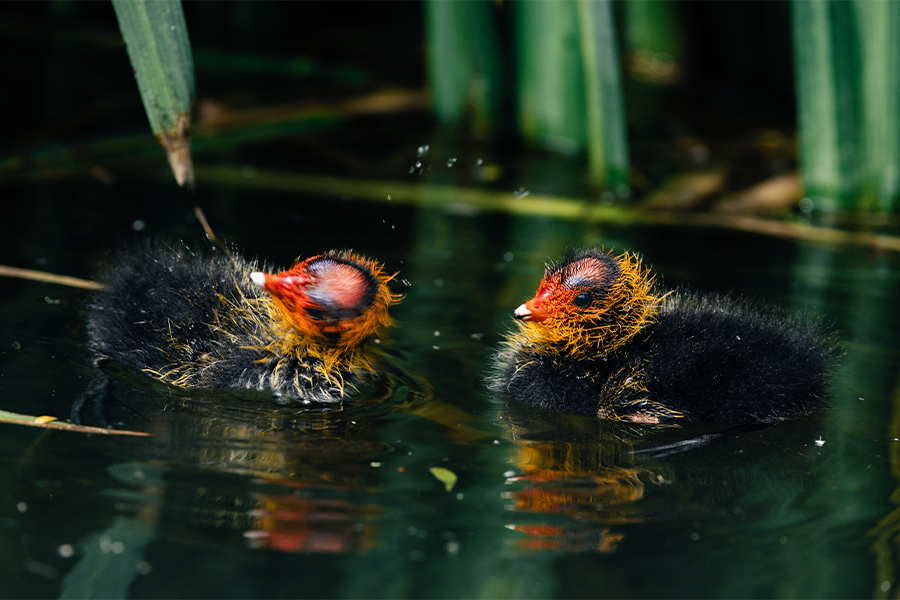 Coot chicks © Becs Greenaway/WWT
Herons
The grey heron is a bird you might recognise standing very still at the waters edge, all by itself, neck outstretched, patiently waiting to catch a fish. However, come the breeding season, these birds come together and move from the water into the treetops to build large platform nests in a communal nest site called a heronry. There can be up to 40 individual nests in a heronry, and some trees can be used for decades!
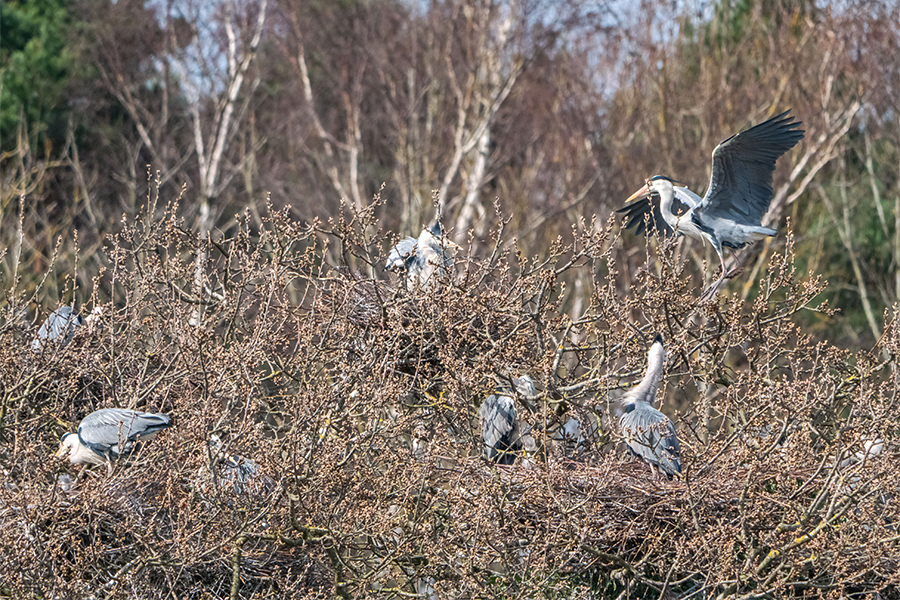 Nest building herons at WWT Washington, March 2025 © Ian Henderson/WWT
Herons will form pairs and start building their nests as early as February. Male herons will claim nest sites and attract a female by calling, stretching their wings and snapping their bills. So if you are lucky, you might be able to spot chicks in their treetop nests from March to April.
Water Vole
It’s also a very busy and important time for Britain’s fastest declining mammal, the water vole. These charismatic creatures that inspired the character of ‘Ratty’ in the Wind and the Willows, live in burrows along the banks of waterways.
Winter can be an incredibly difficult time for water voles, with up to 80% perishing before the arrival of spring. Their breeding season begins in April and can last until October; this long breeding season can help replenish the numbers that are lost over the winter.
A litter of between three and five pups are born after just a 23-day gestation period and after three weeks they are ready to leave the nest. They can have up to six litters a year, meaning that one female water vole can have up to 30 babies in a single breeding season! A pup is also ready to breed themselves at just 15 weeks old.
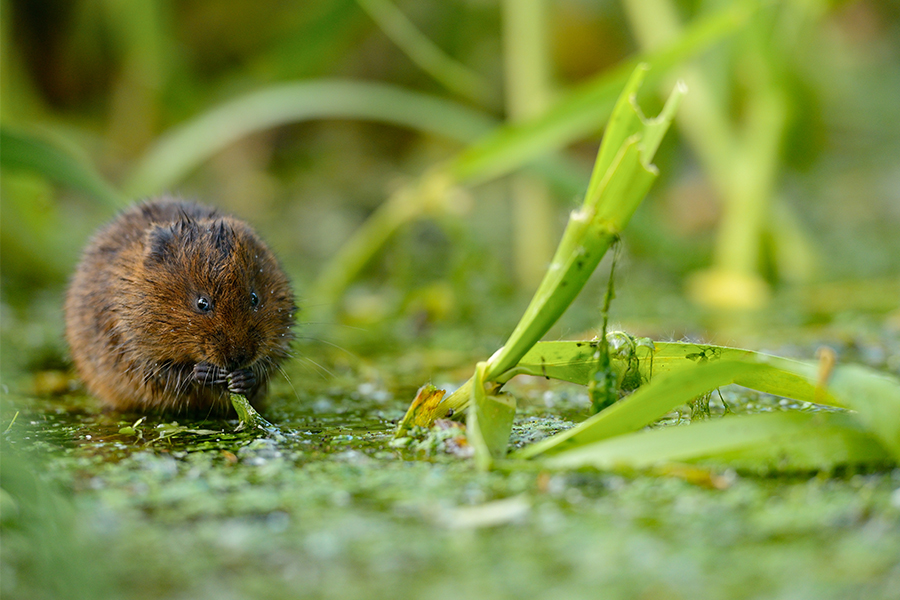 Water vole feeding on spring growth © Ben Andrew/WWT
If you think you have water voles in your area, you can look out for their ‘latrines’, piles of droppings left in one spot to mark their territory. You might also find one of their food stores, a collection of nibbled vegetation between 4-10cm with their tips bitten off at a 45 degree angle.
Waders
Down on the banks of the river, along shorelines and estuaries, saltmarshes, beaches and mudflats our wading birds are also busy gearing up for their breeding seasons.
The oystercatcher is one of our most distinctive wading birds with their stocky build, black and white plumage and thick orange bill. Listen out for their loud and shrill ‘peep peep’ call which can often alert you to their presence. They breed all along our coastline but can also be found breeding at inland wetland sites.
They usually have one brood of 2-3 well camouflaged eggs which are laid in a simple nest, made in a shallow scrape on the ground, lined with small shells or pebbles. Nest sites are usually found on shingly beaches or sand dunes in a spot where they can see in all directions.
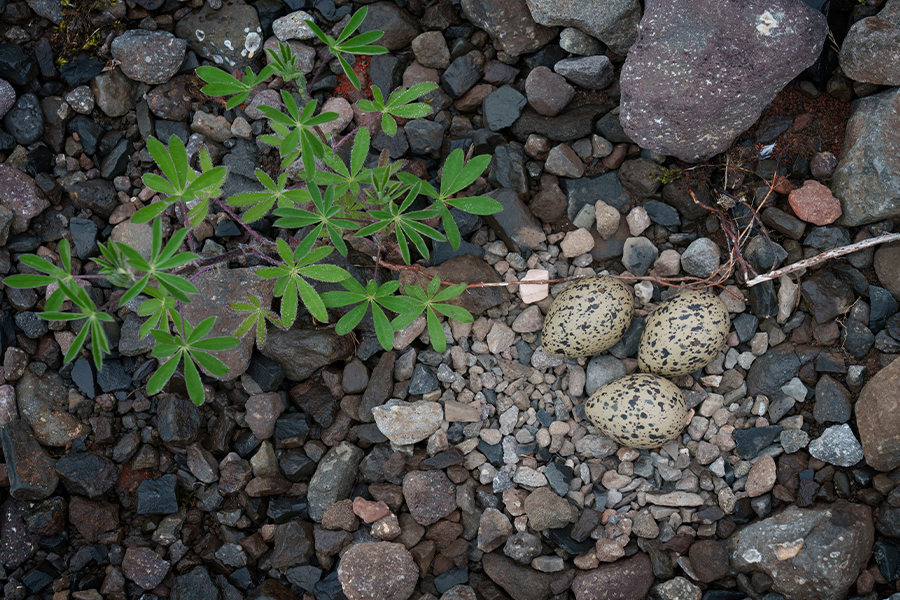 Oystercatcher eggs in the nest © Andy Davis Photography/Shutterstock
The cutest chick award could be awarded to the avocet. These stunning black and white birds are similar in size to the oystercatcher but much more slender and delicate-looking. Their iconic thin, upturned bill is used to catch worms, invertebrates and crustaceans by sweeping back and forth in shallow water.
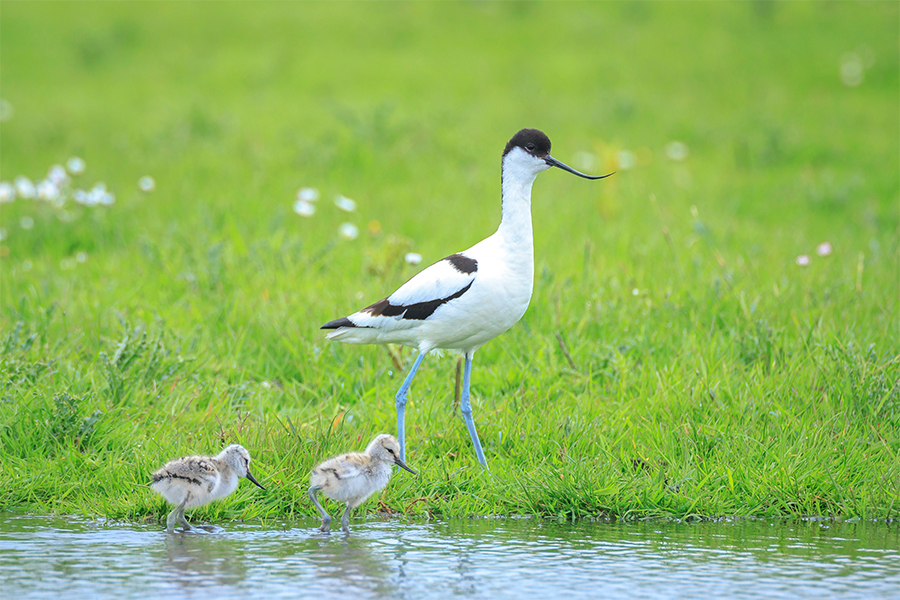 Avocet family © SanderMeertinsPhotography/Shutterstock
Discover a season of firsts on a fun-filled wetland adventure
With so much amazing life hatching and blooming all around us, spring is a wonderful time of year to get down to your local wetland. What new life will you discover?
This spring, we’re teaming up with Macmillan Children’s Books to explore the wonderful world of wetlands with Gozzle the gosling, from Julia Donaldson and Sara Ogilvie’s freshly hatched picture book.
With outdoor adventure trails, interactive Vet Check stations, special storytelling sessions and more, enjoy a season of firsts at your favourite wetland centre.
Plan your visitHeader image: Greylag goose family © Sam Walker/WWT