Join us as we go for a wintery wander through our wetlands and what’s been happening across our sites during this wet winter.
New fascinating fungi finds at WWT Llanelli
Winter is the best time of year to spot hungry predators. Buzzards, peregrines, marsh harriers and sparrowhawks are all regular visitors but we have also enjoyed visits from merlin, hen harrier, goshawk, and even a pallid harrier, a species more typically associated with the steppe habitats of Kazakhstan!
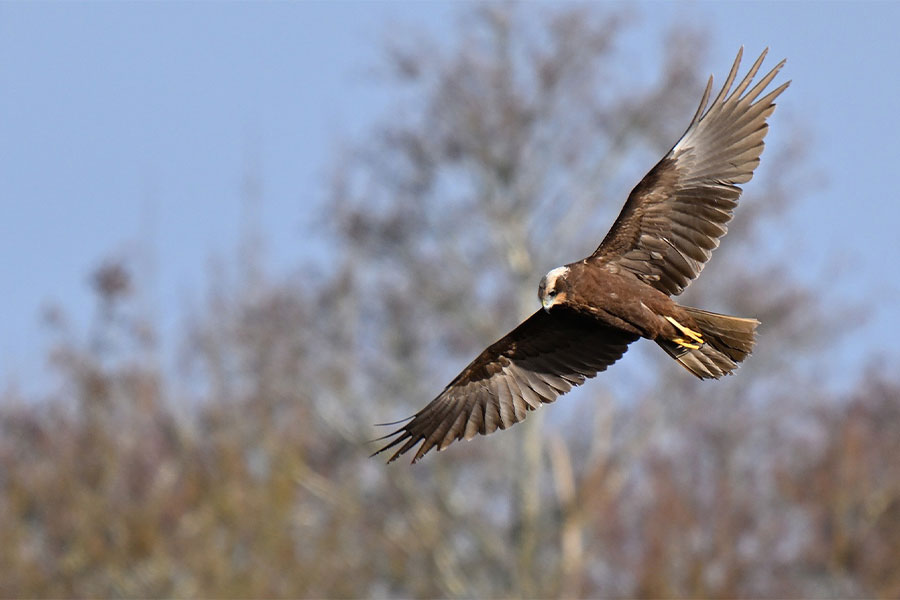 Marsh harrier © Ian Grove
The otters have been spotted over the winter feeding and playing just in front of the Heron’s Wing hide. Even when we aren’t lucky enough to see them, we’ve been finding evidence in the form of their round paw prints, much broader than a foxes, in patches of soft mud around the Deep Water Lake.
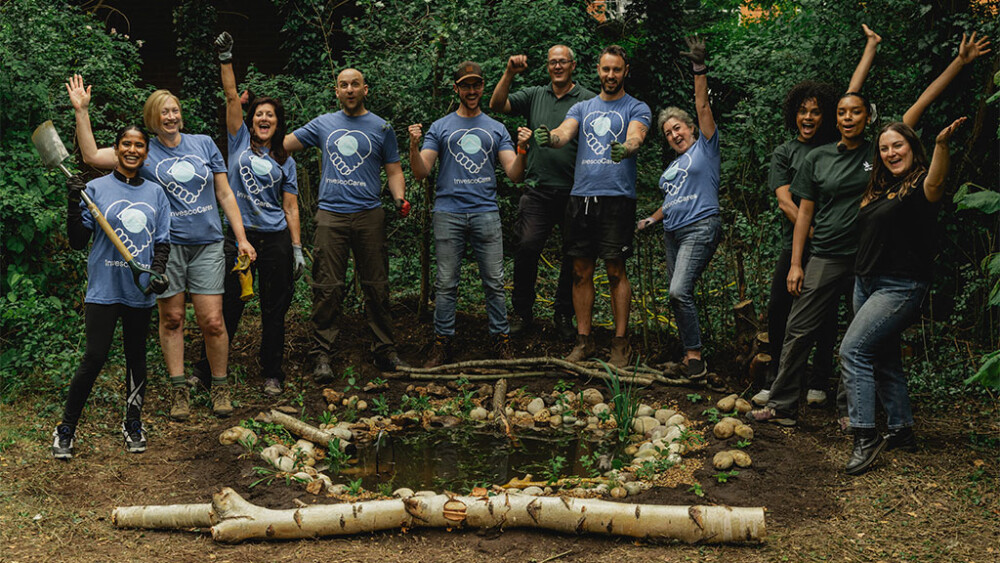
As the first snowdrops shiver in the wet meadows, our tea and biscuit-fuelled volunteers may be spotted deep in the Millennium Wetlands as they work to maintain the open habitat preferred by many of our threatened wetland species, to prepare for the coming nesting season.
In the Millennium Wetlands, it's easier to spot hungry birds in the leafless trees. Gangs of tits, goldcrests and treecreepers roam together feeding in the wet woodland canopy. Goldfinches and siskins chatter to each other from the tops of alder trees and bullfinches perch in hedgerows like giant rose hips. Squeals from the secretive water rail can be heard from the ditches and, as the light fails, the hooting of amorous tawny owls from the tree tops. With tawny owl nesting from February onwards we eagerly wait to see if they will use the new box we put up for them last month.
We discovered a new species for WWT Llanelli this winter, a rare specialist of Atlantic rainforest habitat called 'hazel gloves fungus'. Hazel gloves does not actually feed on its host tree (usually hazel), but in fact is a parasite of another fungus - the glue crust fungus - which it often entirely covers.
The glue crust fungus (Hymenochaete corrugata) engulfs the twigs and branches of its host tree and sticks them together, allowing it to move from branch to branch (and even tree to tree). It then feeds off the decaying wood beneath its gluey pads.
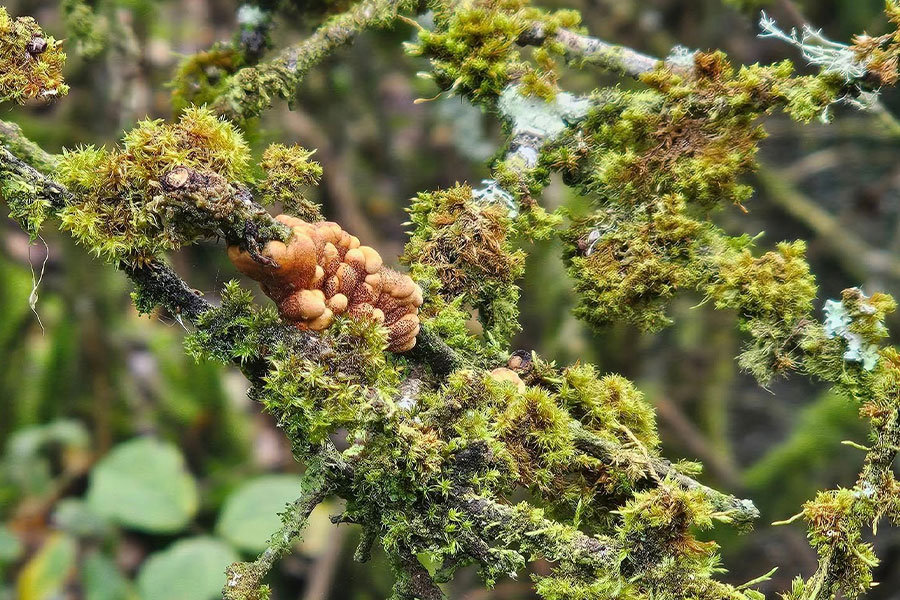 Hazel gloves fungus © Han Bowden
The presence of hazel gloves in our wet woodland areas is a clear indicator of good air quality and of Atlantic rainforest conditions, which we've certainly noticed this winter!
Looking out across the Burry Inlet estuary from the British Steel hide, you can see why this is an internationally important site for wildlife. It was designated for the huge numbers of waterfowl it attracts each winter. This year there have been lots of pintail, wigeon, shoveler and groups of dark-bellied brent geese.
As spring approaches, we’re looking forward to some sunshine and the ever-growing chorus of birdsong. Our first long-distance travellers such as sand martins should be arriving in March and the self-proclaiming chiffchaff will be adding their song to the chorus soon.
Steart – on ditch duty
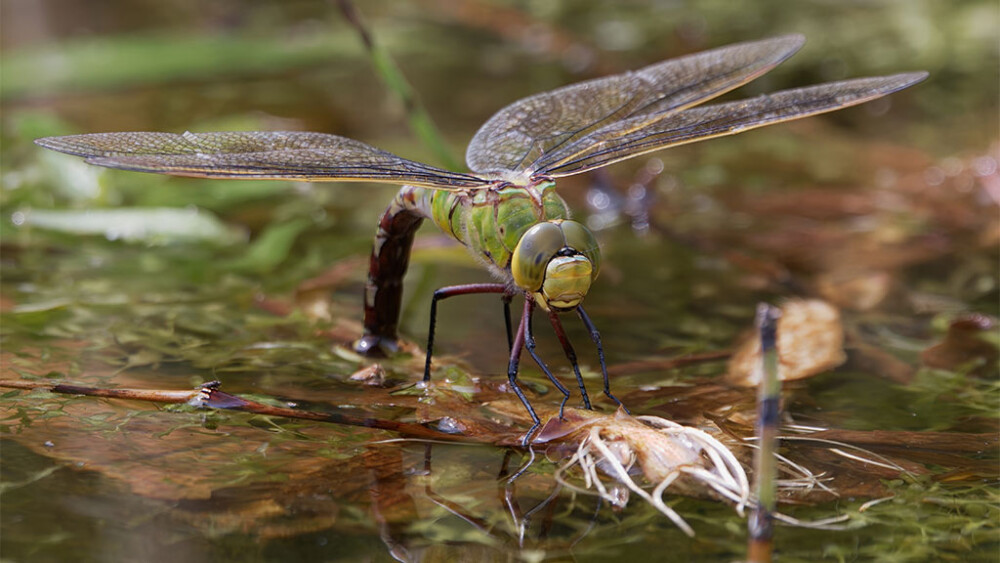
The staff and volunteers have been busy at Steart Marshes this winter. We have been removing blackthorn, hawthorn and bramble that has been choking out some of the ditches allowing them to be dredged, increasing connectivity throughout the site. We have also added three new culverts to these ditches allowing better control of the water levels. These improvements, areas of open water and cleared ditch edges, will become great habitat for wildlife especially dragonflies and damselflies.
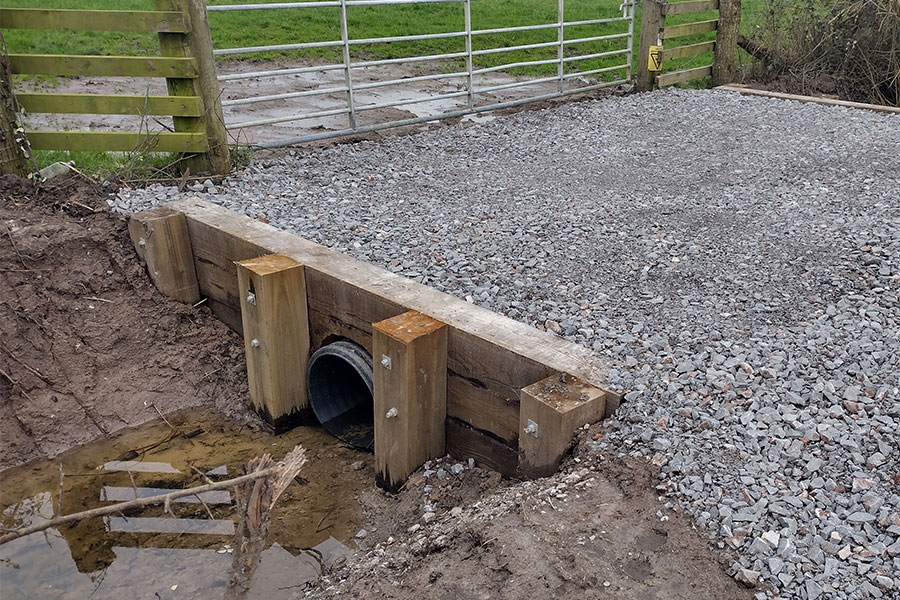 Newly installed ditch covert
The team have also been managing hedgerows to keep them dense and low, preventing them blocking the ditches again and hopefully encouraging waders to use the surrounding wet fields. The hedges will also provide great shelter and nesting opportunities for birds, mammals and invertebrates.
Martin Mere – record breaking cattle egret roost
As always, the winter spectacle at Martin Mere has not disappointed. Thousands of visitors have come to marvel at the amazing display of the vast numbers and variety of species that call this wetland home. At the peak we counted 1019 Whooper swans with a large percentage staying throughout the day and coming to our daily commentated feeds.
The winter also brought some incredibly good views of short eared owls, and up to six barn owls were spotted hunting over the wet grassland. The much-photographed glossy ibis and ring-necked duck have also been posing daily in the stunning winter sun. An influx of Russian white-fronted geese could be spotted peppered amongst our flocks of pink-footed geese, providing entertainment for visitors willing to scour through the geese to spot our rarer visitors. In our grazing goose flocks, Tundra-bean goose, barnacle goose, Todd’s Canada goose and pale-bellied brent goose have also made appearances.
The reserve team have been busy completing the winter tasks which mainly focused on scrub removal in the 26 hectare reedbed. This work is part of a three-year restoration project funded my CMA-CGM group.
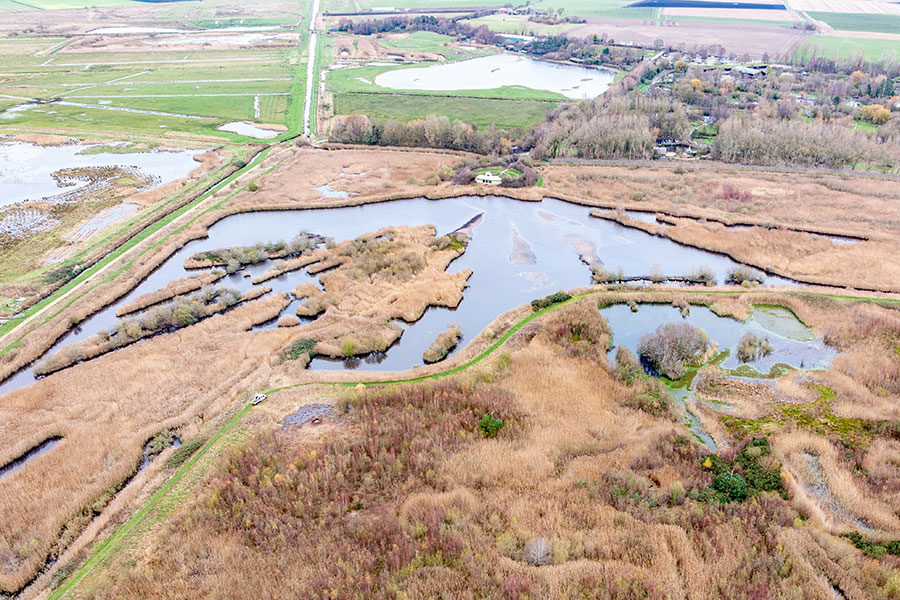 Martin Mere reedbed © David Buckles
The scrub in the reedbed was starting to dominate with 60% coverage, outcompeting the reeds which is a vital habitat for many reedbed specialist species. By reducing the scrub cover to around 10%, the team aim to restore this amazing habitat.
With only 50 reedbeds in the UK larger than 20 hectares, this spot at Martin Mere provides a vital roosting site for marsh harriers and this year we counted 39 coming into roost! We also counted a new site record of 74 cattle egrets.
This record count at Martin Mere highlights the importance of well-manged wetlands and grasslands for supporting expanding bird species and the visitors were thrilled to be able to witness the birds up close.
WWT Slimbridge – A wet winter brings floods of feathered visitors
It’s been a very rainy winter at WWT Slimbridge and the high-water levels have helped produce an amazing daily spectacle of wildlife. Thousands of birds have been viewable from the bird hides every day.
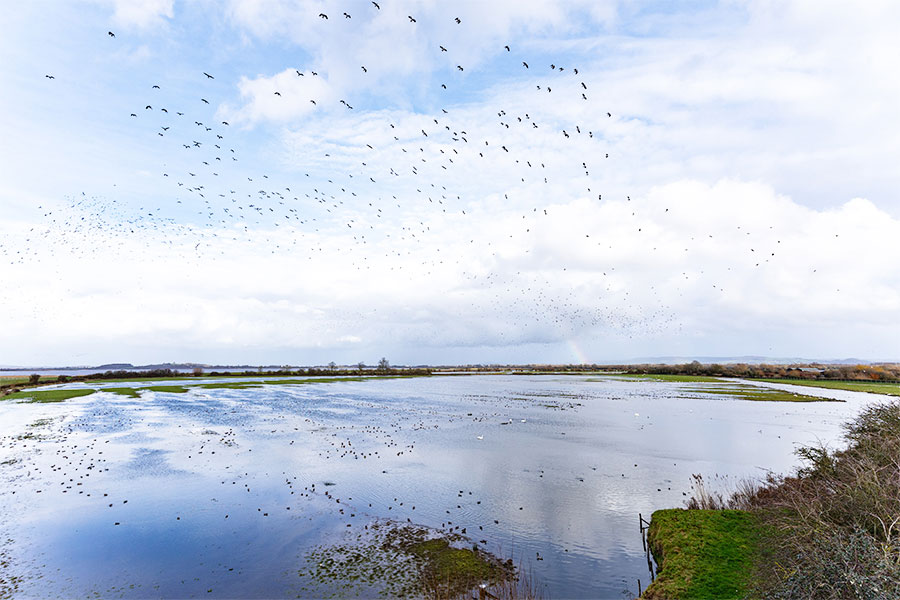 High rainfall meant that the Tack Piece was at times almost fully underwater © Sam Walker/WWT
One highlight was the second ever record of penduline tit. Two birds were briefly spotted in the Five Acre filter beds on January 28th. We were also treated to three wintering firecrests on the reserve with at least one sticking around until February 17th.
Other bird highlights include a male green-winged teal, 40+ cattle egrets, three great white egrets and over 20 little egrets roosted each evening and even one bittern!
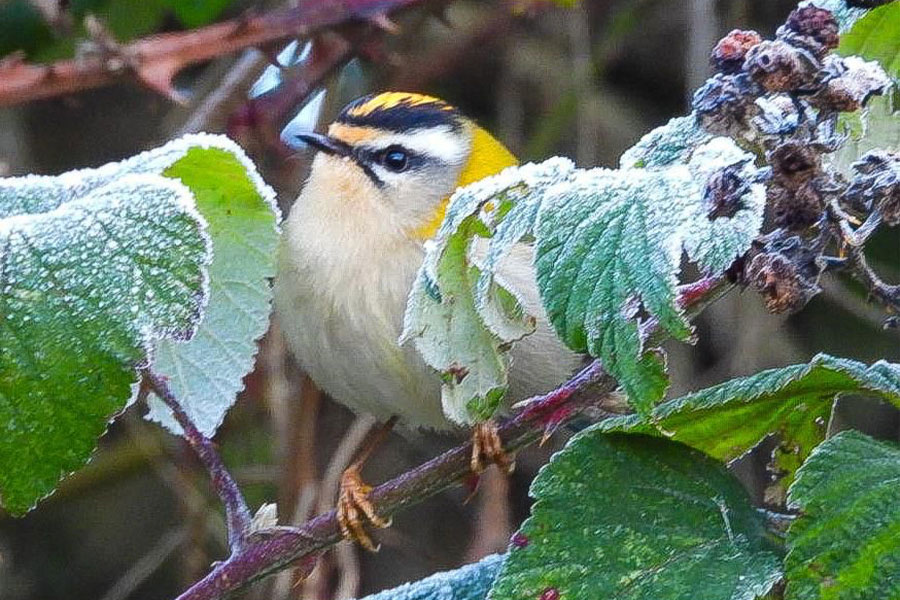 Firecrest in the frost © Tanya Grigg
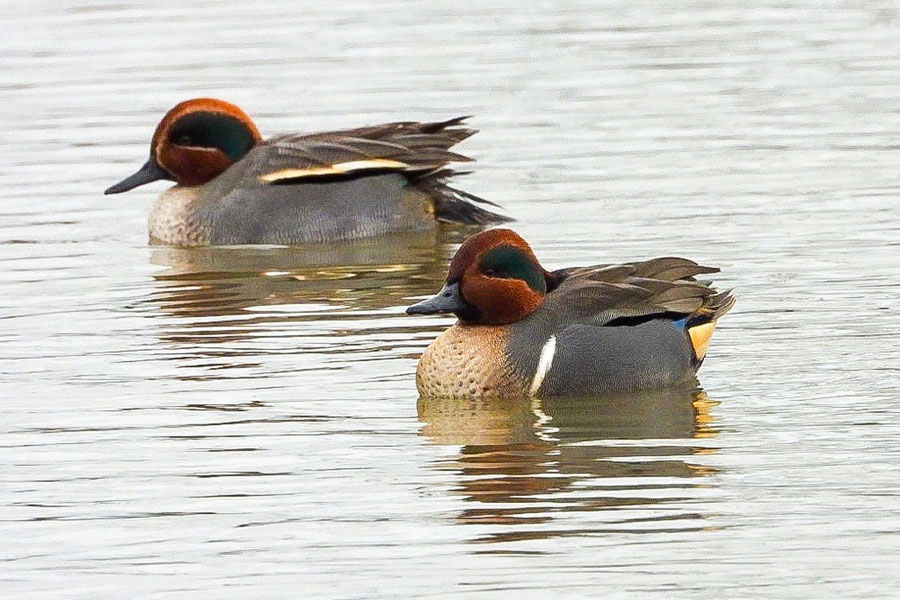 Green-winged teal (foreground), the American form of Eurasian teal (rear) © Tanya Grigg
A few mediterranean gulls began appearing from January 26th, a wintering corn bunting and a showy jack snipe which was very popular with visitors. A single knot was also seen in amongst the large flock of golden plover, likely a bird blown off course by a storm.
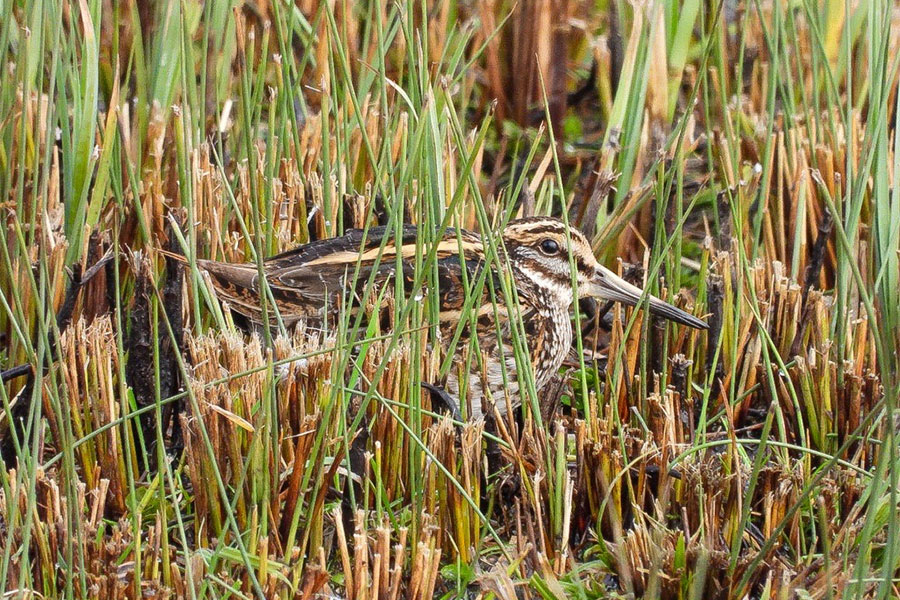 Jack snipe from the Martin Smith hide © Tanya Grigg
A late Christmas present arrived in the form of our first Tundra bean geese on Boxing Day. We had eight on the reserve by the end of the year and by February 4th this had risen to 16.
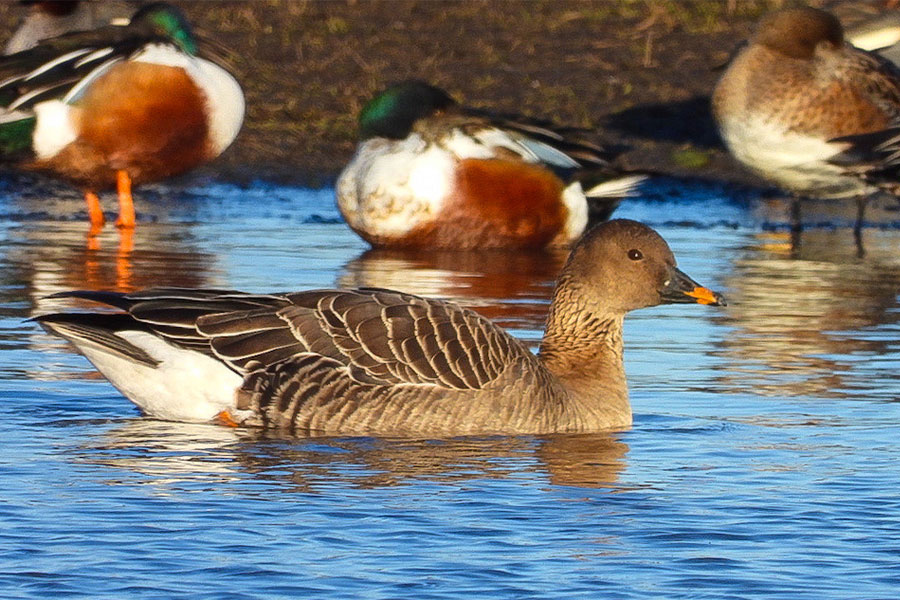 One of the tundra bean goose flock © Tanya
Russian white-fronted geese peaked at 179 but we may see more arrive yet. Two barnacle geese arrived with the Russian white-fronts and chose to follow them everywhere, preferring to shun the naturalised flock of 178. A few dark-bellied brent geese were also spotted around the saltmarsh areas on several dates.
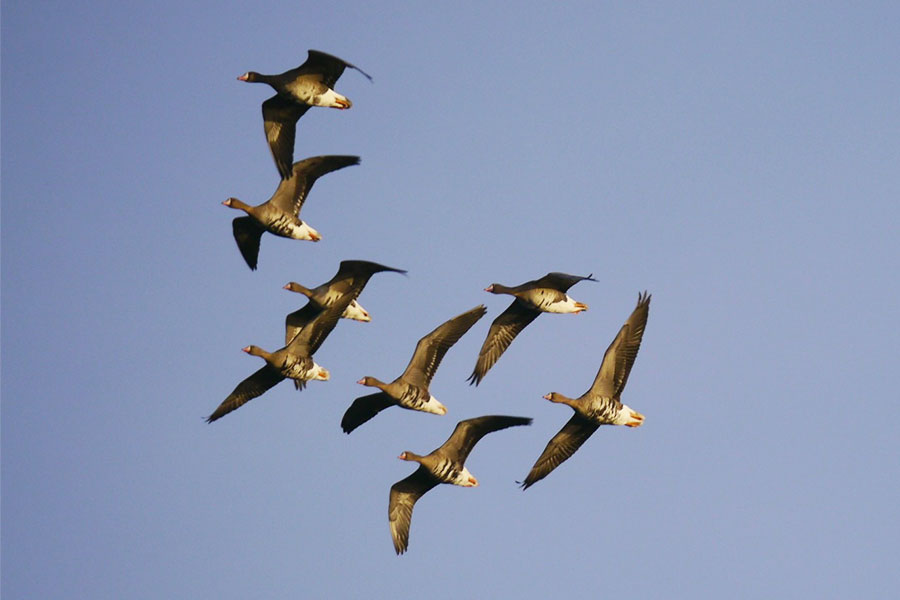 White-fronted geese in-flight © Martin McGill
Other exciting overwintering species of note include between 3 –5 little stints, up to 97 avocet, 3 sanderling and two whooper swans. Bewick’s swans peaked at 94, with at least 86 still present at the time of writing with a few that roost only. Dunlin numbers reached highs of between 900 and 1100 individuals, 4292 lapwing on 21st January and 1730 golden plover on the 25th.
Peak counts of our duck species included 52 gadwall, 217 shoveler, 395 pintail, 2731 teal and 2205 wigeon. These were all low counts but most ducks were using the Severn to roost in the day, so were difficult to count. Two goshawks were spotted, an occasional merlin and up to five marsh harriers (plus some sky dancing!)
A strange tufted duck caused some confusion amongst visitors. It might have some red-crested pochard in its DNA. We have a number of escaped or released geese on site including the long-staying and over-summering pink-footed goose, a Ross’s goose and various hybrids, including a snow goose x bar-headed goose, a barnacle goose x Canada goose and two Canada goose and greylag goose hybrids. We also welcomed the first returning passage spoonbill on the 8th February who was joined by a second for a couple of days.
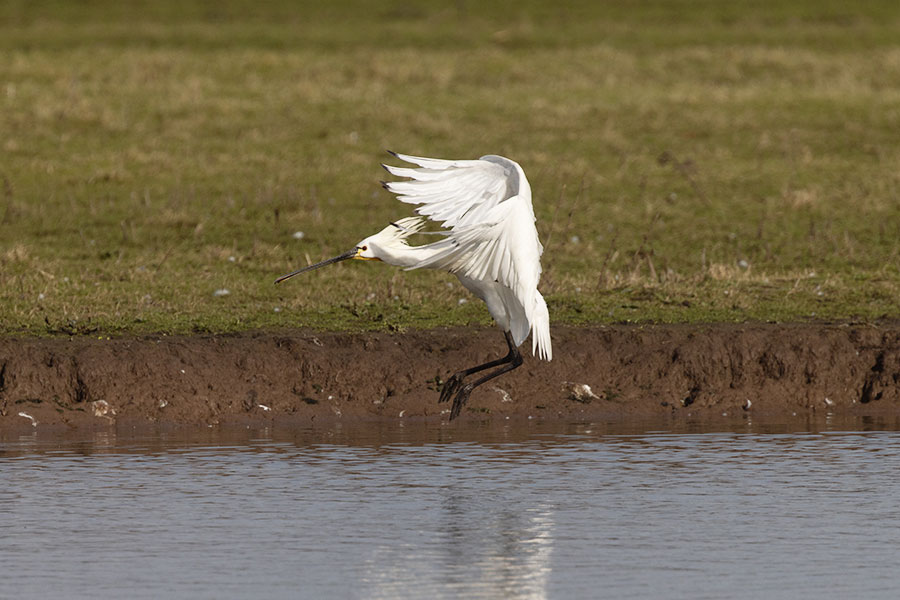 Spoonbill at the Tack Piece © Terry Stevenson
We are also beginning to see some signs of the approaching spring. Pairs of oystercatchers are back at their favoured spots and the chorus of birdsong is growing. Reed bunting, blackbirds, song thrushes, chaffinches, greenfinches, dunnocks, chiffchaff and Cetti’s warblers are all in song. We’re excited to see what spring brings to Slimbridge!
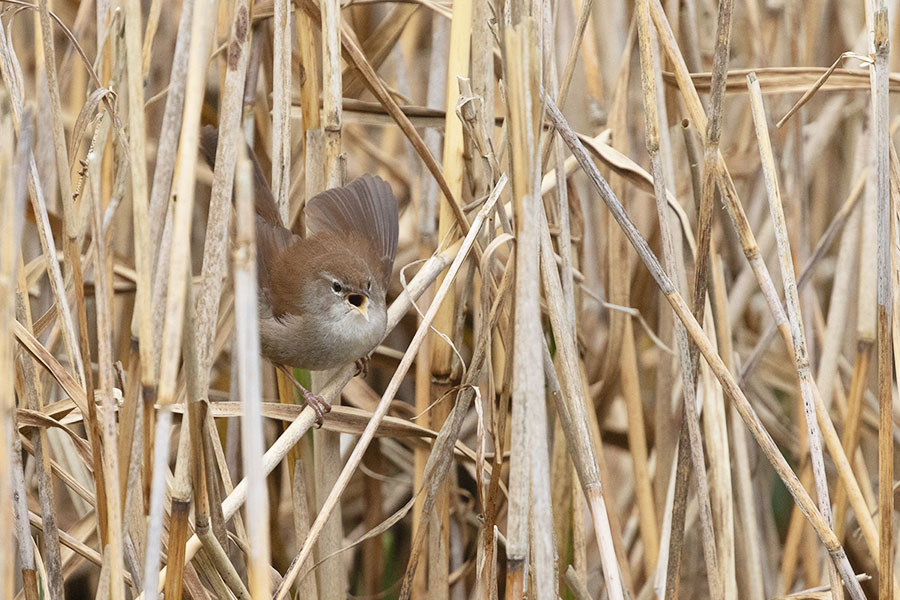 Singing Cetti's warbler © Terry Stevenson
WWT Castle Espie – Research, repairs and a rare visitor!
Over the winter, the team at Castle Espie have been working in partnership with the Coastal Monitoring and Adaptation project with Ulster Wildlife. The aim of the project is to look at the carbon accumulation on different types of saltmarsh, particularly looking at newly created and developing saltmarsh.
The continual wet and windy weather over the past few months has resulted in high water levels across the site, as well as increased erosion along the pier and seawall. We’ve also been working with communities across Northern Ireland to look at opportunities on how we can improve our scheduled monuments on site.
We are looking at restoration, improving interpretation and infrastructure, particularly in relation to some of the recent storm damage to these monuments. We are also currently facilitating a PhD project looking at the growth and nutrient levels in seagrass beds and there is proposed further study to look at the effects land management has on these intertidal nutrients.
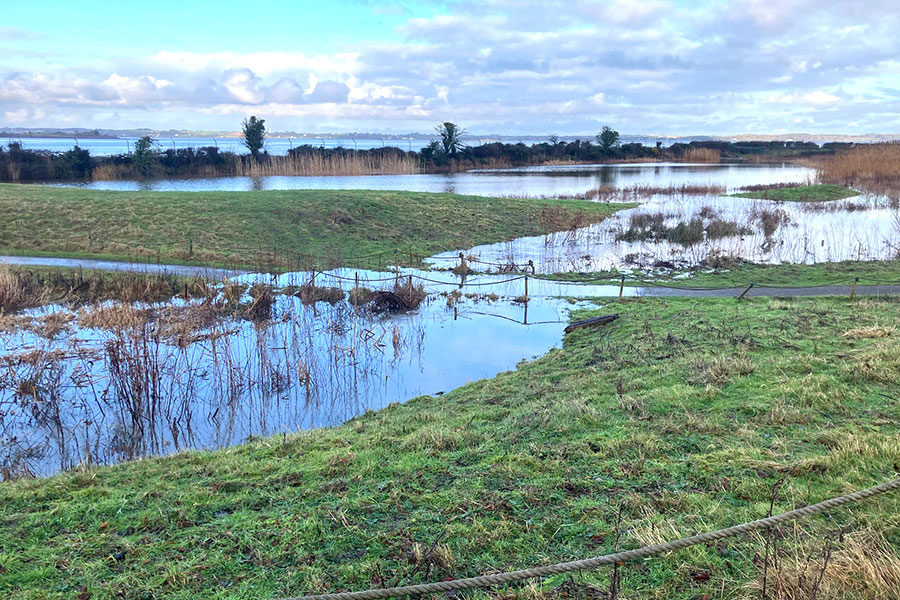 High waters at Castle Espie
Out on the estuary there have been a good variety of wintering birds including flocks of waders. Bar-tailed godwits, a bird not usually seen around the reserve, has increased in number compared to previous years and there have been consistently good numbers of greenshank continuing to roost in our saltmarsh at high tide. A common crane made a welcome yet brief visit to the northern end of Strangford Lough which is a rarity for us.
Looking ahead to the spring, we will be focussing on continued development of new areas for grazing management as well as the increased provision of nesting habitats for our tern species.
WWT Caerlaverock - A winter raptor spectacle!
The reserve team has been very busy this winter preparing for the reopening this spring, but there's still been time to go and record the large variety of birds using the site.
As ever at Caerlaverock, autumn and winter is a raptor spectacle, with hen harrier, marsh harrier, peregrine, merlin, sparrowhawk, buzzard and red kite all seen on the regular.
Our largest WeBS (Wetland Bird Survey) totalled to 12364 birds on 7th November with the main contributors to this total being flocks of over 4000 oystercatcher, 1213 teal, 1038 lapwing, 1024 golden plover, 520 shelduck, and 504 pintail! We haven’t had many rarities this season, the odd green-winged teal popping up, but can’t complain much with wader & wildfowl numbers like these.
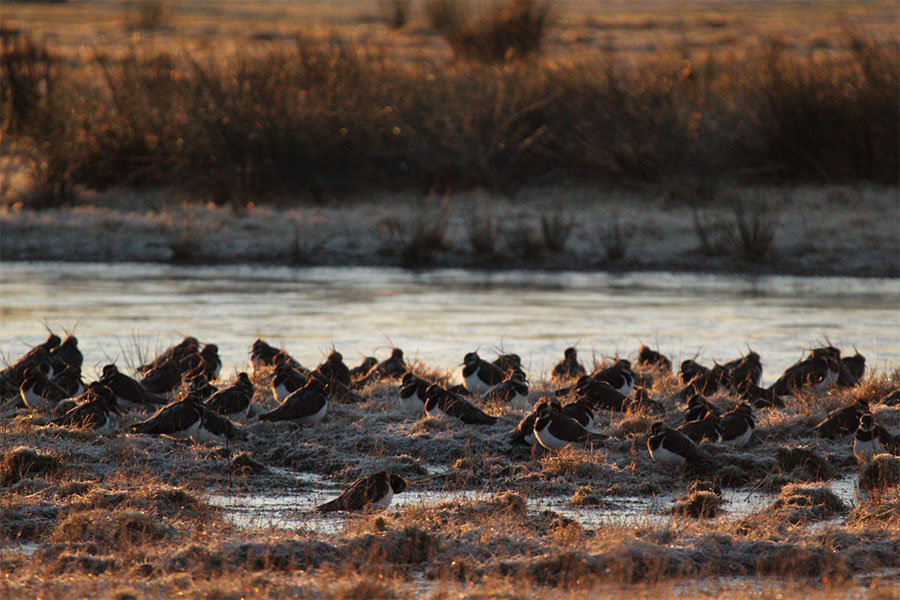 Winter lapwing flock © Rebecca Davies/WWT
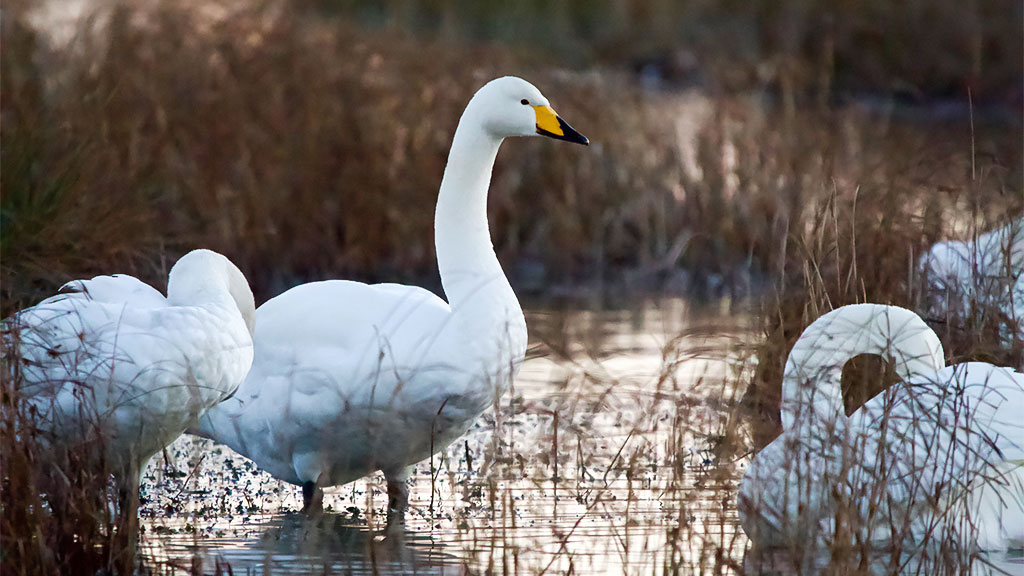
Our most iconic species, the whooper swans, had a slower start to the season than usual with seemingly delayed migrations but we recently hit our peak in February with 108 whoopers, consisting of 73 adults and 35 juveniles. It’s been a good year for barnacle geese, who showed well for us during the goose festival too with large flocks on both our dawn and dusk flight events. The peak count on site was 3395 birds on the 16th January.
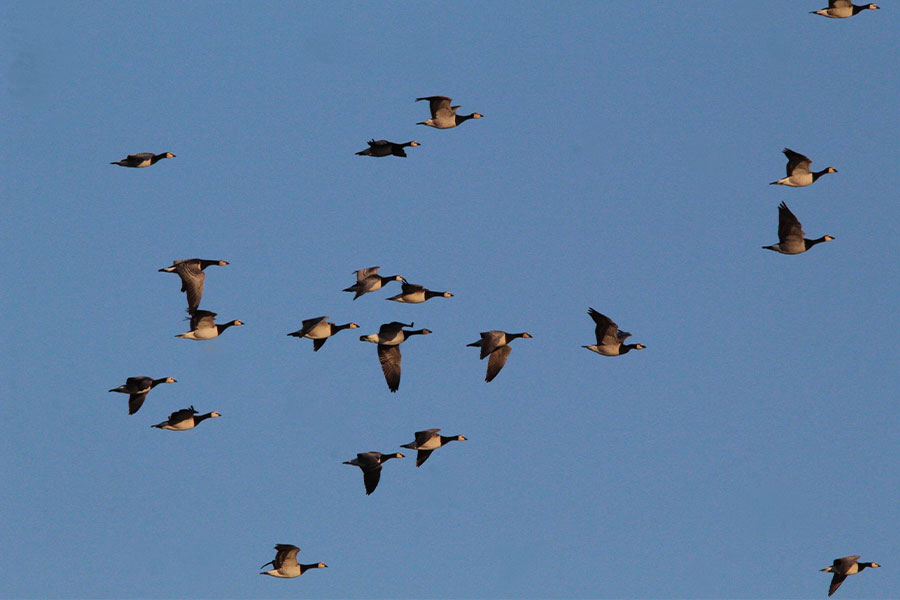 Barnacle geese in-flight © Rebecca Davies WWT
WWT Arundel - Pond desilting and harriers on the wing
One of the winter wildlife highlights at Arundel this year was the three hen harriers (one male and two ringtails) that continue to roost in the reedbed to the delight of our visitors. We also had approximately 100 cattle egrets roosting on site, 200 lapwing and an estimated 100 teal, shoveler and common snipe.
Across the winter there have also been good sightings of our resident barn owl pair from (and sometimes in!) the Lapwing Hide. We’ve also enjoyed a good number of goldcrest and firecrest showing up almost everywhere! Sadly, there’s been a distinct lack of Bewick's swans this year with only two spotted in the north of the valley.
With all the rain this year, the reserve team has been kept busy managing the flood and water pumps across the site. Thanks to a generous donation from a life member, we’ve been carrying out work on the entrance ponds to improve them for wildlife. The ponds were in desperate need of desilting, as they were succeeding to reedbed and dried out completely during last year’s exceptionally dry summer.
These ponds are important natal ponds for common toads and are also one of our best places on site for water voles. All this work was finished in time for the annual amphibian migration which began a few weeks ago and we’re excited to see how wildlife enjoys our improved ponds.
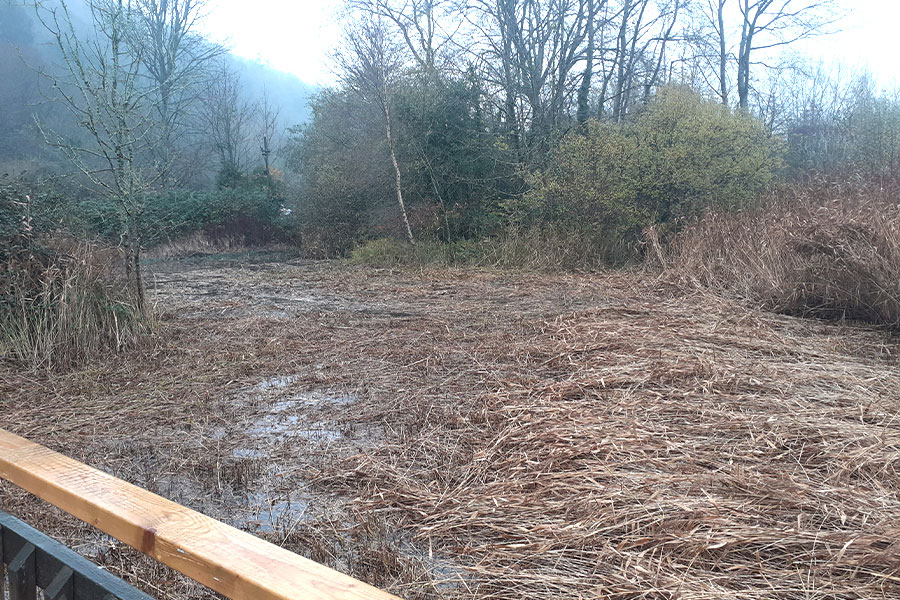 Entrance ponds before..
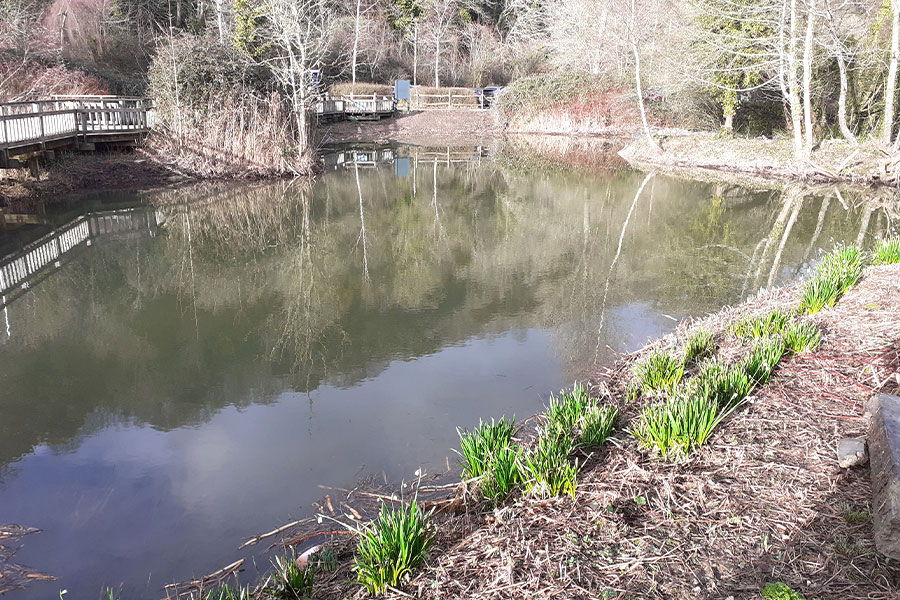 And after desilting!
The reserve team have also been working hard on reedbed management with annual rotational cutting and clearing, scrub management and removal of willow from the reedbeds. Hedgerow management has also been carried out across the site for the benefit of breeding birds and small mammals, with cuttings left as habitat piles.
London – A Bittern winter at WWT London
This winter at London we’ve been lucky to have two bitterns who have remained on site throughout the season. It’s been the best winter for redpoll and siskin for 10 years thanks to a bumper crop of seeds in the alder trees. We recorded 23 water rail on site, a visiting brent and bean goose and over 100 shoveler since September.
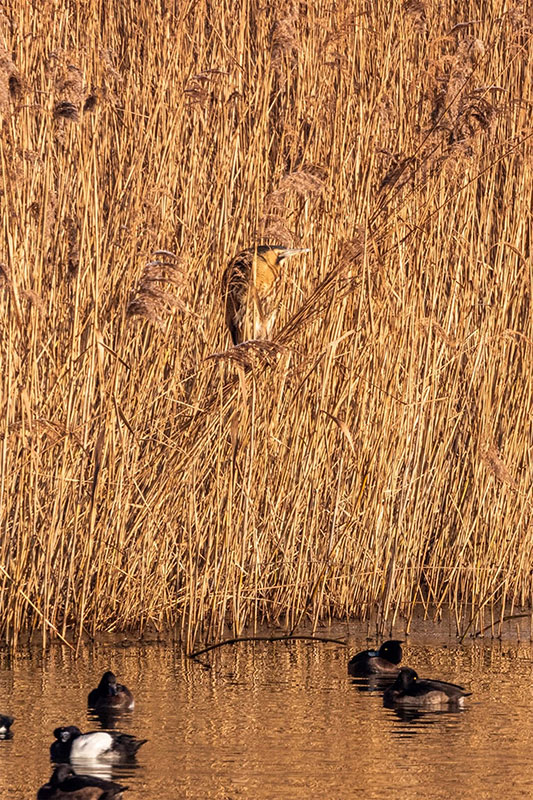 Bittern sitting high in the reedbed, above tufted ducks
The team on the reserve have had a busy winter of coppicing helping to create and maintain valuable successional scrubland.
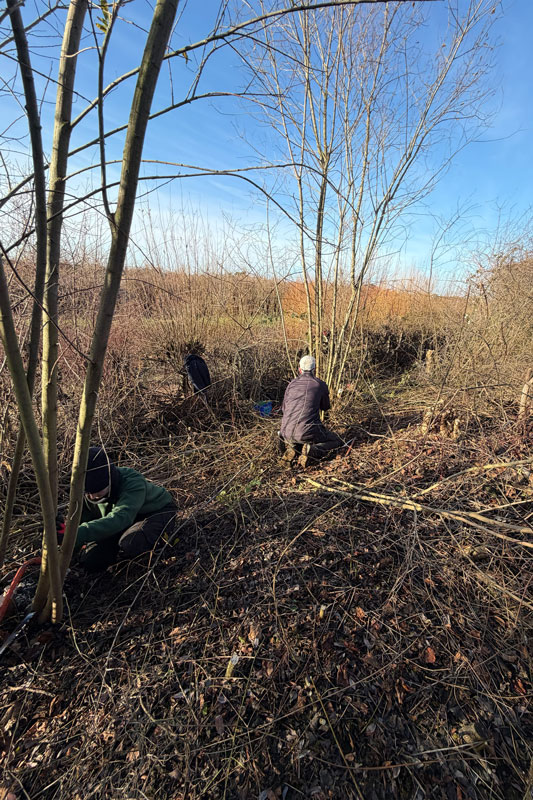 Team coppice
Ready to get your nature fix?
Each of our centres offers the most wonderful wildlife encounters. And with spring just around the corner, there’s even more for you to see.
Not a member? Book online and save time on arrival.
Find your nearest wetland siteAll species work on WWT reserves is carried out under an approved license. We continue to monitor avian influenza across our wetland sites this winter.
Header image: Whooper swans at Caerlaverock © Rebecca Davies/WWT