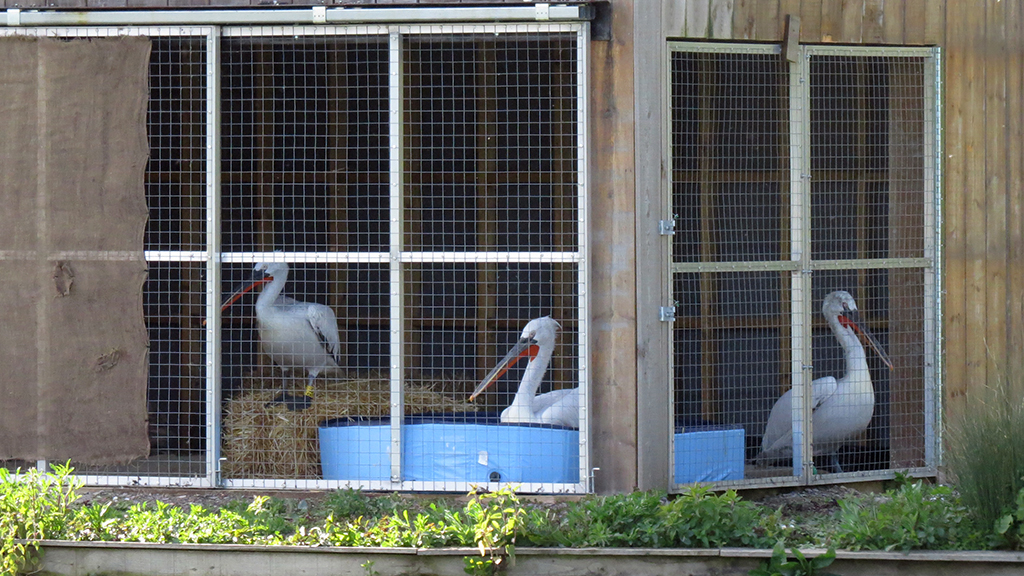
Three new Dalmatian pelicans have joined the resident flock at Pelican Cove in April.
We were delighted to welcome Jean, Wanda and Ghost, who have now settled in alongside four pelicans already calling the West Sussex centre home. They trio were released onto the water on Thursday 30 May. Their arrival brings the total number of Dalmatian pelicans at WWT Arundel to seven.
A journey across Europe
The trio first arrived in the UK from a zoo in Berlin in February 2025. After completing the required UK quarantine, the pelicans spent six months at WWT Slimbridge Conservation Breeding Unit, before making their final move to WWT Arundel on 22 April 2026.
Getting to know Jean, Wanda and Ghost
Telling male and female Dalmatian pelicans apart isn’t always straightforward. Unlike many other bird species, both sexes share the same striking white plumage.
Keeper Molly Foote‑Wyman explained:
“We are currently awaiting feather sexing results for Ghost – they may or may not be male.”
Jean and Wanda are assumed to be female. For their first week at Arundel, all three birds are spent time together in the Pelican Barn on the exhibit, giving them a chance to adjust to the sights and sounds of their new home and get used to their new flock mates Rogue, Storm, Logan and Odin. At WWT Arundel, pelicans are named after superheroes from the Marvel Universe.
Giants of the wetland world
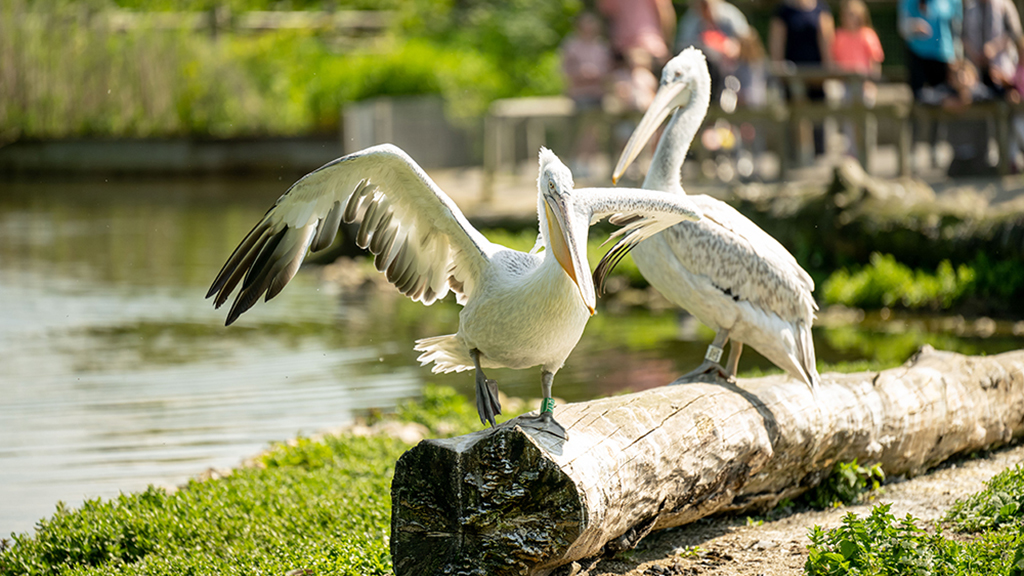
Dalmatian pelicans are the largest and rarest of all pelican species, with an incredible wingspan of up to 10 feet. Built for fishing, they use a huge throat pouch beneath their oversized beaks that can hold up to three buckets of water, acting like a net to scoop up fish.
Although now extinct in the UK, Dalmatian pelicans were once a familiar sight on British wetlands around 2,000 years ago. They disappeared as wetlands were drained for farming and the birds were hunted for food.
Who’s Who at Pelican Cove
Get to know the full pelican line‑up at WWT Arundel:
- Jean – female, 4 years old, yellow leg band RAH
- Wanda – female, 7 years old, green leg band YAJ
- Ghost – male, 5 years old, no leg band
- Odin – male, 3.5 years old, green leg band ZLG
- Logan – male, 2.5 years old, green leg band JBC
- Storm – female, 7 years old, white leg band leg ZBD
- Rogue – female, 7 years old, green leg band ZLH
Visit the pelicans
The pelicans are currently on show in the Pelican Cove exhibit, where visitors can see them swimming in a large pond or perching on islands to preen their feathers and soak up the sun. The Pelican Barn also provides space for the birds to rest off‑show, while allowing keepers to carry out regular health checks and weighing.
WWT keepers feed the pelicans fish several times a day to match their impressive appetites. Visitors can Meet the Keepers at the daily 2pm talk at Pelican Cove, where staff are happy to answer all your pelican questions.
What’s next for the flock?
Dalmatian pelicans are long‑lived birds and generally don’t reach maturity until around seven years old, so breeding is unlikely just yet. However, there’s plenty of optimism for the future.
Marc Boardman, Head of Living Collection at WWT, said:
“We hope that in the near future the flock of Dalmatian pelicans at WWT Arundel will reach double figures, comprising five females and five male birds, which would be the largest resident group of Dalmatian pelicans in the UK.
“With ten birds it will be a more naturalistic flock and hopefully encourage breeding activity. However, like all animals, breeding can never be guaranteed – but we will be better placed once the flock reaches its optimum size.”
For now, visitors can enjoy watching these remarkable birds settle into their new home and get to know their ever‑growing superhero flock.