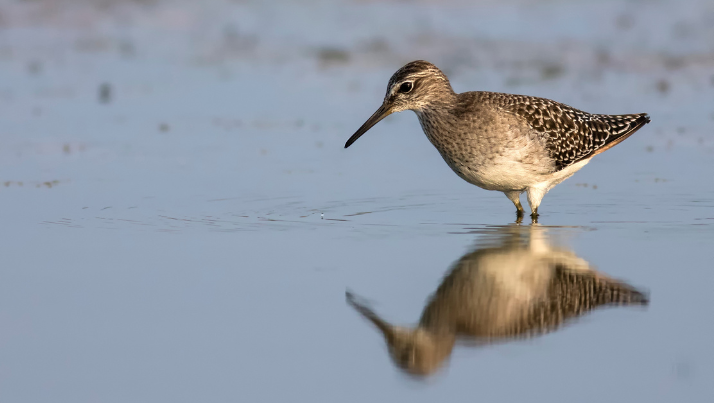
A Glossy Ibis on 16 July, Wood Sandpiper on 18 July, a juvenile Garganey on 19 July, and plenty of dragonflies, damselflies, and other jewel-coloured insects have been delighting visitors this month.
Apologies for the blog being a little neglected over the last couple of weeks. Our team has been incredibly busy as we come into the busiest season for WWT Llanelli. While we love writing our blog, work on site always comes first. But we’re back now, and the last couple of weeks have provided some pleasant surprises for us.
Wildlife highlights in July 2026
A Wood Sandpiper (Tringa glareola) was spotted on the Dafen Scrapes on 18 July. This species is most regularly seen in the springtime. They like shallow wetland habitats, probing for invertebrates in the shallows. Unlike Common Sandpipers (Actitis hypoleucos), which are often identified by their white under-plumage that cuts sharply up between their breast and wings, the separation of under and upper plumage is less stark for Wood Sandpipers. However, their dappled plumage is incredibly pretty, and we were incredibly excited to have one visiting us!
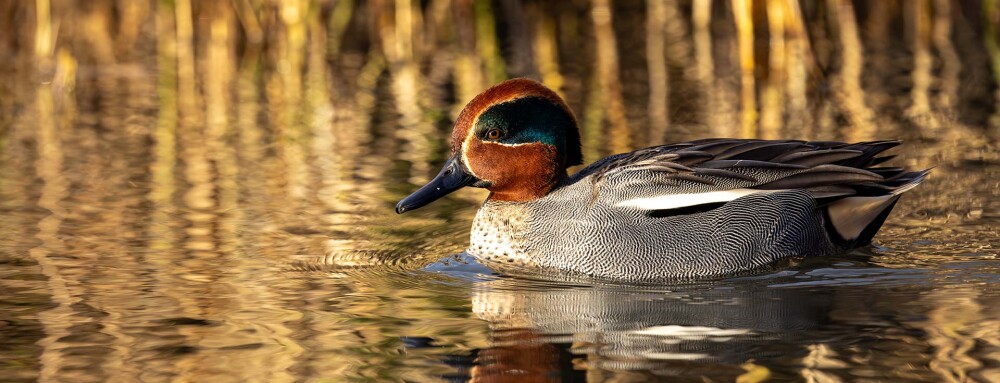
A juvenile Garganey (Anas querquedula) was also sighted on the Dafen Scrapes just a day later on 19 July. The Garganey is a secretive species, with breeding pairs in the UK estimated to be around 100. This species is just one of many we’re trying to encourage here at WWT Llanelli, so we hope this juvenile enjoyed its time here and will return as an adult.
Dunlin (Calidris alpina) and Knot (Calidris canutus) have also been seen over the last couple weeks. Their arrival is an early sign of the shifting seasons and we expect to see increasingly more as the summer continues and autumn comes around. While relatively common in comparison to some other species, we are keen to keep eye on the numbers of Dunlins and Knots that visit our reserve. Since the beginning of the century, Dunlin wintering populations in the UK have fallen by 20% and Knots by 13%. Also, did you know that Dunlins get their name directly from the word ‘dun’, meaning to have a slightly brownish, dark grey colour?
On 16 July, a Glossy Ibis (Plegadis falcinellus) was spotted on the Dafen Scrapes. We don’t know if it’s the same ibis that was seen earlier in the spring, or if it’s a different individual entirely, but we were glad to see it nonetheless, and we hope to see it on our wetlands again soon.
Finally, there have been shanks-a-plenty over the last couple weeks, with as many as 46 Greenshank (Tringa nebularia) and 184 Redshank (Tringa totanus). While both species appear to be fond of the bank edges around the saline lagoon, the greenshanks often spend their time in the near corner of the western side of the saline lagoon. With a good pair of binoculars or a scope, they are regularly spotted from the Michael Powell hide. Also, while looking out over the saline lagoon at the shimmering flocks of waders, keep an eye out for the Spotted Redshank (Tringa erythropus). It’s been a regular sighting these past few weeks.
Dragonflies and Damselflies reach peak activity through July and August. Warm, sunny days with minimal wind provide the best opportunities to spot them as they patrol wetlands in search of food, mates and breeding sites. When the sun comes out, look to sheltered plant life like hedgerows and tall grasses, or over the reeded areas of our ponds, and you should see them darting around.
Look out for the large and colourful Emperor Dragonfly (Anax imperator), one of our most recognisable species of hawker. The males have a sky blue abdomen and a dark central line, while the slightly smaller females have a green abdomen and dark central line. You can find out more about this species and all of the other dragons and damsels that call WWT Llanelli home on one of our daily Dragonfly Festival guided walks this summer.