As the new year begins, we are taking a look at our January bird of the month at WWT Martin Mere. This time, the spotlight is on the common eider duck.
What is a common eider?
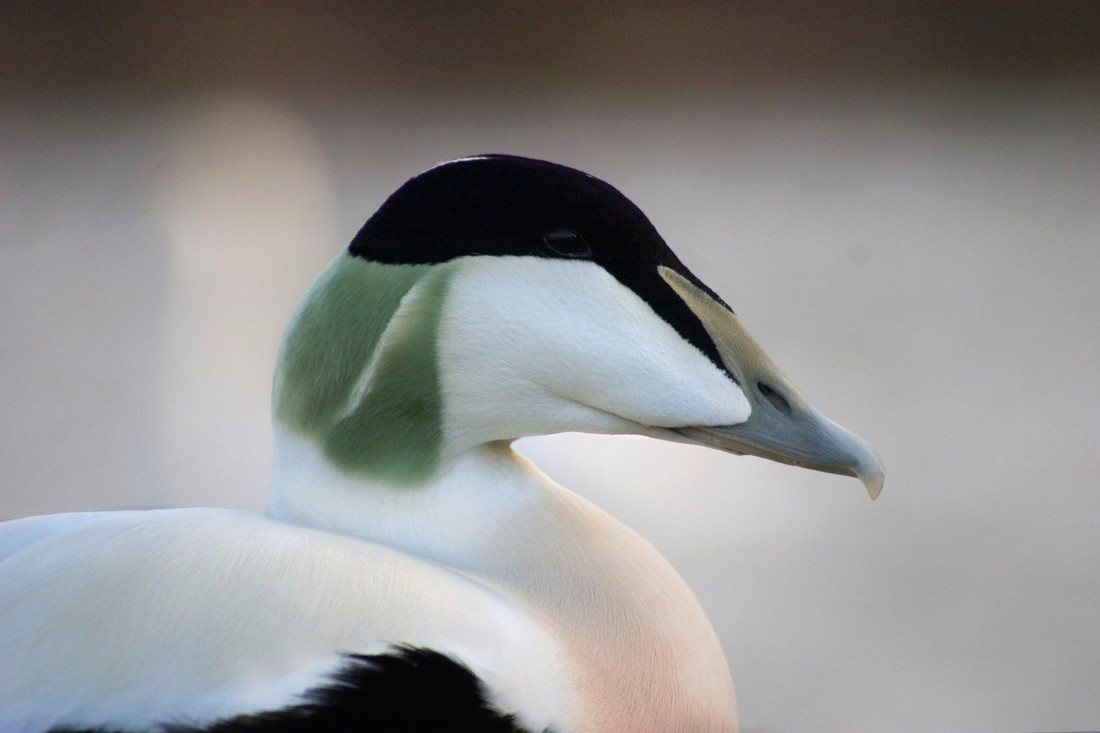
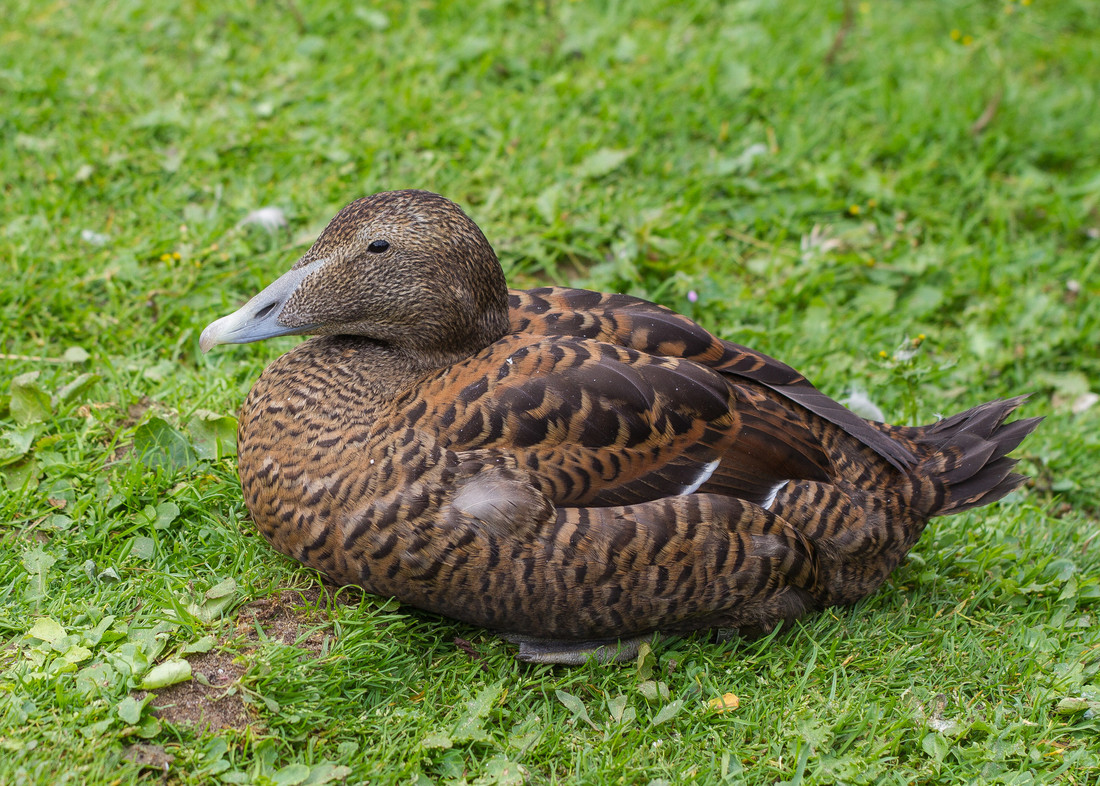
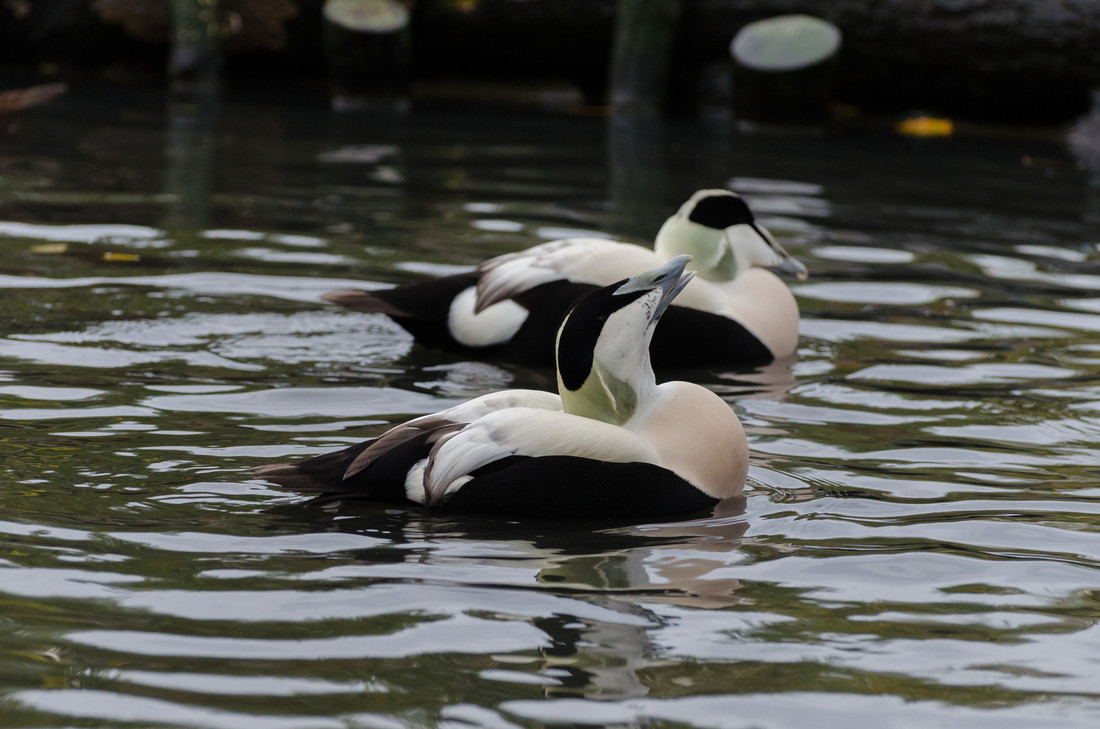
The common eider (Somateria mollissima) is a large sea-duck. It’s well adapted to life along northern coasts. Males have a black crown and belly, and a pure white back and sides. On the back of its neck, they also sport a green patch. Females are patterned brown similar to the female mallard duck, which gives them a perfect camouflage whilst nesting.
The eider is typically around 55-70cm in body length with a wingspan of around 80-100cm.
Where and when you can see them in the wild
In the wild, eiders breed in coastal colonies, often on remote islands or rocky coasts around northern Europe, including the coasts of Scotland and Northern England.
During the winter months, many eiders remain around the coast. They are a diving duck, so you can often see them diving for their food or resting.
What do common eiders eat?
As it’s a diving duck, they feed primarily on marine invertebrates. Their diet includes mussels, clams, and crustaceans. They use their wedge-shaped bills to skillfully pry their food from rocks or the seabed.
Do they have unique down?
One of the most remarkable things about the common eider their extremely soft, warm, and water-repellent down. Whilst being a great insulator, it also remains one of the lightest materials known to man. The female eiders will use their own down to line nests to keep their young warm.
Another fun fact about common eiders is that they are the the heaviest yet fastest duck in the UK, with a speed of up to 70mph!
Conservation status of the common eider
Because of pressures such as habitat change and coastal disturbance, the species is listed as Near Threatened on the global IUCN Red List. In the UK, it is classified as Amber under the Birds of Conservation Concern.
How to see them at WWT Martin Mere
WWT Martin Mere Wetland Centre in Burscough is home to resident eider ducks which can be seen all year round. Come and take a look and a listen, they are located by the Greater Flamingos as you exit the shop.
Inspired to visit?
WWT members enjoy unlimited visits all year round. Or, non-members can save 10% when they book online in advance.