With Christmas fast approaching, we take a moment to look back at the most regularly recorded bird sightings in the week before 25 December, as well as some rarer visitors over the festive period during the past few years.
Every day of the year (except for Christmas Day), the reserve team undertake a daily bird count here at WWT Washington.
We use this data to highlight trends and changes over time amongst the visiting bird populations and to gain a clearer understanding of how what we do benefits the birds, or to highlight areas which need to be developed.
This data is also used by larger scientific bodies, such as the British Trust for Ornithology (BTO), to make informed decisions relating to the environment and advise land managers on the best way to care for our green belt space and country parks. The data collected from organisations such as WWT plays a critical role in recognising problems early enough to make changes.
Thankfully, it also allows us to understand which birds spend their Christmas week at WWT Washington!
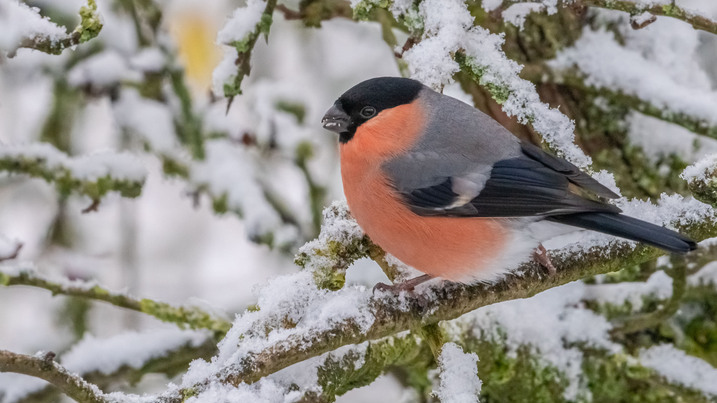
While for most of us the last week before Christmas can be stressful and chaotic, past sightings during this week seem to suggest the birds have their festive affairs in order and are simply relaxing and unwinding around our site.
Looking at the data from the last nine years (2016 to 2024) - specifically at the days of the week before Christmas, (18-24 December), which is a total of 63 days across the nine years - we can see how many days within that period a specific bird species was counted and tally up our most frequent festive visitors.
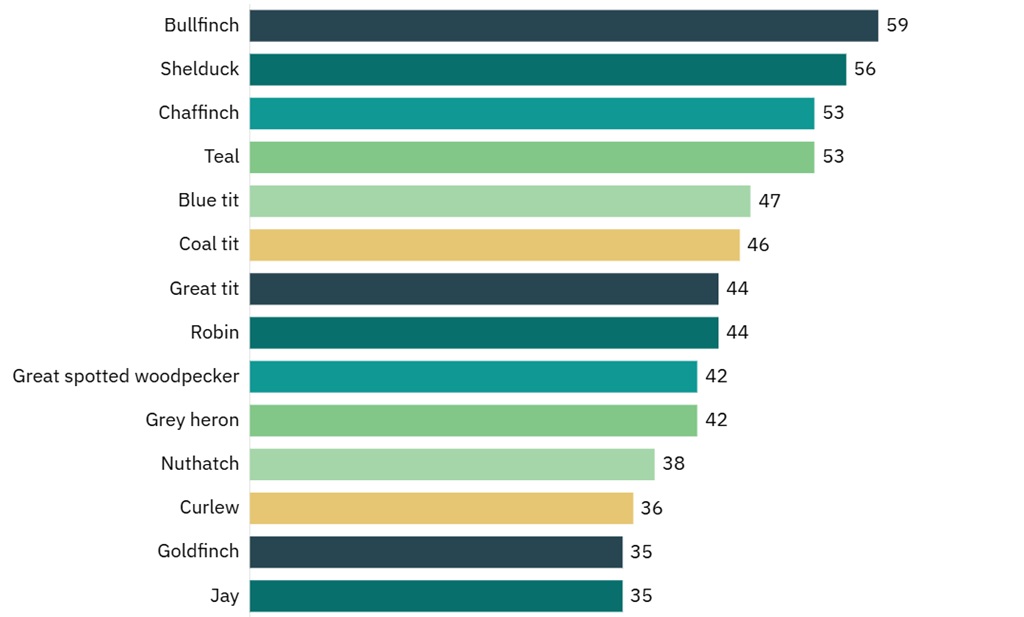
The graph above shows on how many of those 63 days the most recorded species visited, with the top spot going to the bullfinch, sighted on 59 out of the 63 days over the week. While beating the shelduck by three days overall, these two are tied for Christmas Eve visits, both being spotted on all but one Christmas Eve over the last nine years.
A lot of our most frequently spotted birds are smaller finches and tits; often seen at the Hawthorn Wood Hide feeding station, the feeders just outside our visitor centre doors and flitting around the woodlands. This is due to an abundant food source both at the feeders and throughout the woods - small invertebrates and seeds make an excellent Christmas feast.
This can also be explained because our larger bodies of water may freeze over, which means wading birds and shorebirds may have to travel to the coast or further inland to get their Christmas food and so are not present at the time of day the counts are conducted.
Looking at the data, we can also identify our rarer festive visitors - birds we’ve only spotted once or twice in the week before Christmas. While the snipe has been spotted somewhat frequently, (10 days out of 63), its smaller, even more timid cousin, the jack snipe has only been spotted once during this week - on the 18 December in 2018. Jack snipes can be distinguished from snipes by their shorter bill and are also about a third smaller.
Another singular Christmas visitor is the golden plover, which was sighted at Wader Lake on 19 December 2021. Golden plovers are upland birds in summer and lowland birds in winter, coming down from the moors and heathlands to overwinter where it is slightly warmer. They are often seen alongside lapwing on farmland.
Let’s also look at our peak counts across the festive period and see what birds have not only visited the site during this week, but visited in large numbers.
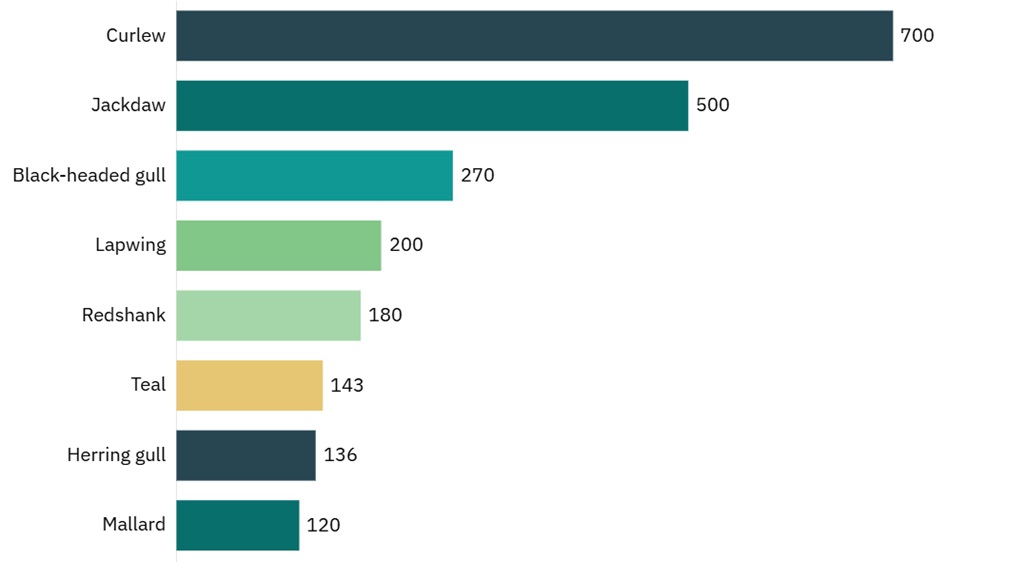
The graph above shows the highest counts of birds recorded, with 700 curlew being spotted on 22 December 2018. This was the same day that the 180 redshank were recorded - clearly a good day on Wader Lake! Strangely enough, these high peaks were all recorded in the second half of the week (21-24) across the decade.
This is possibly nothing more than an interesting coincidence, given that weather conditions weren’t consistent across these years, but we'll continue to monitor it. Maybe these birds just prefer to spend their Christmases with all of us here at WWT Washington!