To look back at 2025, we hand over to one of WWT’s resident birders, Content Producer Sam Walker, to give us a rundown of his personal favourites.
Whether you’re a seasoned birder, or just here for the thrill of spotting something spectacular, get ready to meet our stand-out avian stars. And who knows – your next visit might bring a once-in-a-lifetime sighting of your own.
Firm favourites
I’m starting with some of our re-visiting wetland rarities this year...
9. Caspian tern
Slimbridge scored a one-day Caspian tern on 27th July; it was a quieter year for records of these birds and it didn’t hang around.
The Caspian Sea is one of their key breeding areas, but their populations are scattered across continents worldwide.
The closest breeding populations to the UK are in Sweden and Finland. Their growing presence in the UK hints at exciting shifts in their population, thought to be a direct result of these growing populations in Scandinavia.
Indeed, they bred for the first time in Poland in 2024, in a mixed common tern and black-headed gull colony. It’s not impossible for that to happen in the UK sometime soon.
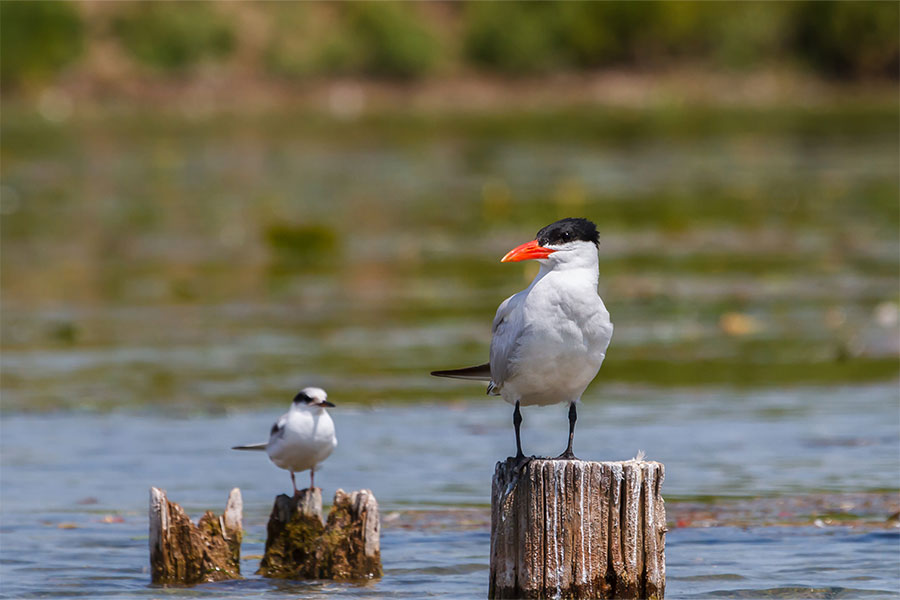 Caspian tern with common tern for size comparison © Paul Roedding/Shutterstock
Slimbridge stalwart
8. White-spotted bluethroat
The male bluethroat was again in-song at his favoured reedbed on the banks of the River Severn from the end of April to the end of July. Remarkably, this superb songster has visited the same territory now for five years running.
Despite dazzling plumage and singing well, he failed to attract a passing female. Being probably the most westerly bluethroat in Europe does have its drawbacks.
The white-spotted bluethroat subspecies breeds on the near continent, so this bird may be a sign of northward range expansion due to a warming climate.
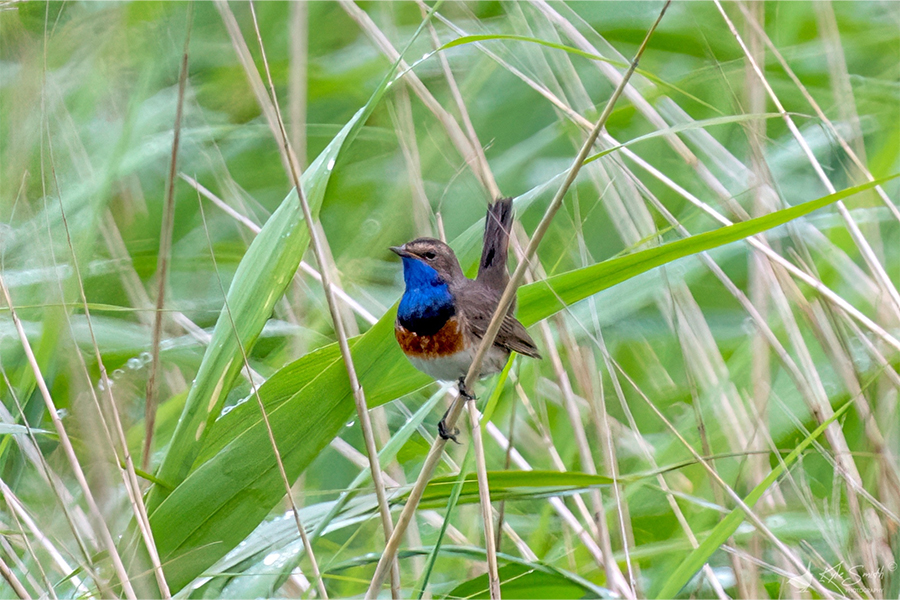 White-spotted bluethroat at Slimbridge © Kyle Smith @jkylesmith.bsky.social/Bluesky
All grown up
7. Pallid harrier
You might also remember Llanelli’s juvenile pallid harrier from winter 2024-2025, spending the darkest months of the year hunting the Lougher Estuary.
Excitingly, it’s back this winter and has now been confirmed as a sub-adult female. She arrived in early September, although it’s unknown where she spent the summer period.
Now in adult plumage, pallid harrier females can sometimes be confused with other harriers due to their white ‘ring-tail’. Adult males however are unmistakable, with pure-grey plumage. Interestingly, an adult male has spent the last couple of winters further west in Pembrokeshire. Is a breeding record soon to be on the cards?
In recent years, the species have bred in Spain and The Netherlands, with traditional wintering grounds in southern Africa or India, before heading to breed in central Asia and eastern Europe. Records in the UK are on the up, as the species expands north-west.
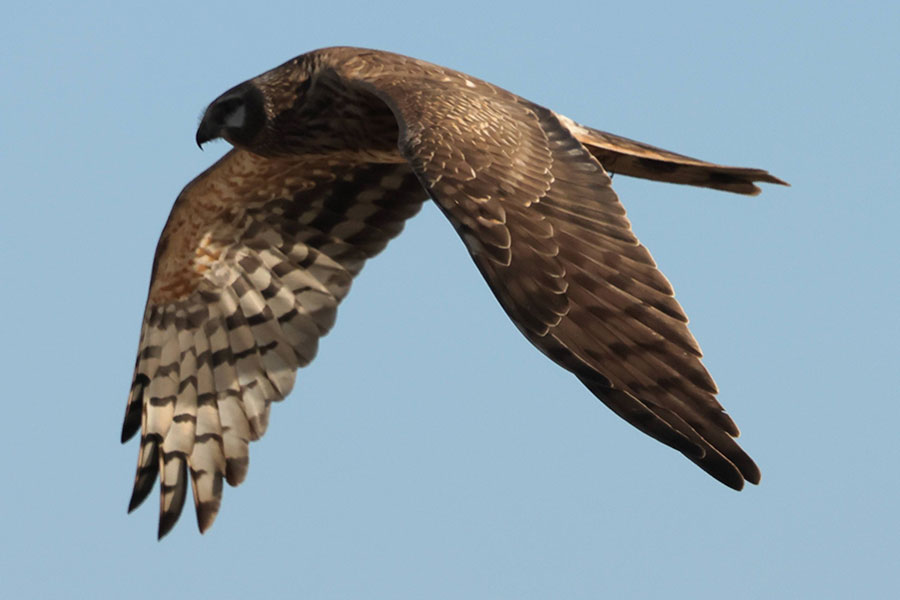 Female pallid harrier © Jay Thomas
Iberian ibis influx
6. Glossy ibis
This species gets a special mention this year due to an unprecedented autumn arrival. Sightings had started off well as it was, with up to four at Slimbridge throughout spring, as well as singles at Llanelli and Steart.
But things really kicked off in early September, with over 600 present across the country. Single figures are more usual.
At WWT sites, Welney did best, with a flock of 17. Slimbridge, Llanelli and Martin Mere had at least two ibis each in September and October, whilst Arundel had a later record at the end of November into early December. London had two birds on site, one of them staying into November – the longest staying rarity in the site’s 25-year history!
Evidently, records of this species are increasing. It’s thought that drought conditions in their usual climes of Iberia cause post-breeding flocks to head north and seek wetter habitats. So, with a warming climate and the changeable weather systems that come with it, we may see more of these exotic species.
With the first breeding record coming from Cambridgeshire in 2022, could spring 2026 see glossy ibis establish a sure-footing as a breeding bird in the UK?
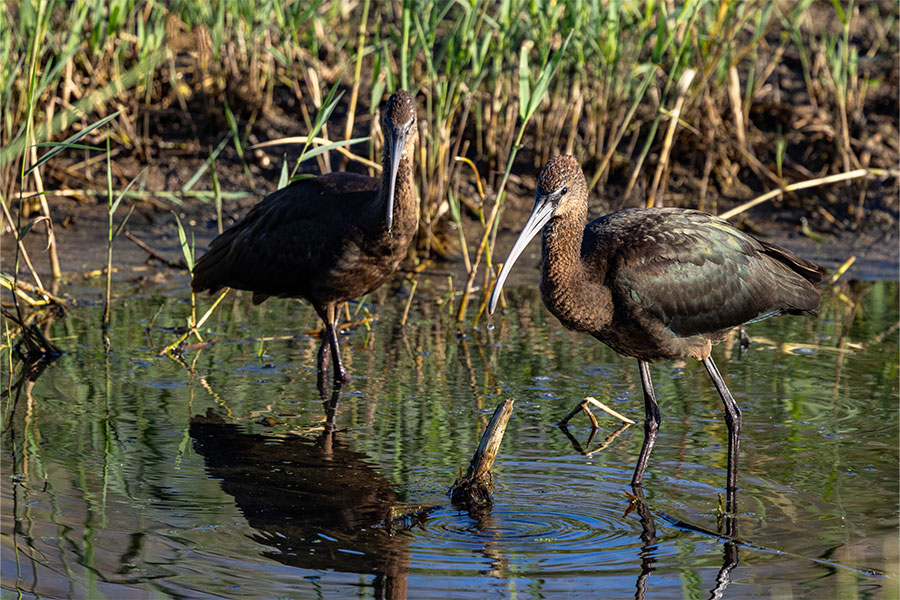 Glossy ibis at Slimbridge © WWT
Rushing for a roseate
5. Roseate tern
Back in mid-April, Welney had a two-day visit from a roseate tern. They’re a UK breeder, but only at one regular breeding colony, Coquet Island – a mile off the Northumberland coast.
That means they’re exceptionally rare inland, and this was a site first. This bird was likely on its way north-east to breeding grounds. They winter around the west African coast and are a rare breeding bird in a European context.
Worldwide they’re fairly widespread, with populations in the Caribbean Sea, Indian Ocean and Western Pacific.
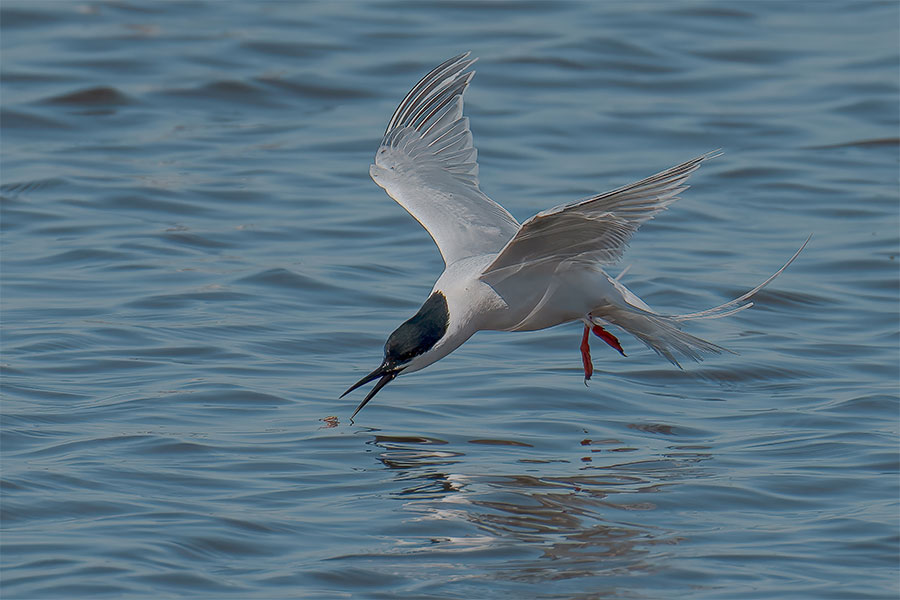 Roseate tern at Welney © Nick Bowman
Superfluous stints
4. Temminck’s stint
Another notable species for the 2025 countdown is the Temminck’s stint. Breeding from Scandinavia across to the Russian far-east tundra, and wintering in a broad line from western Africa to Southeast Asia, they’re a scarce migrant in the UK. But at WWT sites this year, we’ve had a great run of them.
I was lucky enough to be birding in Slimbridge’s Zeiss hide as one was being found on 3rd May; one of the first in the country this year.
Another was at Martin Mere later in the spring. At the end of August, the first Carmarthenshire county record appeared at Llanelli. Later in the autumn, Welney scored. Slimbridge had another at the end of August, followed by second bird that stayed for almost a month.
They can be tricky to identify, being the same size as a little stint, but key features are a longer-body and dark breast band.
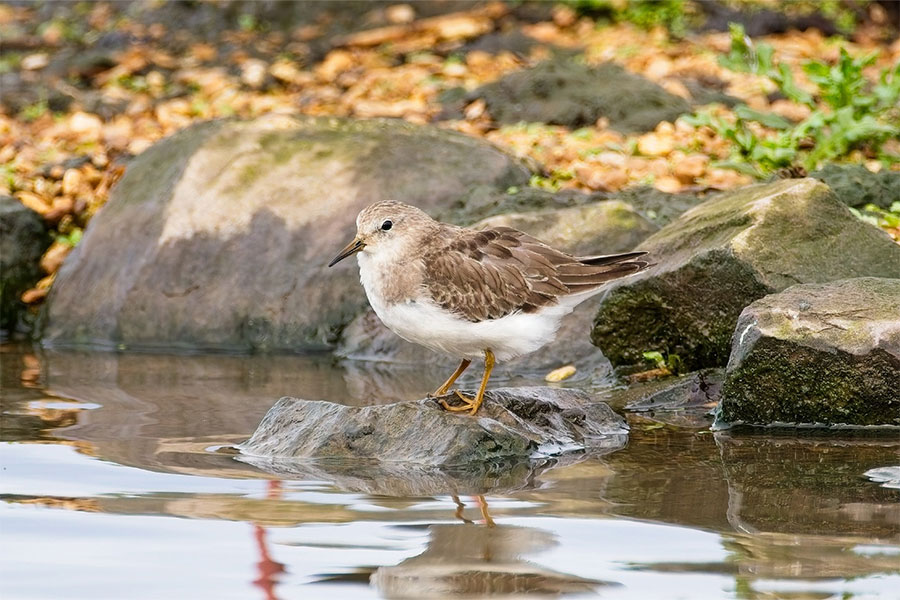 Temminck's stint on the Rushy © Martin Price @smart0406.bsky.social/Bluesky
Steart bags a sandpiper
3. Least sandpiper
On 2nd January, a least sandpiper was found at Steart. This, the smallest wader in the world, was seen from the Quantock View hide that overlooks Otterhampton marsh. An American species, it’s usually found breeding in northern Canada and Alaska, wintering in central and south America.
This was only the 46th record for the UK, and a first for Somerset.
At Steart, it was often seen with dunlin and a little stint, which was helpful for size comparison! It put in an extended stay until early March.
I was happy to be able to twitch it in early January – it was the first one I’ve seen.
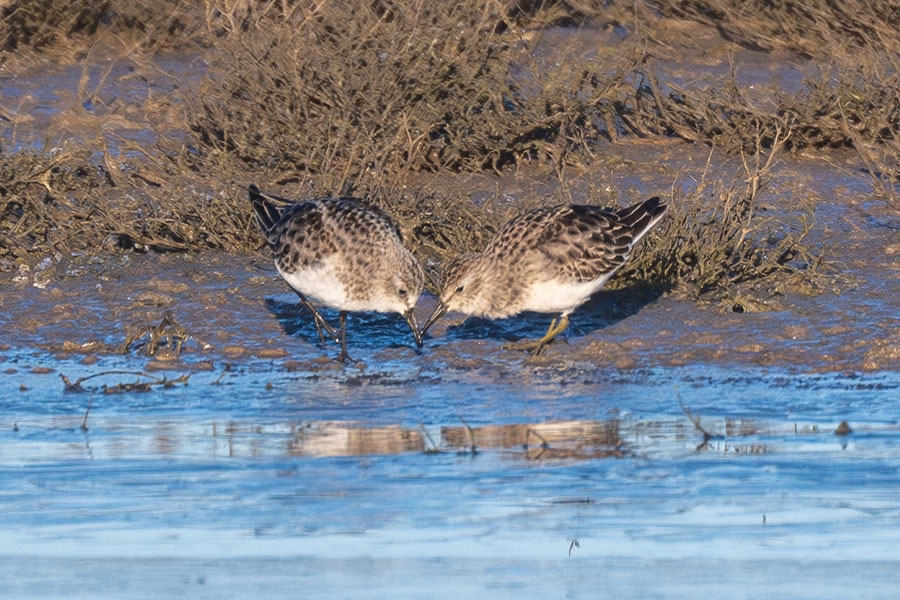 Little stint (left) with the much rarer least sandpiper (right). The pale yellowgreen legs are a key ID feature © Tom Hines @thomhines.bsky.social.jpg/Bluesky
Glamorous goldie
2. Pacific golden plover
Easily the best-looking bird in this article (in my opinion), a Pacific golden plover was found at Llanelli on 30th June.
 Pacific golden plover record shot © Bernie Beck
These beauties normally breed across northern Siberia and Alaska, to then migrate down both sides of the Pacific coast, wintering across south-east Asia and Oceania. This one will have, at some point, accidentally crossed the Atlantic and is now living its best life by moving up and down the East Atlantic coast.
There’s often a handful of records in the UK each year, but this one was always distant at Llanelli and so pictures were tough – we’ve included a stock image below to illustrate.
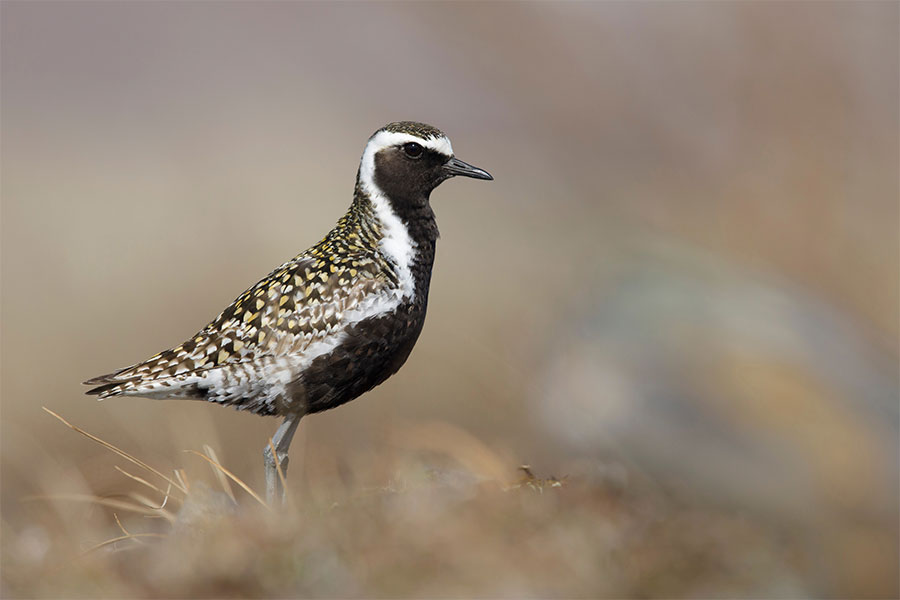 Pacific golden plover © Agami Photo Agency/Shutterstock
Kite in top spot
1. Black-winged kite
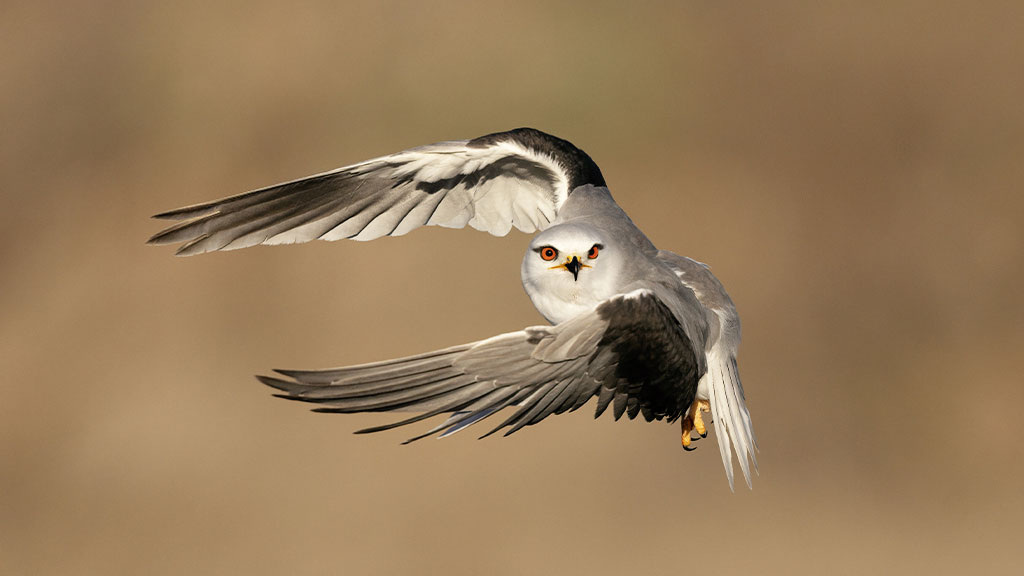
My top spot goes to the black-winged kite that turned up at Slimbridge for just 24 hours on 20th August. I was very pleased to be able to connect with this bird, watching it for ten minutes before it flew off, never to be seen again.
The rarity value here is huge; a true mega, being only the second-ever record for the UK. This follows a 2023 bird that was seen in Powys and then twitched widely in Norfolk and Suffolk.
These are adaptable raptors with a wide range of prey, often hovering like kestrels. They have a wide global range, with similar forms being found across all continents except Antarctica.
This is another species that has been rapidly spreading north through Europe, and have only colonised France since the 1990s.
Whilst it retains a mega rare status for now, it’s one that we could see more and more of in the future with a warming climate.
 Black-winged kite © Tomas Calle Boyero/Shutterstock
But it didn’t stop there…
Above are our rarest records of the year, but there were so many other brilliantly scarce birds found at WWT wetlands in 2025, including:
Tundra bean goose, snow goose, green-winged teal, ring-necked duck, smew, white stork, hen harrier, honey buzzard, buff-breasted sandpiper, pectoral sandpiper, grey phalarope, and hoopoe.
What was your favourite bird of the year? Get in touch on our socials and share your pictures – we’d love to see them.
Header image – Black-winged kite © Helge Sorensen/Agami Picture Library