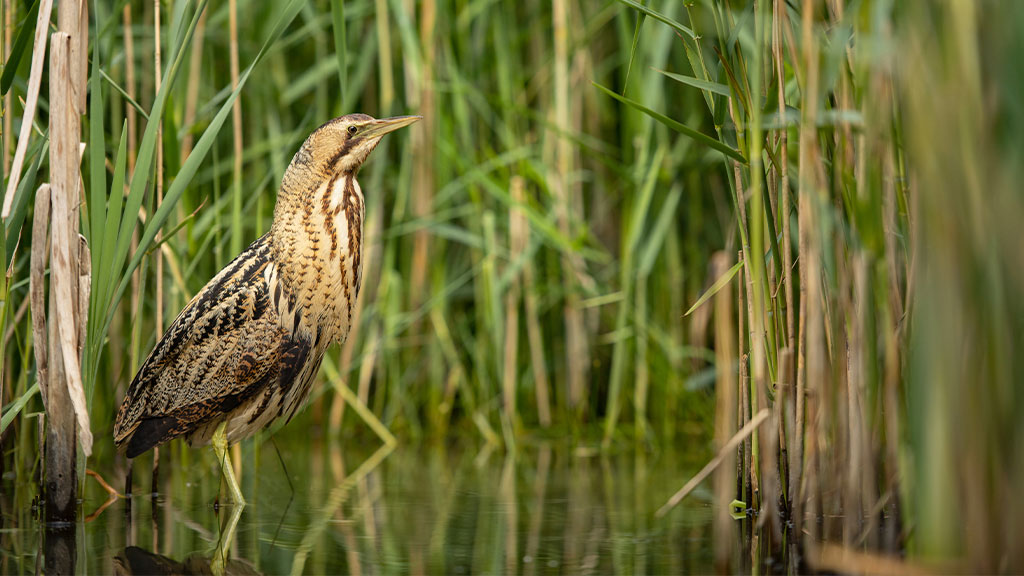
While the feathery world of the reedbed provides a wonderful home for wildlife –they’re also a testament to our deep connection to wetlands as humans. Wetlands are vital for communities to thrive around the world, both economically and culturally: something that’s been a focus of the latest research published by WWT’s Cultural Dimensions team.
People and wetlands: an interwoven history
With over 40% of England’s reedbeds lost since 1945, it’s more vital than ever that we honour our connection to them and do what we can to protect and restore them. We can explore this relationship through traditional craft: handmade objects made from natural materials from within the reedbeds, with a great deal of skill and knowledge passed down from generation to generation.
The craft of rush weaving and matting is testament to this. In the UK, rush matting dates back to early medieval times and possibly even further. Wetland plants such as bulrush are harvested, dried, and then plaited, coiled and stitched into mats and a variety of products.
But rush in the UK is getting increasingly hard to source, with demand often outstripping supply: a careful balance must be maintained to ensure these reedbeds can thrive for wildlife and future generations.
Harvesting sustainability helps maintain this balance. Waveney Rush and Rush Matters are the only two rush matting businesses in the UK, both operating in East Anglia, where rush matting is believed to be the region’s oldest recorded industry.
A family industry
Felicity Irons BEM heads up Rush Matters, and her team use punts to sustainably harvest bulrush for their products. From June to August, their harvesting covers some of the largest rivers in East Anglia and beyond: the Great Ouse in Bedfordshire, the Nene in Northamptonshire and the Ivel in Bedfordshire.
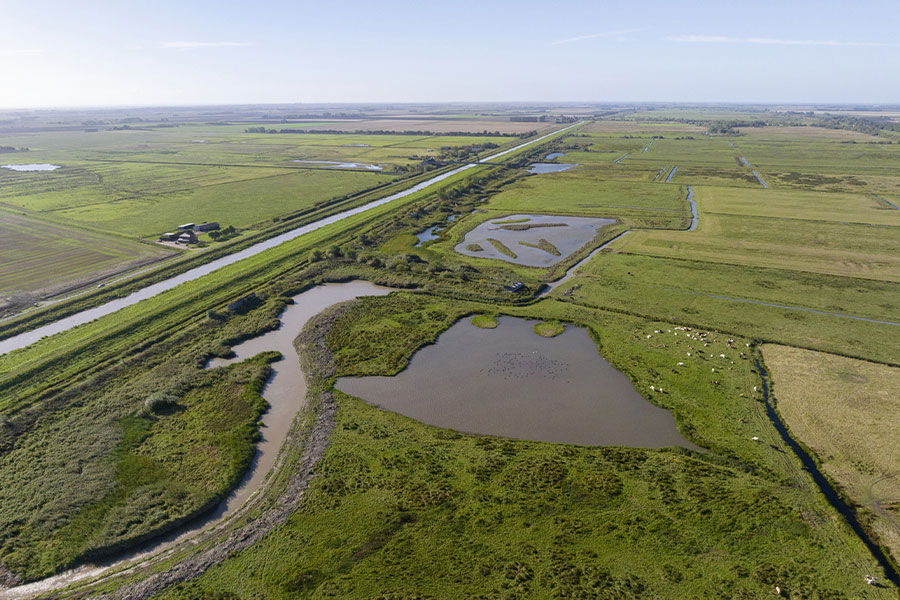 Ouse Washes at WWT Welney
Rush matting is classified as an ‘endangered craft’ by Heritage Crafts; a craft that is in danger of dying out, with nobody to pass the skills on to. On the Great Ouse, Felicity has taken up the mantle from a family who had been harvesting rush there since the 1700s. Without organisations like these, the craft would have disappeared.
Cambodian craft
On the other side of the world, Cambodia’s Mekong Delta is known for its mat weaving, or tbanh kantuel. Mats are used around the house or given as wedding gifts, either left naturally coloured or dyed rich deep jewel tones.
Tbanh kantuel is a vital source of seasonal income, with reeds harvested in January-May when the water on the edge of rice fields recedes.
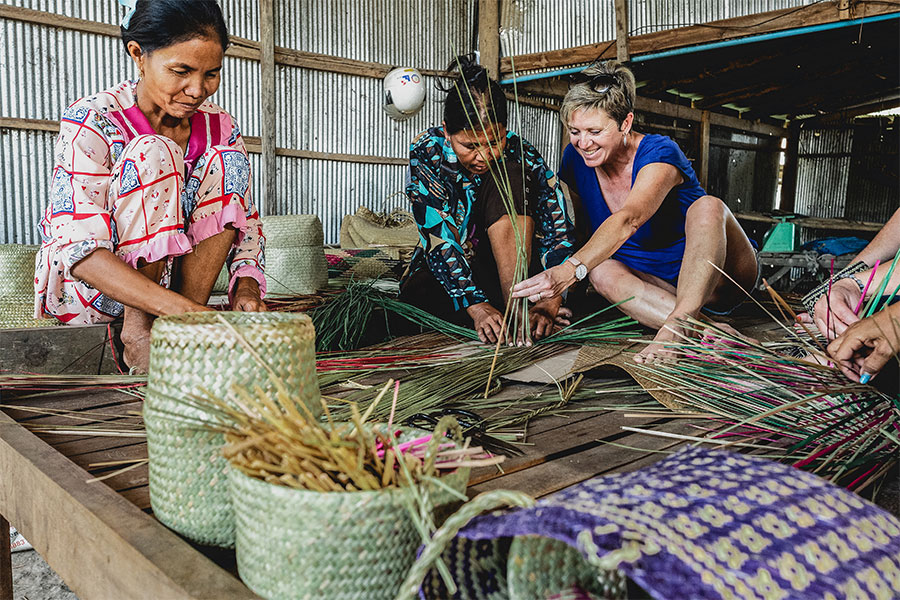 Mat weaving eco-tourism at Anlung Pring
In Anlung Pring, WWT’s Cambodia reserve, tbanh kantuel takes centre stage for our eco-tourism project, where locals guide tourists to try their hand at mat weaving. Locals also sell kantael komplaok, mats made from invasive water hyacinth – a cultural connection taking action to remove invasive species and directly improve the condition of wetlands.
Future generations
We are a part of wetland’s story: as a species, we’ve grown up beside them. We could not survive without wetlands, and, as these crafts are testament to, they’re a vital part in our culture and heritage across the globe.
Celebrate World Wetlands Day
This World Wetlands Day (2nd February 2026), the world comes together to celebrate wetlands. To mark it, we’re exploring culture, heritage, and traditional knowledge in wetlands.
Discover more