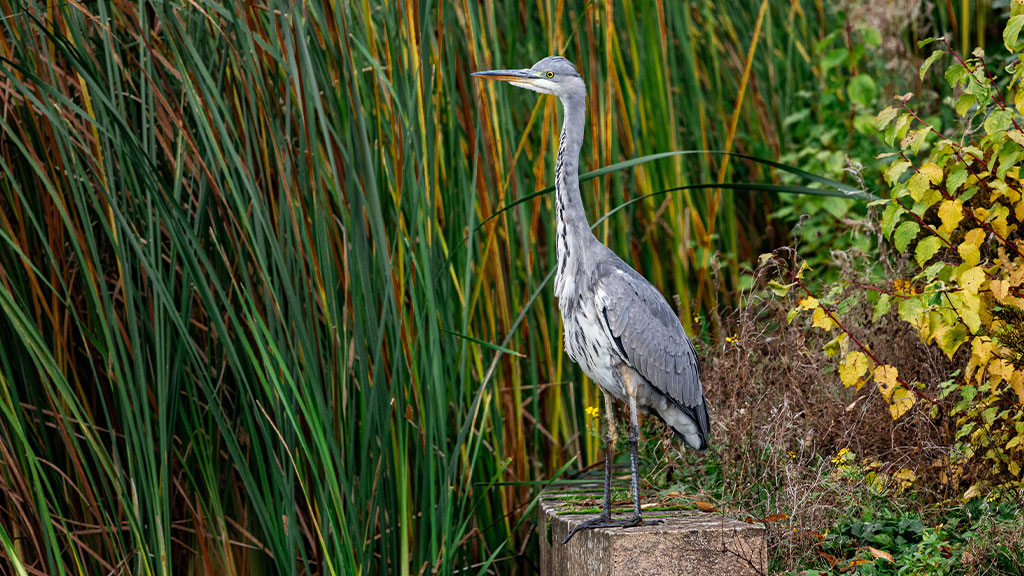
Urban wetlands - rivers, canals, ponds, lakes and flooded margins, act as stepping stones through the landscape. Often isolated, sometimes overlooked, they provide food, shelter and a safe passage for species that have learned to live alongside us.
This is community infrastructure; nurtured and enabled by everyone, from neighbourhood groups to developers, schools to local councils. A network of urban wild spaces restoring balance, beauty, and resilience to the places we call home.
What do we mean by urban wetlands?
Urban wetlands take many forms. Some are ancient waterways now flowing through modern cities. Others are newly created - ponds in parks, restored floodplains, or wetlands designed to manage rainfall and protect homes from flooding.
They include inner-city rivers and canals, community ponds – created and cared for by local people, park lakes, sustainable drainage systems (SuDS) and seasonally wet ground. Some are busy and noisy, others quiet and tucked away.
Despite their surroundings, these wetlands support breeding, feeding and resting sites for a wide range of species.
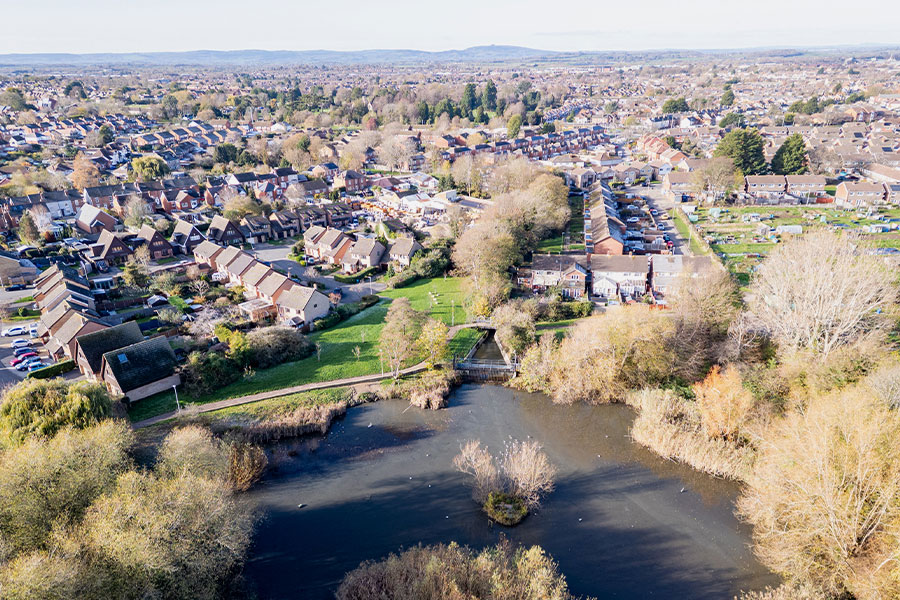 Floodwater balancing pond, Gloucester © Sam Walker/WWT
Why urban wetlands matter
City wetlands do more than provide habitats for wildlife, they make urban life better for everyone. Vegetation filters pollution from water and air. Wet ground absorbs heavy rainfall, easing pressure on drains and rivers. Open water and green edges cool surrounding streets during heatwaves.
And for people, these places offer calm - somewhere to wander, watch and breathe - especially for those with less access to nature. As cities grow, wetlands become increasingly important. Not just as green and blue spaces, but as living parts of the city that work quietly to keep both nature and people thriving.
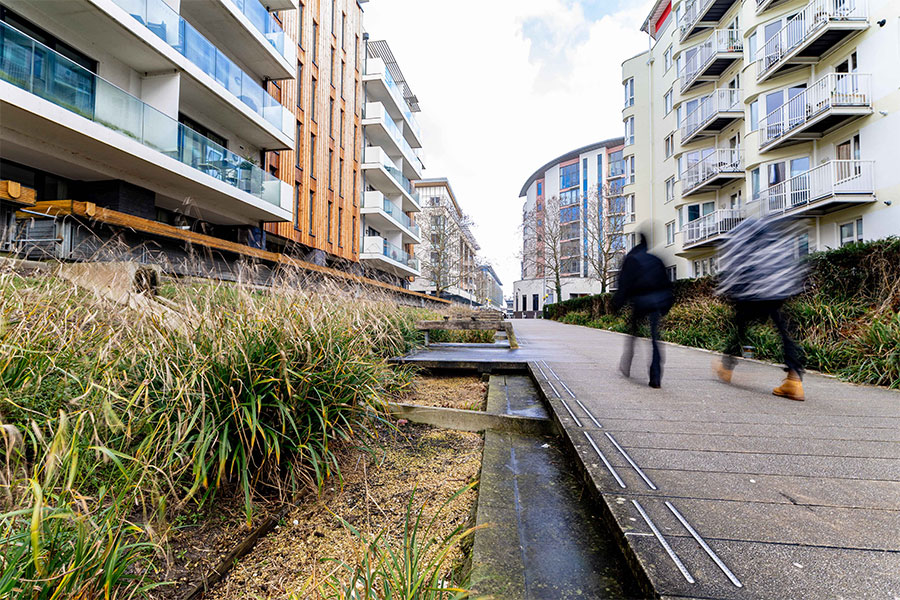 Wetland drainage system integrated into Bristol’s urban environment © Sam Walker/WWT
Wildlife you could see in your city’s waterways
Pond life
Ponds are small, but they are mighty. Even the most modest urban pond can support an astonishing concentration of life. Small ponds are often richer metre for metre than larger water bodies.
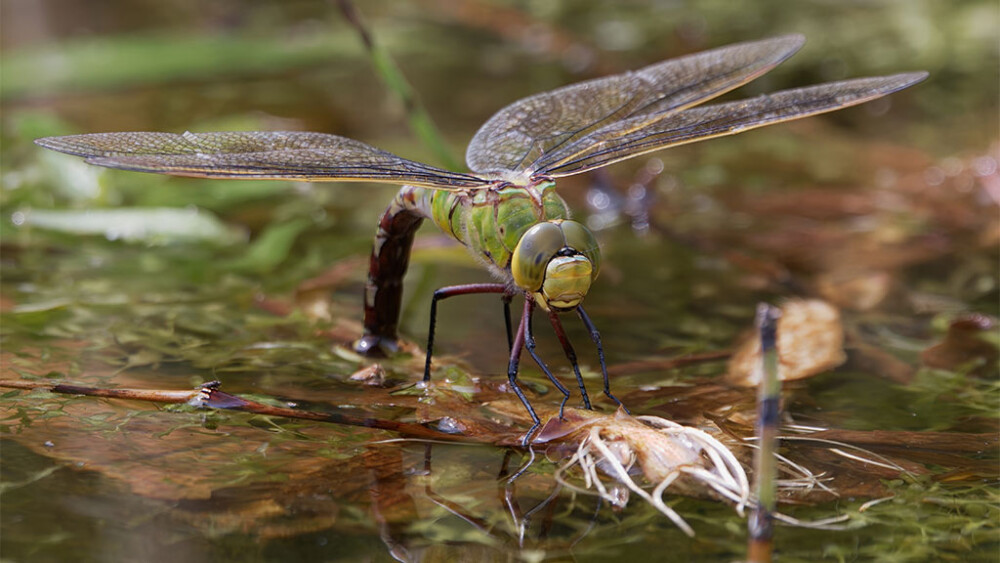
Beneath the surface, aquatic insects, larvae and plants form the foundation of a complex food web. Frogs, toads and newts return each year to breed, drawn to still water and submerged vegetation. In summer, dragonflies patrol the margins, their brief adult lives contrasting with the long months spent hidden underwater.
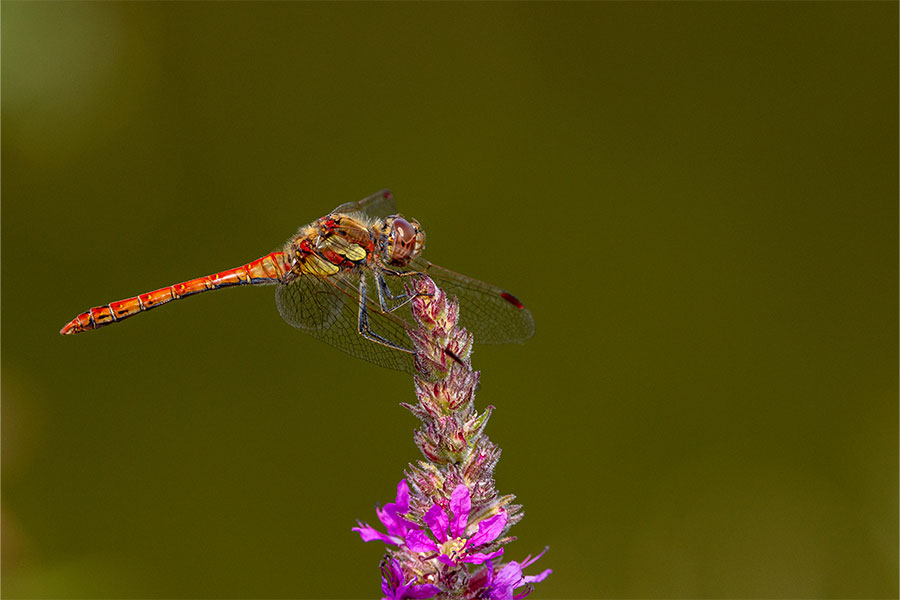 Common darter dragonfly perched on purple loosetrife flower © Sam Walker/WWT
Come springtime in urban wetlands such as WWT London, listen out for the croaking chorus of marsh frogs (Pelophylax ridibundus), their noisy calls carrying across the water. Submerged in plants, spot smooth newts (Lissotriton vulgaris) moving quietly through the shallows.
As spring shifts into summer, dragonflies take centre stage. Broad-bodied chasers (Libellula depressa) dart and hover along the margins, while azure damselflies (Coenagrion puella) skim low over the surface, catching the light as they go.
From above, ponds can appear still. Look a little closer and there may be more going on than you think.
The common kingfisher (Alcedo atthis)
A sudden flash of blue, low over the water, gone almost as quickly as it appeared. Kingfishers are among the most striking birds you might encounter in an urban wetland - and among the easiest to miss in the blink of an eye.
They favour clear, slow-moving water where small fish are visible, and they make use of whatever perches are available: reeds, branches, railings, even old pipes. Patient hunters, they will sit motionless before diving with startling speed.
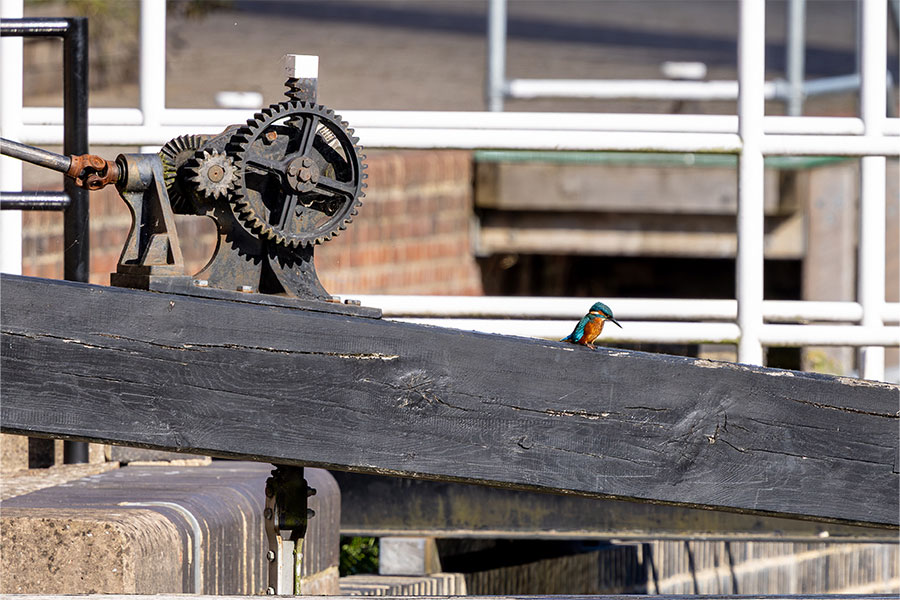 Kingfisher perched on a canal lock gate © Sam Walker/WWT
Though shy, kingfishers are creatures of habit. A single stretch of canal or river can be home to the same bird for months at a time. A morning commute walk or cycle could lead to several sightings if near a kingfisher’s favoured perch, particularly through breeding season (April-August).
Eurasian otter (Lutra lutra)
For many years our native otter was on the brink of extinction in the UK, but they’re making a remarkable comeback. Today they have returned to most river systems in the British Isles, including those flowing through towns and cities.
Otters tend to keep to the edges, and the hours when people are scarce. Mostly nocturnal, they move along riverbanks, under bridges and through quiet backwaters, feeding on fish, amphibians and crustaceans.
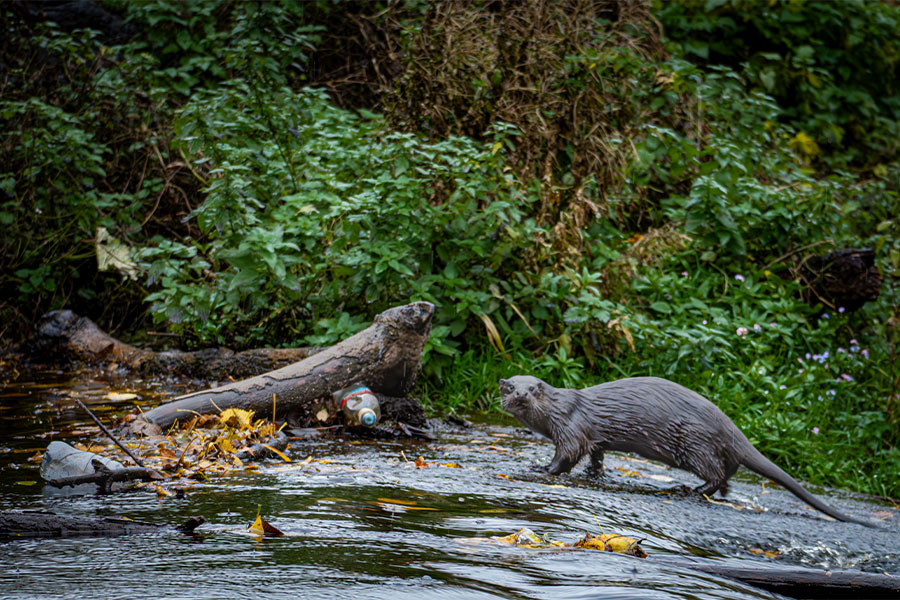 Eurasian otter photographed on Water of Leith, Edinburgh, traversing concrete and litter © APalmer_Wildlifephoto/Shutterstock
Despite now being found in every county in England, Wales and across Scotland, they are still difficult to spot due to their elusive and shy nature. It’s the signs they leave behind that give them away: a smooth slide on a muddy bank, footprints at the water’s edge, or spraint (droppings) left on a rock or bridge pier, to mark territories.
Daubenton’s bats (Myotis daubentonii)
As daylight fades, Daubenton’s bats emerge to hunt, flying low and fast over the surface of the water. Sometimes called “water bats”, they scoop insects from the surface using their feet and tail membrane, exploiting the abundance of prey that gathers above lakes, canals and slow rivers.
Street lighting can even work in their favour, drawing insects closer to the water. Bats are indicator species. Where they are present, ecosystems are usually functioning well - rich in insects, clean water and connected habitats.
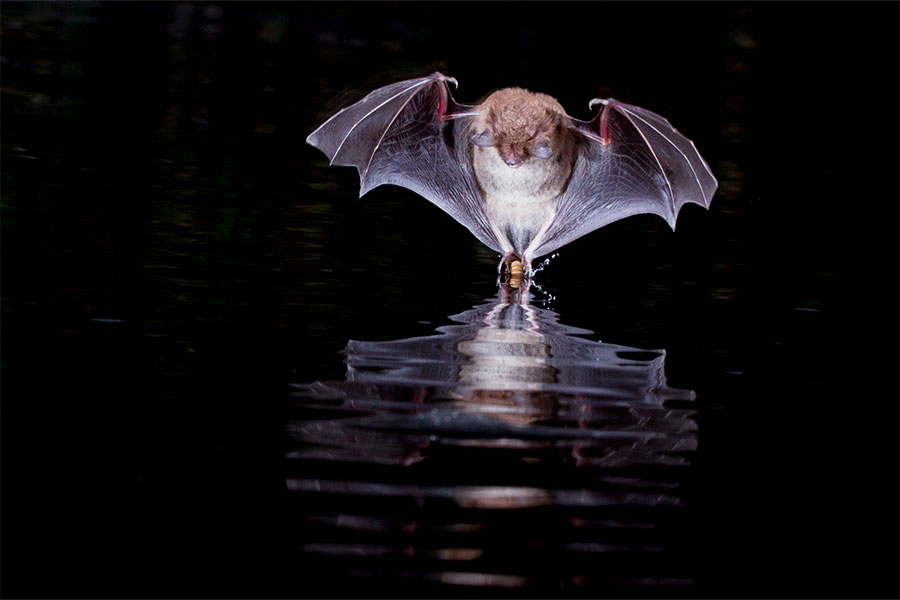 Daubenton’s bat hunting © Agami Photo/Shutterstock
Water voles (Arvicola amphibius)
Often mistaken for rats, water voles are the UK’s largest vole and one of its most threatened mammals. Once widespread, they have declined dramatically due to habitat loss, pollution and predation. Where suitable habitat remains, water voles can still survive in urban wetlands, particularly along quieter waterways with dense bankside vegetation.
They are rarely seen for long, but a sudden “plop” into the water, or neatly nibbled plants, can reveal their presence.
Their survival in urban areas depends on space, cover and connected habitat - exactly what wetlands are wonderful at providing.
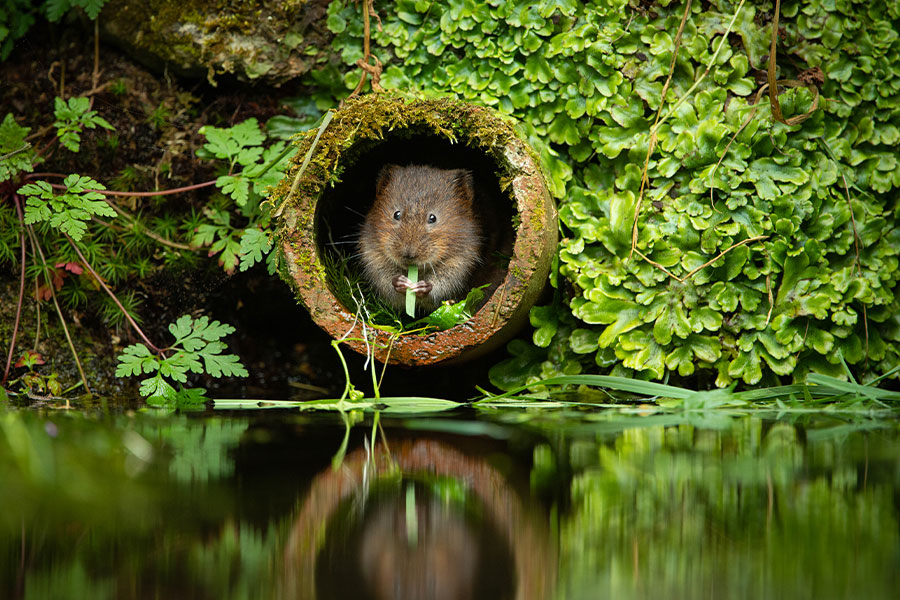 A water vole feeds on grasses within the safety of an old pipe, instead of traditional burrow © Ben Andrew/WWT
Wetlands where you live
Wetlands are the spaces where water meets land – the ponds, rivers, streams and marshes on your doorstep. Where connections are made, and people and wildlife thrive.
At WWT, we want everyone to be able to witness the flash of a kingfisher, the croak of a frog, or the hum of a dragonfly. That’s why we want to reimagine our towns and cities – as places teeming with all forms of life, nurtured and accessible to everyone.
By embedding wetlands into the fabric of urban life, we can transform run-off into resilience, protect our communities from flooding, and bring nature back. Wetlands teeming with wildlife shouldn’t be somewhere else, they should be right here, where we live. Watch this space – because we’ve got big plans to help do just that.
Header image: Grey heron at urban park pond © Sam Walker/WWT